


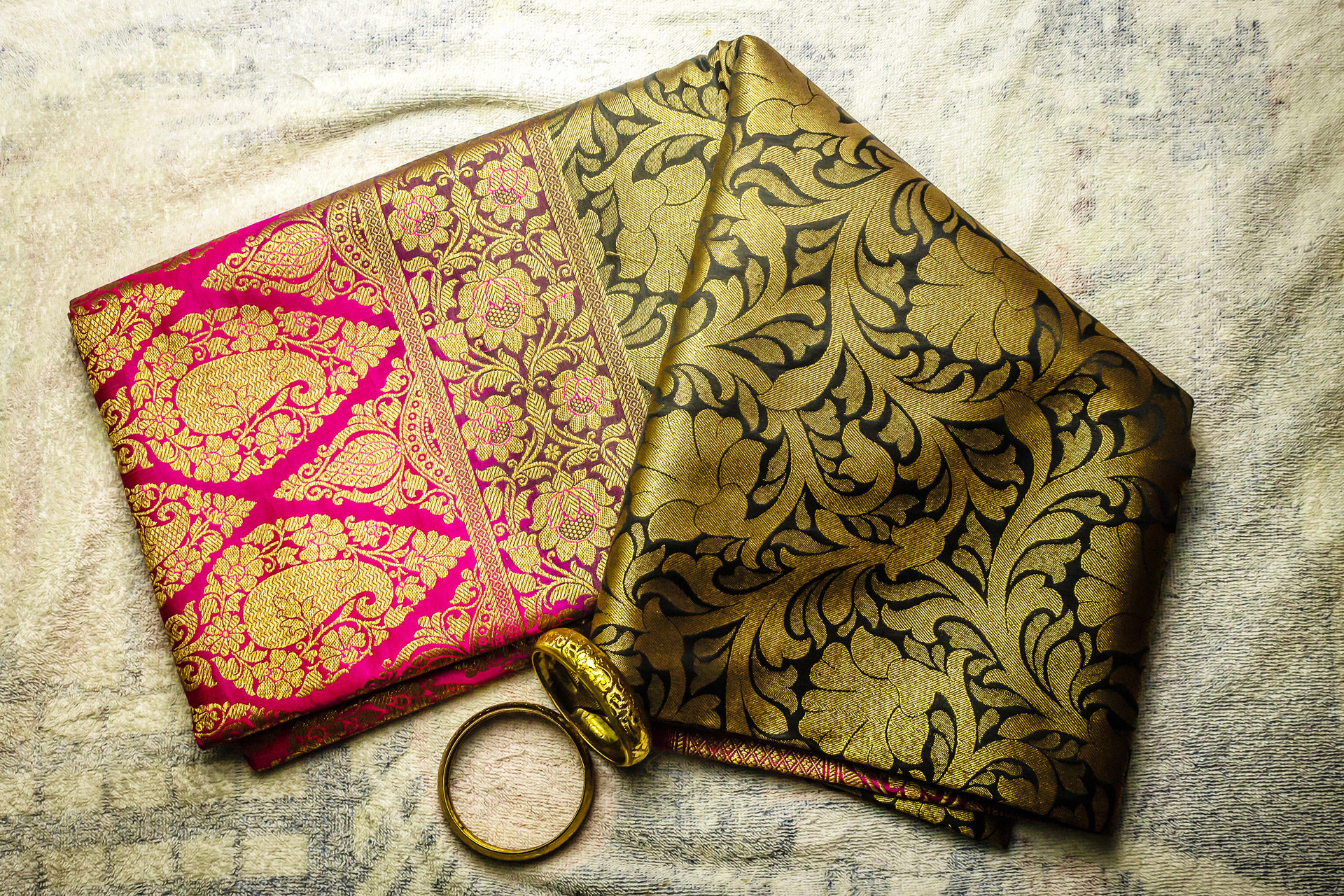
SPECIAL DAY
Preserving Tradition, One Weave At A Time
This International Saree Day, we celebrate this iconic garment that reflects the rich cultural heritage and craftsmanship of India.
Glory Dwarkesh
Sarees are timeless. Sarees are forever. And sarees epitomise poise, grace and beauty. Every year, 21 Dec is commemorated as International Saree Day. This day not just celebrates this iconic garment but also pays a tribute to the rich cultural heritage and craftsmanship of India.
The Adani Foundation, through Project Sathwaro, is proud to commemorate the iconicity of Indian saree weaves and prints. The project is committed to promoting and preserving the rich heritage of the country’s art and craft forms while uplifting artisans in alignment with the United Nations’ Sustainable Development Goals (SDGs) for economic growth, livelihood, and cultural preservation. It is dedicated to creating an ecosystem where art can flourish, and artisans can thrive by empowering the latter with contemporary designs, process innovation, and facilitating market linkages.
The Sathwaro Team believes that sarees are much more than just a piece of fabric; they are a symbol of India’s history, intricate designs, and centuries-old skills passed down through generations. Each region of the country boasts of its unique saree craft which reflects the culture, history and beliefs of the region.
Sathwaro is proud to promote and celebrate saree craft forms of the country, each defined by its unique charm and distinctive features and in turn, empower their dedicated practitioners. Here are some of the noteworthy saree craft forms which Sathwaro is proud to support:
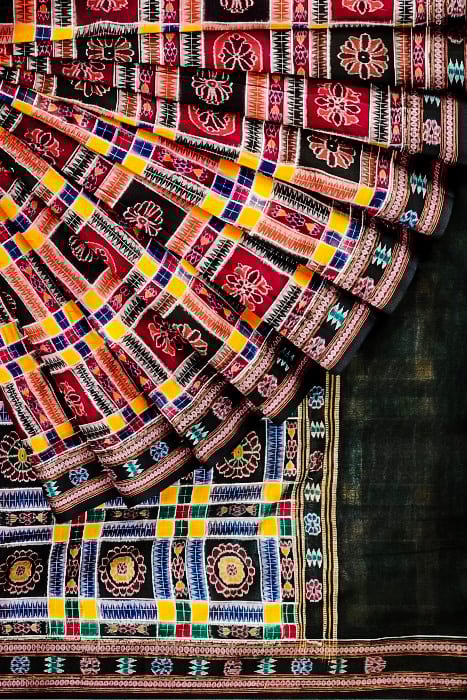
Odisha Ikat
Ikat is a unique form of tie-dye weaving from Odisha, famous for its intricate geometric patterns and vibrant colours. The technique involves tying and dyeing both the warp and weft threads before they are woven, creating a blurry yet stunning design. These sarees often feature soft patterns that combine traditional motifs such as florals and geometric shapes.
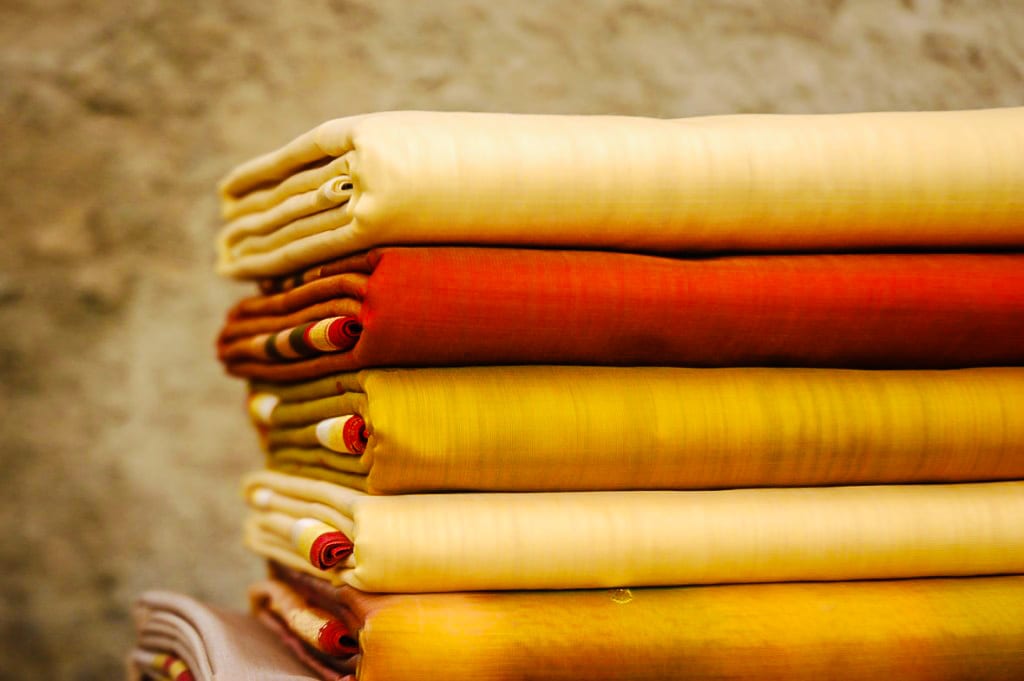
Chanderi
Chanderi sarees, with their roots in Madhya Pradesh, are characterised by their sheer texture and light weight and are mostly woven with silk and cotton. They are widely popular for their intricate zari work, often featuring delicate design patterns.
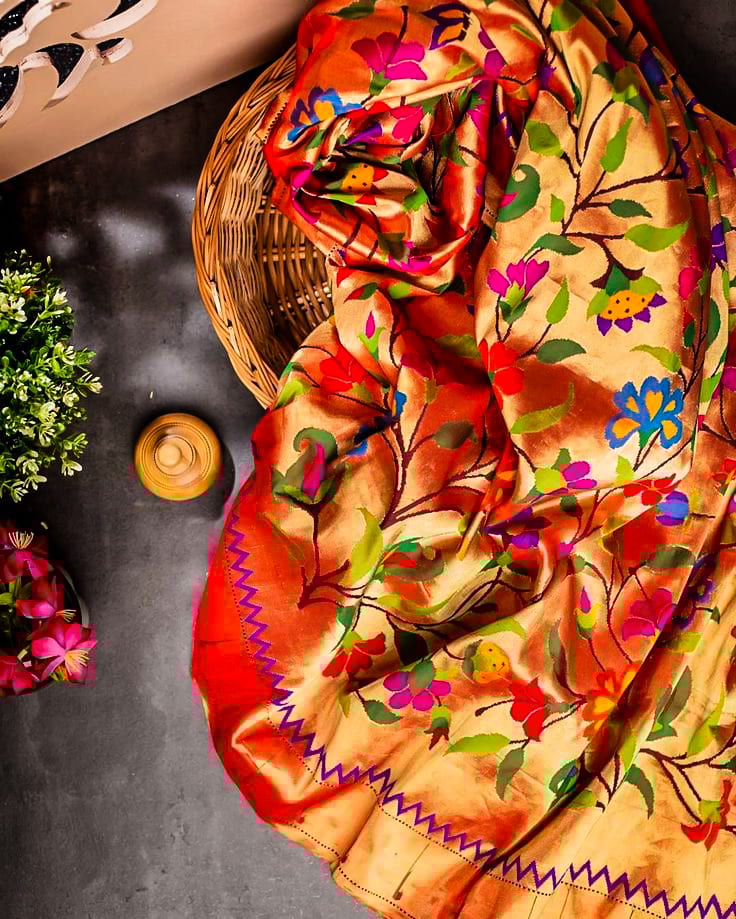
Paithani
Paithani sarees, also known for their rich zari work and intricate designs, originate from Maharashtra. These sarees often feature peacock motifs, lotus flowers, and other traditional patterns, and are usually prized highly for their opulent look.
Applique
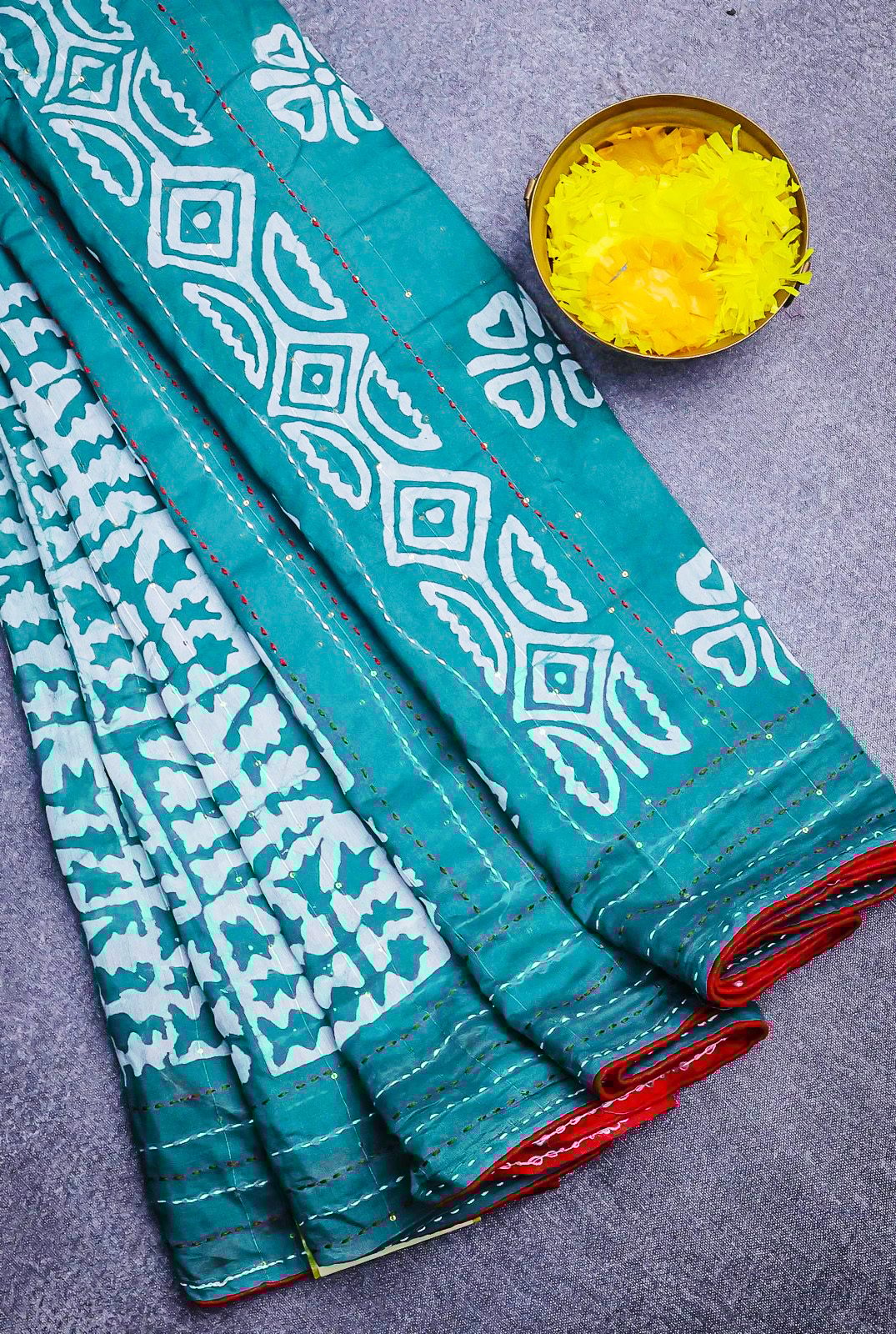
Applique sarees are popular in Odisha. They involve sewing pieces of fabric onto a base to create intricate, colorful designs. This technique often showcases folk and floral motifs, making these sarees perfect for cultural events and traditional celebrations. The hand-stitched artistry and vibrant colors make these sarees a unique form of wearable art.
Patola
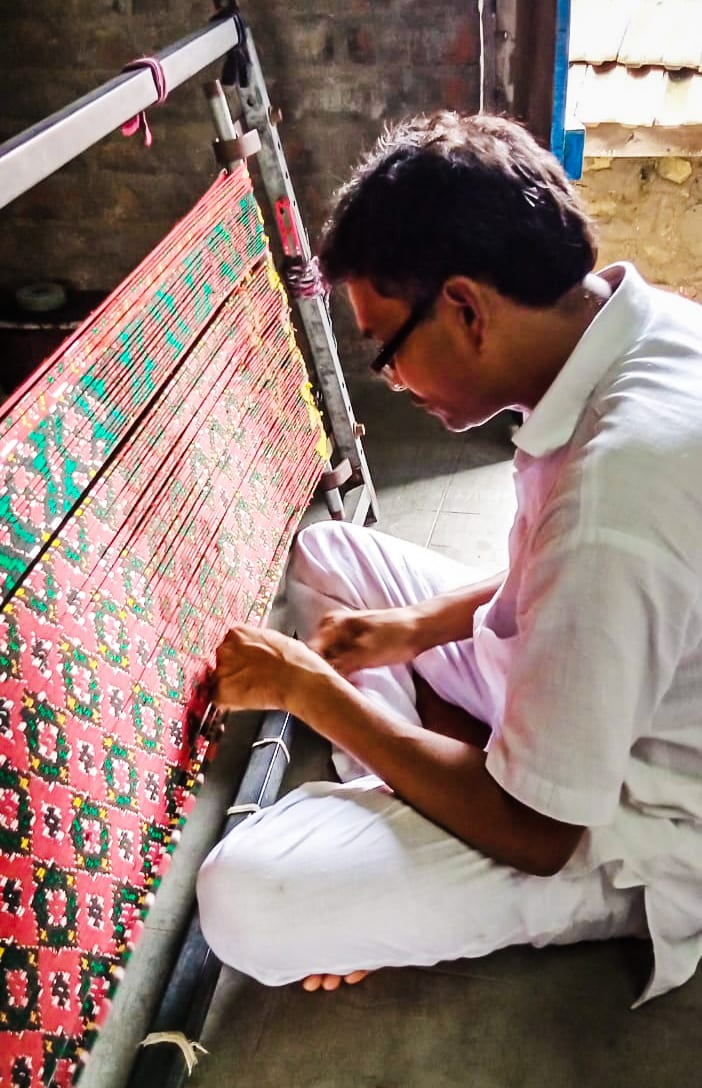
Patola sarees have their roots in Gujarat. They are known for their vibrant colours and beautiful patterns. Patola involves a complex single and double ikat weaving technique, where both the warp and weft threads are tie-dyed before weaving. This leads to the creation of symmetrical, geometric patterns, marked by meticulous precision and visually stunning details. Patola sarees highly valued for their durability.
Bhuj Bandhani
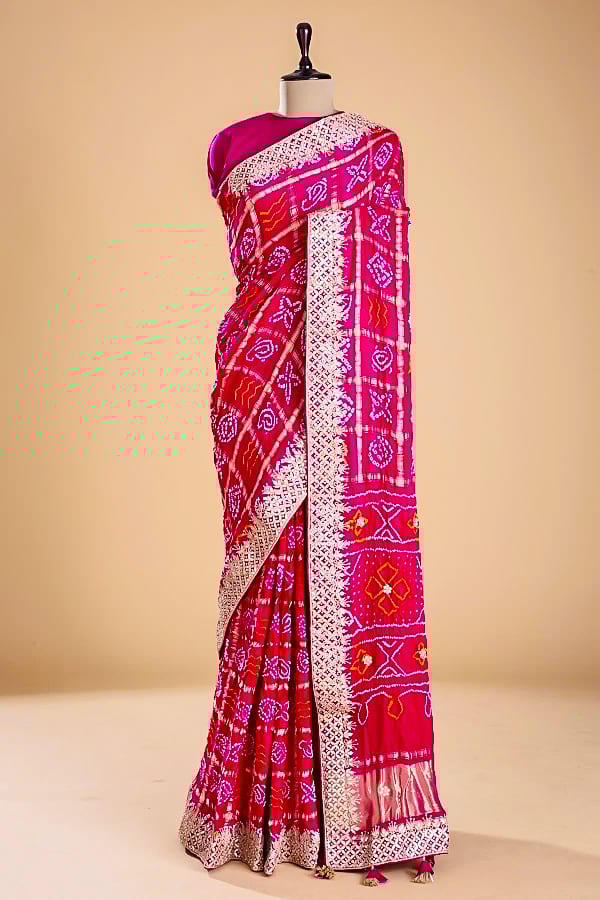
Bhuj Bandhani sarees from Kutch, Gujarat, use a tie-dye technique to create intricate ‘bandhej’ patterns. The process involves multiple rounds of tying and dyeing to produce an array of bright colours and beautiful designs.
Block Printing (Bagru)
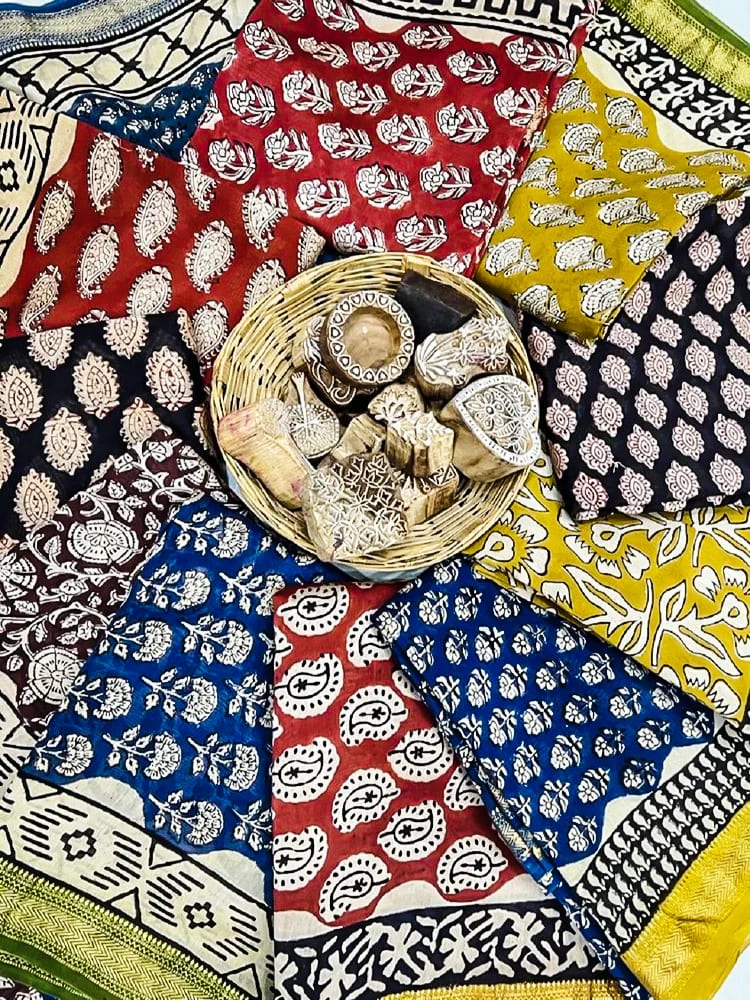
Bagru block printing from Rajasthan is a traditional method that uses hand-carved wooden blocks to print designs onto fabric. Natural dyes are used to create intricate patterns, often featuring earthy tones and floral motifs. Bagru block printed sarees are known for their offbeat charm.
Bhujodi Weave
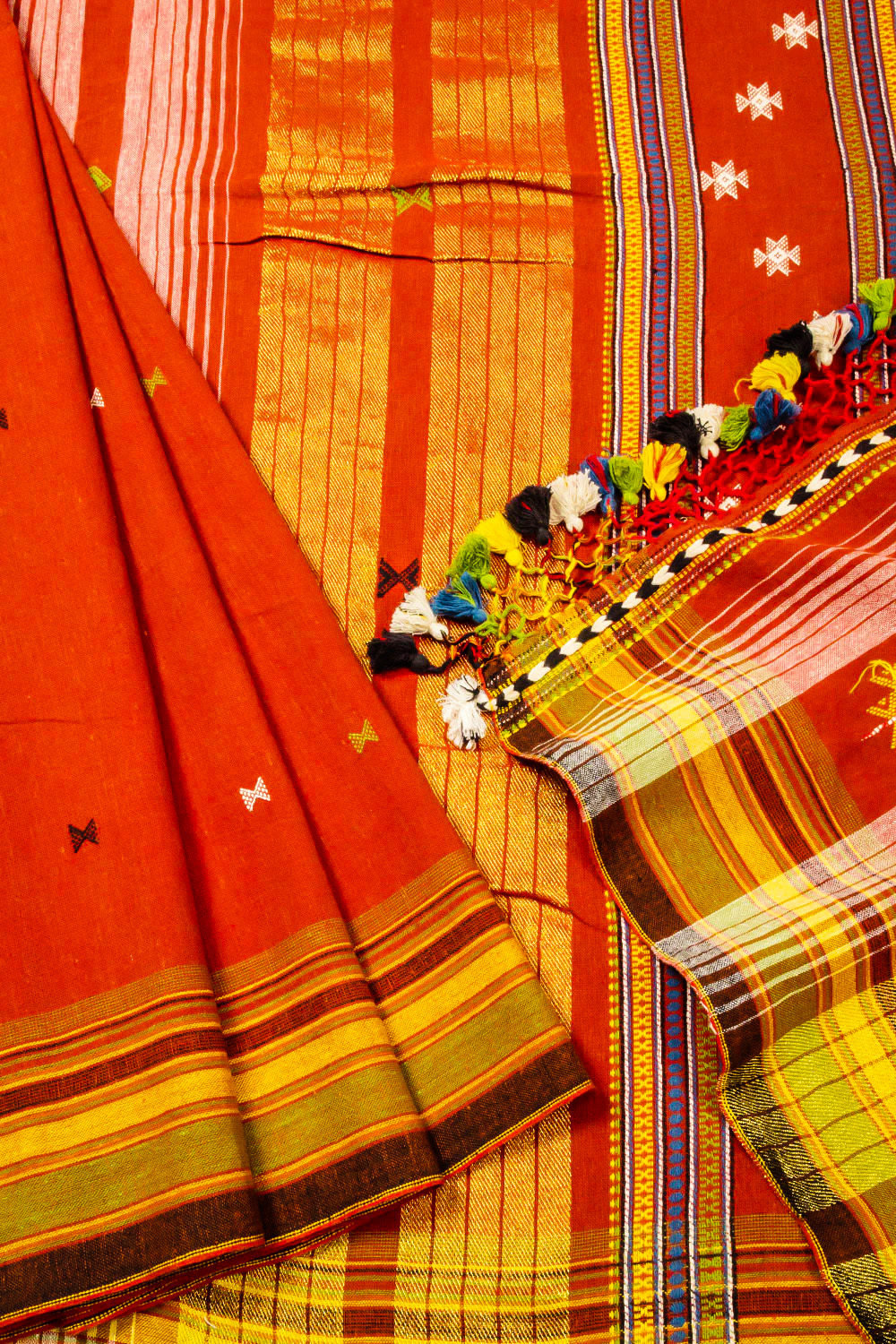
Bhujodi has its roots in Kutch, Gujarat. Known for their intricate weaving patterns, these sarees are ideal for casual wear as well as traditional gatherings, They are typically woven with cotton or silk threads and usually feature geometric and floral designs.
Ajrakh
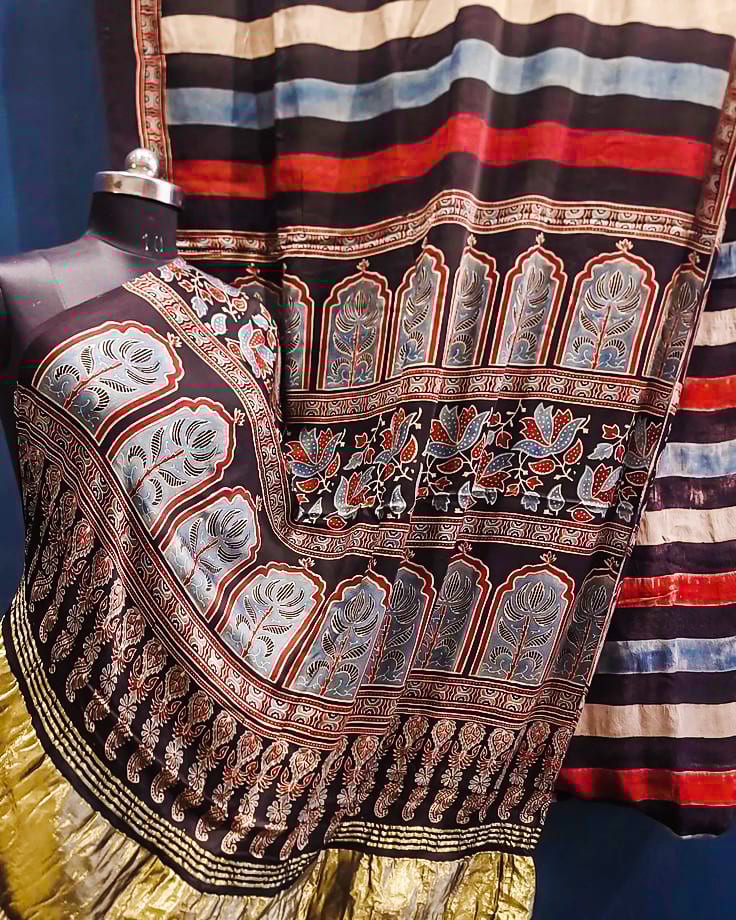
Originating from Kutch in Gujarat, Ajrakh is a resist-dyeing technique that creates rich, deep colors and symmetrical patterns on fabric. The process of dyeing and printing results in the creation of colourful patterns - a fine mix of both traditional and modern themes. These sarees usually offer a blend of artistry and functionality.
A symbol of artistic brilliance and everlasting grace, every saree tells a story of culture and artistry. On International Saree Day, the Adani Foundation celebrates the timelessness of this iconic garment, which embodies the essence of fine Indian craftsmanship. Through Sathwaro, it is privileged to support the talented artisans who ardently practice these meticulous crafts forms. Sathwaro remains committed to weaving a legacy of cultural pride – one drape at a time.