


from the chairman
Words Of Wisdom
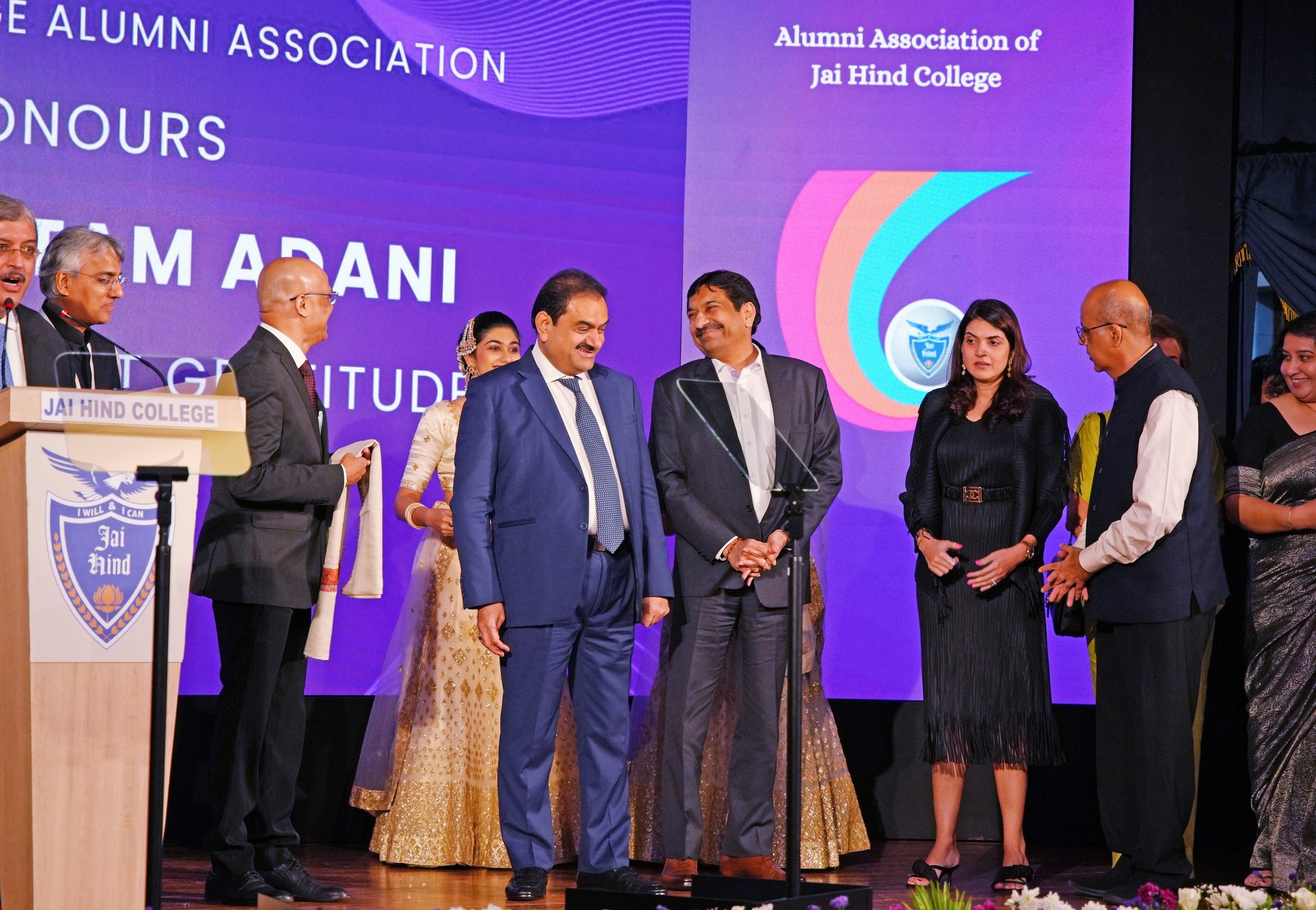
Here are some key episodes from Adani Group Chairman Gautam Adani’s journey, which he beautifully presented before the students and faculty members of Jai Hind College, Mumbai, on Teacher’s Day (5 Sep), reminding us once again that perseverance and persistence are key to success.
The entrepreneurial journey of Gautam Adani, Chairman of the Adani Group, is an inspiring tale of resilience, vision, and unwavering determination. From his humble beginnings as a young dreamer navigating the bustling streets of Mumbai to becoming the leader of one of India’s largest conglomerates, his life embodies the spirit of defying limitations. His story is a testament to the transformative power of overcoming challenges and turning dreams into reality. In this piece, we will delve into the invaluable life lessons derived from his experiences and the extraordinary milestones that have shaped his journey. These insights were generously shared with students and faculty members at Jai Hind College, Mumbai on Teacher’s Day (5 Sep), offering a glimpse into the remarkable story of his success.
Early Inspirations
Gautam Adani was just 16 when he left his hometown, Ahmedabad for Mumbai, driven by an inner voice that urged him to seek a future beyond the familiar. Mumbai became more than just a place to learn; it was a training ground where he first immersed himself in the world of trading by dealing in diamonds. This early exposure taught him the fundamental lessons of commerce: the significance of swift decision-making and the importance of being adaptable in a fast-paced environment. It was here that he learnt that the essence of entrepreneurship lies in the ability to evaluate choices quickly and act decisively.
Embracing Challenges
His early venture into the PVC business marked his first real encounter with the limitations of the Indian business environment, particularly during a period characterised by stringent government controls and import restrictions. This experience could have been a deterrent, but instead, it became a catalyst for his future endeavors. He viewed these challenges not as obstacles but as essential lessons that would prepare him for the opportunities ahead.
In 1985, when India began to take its first steps toward economic liberalisation under Prime Minister Rajiv Gandhi, Adani recognised a golden opportunity. The easing of import policies meant new possibilities for businesses, especially for someone like him, who had firsthand experience in the struggles of small-scale industries. Despite lacking prior experience in trading, he established a trading organisation focused on importing polymers to support struggling small-scale industries. By the age of 23, this venture had begun to thrive, setting the stage for his future successes.
The Power of Vision
One of the defining features of his journey has been his ability to dream big. He often reflects on how Mumbai taught him the importance of thinking beyond one’s boundaries. His vision extended beyond immediate gains; he envisioned a transformative future for the sectors he was involved in.
In 1991, India faced a severe foreign exchange crisis that led to a paradigm shift in its economic policies. The reforms introduced by then Prime Minister Narasimha Rao and Finance Minister Dr Manmohan Singh marked a new era for Indian businesses. Adani understood that the liberalisation of the economy was not merely a moment of change but a golden opportunity for those willing to innovate and adapt. He embraced this spirit of transformation and established a global trading house dealing in various sectors, including polymers, metals, textiles, and agricultural products. Within two years, his enterprise had emerged as the largest global trading house in India.
Resilience in Adversity
The 1991 liberalisation was a double-edged sword, opening new doors while also bringing uncertainties. While it opened opportunities, it also intensified competition. Many established businesses that failed to evolve began to stagnate. In contrast, he capitalised on the moment, understanding that resilience is not just about enduring hardships but also about the willingness to reinvent oneself in the face of adversity.
The establishment of Adani Enterprises marked a significant turning point. In 1994, when he took the company public, the IPO was a resounding success. However, this success was accompanied by the realisation that the trading business, by its nature, was volatile. He recognised that to build a sustainable enterprise, he needed to expand beyond trading. This foresight led him to diversify into various sectors, including energy, logistics, and infrastructure.
Commitment to Sustainability and Social Responsibility
His commitment extends beyond business success; it includes a strong focus on sustainability and social responsibility. His projects are not merely about financial gain but also about creating lasting positive impacts on communities and the environment.
For instance, the Khavda, one of the world’s most inhospitable desserts, is being developed into a massive clean energy installation capable of generating thousands of megawatts of power. This initiative not only addresses energy needs but also serves as a symbol of national pride, demonstrating what can be achieved when boundaries are challenged.
Similarly, the ambitious redevelopment of Dharavi, the world’s largest slum, aims to create a sustainable living ecosystem for over a million residents. This project is about restoring dignity and hope, embodying the idea that when you dare to dream big and act with purpose, meaningful change is possible.
Inspiring the Next Generation
His journey underscores the importance of empowering the younger generation. He believes that the future of India lies in its youth, who will drive economic growth and innovation. With a median age of just 29, India is poised to become the world’s largest consumer society by 2050. His faith in the potential of young minds is a clarion call for the entire nation to invest in education and skills development.
His vision aligns with the belief that a literate population free from poverty can drive sustainable growth. Adani sees the current period as an incredible opportunity for India to realise its aspirations of becoming a superpower, leveraging its demographic dividend and technological advancements.
Inspiring Quotes from Gautam Adani and Their Key Lessons
10
The future belongs to those who recognise today’s limits as tomorrow’s starting points.”
Lesson:
Embrace challenges as opportunities for growth.
In every crisis lies the potential for a reinvention.”
Lesson:
Resilience is essential; setbacks can lead to new opportunities.
You must dare to dream beyond your boundaries.”
Lesson:
Vision is crucial; aim high and think big.
Mumbai taught me to think big.”
Lesson:
Surround yourself with environment that inspire ambition.
Success is about having the courage to act.”
Lesson:
Take decisive actions; hesitation can lead to missed opportunities.
Commitment to values should guide all business decisions.”
Lesson:
Ethical practices are fundamental to sustainable success.
The bigger your ambitions, the bigger the boundaries you break.”
Lesson:
High aspirations can lead to significant achievements.
We must empower our youth for a prosperous future.”
Lesson:
Investing in the next generation is key for long-term success.
Transform challenges into opportunities.”
Lesson:
A positive mindset can turn obstacles into pathways for growth.
What you dream, you create.”
Lesson:
Visualisation and determination are essential for making dreams a reality.