


Defence Diaries
Duty Beyond The Battlefield
Presenting stories of courage and continued service that reflect the enduring spirit of nation-building at Adani Defence and Aerospace.
Sneha TS
As India celebrates its 79th Independence Day, a-connect pays tribute to the heroes whose service extends far beyond the battlefield. Through exclusive conversations with Lieutenant General Santosh Kumar Upadhya and Captain (IN) Anand Revi, we delve into the journeys of two distinguished veterans whose transition from defence to leadership roles at Adani Defence and Aerospace embodies the true spirit of nation-building. Their stories are not just about past glory, but about purpose renewed—about how values forged in service continue to shape India’s defence future.
Join us as we honour the legacy of uniformed service and celebrate the enduring patriotism that continues to inspire, empower and protect our nation.
Lieutenant General Santosh Kumar Upadhya
“The One Who Made It”
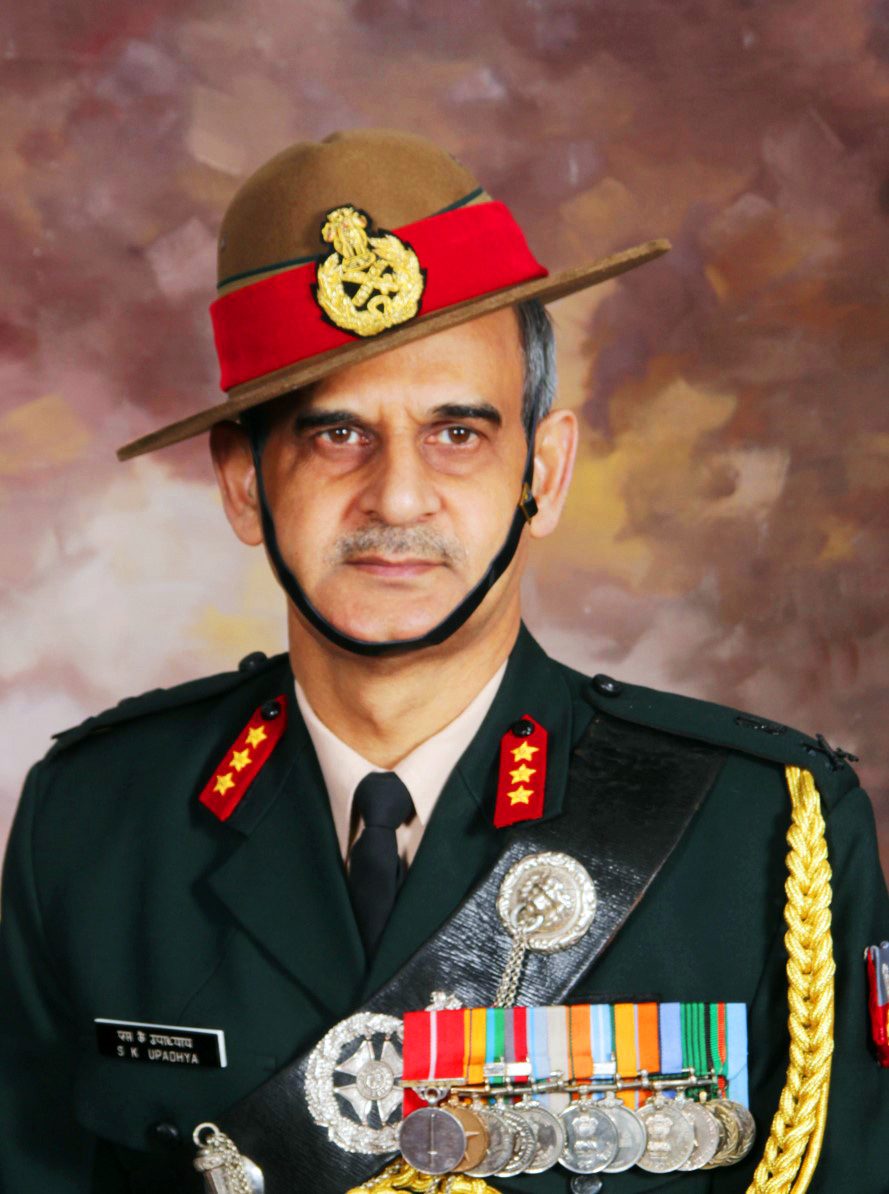
Lieutenant General Santosh Kumar Upadhya, PVSM, AVSM, SM, VSM has had a distinguished career in the Indian Army, marked by strong leadership and dedicated service. His ascent to the position of the 47th Commandant of the Indian Military Academy (IMA) in 2016 reflects his strategic acumen as well as his commitment to training the next generation of military officers.
An alumnus of the National Defence Academy (NDA) and the Indian Military Academy (IMA), Lieutenant General Upadhya followed the typical progression into the Indian Army at the time. Reflecting on his early days, he says, “The standard path in those times was clear, NDA was equivalent to completing college, followed by a year at IMA, Dehradun and then commissioning as a Second Lieutenant.” This process provided a solid academic foundation while also building the discipline and skills necessary for a military career.
Before joining the NDA, his journey began at Bangalore Military School, now known as Rashtriya Military School. He recalls those years as a combination of strict academics, vigorous sports, and other activities that kept him engaged. “It wasn’t just about lessons in the classroom; the daily routines of physical challenges quietly shaped my mindset and gave me an early glimpse of the path that lay ahead in the armed forces,” he says.
He reflects on how, even then, joining the armed forces was seen as a significant accomplishment. “Back then, if someone got into defence, it was considered a matter of real distinction. People would often say, 'He’s made it'." That kind of recognition, he adds, left a lasting impression and gave early meaning to the idea of wearing the uniform.
Lessons Marching In
Commissioned in 1981 into the 13th Battalion of the Garhwal Rifles, Lieutenant General Upadhya’s military journey was shaped by the rigours of intense training that tested his endurance and fundamentally reshaped his understanding of his own limits. “Training in the Army makes you realise that you are capable of far more than you initially believe,” he reflects. “For instance, when you’ve grown accustomed to staying awake for 36 hours at a stretch, being told to remain awake for 24 hours no longer feels like a hardship.” While the body adapts, it is the mind that is conditioned to transcend previously accepted boundaries.
Among the many moments that shaped his leadership philosophy, one incident during a film screening remains deeply etched in his memory. “Film screenings were organised for us on weekends as a brief respite from training,” he recalls. “During one such screening, around Diwali, a sudden cracking sound disrupted the cinema hall. Momentarily distracted, I failed to register the sound clearly and instinctively pointed in the wrong direction when questioned.”
The incident led to a tense inquiry, with a senior Air Marshal interpreting his response as an attempt to mislead. In the armed forces, even the perception of dishonesty carries severe consequences, including the potential loss of up to six months of service.
At that critical moment his mentor, a Captain, significantly junior in both rank and years of service to the Commandant, stood up in his defence. The Captain explained that it was not an act of deceit but a genuine lapse in attention. Drawing from field training, he recounted how once a group of jawans in response to the first round of simulated fire during an ambush exercise rushed in a diametrically opposite direction — not from negligence, but simply because of the sudden, unexpected sound not aligned to their focus at that moment. He emphasised that such lapses must be met not with punishment, but with learning and reinforcement.
“You have to stand by your subordinates when their mistakes are genuine,” the Captain stated firmly. “There mustn’t be punishment, but learning.”
This episode left a lasting imprint on Lieutenant General Upadhya. It taught him that leadership is not merely about enforcing rules—it demands discernment, fairness, and moral courage.
On The Frontlines of the History
Spanning several decades, his military career unfolded through some of the most defining moments in India’s security history. His journey began with an early posting to Jammu and Kashmir, at a time when the region was yet to descend into the turmoil that erupted in 1989. Of this period, he simply states, “It was before J&K went into the state it did later.”
As tensions across the nation escalated, he was subsequently posted to Punjab during Operation Blue Star. “We were in Punjab when the situation was escalating,” he recalls, reflecting on a time fraught with uncertainty and conflict.
His service then took him to the North-East, where Mizoram and Manipur were marked by active insurgencies. It was here, during the mid-1980s, that he encountered the realities of insurgency firsthand, navigating the complexities and dangers inherent in counter-insurgency operations.
Thereafter, his experience broadened further when he was deployed as part of the Indian Peace Keeping Force (IPKF) to Sri Lanka, under the Indo–Sri Lanka Accord. “We were deployed there for about a year and a half,” he recounts, speaking of the challenging mission to enforce peace beyond India’s borders.
Upon his return, the situation in Jammu and Kashmir had deteriorated considerably. “When we came back, the situation in J&K had worsened significantly and one repeatedly went back to J&K on multiple assignments,” he notes, marking a turbulent chapter in his service.
Later in his career, he bore witness to significant border tensions with China. He was present in Leh-Ladakh during the Doklam standoff of 2017, a period he describes as “a tense period along the border.”
The General also served with the United Nations for one year in Rwanda and two years in Cote d’Ivoire gaining valuable insights into the dynamics of peacekeeping and functioning of international agencies.
Dawn of the Indigenous Era
India’s shift toward defence self-reliance gained strategic momentum with the launch of the Make in India initiative in 2014. Lieutenant General Upadhya, at this juncture found himself at the center of Army’s procurement system which gave him a ringside view of the initial efforts and transition away from the country’s long-standing reliance on foreign OEMs resulting in critical gaps in logistics, ammunition availability and systems sustainment.
He describes it as “a necessary course correction after decades of externally dependent procurements.” “Aatmanirbharta in defence is not merely important; it is a matter of survival,” he states, pointing to historical instances where nations withheld weapons, spares, or technical support, effectively compromising nation’s strategic autonomy at critical junctures. He views the 2014 and subsequent policy shift not just as an economic reform, but as a national security imperative, one that must culminate in the full-spectrum indigenous design, development, and deployment of advanced defence capabilities.
Armour for the Brave
After retirement from the Army the General joined Adani Defence & Aerospace as a senior advisor and drawing on his operational experience has been associated with its Make in India drive.
Talking of his experience in the corporate world he points out that Adani Defence and Aerospace joined the country’s Atmanirbharta transformation dynamic guided by the Chairman’s vision & affirmation, “Our primary mission is service to the nation, not profit.”
The remarkable progress achieved, he stresses, is due to a deliberate, multi-pronged strategy. Explaining this approach, Lt Gen Upadhya states, “Bringing in the world’s best technologies, machinery and, training personnel abroad in specialised military hardware production skills have been crucial steps in the rapid exponential capability growth at Adani Defence. We don’t just assemble; we innovate.” This innovation-driven approach is further supported by partnerships with premier technical institutes like the IITs and nurturing indigenous start-ups in advanced fields such as drones and missile technologies.
He also added that by developing an integrated defence manufacturing ecosystem—including Tier-1 and Tier-2 suppliers, in-house R&D, and strategic partnerships—Adani Defence is enabling India to meet its domestic security requirements and position itself as a credible exporter.
Speaking from a perspective forged on the frontlines, Lieutenant General Upadhya emphasises the scale of the company’s manufacturing capabilities: “We operate a 500-acre ammunition manufacturing facility in Kanpur that produces over 300 million rounds annually," he shares. This significantly reduces India’s reliance on imported munitions. Likewise, he highlights the comprehensive firearms production line in Gwalior: “Our end-to-end production line manufactures everything from pistols, carbines and rifles to machine guns, sniper systems, platforms that were once sourced overseas.”
Pointing out that the company’s mission transcends commercial interests, Lieutenant General Upadhya recalls this commitment during Operation Sindoor: “….. when time-critical deliveries of essential equipment were pro-actively offered & prioritised ahead of routine formalities.” This exemplifies the company’s resolute commitment of giving precedence to national exigencies and the needs of soldiers over business considerations.
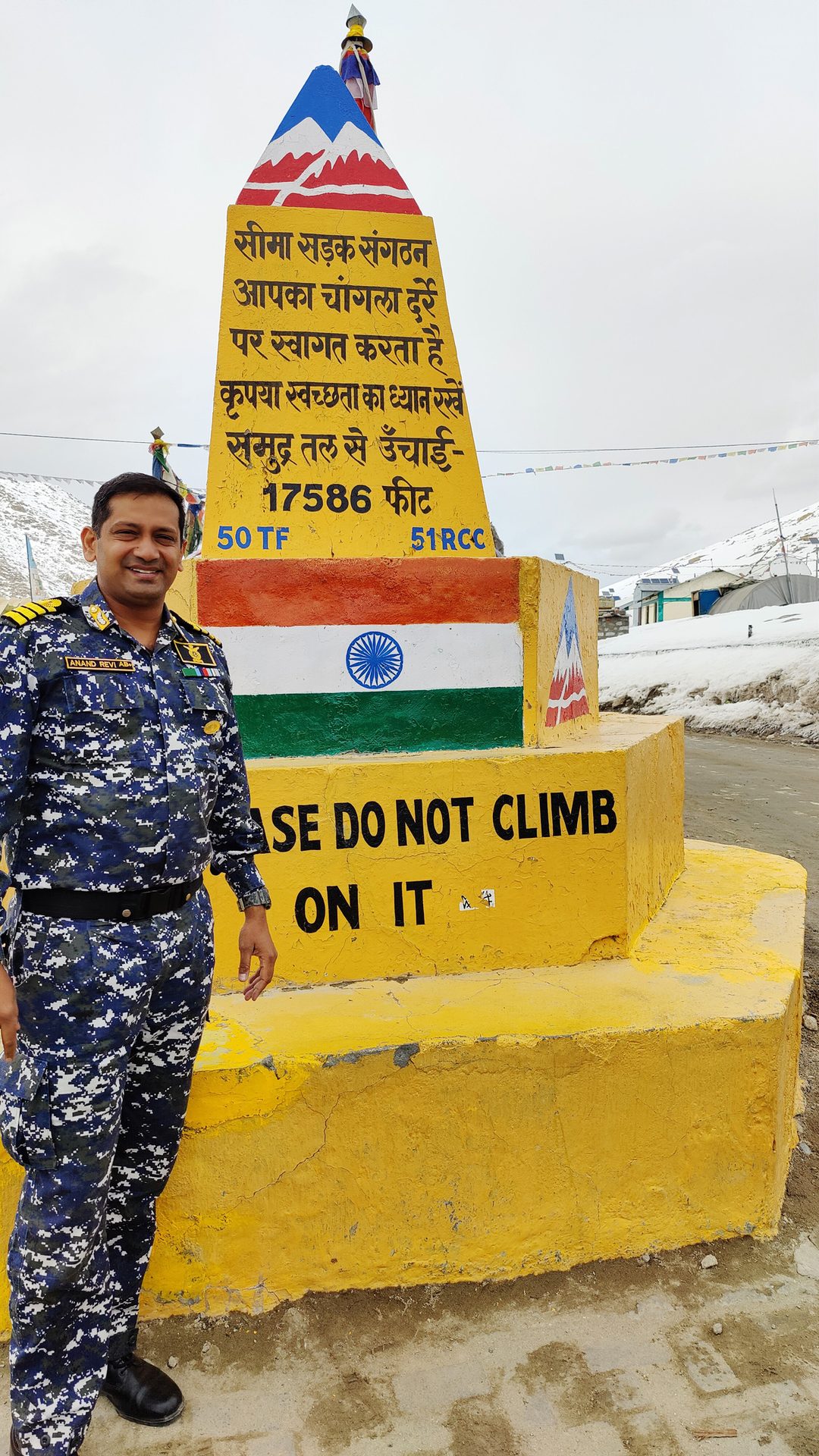
Captain Anand Revi
‘Sea-is’ The Calling
The impetus behind Captain Anand Revi's decision to join the Indian Navy did not emerge suddenly; it was a strength that gathered over the years. Reflecting on his inspiration, he shares, “My inspiration to join the Navy came from home. My father was an Air Force Officer, and his life in uniform left a deep impression on me.”
Speaking about his early clarity, he says, “From a young age, I knew I wanted to serve.” He never considered any other career path, never prepared for alternate entrance exams or explored different streams. The call, he affirms, was clear.
That clarity, he explains, was fueled by something deeper than ambition. It was never about chasing applause or external rewards. As he puts it, “I was always drawn to adventure, and that spirit naturally led me to the life that the Services offered.”
The journey was never his alone. It was strengthened by friends who shared his dream of serving the nation. With warmth, he recalls, “I was also lucky to have childhood friends who shared the same passion. When I joined the Navy, they joined the Army and the Air Force. That sense of shared purpose and camaraderie made the journey even more special.”
For Captain it was far more than a professional decision, it was a commitment to a way of life. A life shaped by the values he holds closest: discipline, service and integrity. As he describes, “Choosing the Navy wasn’t just a career decision. It was a way of life.”
The Grind
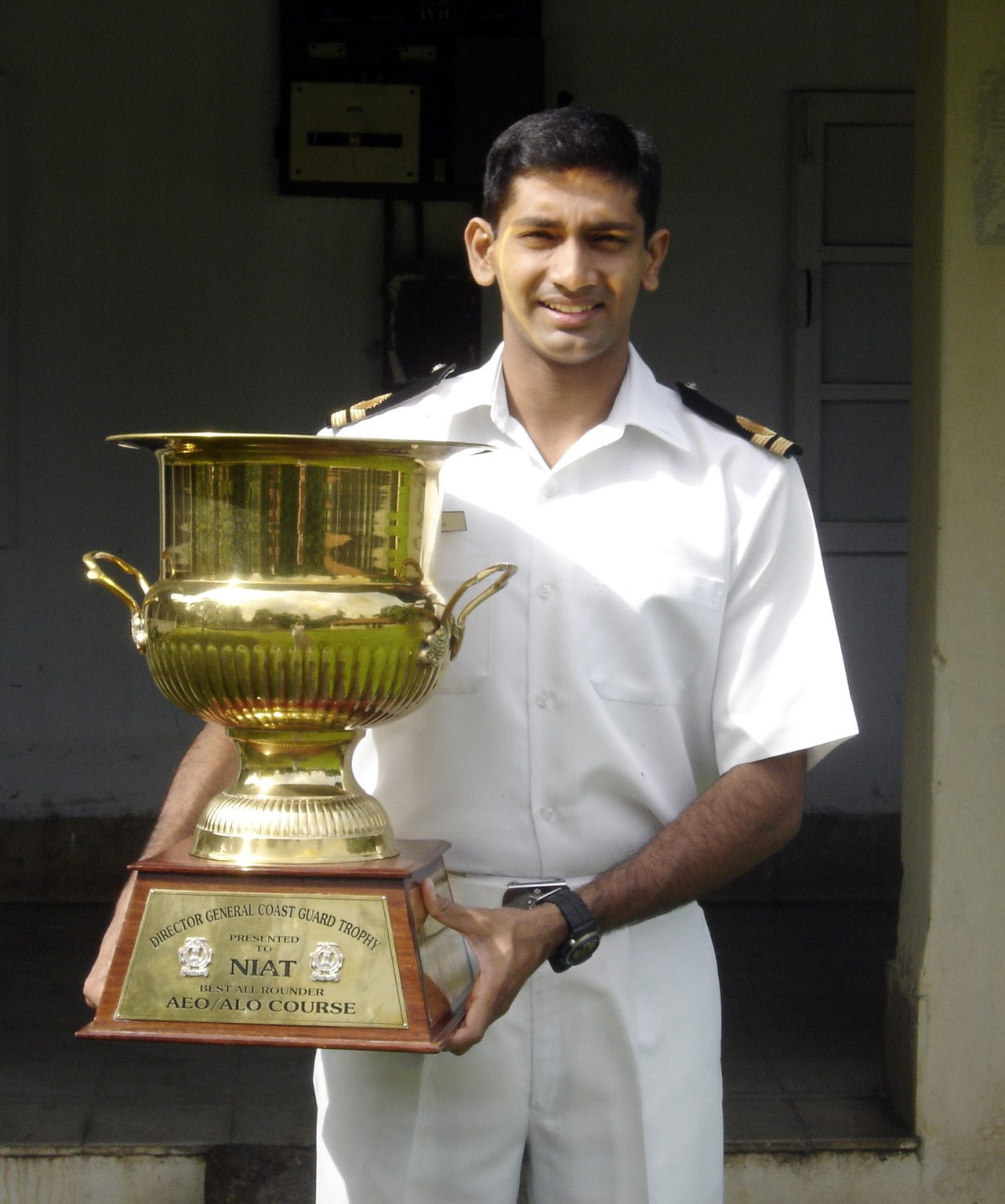
Captain recalls his training as a defining and deeply transformative chapter, an experience marked by relentless intensity, rigorous discipline and humility. It was never simply a test of physical stamina; rather, it was an exacting journey that instilled discipline and impressed upon him with the principle of placing the collective good above personal ambition. From the pre-dawn drills that tested endurance to the exacting academic sessions that sharpened the mind, every moment was designed to stretch limits and prepare officers for the gravity of high-stakes challenges.
“One of the most important lessons learned during training is resilience, the ability to stay focused and composed under pressure,” he shares with conviction. Leadership, he further reflects, was imparted less through instruction and more through example and experience. “Whether we are leading a team or supporting one, we understand the value of trust, responsibility and clear communication.”
Adaptability, too, was a cornerstone of his formation. “Situations change rapidly onboard the ships, and training teaches us to think on our feet and make decisions with limited information and resources.” Above all, this demanding preparation imbued him with a sense of duty and pride.
He emphasises that learning in the military is a commitment, “There is a misconception that once you join the military studies end. That is far from true. Whether at the outset of one’s career or decades into service, officers continually engage in rigorous training, mentorship, and professional development. You are always being groomed, always evolving.”
Steel in the Tempest
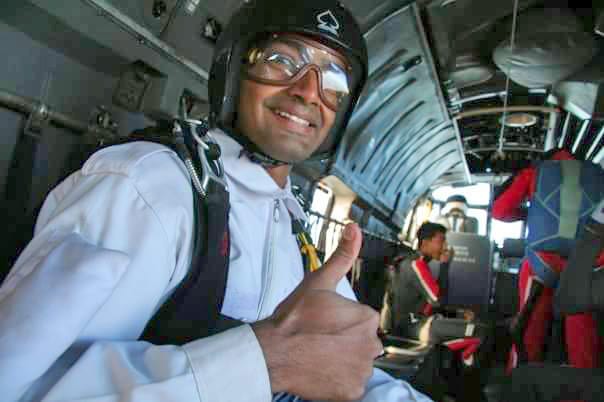
The remarkable naval journey has encompassed a wide range of demanding yet meaningful experiences. From navigating the decks of aircraft carriers and oil tankers to soaring with the Navy’s aerobatic team, from exploring shipwrecks beneath the ocean to skiing down snow-clad mountain slopes, his journey reflects adaptability.
Reflecting on these moments, he says, “Some memories stand out, some unforgettable, others deeply painful. I’ve had the privilege of serving with the best, operating from an aircraft carrier, an oil tanker, flying with the Navy’s aerobatic team, skydiving over Brazil, diving to explore a British shipwreck, and skiing down mountains.”
Yet, what remains most vivid are the humanitarian and disaster relief missions, where service transcended strategy to become a lifeline - “These go beyond strategy, they’re about saving lives in the most unpredictable, high-pressure situations.”
Among these experiences, his time aboard a ship nicknamed the ‘Cyclone Chasers’ holds a special place. Along India’s cyclone-prone East Coast, he tracked storms closely and responded swiftly to deliver aid immediately after a cyclone’s landfall. He recalls, “There are a lot of cyclones that originate in the Bay of Bengal and the East Coast. We would tail cyclones and rush into ports the moment they hit, to begin relief work. It was challenging yet deeply satisfying to be able to serve the people.”
He also remembers the tense period of the India-China standoff during the early days of the COVID-19 pandemic. Despite limited manpower and the uncertainty of the health crisis, he maintained focus and determination through long patrols on the high seas. He shares, “We were deployed with limited manpower, COVID uncertainty all around, and the enemy in sight. Yet, the crew’s resolve never wavered. We patrolled the high seas for weeks, driven by sheer willpower.”
Beyond these moments of challenge, representing India at joint exercises and skydiving championships brought great pride to him. As he notes, “The camaraderie, the learning, and the honour of wearing the uniform on a global stage, those are moments I’ll always carry with me.”
Arming Autonomy
Self-reliance in defence is essential for India’s future, significantly influencing the nation’s security framework, economic strength and position on the global stage. The Captain notes, “Relying on foreign suppliers for critical defence equipment introduces vulnerabilities, especially during conflicts or geopolitical tensions.”
Within this context, Adani Defence and Aerospace plays a crucial role in advancing India’s indigenous defence capabilities by leading innovation and precise manufacturing across a wide range of technologies, from sophisticated unmanned aerial vehicles and precision-guided missile systems to advanced ammunition and comprehensive aircraft maintenance, repair, and overhaul (MRO) services. The Captain emphasises, “Our strategic collaborations with DRDO and global defence leaders enable us to execute Technology Transfer (ToT) agreements, ensuring the localised development and sustainable production of advanced defence platforms within India.”
The drive toward Aatmanirbharta goes beyond policy, representing a strategic necessity that “It empowers India with faster, unhindered access to critical technologies, greater control over defence procurement, and a significant boost to indigenous industries and employment," he stresses.
In a world where threats evolve swiftly, having homegrown, cutting-edge defence solutions grants India the capability and confidence to respond effectively and independently. As the Captain concludes, “Adani Defence’s initiatives are pivotal in transforming this vision of a self-reliant India into a tangible, operational reality.”
Through the legends of these veterans, we see that service to the nation is not bound by time or title. It transforms, adapts and continues—with the same resolve.