


EMPOWERMENT
From Seeds To Enterprises
How Adani Cement is cultivating women-led change through Self-Help Groups (SHGs).
Priti Saldanha
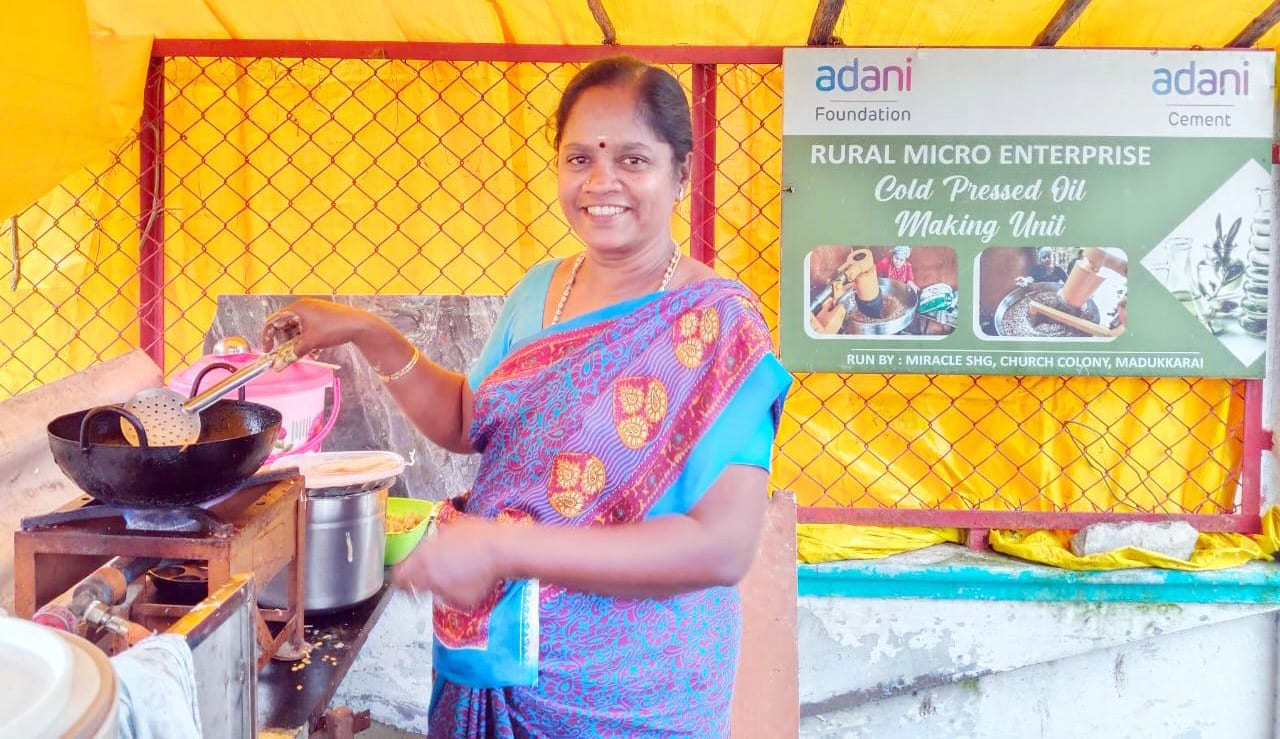
Across India’s heartland, a silent yet powerful transformation is underway—led by women, fuelled by community, and supported by Adani Cement. Through the efforts of Ambuja Cements’ CSR arm and the Adani Foundation at ACC sites, over 4,200 Self-Help Groups (SHGs) have been formed, engaging thousands of women in income-generating activities that are reshaping local economies and lives. These SHGs are more than just collectives—they are incubators of confidence, leadership, and economic resilience. From running spice production units in the arid stretches of Rajasthan to operating soil testing labs in Madhya Pradesh, women are stepping into roles once out of reach and building businesses that serve both their families and their communities.
At the core of this movement is a simple but powerful model: equip women with skills, support them with structure, and trust them to lead. And lead they have—transforming villages, supporting livelihoods, and showing that when women thrive, entire communities rise with them. What started as grassroots support has grown into a nationwide network of empowerment—one woman, one village at a time.
Ambuja Cements: Empowering Women through its CSR Arm
Ambuja Cements’ CSR arm has been instrumental in forming and nurturing over 3,258 SHGs, directly benefiting 7,456 women across multiple states. These SHGs are not just savings collectives—they are platforms for entrepreneurship, leadership, and transformation.
Mundwa, Rajasthan – From Volunteer to Entrepreneur
In the arid belt of Marwar Mundwa, Ambuja Cements has been driving a multi-pronged transformation through its CSR arm. One standout story is that of Saroj, a housewife who joined the Radha Krishna SHG and borrowed INR 50,000 to start a spice production unit. With training and support from Ambuja’s CSR team, she expanded her venture to include goat farming, now earning INR 15,000–INR 18,000 monthly.
Punjab – Preserving Heritage, Creating Livelihoods
In rural Punjab, Ambuja Cements’ CSR arm has revived traditional crafts like phulkari embroidery, charpai weaving, panjhi dhurrie, and basket-making, empowering 90 women artisans. These women, once confined to household roles, now produce high-quality handcrafted items that blend tradition with modern market appeal. A shining example is Karamjeet Kaur, who started with the Guru Tegh Bahadur SHG and went on to lead Virasat-E-Malwa, a collective that supports women artisans across Bathinda. Despite financial challenges and societal pressures, Karamjeet built a boutique business and now mentors others. Today, Virasat’s members earn sustainable incomes through exhibitions and online platforms, gaining financial control and renewed self-worth.
Bhatapara, Chhattisgarh – Validated Impact
A study by LEAD, Krea University (IFMR) confirmed the transformative impact of Ambuja’s SHG initiatives in Bhatapara. Women reported increased savings, improved household decision-making, and greater confidence. The study highlighted how SHGs have become a vehicle for long-term economic resilience and social mobility.
Puja SHG, Chhattisgarh – From Scavenging to Sustainability
The Dewar women of the Puja SHG in Chhattisgarh, once marginalized and engaged in scavenging, have undergone a remarkable transformation. Trained in plastic waste collection and supported with consistent handholding by Ambuja Cements, they now manage a structured waste collection enterprise. Their efforts were recently recognized with a 300-ton plastic waste supply order from Ambuja Cements. Their children now attend school, and the community’s perception has shifted from prejudice to pride.
Adani Foundation at ACC sites: Driving Grassroots Change
At ACC sites, CSR is led by the Adani Foundation. The Foundation’s SHG-led initiatives are creating sustainable livelihoods and fostering community resilience.
Kymore, Madhya Pradesh – Science Meets Soil
In Deori Majhgawan, 13 women from the Shakti Peeth SHG launched a rapid soil testing micro-enterprise using the AgroNxt Bhu-Parikshak device. This spectrometer-based tool tests eight soil parameters on-site, helping farmers make informed decisions. The initiative has evolved into a sustainable business, earning the group the Dr Manibhai Desai Gaurav Puraskar and a INR 20,000 prize, which they reinvested to expand services.
Salai Banwa, Uttar Pradesh – A Dhaba with a Dream
Bhagat Devi, a member of the Radhe SHG, used a INR 50,000 loan to open a Dhaba in Panari village. Her home-cooked meals are now a staple for local workers, and she plans to expand into a fruit and vegetable shop. Her story reflects how SHGs can unlock entrepreneurial potential in rural women.
Chilhati, Chhattisgarh – Cultivating New Futures
At the Chilhati site, 60 women from 25 SHGs were trained in mushroom cultivation and non-farm businesses like broom-making, candle-making and incense stick production. Exposure visits to Gatora village and regular leadership training have helped these women build viable enterprises. The initiative has enhanced their financial literacy, record-keeping, and confidence to explore new income streams.
Gudur, Uttar Pradesh – From Margins to Markets
In Gudur Gram Panchayat, 12 SHGs were formed to address deep-rooted poverty and lack of access to services. Sundra, a 54-year-old member, received INR 1.5 lakh through her SHG under the NRLM scheme to invest in farming equipment. She now earns INR 15,000 monthly by offering ploughing and sowing services to local farmers, becoming a role model for rural entrepreneurship.
Tikaria, Uttar Pradesh – RO Water Plant for Community Health
Garima Tiwari, a member of the LAXHMI SHG, established a home-based RO water plant in Gouriganj with INR 60,000 in support from the Adani Foundation, plus loans totaling INR 5.5 lakh. Her plant now supplies clean drinking water to local markets and earns her INR 19,000 monthly. This initiative not only improved public health but also demonstrated how SHGs can leverage government schemes and private support for sustainable ventures
The Broader Impact of SHGs at Adani Cement
-
4,210+ SHGs formed across Ambuja Cements and ACC locations.
-
17,255+ women engaged in income-generating activities.
-
Validated by independent studies (e.g., LEAD, Krea University) for measurable impact on income, savings, and social status.
-
Diverse enterprises launched: from spice units and dhabas to soil testing labs and handicraft collectives.
-
Increased access to finance through joint liability groups and partnerships with NABARD and NRLM.
-
Enhanced community leadership through federations, exposure visits, and continuous training.
*(All the numbers mentioned above are from FY 2024-25)
Together, under the Adani Cement umbrella— Ambuja Cements and ACC are building a resilient ecosystem where women are not just beneficiaries but leaders of change. Whether through Ambuja’s CSR arm or the Adani Foundation at ACC sites, the focus remains clear: empower women, strengthen communities, and foster sustainable livelihoods. This approach reflects Adani Cement’s belief that true progress is inclusive—and when women rise, entire communities thrive.