


impact
Crafting Dignity
In Netrang’s tribal belts, the Adani Group’s CSR arm is empowering the Kotwalia community—one of India’s most marginalised—through focused efforts in education, livelihoods and dignity restoration.
Joydeep Sen Gupta
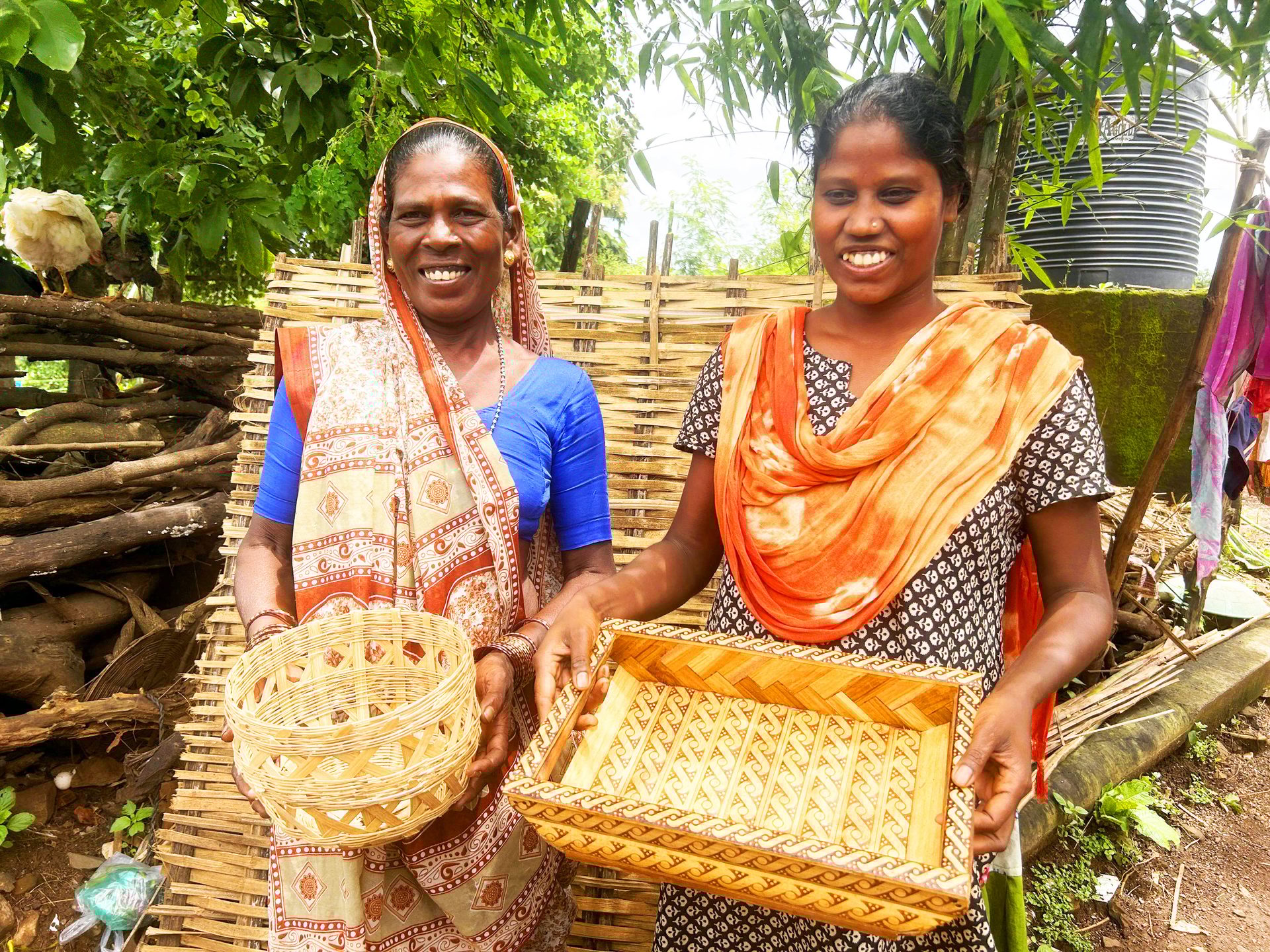
In the quiet, leafy interiors of South Gujarat’s Netrang region, the Kotwalia community—master bamboo artisans and one of India’s Particularly Vulnerable Tribal Groups (PVTGs)—has spent generations crafting exquisite handiwork, only to live lives of obscurity and hardship. Isolated from opportunity and overlooked by the mainstream, their skills brought little more than survival.
But change began to take root when the Adani Foundation stepped in—not with handouts, but with a deep commitment to inclusive, community-driven transformation. Their model was clear: development with dignity. By focusing on identity restoration, self-reliance, and grassroots empowerment, the Foundation worked hand-in-hand with the Kotwalias to reignite pride in their craft.
Today, with access to tools, training, and markets, many from the community are weaving a new story—where heritage meets opportunity, and where dignity is no longer a dream, but a way of life.
A Voice Found: Jasodaben’s Journey
The story of Jasodaben Kotwalia—32 years old, mother of two, and now a leader of the Anandi Sakhi Mandal—captures the very soul of this transformation.
Growing up in a remote tribal village, she never imagined a life beyond her home. She had studied only till Std 9 and like many women around her, inherited the intricate art of bamboo weaving without any real recognition or reward. The bamboo craft, though exquisite, was seen as merely utilitarian—good enough to serve household needs or be sold to middlemen at low rates.
Then came a turning point.
“When the Adani Foundation came to our village, they looked at us differently. They saw value in what we did,” she says. That recognition became the seed of confidence. With steady guidance, Jasodaben and others in her village began receiving training to upgrade their skills—learning contemporary designs, quality finishing and better product-market fit.
Restoring Dignity Through Livelihood
Beyond just honing skills, the social welfare and development arm of the Adani Group equipped artisans like Jasodaben with machinery that made their work easier and more efficient. Manual fatigue was reduced, productivity increased, and orders became larger and more ambitious. Crucially, the Foundation also ensured that artisans were no longer at the mercy of exploitative middlemen.
With financial literacy training and marketing support, they began selling directly to customers at exhibitions and even government outlets like the Forest Department’s Rural Mall in Vishdaliya. Artisan identity cards gave them formal recognition—opening doors to schemes, subsidies, and visibility that had always eluded them.
“Earlier, we worked hard while someone else earned the profit. Now, we know the worth of our hands and our craft,” Jasodaben says with quiet pride.
Today, she leads a women’s collective that has grown into a self-sustaining force—travelling, marketing, and inspiring her peers. From invisible homemaker to artisan-entrepreneur, she is a living proof that empowered women can transform families, communities, and future in equal measures.
Education: Building Bridges to a Better Tomorrow
While livelihood interventions created immediate economic relief, it was education that laid the foundation for long-term transformation. The Utthan Project was initiated to ensure that children of the Kotwalia community—many of whom were first-generation learners—could access quality education.
Jasodaben’s children now study at Kevadi Prathmik Shala, a local school supported by the social welfare and development arm of the Adani Group. “I couldn't study beyond Std 9. Watching my children go to school, dressed in uniform, carrying books, fills me with hope I never imagined,” she says.
Bridge Education Camps and Learning Centres have sprouted across several Kotwalia settlements, offering more than just books and blackboards. They nurture curiosity, confidence, and ambition—helping young minds dream beyond the bamboo forests.
Health and Hygiene: The Unseen Empowerment
Livelihood and education often falter in the absence of health. The Foundation understood this and ensured that every initiative was underpinned by access to healthcare. For artisans like Jasodaben, who depend on precision and vision, the eye check-up camps were a lifeline. Poor eyesight—often ignored in rural belts—was treated before it could impact livelihoods.
Medical camps, hygiene awareness drives, and sanitation kit distributions have helped reduce illness, improve well-being, and restore energy in the community. It’s these silent interventions—less glamorous, but deeply vital—that often make the real difference.
The Women Who Rose
Jasodaben’s journey is not an isolated success story—it represents a broader ripple across the Kotwalia landscape. The Foundation has supported the formation and growth of numerous Self-Help Groups (SHGs), placing women at the heart of development. These SHGs offer micro-loans, business training, and peer support—creating a fabric of resilience.
Many of these women had never stepped out of their homes. Today, they are earning, budgeting, saving, and even mentoring others. The SHGs are now nurturing a generation of women who speak up, step out, and shape their own futures.
Crafting a Future, Together
The transformation of the community is still in motion, but its direction is clear. From passive beneficiaries to active stakeholders, the community is now leading its own development—with the Foundation walking alongside, not ahead.
What makes the intervention stand out is its deep respect for traditional wisdom and cultural continuity. Instead of replacing bamboo craft with new trades, it modernised the skill, dignified the labor, and restored identity. Instead of imposing systems, it co-created solutions.
In Netrang, the Kotwalias are no longer fading into the background. They are being seen, heard, and celebrated—for who they are and what they’ve always had within them.
And Jasodaben? She’s not just a bamboo artisan anymore. She’s a teacher, a leader, and a torchbearer—proving that when women are given a chance, they don’t just lift themselves. They carry entire communities with them.