


TRANSFORMATION
Lighting Up Lives
With the third film in the Hum Karke Dikhate Hain series, Adani Group’s Story of Suraj captures how solar power is transforming lives—quietly, powerfully and permanently.
Juhi Chakraborty
In a quiet town once accustomed to blackouts and stillness after sunset, the light never fades now. Fields shimmer with healthy crops, classrooms hum with learning, and hospitals pulse with new life. The town—fictional yet achingly familiar—is the heart of Story of Suraj, the latest film in the Adani Group’s Hum Karke Dikhate Hain series, and a vivid portrayal of how renewable energy is rewriting rural India’s future.
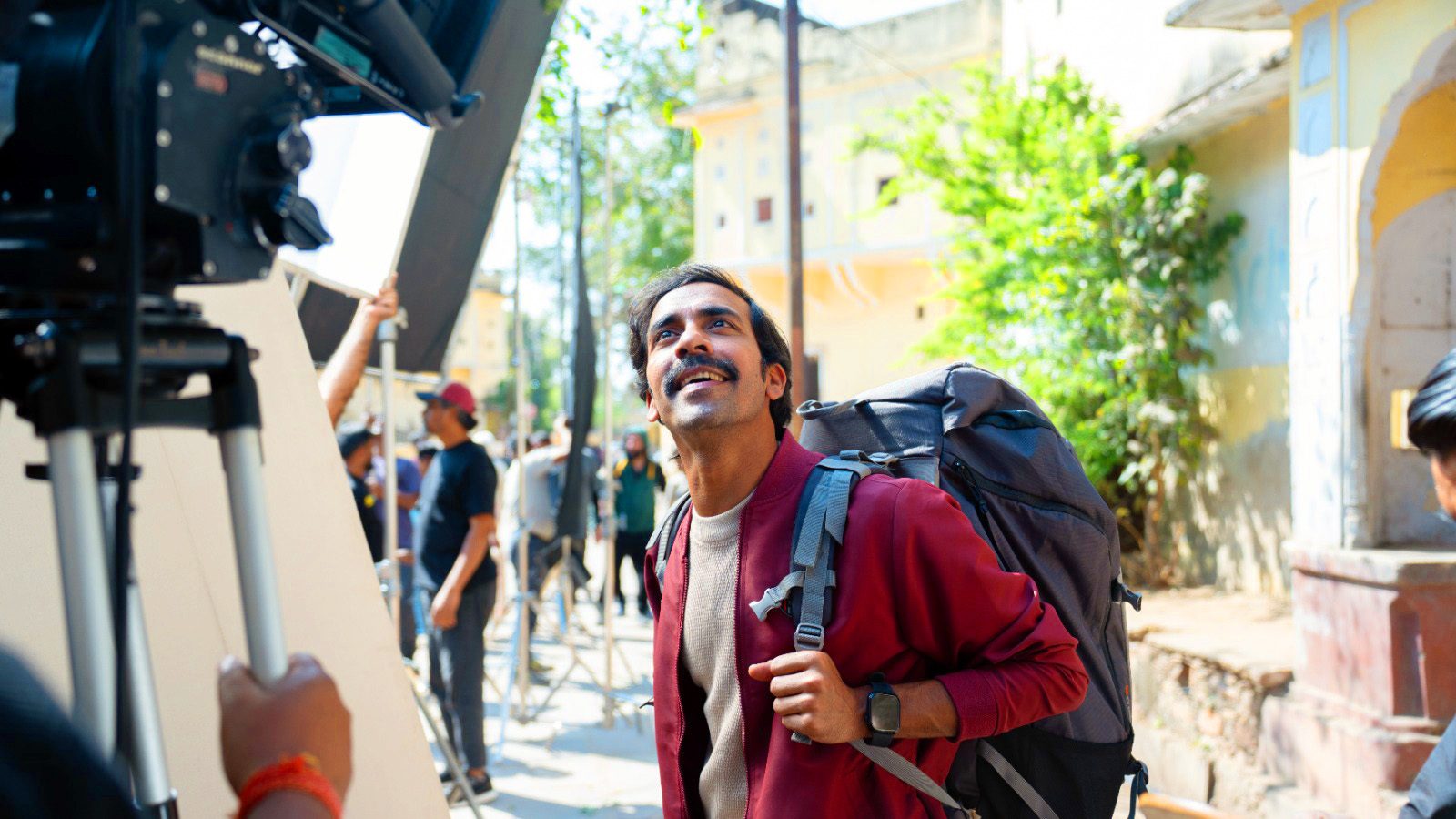
This third installment, titled Story of Suraj, isn’t just a film. It’s a reflection of a broader truth—how access to clean, reliable energy can reignite a community’s momentum and spirit. Directed by filmmaker Amit Sharma, behind films like Badhaai Ho and Maidaan and released as part of the Group’s continuing commitment to sustainable infrastructure, the film takes viewers on a deeply human journey through the eyes of Rakesh, a young man returning to his village after years away, only to find it utterly transformed.
From the first few frames, it’s evident that this isn’t a corporate showcase—it’s a celebration of possibility. The narrative doesn’t focus on the technology, but on its impact. The difference solar energy has made is measured not in megawatts but in moments: a farmer irrigating his land late into the evening, a school where digital learning is now routine, a health center no longer at the mercy of power cuts.
Backed by the storytelling vision of the Hum Karke Dikhate Hain series, Story of Suraj takes forward the Adani Group’s belief that development must be inclusive, accessible, and deeply rooted in people’s lives. It reflects the Group’s expansive presence across energy, logistics, transport, and social upliftment—while highlighting the shift toward a clean energy future that leaves no one behind.
The film’s release also comes at a time when India is fast emerging as a global leader in renewable energy, and the Adani Group has been at the forefront of this movement. With large-scale investments in solar and wind power, and a vision that looks beyond infrastructure to impact, the Group is actively building an energy-secure India—one that powers progress, sustainably.
What makes Story of Suraj resonate is its warmth. It doesn’t preach change—it shows it. Through simple vignettes, it captures how clean energy unlocks dignity: children who can study at night, women who can work safely after sundown, small businesses thriving in a steady power supply.
For the Adani Group, the goal isn’t just to build the future—it’s to illuminate it. Story of Suraj is a cinematic tribute to that vision. It speaks not in numbers, but in lives uplifted. Not in noise, but in light.
And sometimes, that’s the most powerful story of all.
Framing the Vision: A Chat with Director Amit Sharma
Tell us about the conceptualisation of film?
The concept for this campaign originated from the brilliant minds at Ogilvy & Mather— Harshad Rajadhyaksha and Kainaz Karmakar. Piyush Pandey sir was deeply involved as always; his commitment to every Adani campaign is unwavering. From our first film, Pankha, to this latest one, the entire team—O&M and Chrome Pictures—was fully invested in shaping the story.
How did you bring the story to life?
What I was personally keen to portray was the transformative impact of Adani’s solar and green energy initiatives. It’s not just about electricity—it’s about how that electricity changes lives. Where once there were barren fields, now farms are flourishing. Where there was darkness, light now powers opportunities. In one village, an eye clinic has become a reality—something unimaginable before, all because of consistent access to electricity. My goal was to show the effect—how solar power uplifts an entire ecosystem. We city dwellers often take electricity for granted: hot water, air conditioning, internet—it’s all just there. But in villages where electricity is a luxury, its true value is deeply felt.
Tell us more about how the story unfolded on screen?
In the film, we follow a young man returning to his village after years away. When he left, electricity might have reached the area, but it was unreliable—maybe just a couple of hours a day. Now, he sees a transformed village: lush greenery, his Taai regaining her eyesight thanks to the eye clinic, a girl using the internet to build models. He’s amazed. “How did this happen?” he wonders. The answer is solar energy—brought in by Adani.
What I tried to capture most was the emotion—the surprise, the awe, the joy—on the face of someone witnessing this change. That, to me, is the true power of renewable energy: not just lighting homes, but lighting up lives.
Where was the film shot?
The film was shot in Rajasthan, primarily around Samod and the outskirts of Jaipur—but not within the city itself. Every location was quite remote and came with its own set of challenges, especially the extreme heat and the distance from where we were staying.
What made it more demanding—but also more rewarding—was that I wanted to capture a specific quality of light for each scene. So, the shoot was tightly time-bound to make the most of natural lighting.
To me, this wasn’t just a commercial—it was a story. A story that demanded the right light, the right landscape, and the right emotion to bring it to life.
What kind of impact do you believe initiatives like these by the Adani Group create?
More than the films themselves, what truly matters is the real impact on the ground. I truly believe Adani is working towards the larger goal of uplifting the country, and that intent reflects in the scale and scope of their initiatives. When films like these are released, they help tell that story. But the real power lies in pairing the film with facts—when a case study follows that says, this is the film we made, and these are the actual villages that have been impacted. That’s when the message becomes truly compelling. A film alone may inspire, but when it's backed by real data—how many villages were electrified, how many lives transformed—it builds trust. It makes people believe not just in the product, like solar power, or a simple fan, but in the intent behind it. It shows that the company is connected to the people, and to the future of this country.
Tell us about the music—it plays such a powerful role in the film.
The music for this film was composed by Bharat Menaria and Hitarth—the same talented duo who also scored Pankha. They are incredibly gifted, and I’ve truly enjoyed working with them. We had multiple sittings and long discussions to arrive at the final composition, because it wasn’t just about creating a soundtrack—it was about capturing the soul of the film.
There’s nostalgia, emotion and a deep sense of reality embedded in the story, and we needed
the music to reflect all of that. It had to feel authentic and heartfelt. Music, after all,
is the emotional heartbeat of a film. If it doesn’t land right, the entire impact can fall
flat. We knew that for a campaign like this, the music had to carry the weight of the
message—and Bharat and Hitarth absolutely delivered. Their work stayed with us long after
the edit was locked. It truly elevated the narrative. Filmmaking is deeply collaborative,
and this was no exception. Music directors, too, draw inspiration from what they see and
feel in the film. The visuals, the mood, the story—all of it feeds into the final
composition. And when you have the right lyrics, the right voice, and the right emotion,
everything comes together seamlessly to create something
unforgettable.
How was your overall experience working on this project?
These films are never easy—but if you choose to take them on, you have to commit fully and do them right. The scale of this project was massive. We were traveling with a crew of over 300 people, and because we were shooting in remote outskirts, finding nearby accommodation was a challenge. There was nothing close, so every day involved a three-hour round trip—an hour and a half to the location and back. Sleep was scarce, the conditions were tough, but the team’s spirit never wavered.
What people often see is just the final product—the performance, the music, the visuals—but behind all of that is a team working relentlessly. From production and logistics to the light boys and costume assistants—everyone played a role in bringing this story to life. A special mention to Rahul, our art director, who did a phenomenal job in crafting the look and feel of the film. In the end, this wasn’t just a shoot—it was a labour of love. And it was only possible because of the passion and dedication of the entire team.