


REWIND 2025
A Landmark Year Of Progress And Purpose
Let's take a look back at the achievements and milestones of the Adani Group in 2025, highlighting progress and impact.
Juhi Chakraborty & Sneha TS
2025 marked a year of significant progress for the Adani Group, as the organisation advanced its strategic priorities across energy, infrastructure and community impact. The year saw milestone partnerships in digital and data infrastructure, continued expansion of renewable energy capacity and record operational performance across ports, airports and logistics networks. Major recognitions—including global ESG honours—reinforced its commitment to responsible growth. In cement and transmission, the Group strengthened national connectivity and sustainability initiatives, while the Adani Foundation scaled programmes reaching millions across India. Together, these achievements reflected a year of momentum, resilience and forward-looking investment shaping India’s growth future.
Adani Cement: A Year Of Transformative Milestones
2025 marked a year of bold transformation for Adani Cement, powered by its ‘Reimaginaction’ strategy and unwavering commitment to innovation. With cement capacity crossing the 100 MTPA milestone and reaching 107 MTPA, the company is now the 9th largest building materials solutions provider globally. Strategic debottlenecking initiatives are underway to add a further 15 MTPA at low capex, revising its FY28 capacity target to an ambitious 155 MTPA. The rapid integration of Orient, Penna, and Sanghi assets at record pace strengthened operational reach and market presence, underscoring the scale and agility of this transformation.
Performance milestones reflected this momentum. Ambuja Cements delivered its highest-ever annual sales volume of 65.2 MnT, with an all-time quarterly peak of 18.7 MnT in Q4 FY25. ACC achieved its best annual volume of 42.2 MnT, complemented by a record 11.9 MnT in the same quarter. Ambuja’s net worth surged by INR 12,969 crore to INR 63,811 crore at FY25-end and further to INR 69,493 crore by Q2 FY26, signalling robust financial strength and resilience.
Operational excellence remained a cornerstone. Group synergies and efficiency measures reduced total cost by 5% year-on-year, with kiln fuel cost at INR 1.65/’000 Kcal—the lowest among peers. The GST reduction on cement from 28% to 18% in September was passed on to customers, enhancing affordability and driving demand for premium products, which now account for 35% of trade sales. Branding initiatives and stakeholder engagement programmes such as CEO Club, DHANVARSHA, SamvAAAd, and NirmAAAnotsav energised contractor and channel partner networks, supported by exclusive partnerships with CREDAI and BAI.
Digital transformation accelerated with the launch of CiNOC, embedding artificial intelligence deep within operations to enhance efficiency, productivity, and stakeholder engagement. FutureX, one of the largest industry–academia initiatives, was launched in collaboration with 400+ institutes and schools, engaging 4 lakh+ students nationwide. The Adani Workplace Management System (AWMS) was institutionalised, reinforcing its RESQ (Reliability, Environment, Safety, Quality) philosophy across operations.
Sustainability remained central to Adani Cement’s vision. The company is among four global cement producers with near-term and net-zero targets validated by the Science Based Targets initiative (SBTi), reaffirming its leadership in climate action. In a pioneering move, Adani Cement will the world’s first to commercially deploy Coolbrook’s RotoDynamic Heater™ technology at its Boyareddypalli plant, enabling clean, electrified low-carbon cement production. Complementing these breakthroughs, green power share rose to 32.9%, renewable energy capacity reached 673 MW, and over 7 million trees were planted. The company also achieved 12x water positivity and 11x plastic negativity, setting benchmarks in resource stewardship.
Throughout the year, Adani Cement continued to supply marquee national projects, including the Chenab Railway Bridge, Navi Mumbai International Airport, and the world-record raft pour at Umiya Dham, Ahmedabad. Industry accolades such as ‘Most Trusted Cement Brands’ and global ESG awards further reinforced its position as a trusted partner in India’s infrastructure growth story.

AdaniConneX: A Powerful Collaboration
In a landmark step toward redefining India’s technological trajectory, Adani Enterprises, through its joint venture AdaniConneX, has partnered with Google to establish the nation’s largest AI data centre campus in Visakhapatnam, Andhra Pradesh. Valued at USD 15 billion over five years (2026–2030), the initiative is envisioned as a transformative nexus where advanced compute infrastructure, clean energy innovation, and digital connectivity converge. Supported by a sophisticated subsea cable system and expansive renewable energy capacity, the project aims to accelerate India’s emergence as a formidable global force in artificial intelligence and cloud computing. This partnership marks a decisive shift in how India positions itself in the global technology ecosystem. Until now, much of the world’s advanced AI and hyperscale computing capacity has been concentrated in a handful of regions, particularly North America and parts of Europe and East Asia. By strategically investing in world-class infrastructure, India is preparing to become not just a participant but a shaper of the global AI economy. Visakhapatnam’s selection as the site of this ambitious project is equally significant. Once known primarily as a thriving port and industrial city, it is now being positioned as a future digital powerhouse symbol of how regional cities can evolve into global technology hubs.
Adani Airports: Soaring To New Heights
In 2025, Adani Airports strengthened its position as one of India’s fastest-growing airport networks, marking a year defined by expansion, service excellence, and passenger-first transformation. The landmark milestone of the year was the launch of Navi Mumbai International Airport, introducing a new gateway designed to ease congestion in the Mumbai aviation corridor and set a benchmark for next-generation airport infrastructure. With its phased opening, the airport signalled a new chapter in regional connectivity, sustainability-led development, and seamless multimodal access.
Across the wider portfolio, Adani Airports advanced terminal modernisation efforts, with upgraded check-in zones, enhanced security processing, and expanded retail and dining designed to elevate the traveller experience. The rollout of digital services—including biometric-enabled entry, smart navigation tools, and app-based passenger assistance—further simplified journeys, reducing friction for both frequent and first-time flyers.
Operational efficiency also saw meaningful progress, supported by improved airside management and expanded apron capacity at select locations. Accessibility remained a priority, with widened assistance services for seniors and passengers with reduced mobility, reinforcing a human-centred philosophy.
Sustainability initiatives continued to gain momentum, including renewable energy integration and waste-reduction measures aligned with long-term climate goals. Community engagement through employment, skilling, and local partnerships further strengthened airport-linked ecosystems. In 2025, Adani Airports not only expanded its footprint but deepened its purpose—transforming Indian aviation into an experience that is modern, inclusive and truly world-class.
Adani Power: Powering India’s Energy Expansion
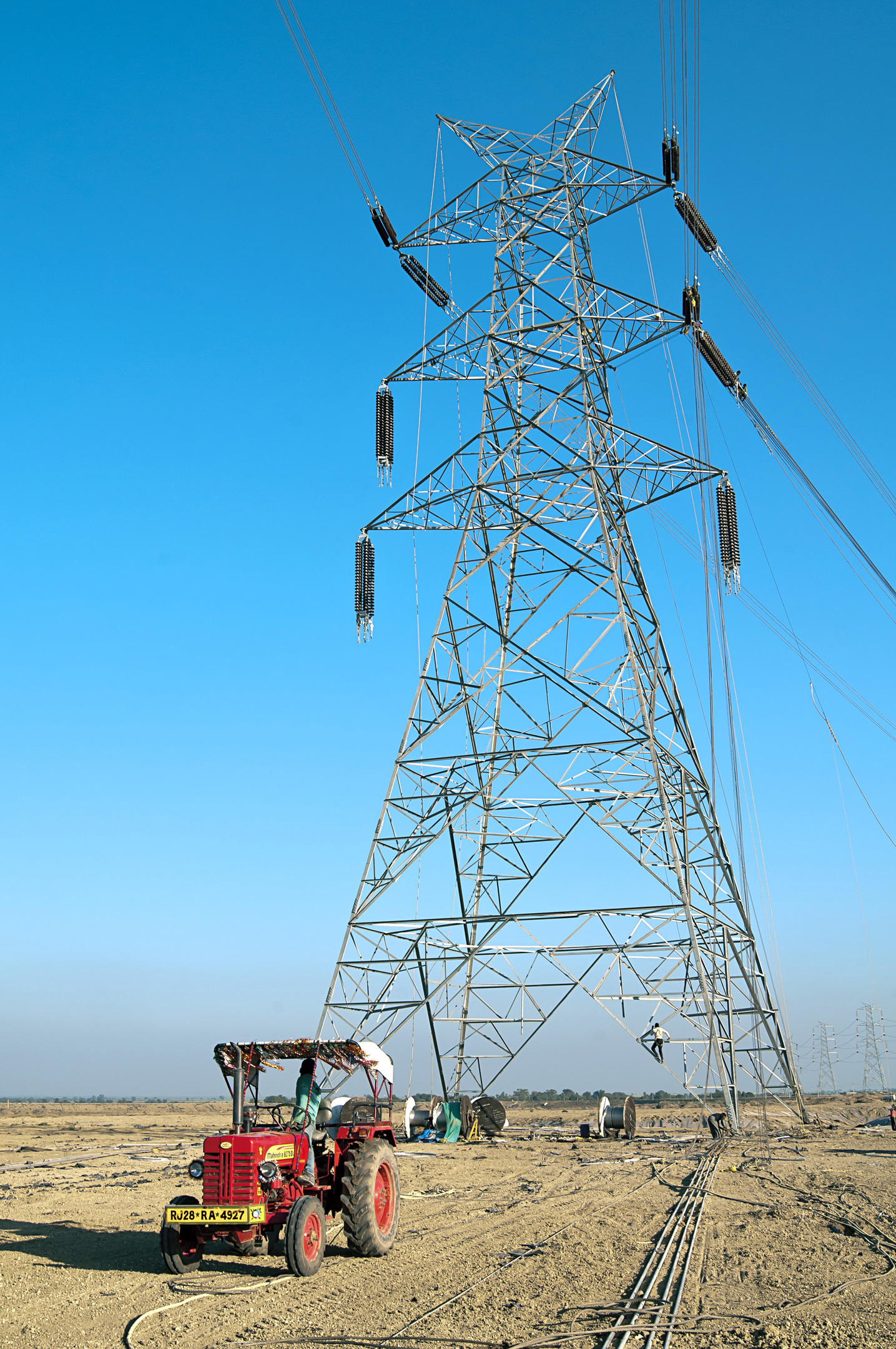
Adani Power delivered a landmark year with strong capacity growth, major project wins, and ambitious capital commitments. Operational generation capacity rose from 17,550 MW to 18,150 MW, while long-term targets increased from 30,670 MW by 2030 to 41,870 MW by 2032, supported by a planned capex of over INR 1.83 lakh crore (USD 22+ billion).
In May, APL won a competitive bid to supply 1,500 MW of thermal power to Uttar Pradesh at INR 5.383/unit, alongside an investment of INR 16,600 crore for a 2×800 MW greenfield ultra-supercritical plant in Mirzapur. In July, the company acquired 2×300 MW VIPL in Butibori, Nagpur, for INR 4,000 crore, raising operational capacity to 18,150 MW.
In Aug APL won two tenders: 2,274 MW to Bihar at INR 6.075/unit, backed by a 3×800 MW plant in Pirpainti (INR 24,900 crore), and 800 MW to Madhya Pradesh at INR 5.838/unit, with an 800 MW Anuppur plant (INR 10,500 crore).
Sep milestones included signing a Shareholder Agreement for the 570 MW Wangchhu hydro project in Bhutan (INR 6,000 crore) and approval to operate the Dhirauli coal mine in MP, ensuring long-term fuel security. Madhya Pradesh also exercised a Green Shoe option, adding 800 MW to Anuppur, raising total investment to INR 21,000 crore.
In Nov, APL secured 3,200 MW in Assam at INR 6.30/unit, investing INR 48,000 crore in a greenfield plant. Combined with Adani Green’s projects, the group’s total investment in Assam reached INR 63,000 crore, the largest private-sector energy investment in the region.
APSEZ: Setting New Growth Benchmarks
In 2025, Adani Ports and Special Economic Zone (APSEZ) strengthened its position as India’s largest port and logistics operator with a series of significant milestones. The company crossed the 500 MMT cargo handling mark, becoming the first Indian port operator to achieve this scale. Mundra Port continued its dominance as India’s largest container port, delivering record throughput and industry-leading vessel turnaround times. APSEZ’s national footprint grew further, with a 15-port network across India’s east and west coasts supported by major capacity enhancements at Mundra and Dhamra, including new berths, deeper drafts and upgraded container-handling infrastructure.
Sustainability remained central to APSEZ’s growth, with renewable energy powering over 60% of port operations and several facilities advancing toward the company’s 2040 net-zero goal. The logistics arm expanded rapidly, adding multi-modal logistics parks, rail-linked terminals and modern warehousing clusters, solidifying APSEZ’s position as India’s most integrated port-to-hinterland logistics ecosystem.
Digital transformation accelerated across the network, featuring AI-driven cargo planning, smart gate systems, automated yards and blockchain pilots for documentation. With strong cargo diversification, operational efficiency and expanded logistics capabilities, APSEZ delivered robust financial performance and advanced its global aspirations through strategic international partnerships.
Dharavi: From Blueprint To Action
2025 will go down as the year when Dharavi finally stopped being a story of plans on paper and began its journey on the ground. After four decades of discussions, tug-of-war politics, and endless speculation, the first round of construction work started quietly but firmly signalling that the project has at last taken off. For many, it was the first visible sign that change is no longer a distant promise.
This year also saw Asia’s largest slum survey enter its last lap. Spread across four scientific stages, the survey has been one of the most detailed exercises ever attempted in an Indian informal settlement. Along the way, the team introduced an idea rarely seen in such environments: a digital twin of Dharavi. Once fully ready, it will help officials settle disputes faster, take decisions with clarity and keep every phase of redevelopment transparent.
Another big step came with the preparation of Dharavi’s first comprehensive masterplan. It was placed before the government this year and marks a shift in how the city imagines Dharavi’s future. The plan blends the settlement’s “live–work” character with a modern township layout, without losing sight of the industries, trades, and livelihoods that give Dharavi its unique identity.
Alongside the technical and physical progress, the Dharavi Social Mission (DSM) continued to work quietly in the background, focusing on skilling, jobs, and community upliftment. It’s a reminder that the redevelopment is as much about people as it is about new houses and dignified living.
2025 has set the wheels in motion. 2026 has a solid platform to build on.
Adani Defence & Aerospace: The Year of Resolve
2025 will be remembered as the year when India realised, not in theory, but in action that self-reliance in defence was no longer an aspiration. It was a necessity. 7 May 2025 – the day - will go in the history of the country as a day when India stood united against terrorism. When Operation Sindoor demanded courage, innovation and readiness, Adani Defence & Aerospace stood as India’s shield and spear.
Across 2025, the facilities became hubs of inspiration and innovation. Lieutenant General Manoj Kumar Katiyar, PVSM, AVSM, Army Commander, Western Command, visited the Adani Ammunition Complex in Kanpur, where he witnessed cutting-edge ammunition, drones, and weapon systems shaped for modern warfare. Air Marshal Ashutosh Dixit, AVSM, VM, VSM, Chief of Integrated Defence Staff (CISC), toured the Adani Aerospace Park in Hyderabad, underscoring trust in the capabilities across domains.
This year there were over 48 trials and 15 fielded products marked India’s largest-ever defence testing footprint by a private enterprise. Systems like Aaramukhi 6H, VTOL kamikaze drones and advanced artillery platforms demonstrated endurance and precision under the toughest conditions. The spotlight shone brightest on Agnikaa, loitering munition that proved its prowess in Operation Sindoor with unmatched performance in trials lasting over nine hours. Alongside, ARKA MANPADS, small arms, and next-generation ammunition delivered excellence in every theatre. Guided weapon systems including Rudram, NASM, and VSHORADS further advanced India’s precision strike capability.
Achievement in AWACS made Adani Defence the only private entity in India with capability in this strategic area. Winning India’s largest pistol contract for the Indian Navy and Indian Coast Guard, cemented the position as the nation’s most comprehensive small arms manufacturer. The record execution of ARKA MANPADS in just 18 months bridged a gap left unaddressed for 25 years. And the integrated, vehicle-mounted Counter Drone System with both soft-kill and hard-kill technologies became India’s first and only system of its kind, now trusted by the tri-services the as the domination shield in the skies.
The pursuit of excellence resonated far beyond results, it was recognised by the nation and industry alike. At the ET Edge AI Summit & Awards 2025, Adani Defence & Aerospace received three prestigious honours:
Enterprise AI Transformation Award – for deep AI integration in operations and technologies.
Intelligent Automation Champion Award – for the Kanpur Ammunition Complex’s industry-leading advances in safety, quality, and efficiency.
AI Leader of the Organisation Award – recognising the AI CoE’s contribution to building autonomous defence solutions.
Adding to these accolades, the Kanpur site earned the Gold Award in Engineering at the Frost & Sullivan India Manufacturing Excellence Awards 2025.
The SIDM Champion Award for Design, Manufacturing and Testing Excellence further validated the unmatched contribution to India’s indigenous ecosystem.
The Hyderabad team’s recognition under the Adani Workplace Management Practices Gold Category reflected the culture of empowerment and performance, and more such achievements only solidified the commitment towards a secure future of the nation.
The full integration of Air Works marked more than the acquisition of India’s largest independent MRO provider, it created a national backbone capable of sustaining fleets across military platforms, UAVs, helicopters, and regional aircraft. With Air Works' decades of engineering excellence and Adani's scale and operational excellence centered around customers, it is poised to helping India transform into a destination for world-class hi-tech defence and aerospace hub.
Parallelly, Indamer Technics Private Limited aligned into the ecosystem, bringing decades of civil aviation experience and building a unified national aviation sustainment network. With these advancements, India took a step toward ending dependency on foreign maintenance hubs.
The acquisition of Flight Simulation Technique Centre (FSTC), valued at INR 820 crore, completed the circle. For the first time, India now possesses a continuous aviation lifecycle from training pilots, maintaining fleets, modernising aircraft, and ensuring air readiness for both civil and defence platforms, all under one integrated architecture provided by Adani Defence and Aerospace.
Through partnerships with global pioneers like EDGE and Sparton, Adani Defence reinforced its position at the intersection of innovation and strategy, co-developing technologies that place India on the cutting edge of global defence evolution.
Seva Hi Sadhna: Service Became the Adani Group’s True Purpose
In 2025, the Adani Group deepened its philosophy of Seva Hi Sadhna—the belief that service is not an obligation but a form of devotion. Across the year, this ethos moved beyond statements and took shape through large-scale support for two of India’s most significant cultural events: the Kumbh Mela and the Rath Yatra.
At the Kumbh, where millions converge in moments of faith and tradition, the Group extended logistical and on-ground support initiatives aimed at ensuring smoother movement, cleaner spaces, and improved access to essential services. The focus remained on dignity and safety—quiet interventions that helped pilgrims navigate the scale of the gathering with greater comfort.
During the Rath Yatra, the Group’s efforts similarly aligned with the spirit of the festival—facilitating crowd-support measures, enhancing sanitation infrastructure, and assisting civic agencies in managing high-density footfall. The intent was not visibility, but responsibility: enabling communities to celebrate with ease, continuity, and care.
Throughout 2025, Seva Hi Sadhna translated into everyday action—from disaster-relief mobilisation to community outreach around its business locations. What emerged was a consistent thread: when service is treated as devotion, impact becomes collective. As the year closes, the philosophy stands reaffirmed—progress is meaningful not only when it builds, but when it serves.
With inputs from Priti Saldanha, Rakhi Kankane and Sukriti Jain