


TRAVEL
Himachal’s Little Secret
Shangarh, a serene village in Himachal’s Sainj Valley, offers lush meadows, an ancient temple, and rich wildlife—an ideal offbeat escape at 7,000 feet.
Sweta Chatterjee
Tucked away in the pristine Sainj Valley, often called one of Himachal Pradesh’s best-kept secrets, lies Shangarh—a quaint village in the Kullu district with a population of just around 1,000. Surrounded by dense forests and towering Himalayan peaks, Shangarh is the kind of place that feels untouched by time. Every corner of this village resembles a hand-painted masterpiece, bursting with rich hues of green and blue.
Just a stone’s throw from the Great Himalayan National Park, a UNESCO World Heritage Site, Shangarh offers a serene alternative to the state's bustling tourist hubs. It’s a destination for the discerning traveller—someone seeking quietude, natural beauty, and the raw magic of the Himalayas, without the noise and crowds.
At the heart of Shangarh’s charm lies its crown jewel: the Shangarh meadows. A vast, emerald expanse ringed by pine trees and mountains, the meadow feels almost otherworldly—as if nature itself placed it gently in the middle of the Himalayas. Whether you're walking through the grass at sunrise or sitting under a tree as clouds drift overhead, the tranquility of this place is truly unmatched.
For those in search of an offbeat escape, Shangarh is not just a destination—it’s a soulful experience waiting to unfold.
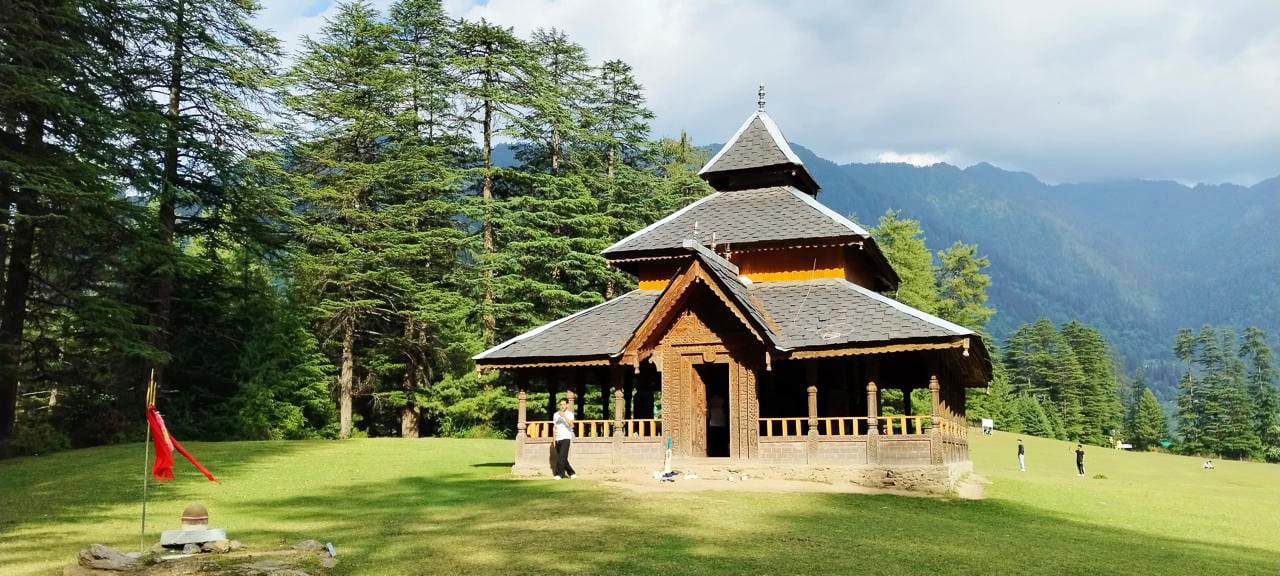
Shangarh village is at an altitude of about 7,000 feet. And at one end of the meadow is an old wooden temple built in the traditional Kath-kuni style. According to locals, this style (kath-wood and kuni-corner) is native to Himachal Pradesh and uses wood and stone that are sourced from nearby areas. Structures built in this style often have no mortar. Wooden pieces are interlocked to erect and provide protection against possible earthquakes. The walls have wood and stones and often double-layered that provide insulation.
It is believed that the place has the blessings of Shangchul Mahadev. At the meadows, you can find cattle grazing peacefully – sheep, cows and goats. Visitors are also greeted by a variety of birds and furry friends, some of whom will pose with you and insist that some pictures be taken!
Unlike popular tourist places in Himachal, Shangarh has no crowds, honking vehicles and traffic (yet). Right next to the meadow there are tiny makeshift stalls that sell Siddu (a local delicacy), tea, coffee, and of course the Indian hill staple, Maggi, among other things.
We also visited Oreo’s Café nearby. It is named after the resident dog who seemed extremely calm and composed. He has his own cabin and occasionally inspects the common areas. Known for his love for food and pets, Oreo rates sleep/nap as his favourite activity. We tried Siddu, jhol momo, coffee, hot chocolate and a few other items and I would recommend a visit for this place for the food, view, vibe and of course Oreo.
Kullu-Manali (Bhuntar) is the nearest airport, which is about 45km from Shangarh. The closest railway station is Joginder Nagar, nearly 120km away. From Chandigarh, you can take a road trip to Aut and then to Sainj Valley to reach Shangarh. The road is scenic, but the uphill drive can be stressful for some! Better to eat light and carry medicines, just in case.
Pro tip from our driver: A crushed garlic clove eaten as a candy can be helpful if you have motion sickness.
Our drive from Jibhi to Shangarh (about 3 hours) and then to Barshaini (around 100km) was pleasant. On the way, you can see many water reservoirs and dams against the mountain slopes. While you can just sit, lie down and relax admiring the Shangarh meadows, it is not all that this place has to offer. If you are ready to walk for about two hours, then visit Barshangarh waterfall. For those who want to explore Sainj Valley, you can take a cab to the lesser-known Rupi Raila waterfalls (this involves some walking and random navigation around rocky routes) and the Raila twin towers. Deohari village can be your starting point for a hike to Pundrik Rishi Lake.
If you are more adventurous, then look for longer treks to Lapha village, Jiwa Nala (this week-long trek ends at Parvati Valley. It will need focused preparation) or Thini Thatch (two days with overnight camping). Most homestays and guesthouses in and around Shangarh are known to offer freshly cooked local meals. Vegetables are often sourced from nearby farms and kitchen gardens. Hostels and dormitories offer similar food, and the kitchen and housekeeping staff are usually from the same village.
The next time you plan a trip to Himachal Pradesh and if you are ready to stay in the quietness for an “offbeat” experience, try to fit Shangarh in your itinerary. This underrated place can enrich your Himalayan vacation in an unexpected way.
What To Remember
-
The roads are uneven and narrow. A good vehicle and driver are recommended.
-
Lots of hostels/dorms in Shangarh and some might not have porters/helpers and motorable approach roads. They are mostly for backpackers. So, if you have children, elderly persons or someone with specific needs (or a trolley bag) with you, please check beforehand.
-
Keep some cash.
-
Local drivers usually figure out their own meals and accommodation. Check this while you plan your itinerary and negotiate rates (you can always invite them and have them join you for snacks, tea and meals if they are comfortable).
What to Eat
-
Siddu - A traditional steamed, stuffed bun popular across Himachal Pradesh. It is usually made of atta and typically stuffed with urad dal, poppy seeds, nuts, potatoes, vegetables, paneer and even chicken. It is often served with ghee and chutney. The pillowy texture of the dough is because of the fermentation process, which can sometime extend for hours or even overnight. You can find Siddu in almost every roadside stall and café.
-
Trout – Most eateries sell the fresh catch. You can get them in a variety of flavours and spices.
-
Madra – This dish has chickpeas cooked in a yogurt gravy.
-
Dham – A traditional vegetarian feast (think a thaali) often served during celebrations/festivities. Typically includes rice, dal, rajma, madra and some sweet.
-
Chha gosht – Mutton slow cooked with local spices.
-
Seasonal fruit juices - Especially apricot and apple.