


TRAVELOGUE
Into The Wild
Pench National Park and Tiger Reserve, the forest that inspired Rudyard Kipling’s The Jungle Book, offers a journey into the jungle’s magic, mystery and timeless rhythm.
Sweta Chatterjee
In the forests that inspired Rudyard Kipling’s The Jungle Book, every rustle, paw print and star-filled sky tells an enchanting take. My three-day trail through Pench National Park and Tiger Reserve was not just a trek on a long weekend in mid-August. It was an awakening to the magic, mystery and timeless rhythm of the wild
If you’ve ever heard the jungle hum in Rudyard Kipling’s The Jungle Book—Mowgli chasing adventures, Bagheera’s wisdom and Baloo’s carefree laughter—you’ve heard echoes of Pench National Park and Tiger Reserve. This forest in central India, straddling Madhya Pradesh and Maharashtra, is where Kipling found his muse, even though, strangely, he never set foot here.
My first time walking through Pench was nothing like the many safaris I’ve done before. A jeep safari shows you glimpses of the wild; a forest walk makes you part of it.
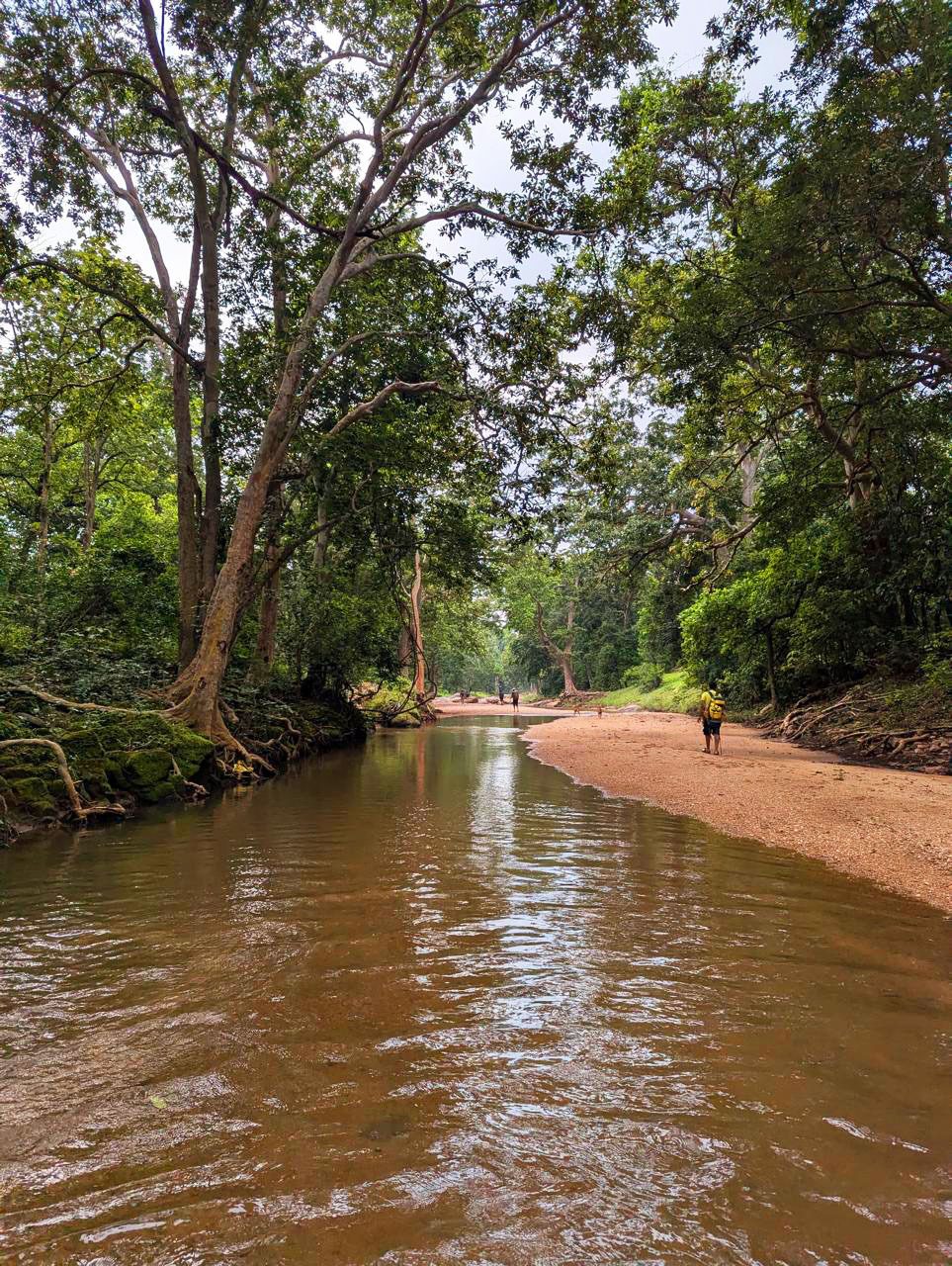
The humid air clung to me like a second skin, heavy with the scent of damp earth and verdant life. Every inhale felt thick, a muggy reminder that I was now a part of the forest, not just a visitor watching from a distance. A monsoon hike, they called it. What it really meant was trading the predictable comfort of a safari jeep for an intimate, and slightly unsettling, dance with nature. My world, usually seen through a window, was now right up against me. It was a tangle of ancient trees, buzzing insects and the quiet, creeping promise of life unseen.
For years, I've been one of the thousands drawn to the beautiful heart of India's forests. There’s no feeling quite like the electric jolt of seeing a tiger or a leopard in the wild. The entire process of tracking a predator is a ritual, almost a form of prayer in the forest. You’re a detective of the wild: studying pugmarks on the soft earth, noticing scratch marks on a tree, analysing scat, finding the remains of a hunt, and listening for the alarm calls that slice through the air. This time, however, I wasn't in a safari car. I was on my own two feet, a nervous guest in a world that did not know me and I did not know what to expect next.
Pench is a mosaic of life far beyond its famous big cats. As we walked, a few birders in our group pointed out the flash of a drongo and its nest. They told us stories of clever birds that mimic other calls to startle their prey, stealing a meal from the chaos. I listened intently as we walked, mostly in silence. Then, a sharp, sudden alarm call from a langur echoed through the canopy. Our guides, their faces inscrutable, confirmed what we all felt in our guts: a predator was close.
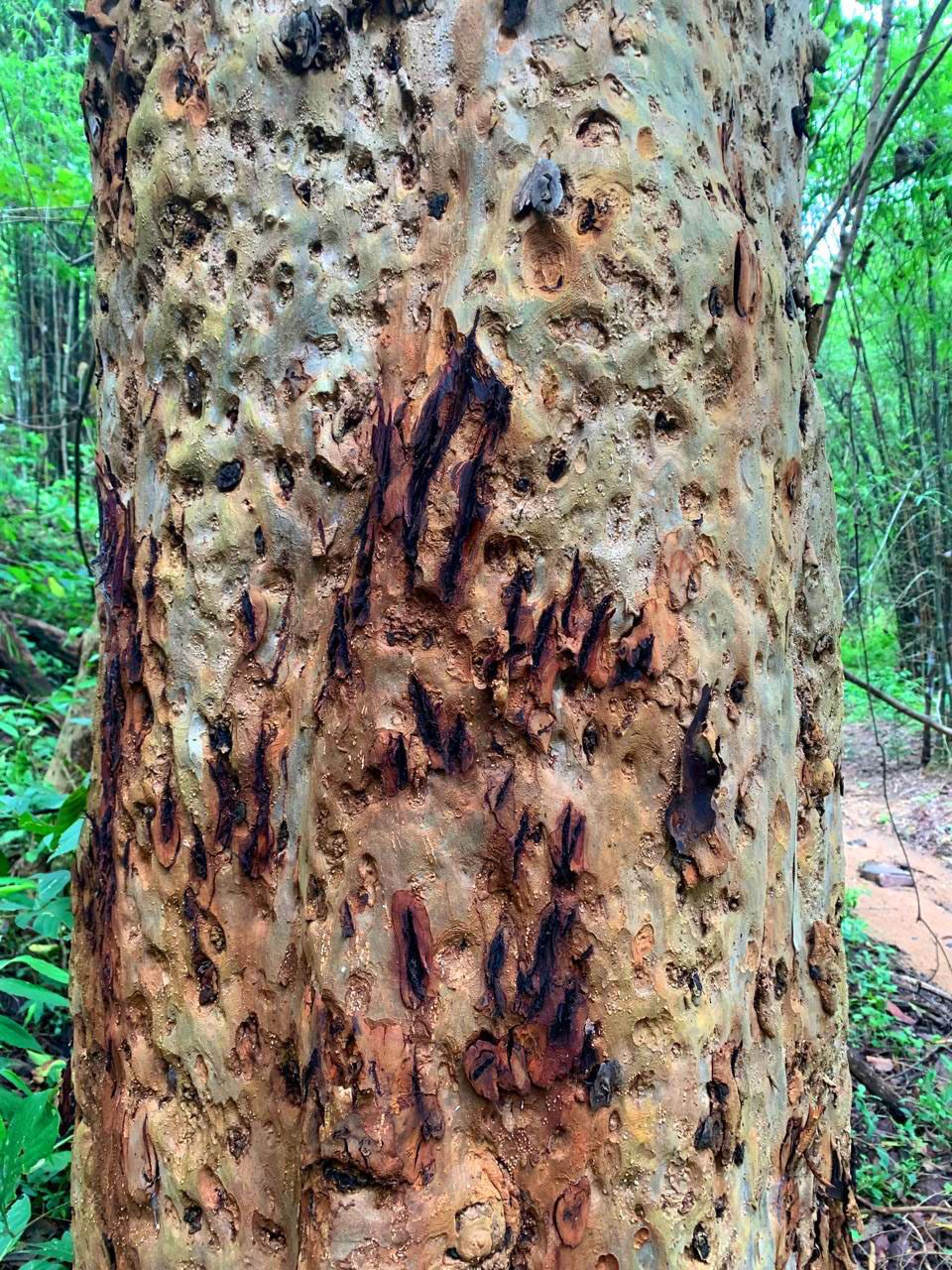
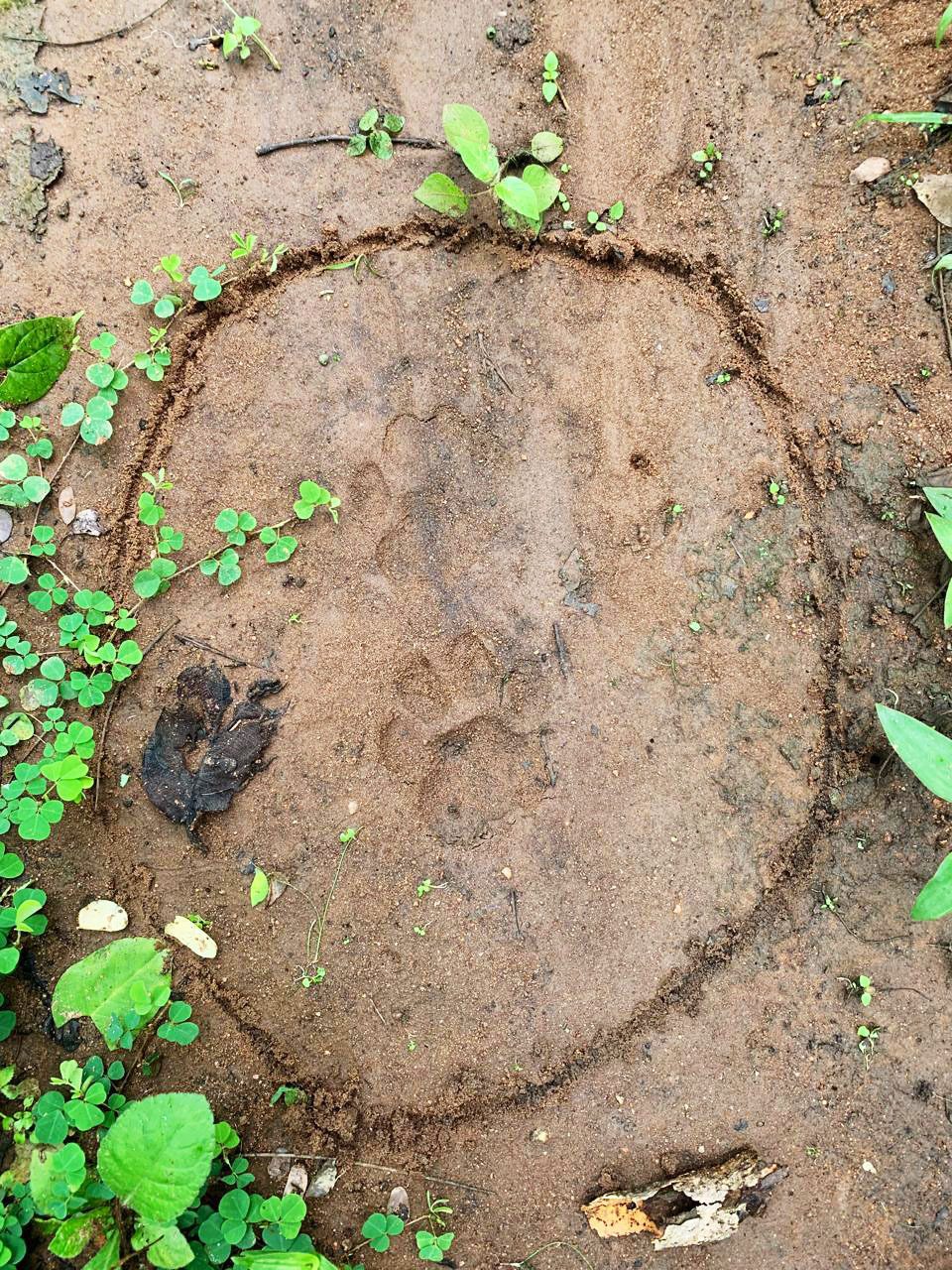
Minutes later, we saw them. Fresh pugmarks on the mud, a stark, beautiful print that our guide said belonged to a female leopard, and that she'd been here barely 20 or 30 minutes ago. A jolt of both fear and wonder went through me. Further down the trail, we found more marks and scratch marks on several trees—a clear sign we were in tiger territory. The big cats had marked their land.
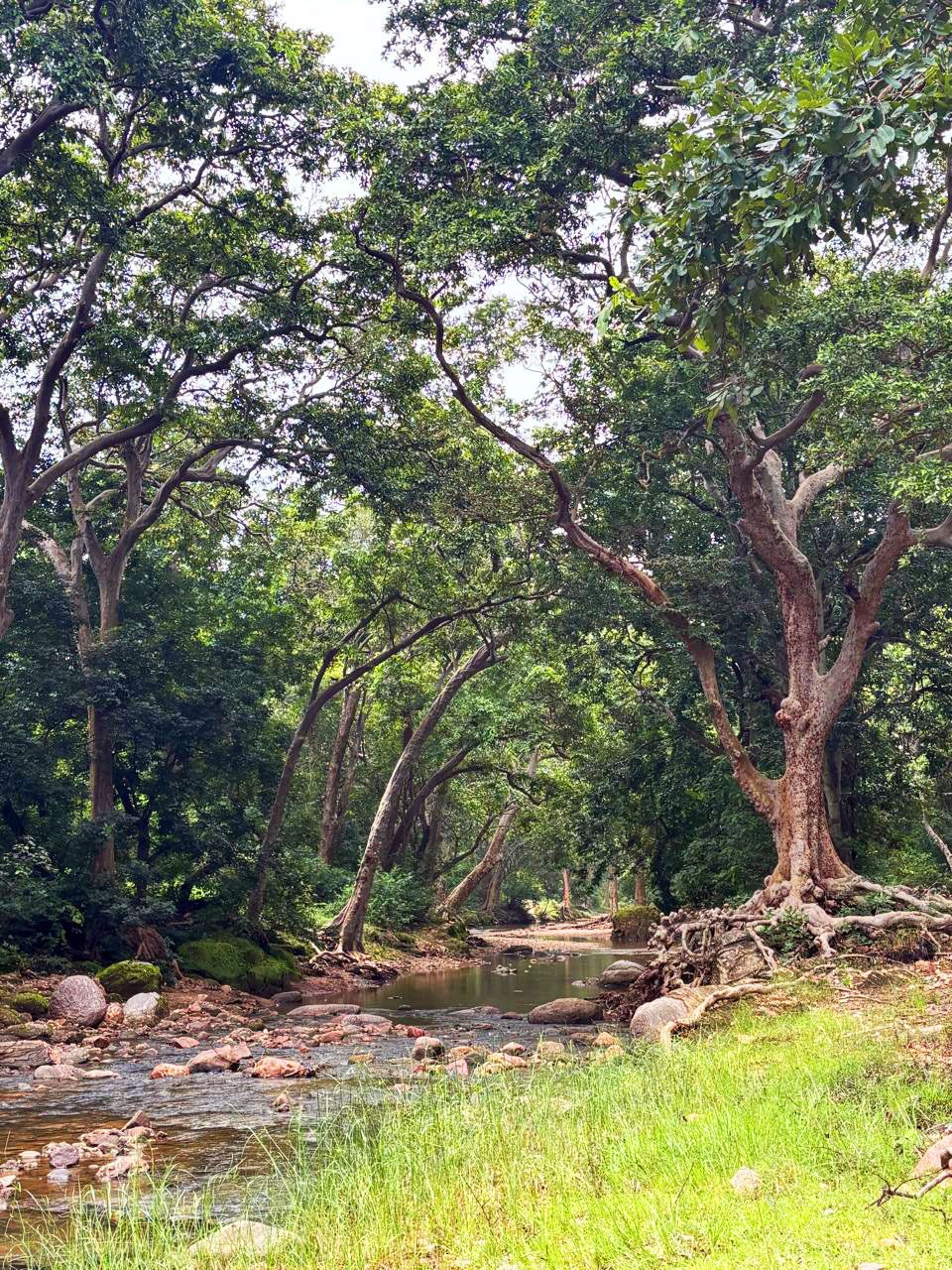
The walk was punctuated by a surreal journey through the Bawanthadi River for nearly five kilometers. The water was so clear it was like glass over a bed of polished pebbles. The banks were a vibrant green tunnel, the trees leaning in as if to listen to the whisper of the water. We found a perfect spot, where we sat on rocks and let our tired feet soak in some more cool water. While we had our packed lunch, the forest guides shared stories of tigers and leopards. The river walk was a first for me and this trip had been a collection of firsts: walking in a forest, camping, walking through a river and sleeping under a sheltering sky full of stars.
I had no idea that Pench was India’s first and Asia’s fifth Dark Sky Park, a protected haven for stargazers. Despite the monsoon, the clouds parted just enough for us to see a spectacular blanket of stars sparkling directly above our campsite by the Nayegaon Lake. It was magical. Later, a thunderstorm rolled in, followed by a heavy downpour that lashed against my tent for hours. At one point, I was sure it would tear away from the ground and leave me in the open. Luckily, that particular "first" did not happen.
Forests are a different world with their own rules, rules that demand respect and fill you with awe. So much of the forest remains a mystery to us, left to our imagination, just as it was for Kipling. It is said he never even visited Pench, yet this very forest inspired him to write The Jungle Book. It's a reminder that sometimes, the true beauty of a place is not just what you see, but what it makes you feel. No wonder, forests make no promises, but they seldom disappoint.
Secrets of Pench:
- A forest across two states: Pench Tiger Reserve spans both Maharashtra and Madhya Pradesh, making it one of central India’s most iconic wildernesses.
- A window to the stars: Pench is India’s first and Asia’s fifth Dark Sky Park, a designation that protects its pristine night skies from light pollution—vital for both wildlife and astronomical research.
- The rare black leopard: Mysterious and elusive black leopards have been sighted in Pench, adding to the forest’s allure.
- On the global screen: The acclaimed BBC documentary Tiger – Spy in the Jungle, narrated by Sir David Attenborough, was filmed here over three years, capturing intimate moments of tiger families with innovative camera techniques.