


Runways To Revenue
Reimagining Airports As Engines Of Growth
As airports evolve into economic engines and city-scale ecosystems, Adani Airports Holdings Limited is spearheading India’s own aerotropolis transformation across its eight key airports—reimagining terminals as growth hubs and connectivity as capital.
Joydeep Sen Gupta
Coined by Dr John Kasarda, the term “aerotropolis” refers to a metropolitan subregion where the layout, infrastructure, and economy are centered around an airport. These aren’t just places to catch a flight; they’re integrated commercial ecosystems with office parks, logistics hubs, leisure zones, and innovation corridors. Airports today are no longer endpoints — they are anchors for urban development, catalysing GDP (Gross Domestic Product) growth, job creation, and global connectivity.
As global trade, digitisation, and mobility redefine the urban economy, aerotropolis cities are becoming epicentres of 21st-century development.
Here's a look at the top 10 aerotropolis models inspiring the world — and how Adani Airports Holdings Limited (AAHL) is translating this vision into India’s context.
Top 10 Aerotropolis Cities Driving the Future
Incheon, South Korea
Perhaps the most textbook example, Incheon has transformed from a remote airport zone to a global logistics and smart city hub. The Incheon Free Economic Zone (IFEZ) attracted over USD 12 billion in FDI (foreign direct investment) and houses R&D (research & development) centres, corporate HQs (headquarters), and waterfront leisure districts.
Amsterdam Schiphol, the Netherlands
Schiphol is more than a European hub — it’s the heart of the Amsterdam Airport City. The area generates over USD 30 billion annually in economic activity, driven by aviation-linked logistics, fintech offices, and sustainability labs.
Dallas-Fort Worth (DFW), USA
DFW catalysed the growth of surrounding areas like Las Colinas and Grapevine. Today, over 60,000 jobs are linked to DFW's ecosystem, with tech parks, retail, and convention centres springing up within a 10-mile radius.
Dubai, the UAE
The Dubai World Central (now Dubai South) aerotropolis surrounding Al Maktoum International Airport spans 145 sq km and is designed to support one million residents, integrating aviation, trade, and logistics.
Doha, Qatar
Hamad International Airport is part of a broader logistics and hospitality nexus. The Qatar Free Zones Authority uses the airport’s proximity to attract global manufacturing, e-commerce, and fintech investors.
Hong Kong
The Hong Kong International Airport (HKIA) ecosystem includes SkyCity, AsiaWorld-Expo, and the nearby port, facilitating 42% of the city’s cargo trade by value. It's a benchmark in multi-modal integration.
Istanbul, Turkey
Istanbul’s new mega-airport is positioned to become one of the largest aviation hubs globally, with direct links to logistics parks and industrial zones across Europe and Asia.
Changi, Singapore
With Jewel Changi, Singapore created a mixed-use retail and entertainment experience, merging tourism with terminal functionality. The aerotropolis plan includes new terminals integrated with business districts and housing.
Zhengzhou, China
Home to Foxconn’s 300,000-worker campus, Zhengzhou Airport Economy Zone contributes over 65% of the region’s exports. This is one of the most production-led aerotropolis models.
Frankfurt, Germany
Frankfurt Airport’s Gateway Gardens and CargoCity South generate USD 26 billion (approx) annually, hosting logistics, pharma, and mobility enterprises within a 30-minute radius.
India’s Turn: Adani’s Aerotropolis Playbook
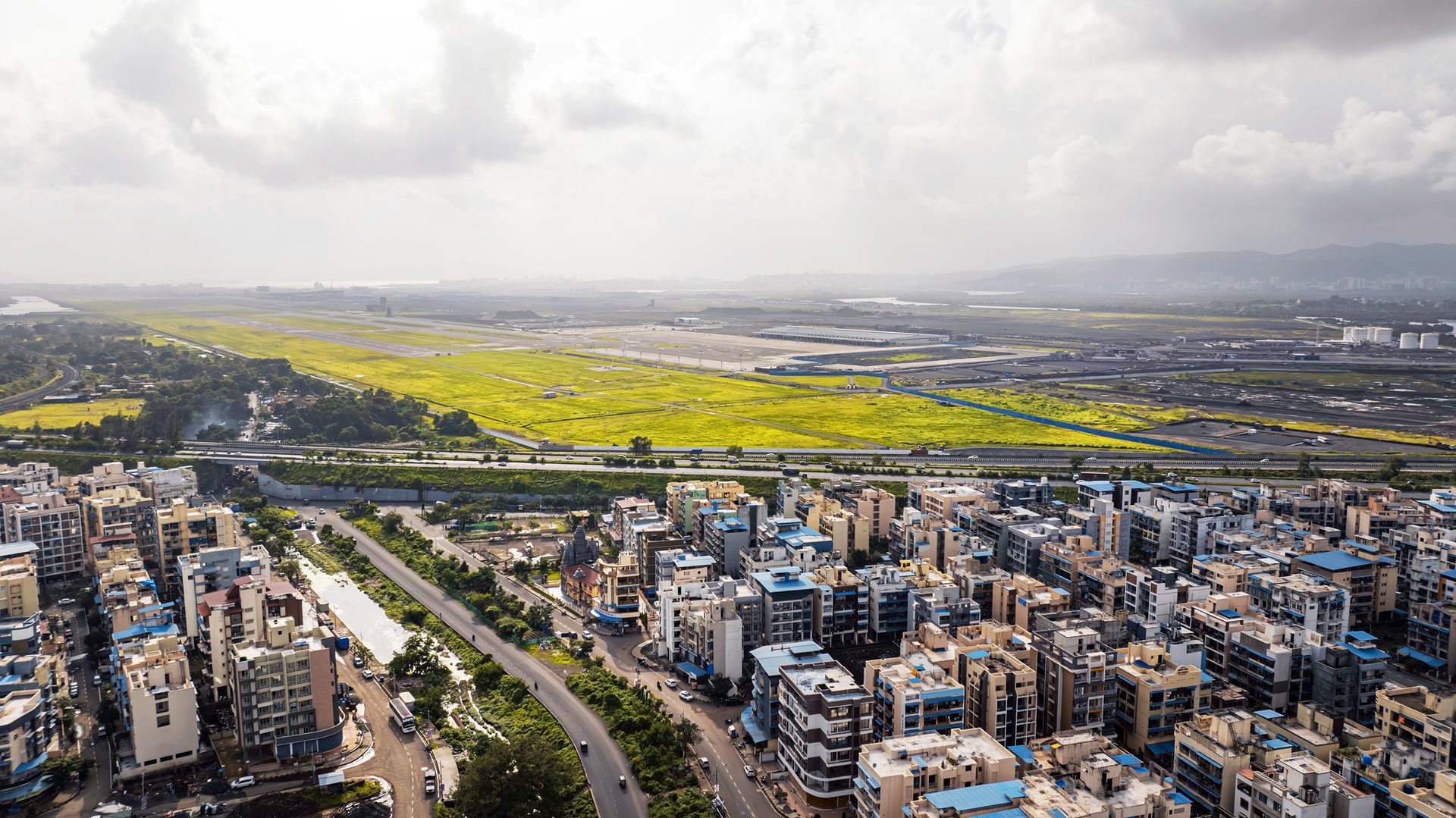
Adani Airports Holdings Limited (AAHL), a subsidiary of Adani Enterprises Limited (AEL), is drawing cues from these global models to reimagine Indian airports as economic ecosystems, not just transit points. It operates eight airports, including Mumbai, Ahmedabad, Lucknow, Guwahati, Jaipur, Thiruvananthapuram, Mangaluru and the upcoming Navi Mumbai.
How the Model is Taking Shape:
-
Real Estate & Commercial Integration: At Mumbai and Navi Mumbai, the group is creating integrated zones with hotels, business parks, retail, and convention centres — akin to Schiphol and Changi.
-
Cargo & Logistics Hubs: Lucknow and Ahmedabad are being positioned as multi-modal cargo hubs, streamlining export-import chains for textiles, electronics, and perishables.
-
Retail, Entertainment & Tourism: With over 100,000 sq. ft of retail space across its airports, AAHL is leveraging non-aero revenue in the Changi model. For instance, Mumbai’s Terminal 2 retail sales rose by 22% year on year (YoY) in financial year (FY)24.
-
Sustainability and Smart Infrastructure: The Guwahati Airport is India’s first airport terminal built using bamboo and is powered by solar. Green aerotropolis design is a core element of the AAHL philosophy.
-
Passenger Flow as Economic Multiplier: Collectively, AAHL airports handled over 94 million passengers in FY24, a 33% increase from pre-pandemic levels, boosting regional business and employment.
An integral part of urban economy
As India aims for a USD 5 trillion economy, airports can no longer be siloed from the urban economy. With Adani Group’s infrastructure backbone, logistics synergies, and vision of nation-building, its aerotropolis strategy is both a market opportunity and a policy blueprint. Just as Incheon or Schiphol reshaped their national economies, India’s new-generation airports could define its next wave of urbanisation.
In the next decade, the question won’t be how close you live to the airport — but how close you are to the new capital of commerce.