


HEALTHCARE
Securing A Bright Future
At Gujarat Adani Institute of Medical Sciences (GAIMS), a comprehensive Retinopathy of Prematurity (ROP) screening programme safeguards the vision of premature infants.
Dr Monali Jani
Sight is one of life’s earliest connections – between a newborn and the parent the world. Every child deserves the gift of sight. In a geographically vast and resource-challenged region like Kutch, safeguarding this fundamental right for the most vulnerable premature infants demands unwavering commitment, clinical excellence and coordinated care. At Gujarat Adani Institute of Medical Sciences (GAIMS), this commitment has been translated into a comprehensive and guideline-driven Retinopathy of Prematurity (ROP) screening program, providing free, accessible and life-changing eye care to newborns who need it the most.
Retinopathy of Prematurity (ROP) is an eye disease in premature babies where abnormal blood vessels grow in the retina, the light-sensing tissue at the back of the eye, potentially causing bleeding, scarring, retinal detachment and blindness.
GAIMS is the only tertiary care district hospital in the Kutch region offering systematic ROP screening and follow-up in collaboration with Health and Care Foundation, Ahmedabad in strict adherence to national and international guidelines. The program ensures early identification and timely management of ROP, a potentially blinding condition affecting premature infants.
Structured, Evidence-Based Screening Protocol
The ROP screening program at GAIMS follows a robust and standardised protocol:
Target infants: Preterm neonates born before 34 weeks of gestation or with a birth weight below 2000 grams
Additional at-risk infants: Larger infants with unstable neonatal courses, including those requiring:
- Respiratory support
- Prolonged oxygen therapy
- Sepsis management
- Episodes of apnoea
- Blood or exchange transfusions
Timely screening: Screening is initiated at the recommended postmenstrual or postnatal age, with earlier screening for extremely preterm or very low birth-weight infants
Continuity of care: Regular, need-based follow-up continues until complete retinal vascularisation is achieved.
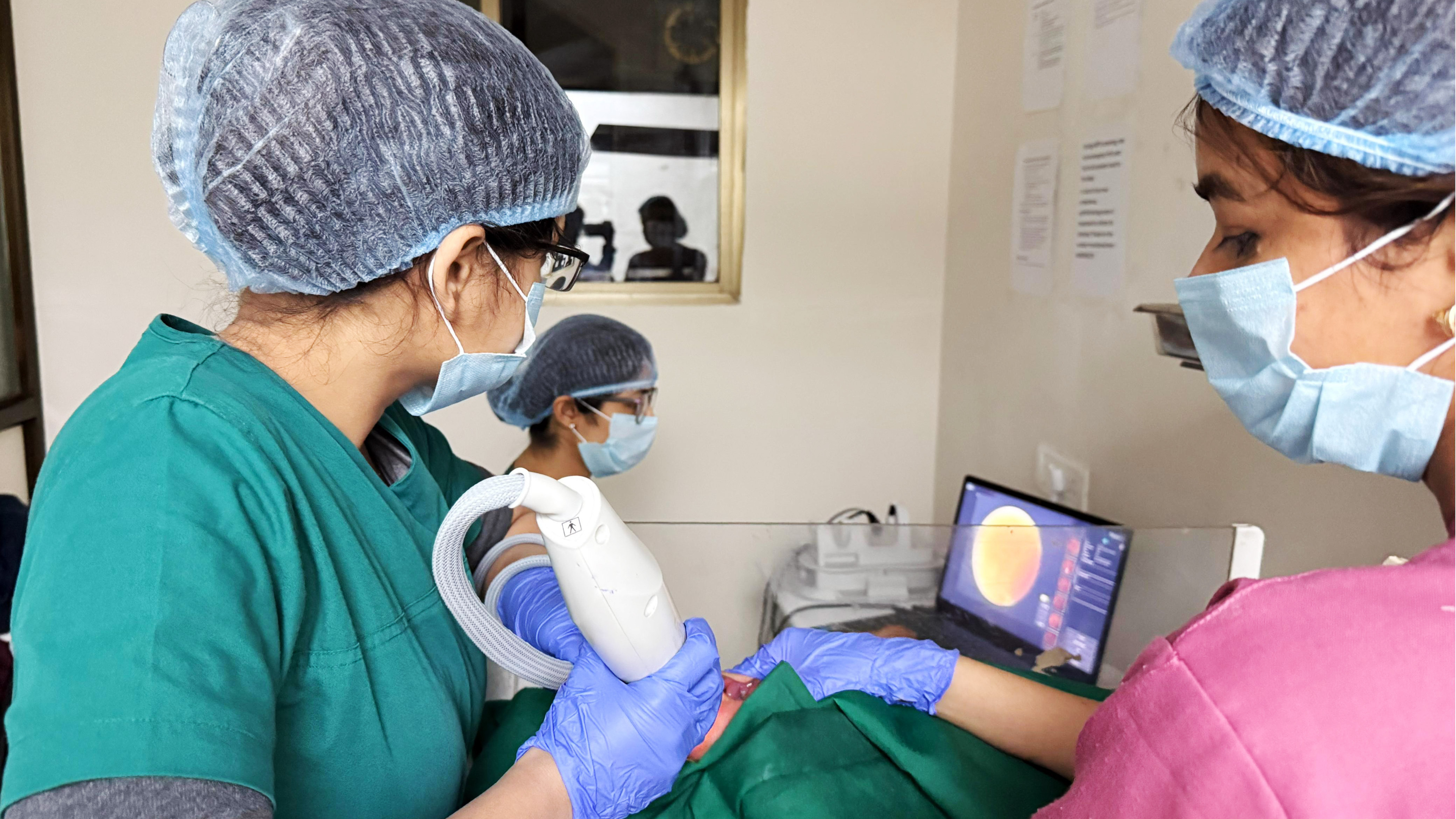
All examinations are conducted in a dedicated ROP screening room, ensuring strict aseptic precautions and neonatal safety. High-resolution retinal imaging is performed using the FORUS RET Camera, with standardised pupillary dilatation and comfort measures to ensure a gentle, safe experience for every infant.
A Multidisciplinary Effort
The success of this initiative is rooted in strong interdepartmental collaboration. The program is jointly led by GAIMS ophthalmologists, pediatricians and a neonatologist. The active involvement of resident doctors, nursing staff, and technical teams ensures seamless care, from screening to follow-up reflecting a shared commitment to neonatal wellbeing.
Measurable Impact, Meaningful Outcomes
Between Mar 2024 (its inception) and Dec 2025, a total of 1,988 preterm infants were screened for ROP at GAIMS. Approximately 270 infants showed positive findings and were facilitated dynamic and continuing care at GAIMS with the help of Health and Care Foundation, Ahmedabad in case of requirement of advanced intervention.
Transforming Lives, One Tiny Vision at a Time
Through early identification, guideline-based management and compassionate teamwork, GAIMS has safeguarded the vision of hundreds of premature infants—offering families hope and children the promise of a brighter future. This initiative exemplifies how private-sector healthcare, when driven by dedication, collaboration and clinical excellence, can create profound and lasting impact.
The writer works at Gujarat Adani Institute of Medical Sciences (GAIMS), Bhuj.