


DIGITAL TRANSFORMATION
Meters That Are Transforming The Grid
How one crore smart meters by Adani Energy Solutions is a critical step towards redrawing India’s power map and reshaping the economics of electricity distribution
Sweta Chatterjee
For decades, India’s electricity distribution system has been the weakest link in the power value chain, burdened by high technical losses, power theft, billing inefficiencies and financial stress. Today, that narrative is beginning to change.
A combination of policy reforms, large-scale infrastructure upgrades and the accelerated rollout of smart meters is reshaping the economics of power distribution and helping loss-making distribution companies (discoms) move towards profitability.
Recently, Adani Energy Solutions (AESL) became India’s, and probably also the world’s, first player to have a base of one crore smart meters. Achieved well ahead of its guidance to reach this figure by the end of the financial year, the milestone highlights its operational scale and signals a structural shift in how power consumption is measured, billed and managed across the country.
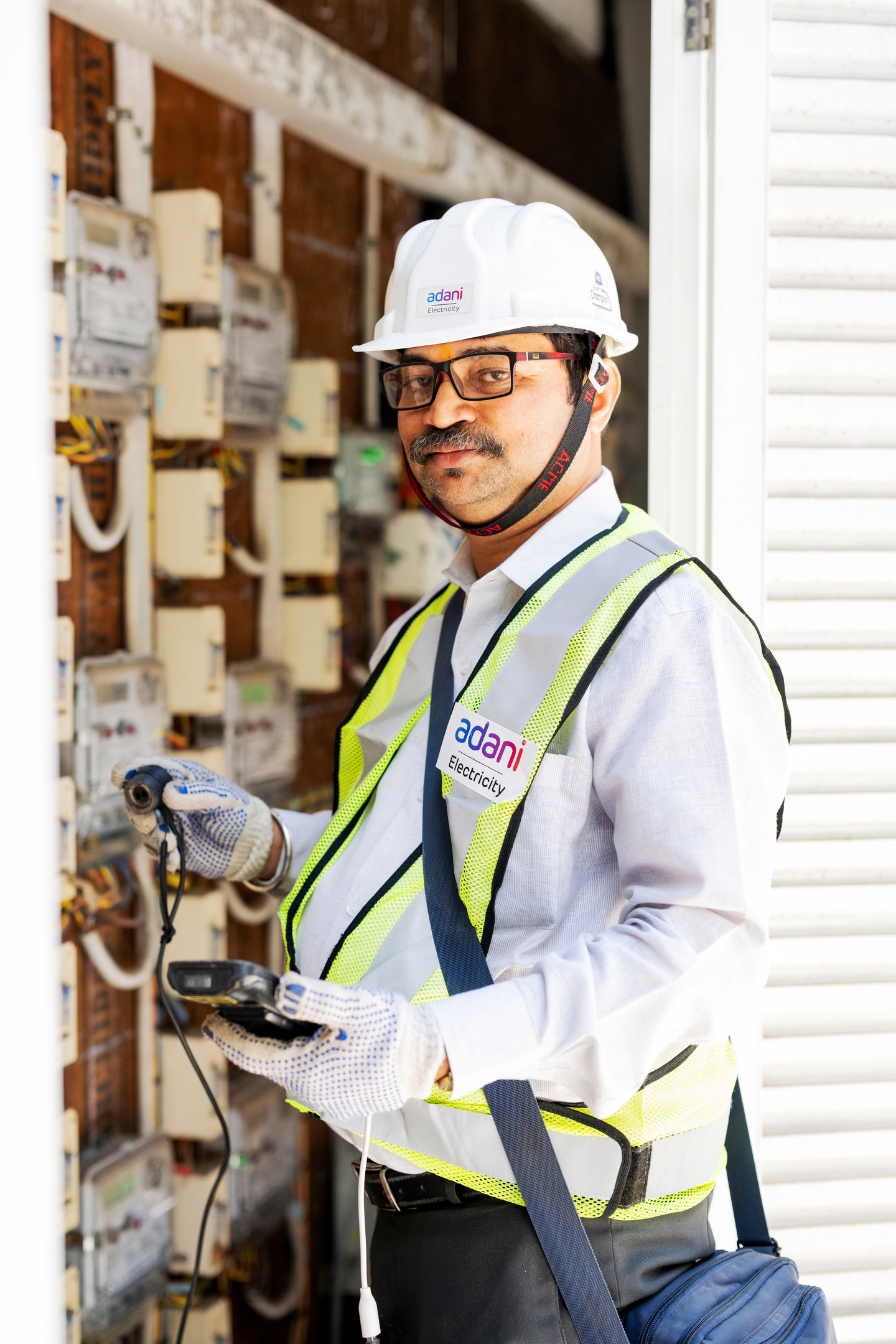
As India’s leading AMISP (Advanced Metering Infrastructure Service Provider), AESL has a mandate to install 2.5 crore smart meters across Maharashtra, Bihar, Uttarakhand, Andhra Pradesh and Assam. At ~25,000-27,000 installations per day, the pace is the highest in the industry. The next one crore smart meters are slated for delivery in the upcoming financial year.
From losses to inflection point
Smart meters are not merely technological upgrades, they are transforming the economics of the electricity distribution system.
In financial year (FY) 2013–14, aggregate discom losses stood at INR 67,962 crore. Even a decade later, losses remained substantial at INR 25,553 crore in FY 2023–24. Against this backdrop, the sector’s return to profitability in FY 2024–25 marks a significant inflection point. According to Ministry of Power data, discoms collectively recorded a profit after tax (PAT) of INR 2,701 crore during the year.
While policy reforms have been critical, digital visibility has been decisive. Smart meters replace estimated billing with real-time consumption data, enabling accurate billing, faster collections, theft detection and improved demand forecasting. They also prepare the grid for a future shaped by renewable energy, electric vehicles and decentralised energy resources.
In this context, AESL’s one-crore smart meters milestone represents more than scale — it forms a key building block for India’s emerging digital distribution backbone.
Policy push
Government initiatives have played a central role in accelerating this transition. The Revamped Distribution Sector Scheme (RDSS) has encouraged states to modernise their electricity networks by upgrading substations, transformers and feeders while rapidly deploying smart metering solutions. Central funding under RDSS is tied to measurable outcomes such as loss reduction, timely billing and improved collection efficiency.
These interventions are already delivering results. Aggregate Technical and Commercial (AT&C) losses, which include both technical inefficiencies and commercial leakages, have dropped from 22.62% in FY 2013–14 to 15.04% in FY 2024–25.
Further reforms, including the Electricity Distribution Accounts and Additional Disclosure Rules, 2025, have standardised accounting practices across states, significantly improving transparency for lenders, regulators and policymakers.
Smart meters as gamechangers
The true value of smart meters lies in the insights they provide.
By replacing estimated billing with real-time consumption data, smart metering fundamentally alters the incentive structure of power distribution. Automated readings reduce human intervention, improve billing accuracy and strengthen collection efficiency. Advanced analytics help utilities detect theft, manage peak demand and optimise load flow.
The rollout has been accelerated under the Smart Meter National Programme (SMNP), supported by RDSS. Together, these initiatives have pushed states to upgrade core infrastructure while linking financial assistance to performance.
The Government of India aims to replace 250 million conventional meters by FY 2025–26. Around 47.6 million smart meters have already been installed, with state-level proposals covering another 203.3 million meters.
AESL’s expanding network generates real-time consumption data that empowers consumers with greater transparency while enabling utilities to enhance reliability, plan investments more effectively and support renewable integration and long-term financial sustainability.
Kandarp Patel, Chief Executive Officer, Adani Energy Solutions, says, “Reaching an installed base of 1 crore smart meters is a testament to our benchmarked execution excellence and deep engagement with distribution utilities and consumers. These smart meters are not just devices — these are catalysts for empowering consumers with real-time usage data, improving grid reliability, reducing losses, and enabling efficient energy management. We remain committed to playing a pivotal role in India’s digital energy transition.”
Execution at scale
Despite entering the smart metering space later than several peers, AESL has the fastest installation run-rate in the sector. The one-crore milestone was achieved in around 24 months — which is the fastest rollout of its kind not just in India but also globally.
AESL’s execution superiority is built around its end-to-end control of the smart-metering ecosystem. The company integrates manufacturing and IoT capabilities through Adani Esyasoft Smart Solutions, secures local data hosting via AdaniConneX and partners with Tier-I global meter manufacturers to ensure long-term platform reliability. AESL draws on Adani Group’s execution prowess. Its centralised Project Management Group (PMG) has end-to-end visibility and delivery assurance.
Human capital has been equally critical. Through skilling initiatives, AESL has trained a large workforce of technicians capable of sustaining high-volume installations across diverse geographies.
Towards a digital reset
As India scales up renewable generation, accelerates electrification and digitises public services, distribution networks are becoming more complex and critical to energy security.
With an order book of 2.46 crore smart meters and proven execution capabilities, AESL is positioned at the heart of this transformation. While the recent milestone demonstrates operational excellence, the next phases will determine how deeply India’s power distribution system embeds digital resilience, financial sustainability and consumer empowerment.
India’s power distribution reset is well underway, and the grid is transforming itself into a responsive, data-driven infrastructure that is ready to support the country’s next phase of economic growth.
Highlight:
The first 1 crore took ~24 months. The next one will be done in under 12 months.
AESL has transitioned smart metering from a manual activity to a tech-driven execution engine. It has:
- Automated planning tools for saturation and manpower allocation
- Workflow management app for job allocation, geo-fencing, and closure
- AI-based QC tools reducing rework and site incidents
- Real-time dashboards for monitoring and governance
- Control across full execution value chain