


We employ a holistic approach to identify the economic, environmental, social, and governance topics of significance to our business performance and stakeholder interests. We integrate them into our strategy to ensure the resilience of our operations and seize emerging opportunities.
Our Approach to Materiality Assessment
We have followed the double materiality assessment to identify critical ESG topics that affect the environment, people, and economy by analysing impact materiality and financial materiality.
We conducted our first such exercise in FY 2023-24 based on the European Financial Reporting Advisory Group’s (EFRAG) methodology under the Corporate Sustainability Reporting Directive (CSRD) and European Sustainability Reporting Standards (ESRS) and aligned with IFRS standards’ requirements. 16 high-priority material topics were prioritised through the materiality matrix based on responses from all internal and external stakeholders. These topics are aligned with our strategic priorities and risks and opportunities, which are integrated into our Enterprise Risk Management (ERM) framework and reviewed annually to ensure relevance. Our Board of Directors and Senior Management have reviewed and signed off the materiality matrix.
In FY 2024-25, while no fresh assessment was conducted, we revisited the topics to review and update their material impact.

Impact Materiality
We assessed our organisation’s sectoral and operational context to determine actual and potential impacts on various internal and external stakeholder groups and the environment, evaluating their materiality based on severity and likelihood.

Financial Materiality
We identified the financial risks and opportunities associated with these impacts and evaluated their materiality based on the probability of occurrence and potential financial effects.
Mapping Our Material Topics
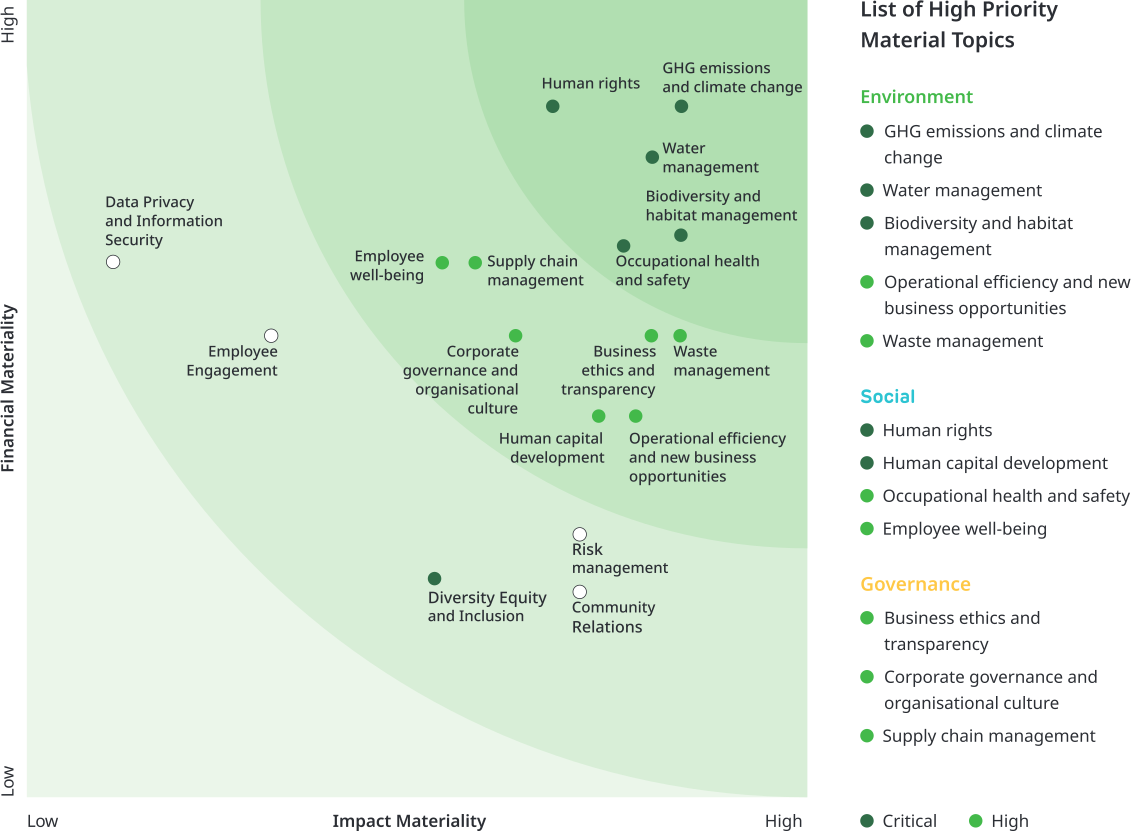
Managing High-Priority Material Matters in Our Operating Context
Strategy
S1 Focussed on delivering renewable energy with storage solutions,
S2 Increased focus on C&I and merchant opportunities to maximise value creation,
S3 Developing RE projects at an unparalleled scale and speed,
S4 Driving operational excellence through increased digitalisation,
S5 Fully funded growth with disciplined capital management,
S6 Driving improvements across environmental, social and governance aspects
 Positive
 Negative
GHG Emissions and Climate Change
GRI Alignment
GRI 302, 305
SDG Alignment

Financial Implication

Impact Materiality (Impacts) and Possible Impact on Capitals

- Rising GHG emissions contribute to climate change
- Growing cost-effectiveness of wind and solar plants reduces dependency on fossil fuels
Financial Materiality and Possible Impact on Capitals
Risk

- GHG emissions compliance may increase operational costs, while non-compliance risks may result in reputational damage
- Extreme weather events can damage assets
- Investments are also needed in climate action
Opportunity

- New regulations and focus on RE present opportunities to expand, enter new markets, and grow market share
- Investment in R&D may increase RE’s cost-effectiveness, efficiency and reliability, while reducing fossil fuel usage
Business Strategy
- Policies on climate change (with Board oversight) and energy management
- Completed climate scenario analysis and comprehensive climate change risk assessment (TCFD), implementing recommendations
- Energy efficiency using advanced bifacial modules/trackers technologies, digital technologies and ENOC
- Implemented Internal Carbon Pricing (ICP) mechanism
- Working towards 65% EV adoption across the value chain by 2030
- Engaged 87% manufacturing suppliers to help them set their net-zero targets
| Performance against KPIs | FY 2024-25 | FY 2023-24 |
|---|---|---|
| GHG emissions avoided by renewable capacity (tCO2e) | 20.33 million | 15.64 million |
| % EV adoption | 46% | 12.2% |
Strategic Response
Stakeholders Impacted

Waste Management
GRI Alignment
GRI 306
SDG Alignment

Financial Implication

Impact Materiality (Impacts) and Possible Impact on Capitals

- Circular waste management conserves resources and reduces the ecological footprint of solar technology
Financial Materiality and Possible Impact on Capitals
Risk

- Inadequate waste management can increase operational costs, reduce overall efficiency, create health and environmental hazards, potentially leading to legal and reputational issues
Opportunity

- Effective waste management and recycling can optimise raw materials use, decreasing costs and increasing profitability
Business Strategy
- All our operational sites are zero-waste-to-landfill and single-use plastic free certified
- Developed action plans to reduce waste generation including training employees
| Performance against KPIs | FY 2024-25 | FY 2023-24 |
|---|---|---|
| Total Waste Recycled/Reused (MT) | 8,495.94 | 5,859.63 |
Strategic Response
Stakeholders Impacted

Water Management
GRI Alignment
GRI 303
SDG Alignment
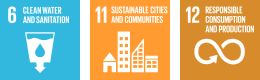
Financial Implication

Impact Materiality (Impacts) and Possible Impact on Capitals

- Excessive water usage during construction in water-stress regions strain ecosystems and local communities
- Robotic cleaning techniques for solar PV panels reduce freshwater consumption
Financial Materiality and Possible Impact on Capitals
Risk

- High water consumption without replenishment can increase operational costs and reduce efficiency
Opportunity

- Efficient systems for water conservation, recycling, and replenishment
- Robotic cleaning technology reduces water consumption and operational costs
Business Strategy
- Water-saving technologies, rainwater harvesting and robotic cleaning techniques (including all new sites) to prevent use of freshwater
- Conducting water use assessments to improve the efficiency of our water management initiatives
- Water Positive for 100% operational locations
| Performance against KPIs | FY 2024-25 | FY 2023-24 |
|---|---|---|
| Water withdrawal/consumption for operations (m³) | 4,10,928 | 4,48,461 |
| Operational water intensity (KL/MWh) | 0.015 | 0.021 |
Strategic Response
Stakeholders Impacted

Biodiversity and Habitat Management
GRI Alignment
GRI 304
SDG Alignment
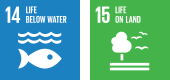
Financial Implication

Impact Materiality (Impacts) and Possible Impact on Capitals

- Loss of habitat and degradation of the natural ecosystem
Financial Materiality and Possible Impact on Capitals
Risk

- Large RE farms need huge land areas, impacting the flora and fauna
- Biodiversity non-compliance or natural habitat destruction may damage reputation
Opportunity

- Biodiversity impact assessment identifies risks and remedial actions
Business Strategy
- Comprehensive biodiversity assessment in progress using the LEAP approach
- Conducted Bird and Bat monitoring studies and installed bird flight diverters, guards, insulation sleeves, cotton flags, and reflectors on the transmission line to protect them
- Proper reservoir placement and trap-and-haul programmes to prevent fish entrapment in PSP hydro project turbine
| Performance against KPIs | FY 2024-25 | FY 2023-24 |
|---|---|---|
| Biodiversity risk assessments conducted | 6 | 3 |
Strategic Response
Stakeholders Impacted

Operational Efficiency and New Business Opportunities
GRI Alignment
GRI 201
SDG Alignment
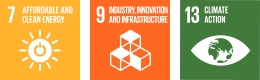
Financial Implication

Impact Materiality (Impacts) and Possible Impact on Capitals

- Technological advancement for reducing environmental impact
Financial Materiality and Possible Impact on Capitals
Opportunity

- Advanced technologies boost efficiency and power supply creating new business opportunities
- Innovative solutions reduce costs, create new jobs, enhance competitiveness, and ensure long-term success
Business Strategy
- State-of-the-art Centre of Excellence and other automation projects to efficiently monitor sites
- Deployed innovative RE technologies (PV optimisers, module price intelligence, aerial imagery analytics, WTG vibration analysis, and digital twins) to increase operational efficiency
- Expanded presence across RE value chain with energy storage to ensure a reliable, green power supply and C&I opportunities
- Identified various development prospects: hybrid power, a smarter grid which facilitates two-way interchange and developing integrated business ecosystem with backward integration
| Performance against KPIs | FY 2024-25 | FY 2023-24 |
|---|---|---|
| Revenue from operations (₹ crore) | 11,212 | 9,220 |
Strategic Response
Stakeholders Impacted

Occupational Health and Safety
GRI Alignment
GRI 403
SDG Alignment
Financial Implication

Impact Materiality (Impacts) and Possible Impact on Capitals

- Workplace hazards and accidents can harm workers, contractors, and local communities
Financial Materiality and Possible Impact on Capitals
Risk

- Safety incidents could result in fines, corrective action or settlement costs, productivity loss, and reputational damage
Opportunity

- Automating health and safety monitoring systems can prevent accidents, electrical hazards and streamline safety operations
Business Strategy
- Implementation of Standard Operating Procedures (SOPs), stringent health and safety norms, ISO 45001:2018 management system, and robust governance to ensure zero harm
- Continuous monitoring and evaluation of safety performance and conducting audits for system improvement
- Implemented Video Analytics for real-time PPE monitoring and safety alerts
| Performance against KPIs | FY 2024-25 | FY 2023-24 |
|---|---|---|
| TRIFR / LTIFR | 0.04 | 0.40 |
| Fatality | 4 | Zero |
Strategic Response
Stakeholders Impacted

Employee Well-Being
GRI Alignment
GRI 401
SDG Alignment
Financial Implication

Impact Materiality (Impacts) and Possible Impact on Capitals

- Excessive workloads can drive mental health illnesses
Financial Materiality and Possible Impact on Capitals
Risk

- Employees mental health issues may lead to missed work days and decline in productivity and efficiency
Opportunity

- Support for stress management, preventing burnout, and mental health sessions can enhance loyalty
Business Strategy
- Comprehensive wellness programmes covering mindfulness sessions, yoga and stress management workshops
- Comprehensive wellness programmes covering mindfulness sessions, yoga and stress management workshops
| Performance against KPIs | FY 2024-25 | FY 2023-24 |
|---|---|---|
| Total Employee Benefits (₹crore) | 128 | 77 |
Strategic Response
Stakeholders Impacted

Human Rights
GRI Alignment
GRI 407 to 410
SDG Alignment
Financial Implication

Impact Materiality (Impacts) and Possible Impact on Capitals

- Child/forced labour, poor working conditions, discrimination and harassment can violate human rights
Financial Materiality and Possible Impact on Capitals
Risk

- Human rights violations can lead to fines, pose regulatory and reputational risk, and negatively impact employee morale and productivity
Opportunity

- Good working conditions with respect for human rights provide social, physical and psychosocial protection and personal development opportunities, enhancing productivity
Business Strategy
- All our sites are assessed for child/forced labour, sexual harassment, discrimination, and wages
- Human rights due diligence conducted through head office and sample site visits, including ESG valuation/screening of suppliers
- Training on workplace discrimination and harassment with a transparent process for reporting incidents
| Performance against KPIs | FY 2024-25 | FY 2023-24 |
|---|---|---|
| Human rights assessment conducted | 6 | 3 |
| Instances of human rights violation | 0 | 0 |
Strategic Response
Stakeholders Impacted

Human Capital Development
GRI Alignment
GRI 401, 404
SDG Alignment
Financial Implication

Impact Materiality (Impacts) and Possible Impact on Capitals

- Improved productivity and performance, and value proposition through talent management
Financial Materiality and Possible Impact on Capitals
Risk

- Insufficient training hampers skill development and growth of employees and company
- Poor workforce planning and talent gaps can overload existing staff, causing stress and burnout
Opportunity

- Training enhances employee growth, retention, and productivity, optimising production costs
- Capability gaps can be closed through future workforce scenario analysis and forecasting workforce requirements
Business Strategy
- Robust mechanism to assess (forms and one-on-one discussions) competency and identify training needs to create Individual Development Plans (IDPs)
- Proactive assessment of workforce needs through department head and key stakeholders’ meetings to identify organisational structure gaps
- Strategic workforce plan to make informed talent acquisition and retention decisions
| Performance against KPIs | FY 2024-25 | FY 2023-24 |
|---|---|---|
| Average training hours per employee | 94 | 70 |
Strategic Response
Stakeholders Impacted

Business Ethics and Transparency
GRI Alignment
GRI 205, 206
SDG Alignment
Financial Implication

Impact Materiality (Impacts) and Possible Impact on Capitals


- Enhancing stakeholder relationships through transparency
- Corruption and bribery harm intangible assets and anti-competitive practices risk the economic exclusion of small producers and livelihoods
Financial Materiality and Possible Impact on Capitals
Risk

- Delayed or inadequate disclosure of corrupt and anti-competitive practices poses regulatory, reputational, and legal risks; it can lead to exclusion from contracts affecting future earnings
Opportunity

- Regulatory adherence and fair practices enhance our reputation
- Strategic partnerships drive synergies, market access, and resource sharing, ensuring a sustainable and competitive business environment
- Capability gaps can be closed through future workforce scenario analysis and forecasting workforce requirements
Business Strategy
- Robust corporate communication mechanism for effective engagement with internal and external stakeholders, including updates on performance through the Integrated Annual Report, ESG Report, and the company website
- Adhering to the Adani Code of Conduct (CoC) and business ethics with zero tolerance for bribery, corruption, illegal payments, etc.
- Stringent policies and whistleblower mechanisms to prevent unethical business practices
- MySOPs application for managing and accessing process documents
| Performance against KPIs | FY 2024-25 | FY 2023-24 |
|---|---|---|
| Instances of corruption and bribery | 0 | 0 |
Strategic Response
Stakeholders Impacted

Supply Chain Management
GRI Alignment
GRI 308, 414 and 204
SDG Alignment
Financial Implication

Impact Materiality (Impacts) and Possible Impact on Capitals

- Poor supply chain management (SCM) practices risk environmental and human rights violations
Financial Materiality and Possible Impact on Capitals
Risk

- Inefficient SCM can cause disruption and elevate costs
- Raw materials impact the environment and society, and can disrupt operations due to community protests, legal or regulatory action, and increased extraction costs
- Cases of child/forced labour or any other human rights violations may lead to statutory breaches
Business Strategy
- Ensuring assessment of the suppliers' ESG performance while considering country-, commodity-, and sector-specific risks
| Performance against KPIs | FY 2024-25 | FY 2023-24 |
|---|---|---|
| Percentage of critical/important manufacturing suppliers: | ||
| Evaluated on ESG parameters | 100 | 100 |
| Trained | 100 | 100 |
Strategic Response
Stakeholders Impacted

Corporate Governance and Organisational Culture
GRI Alignment
GRI 3-3, Multiple disclosures under GRI 2
SDG Alignment
Financial Implication
Impact Materiality (Impacts) and Possible Impact on Capitals

- Robust governance practices ensure ethical value creation and drive stakeholder trust
- Strong organisational culture strengthens employer branding and customer trust
- A well-structured board with independent oversight enhances decision-making and protects stakeholder interests
Financial Materiality and Possible Impact on Capitals
Risk

- A weak governance structure can lead to corrupt practices, negatively impacting the reputation, employee morale and productivity, and financial penalties and legal liabilities
Opportunity

- A collaborative organisational culture encourages idea-sharing, loyalty, and satisfaction
- Independent directors provide an unbiased viewpoint and guide in identifying new growth opportunities
Business Strategy
- Strong governance framework with diverse directors (50% independence) and experienced leadership team
- Robust corporate/ESG governance framework
- "Your Voice Matters" survey to gauge employee satisfaction, from daily operations to strategic direction
| Performance against KPIs | FY 2024-25 | FY 2023-24 |
|---|---|---|
| Proportion of independent directors on the Board | 50% | 50% |
Strategic Response
Stakeholders Impacted



