Risk and opportunities
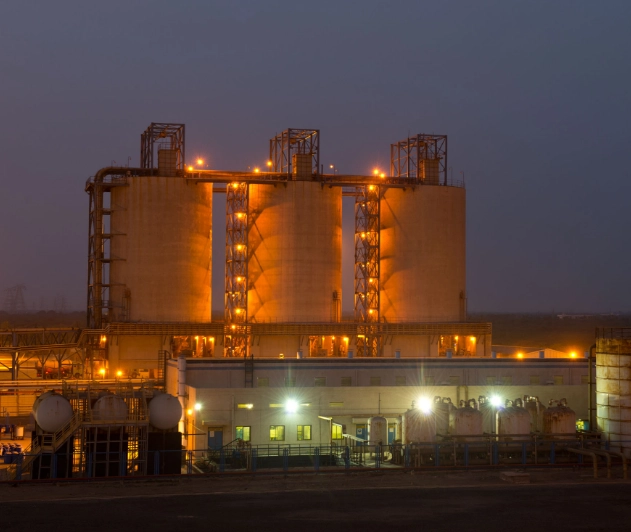


We continuously enhance our risk management practices through learning, innovation, and employee engagement to stay ahead in an ever-changing environment. Our proactive approach enables us to manage regulatory and operational risks effectively, while pursuing growth opportunities through capacity expansion and technology upgrades.
Our strategy is driven by our commitment to provide affordable power for all while effectively managing business risks. We have established an Enterprise Risk Management (ERM) framework to identify and mitigate risks identified. We are able to achieve sustained value creation and to take advantage of growth opportunities by leveraging our experience and capitalising on our strengths and capabilities. We continuously enhance our risk management practices through learning, innovation, and employee engagement to stay ahead in an ever-changing environment. Our proactive approach enables us to manage regulatory and operational risks effectively, while pursuing growth opportunities through capacity expansion and technology upgrades. Going forward, we are enhancing energy efficiency, embedding sustainability deeper into our operations, and strengthening safety standards.
Our comprehensive risk management policy and framework enables us to identify and manage various risks, including financial, operational, sectoral, sustainability, IT, cyber security, and other emerging risks.
Our Risk Management Committee (RMC), comprising independent directors, oversees the risk appetite, risk management framework, and governance structure. The RMC is responsible for managing both internal and external risks that could impact our business.
To ensure specialised risk oversight, the RMC operates through four sub-committees:
Further, the Audit Committee monitors financial risks, including interest rate fluctuations and other financial parameters.
At the executive level, our Business Risk Management Committee (BRMC), led by the Chief Risk Officer (CRO) and other members, is responsible for implementing and executing the risk management framework. The BRMC biannually presents the risk management update to the Board-level RMC. We also have Functional Risk Committees (FRCs) for Mergers and Acquisitions Risks, Legal, Regulatory and Tax Risks, Reputation Risks, Commodity Price Risks, and Other Risks. Our Station Risk Committee (SRC) focusses on risks related to project and operational locations. The FRCs and SRC report quarterly to the Chief Risk Officer, ensuring continuous monitoring and timely action.
At the plant level, plant heads are responsible for identifying, notifying, and mitigating potential risks. Each risk is assigned a dedicated Risk Owner and Risk Champion to ensure the successful implementation of the risk mitigation plans and effective control measures.
We have implemented an integrated ERM framework aligned with the International Standards ISO 31000:2018 (Risk Management System) and COSO (Committee of Sponsoring Organisation of the Treadway Commission) framework. This framework is strategically designed to identify, assess, and mitigate risks across our operations.
We have a dedicated risk team responsible for addressing challenges arising from non-compliance with our risk framework and advising the Board on setting an appropriate risk tolerance. The responsibility of identifying risks lies with each department where they identify potential risks, develop mitigation plans, and regularly update the Chief Risk Officer on mitigation plans.
The BRMC meets quarterly to discuss the risks identified by the Functional Risk Committees and Station Risk Committee. It also oversees compliance with our risk framework, provides guidance on risk appetite and tolerance, and ensures alignment with emerging regulatory requirements, best practices in corporate governance, and industry standards.
The Company’s exposure to risk is reviewed quarterly to ensure its resilience against potential risks. Our risk management system is audited internally once a year.
The BRMC meets quarterly to discuss the risks identified by the Functional Risk Committees and Station Risk Committee. It also oversees compliance with our risk framework, provides guidance on risk appetite and tolerance, and ensures alignment with emerging regulatory requirements, best practices in corporate governance, and industry standards.
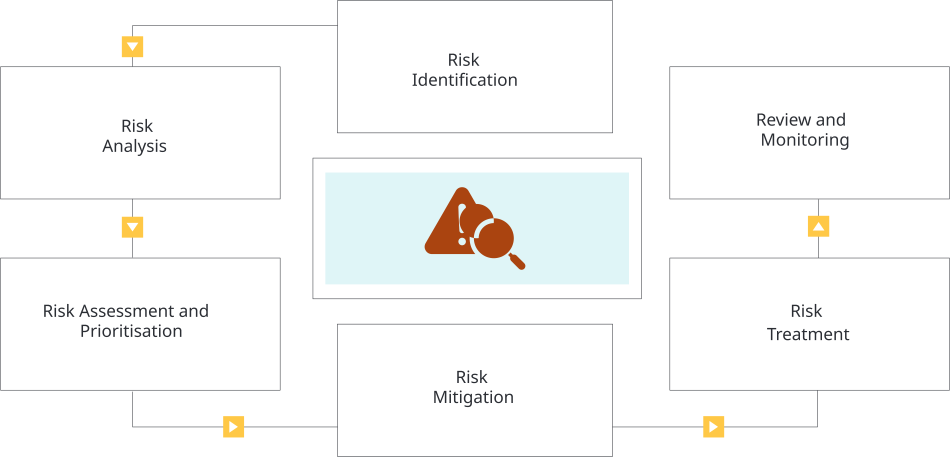
At Adani Power, risks are systematically identified at both the enterprise and operational levels. This process entails a comprehensive examination of internal and external factors that could facilitate or impede the achievement of set objectives and expected targets. The identified risks are then compiled in a risk register for the power business. This register is reviewed periodically by a council comprising Board members.
Risk analysis involves the comprehensive evaluation of uncertainties, sources, consequences, likelihood, events, scenarios, controls, and their efficacy, followed by the categorisation based on severity and probability. This aids in determining the impact value for classifying risks as catastrophic, critical, moderate, or marginal. Additionally, lead and lag indicators are defined along with risk indicator thresholds, ensuring the efficiency of risk management processes.
Each risk is aligned with performance measures to assess its impact on business processes. This includes measuring efficiency (In-Process) using factors like the risk mitigation completion index, overlooked risks, and accuracy of identified risks. Furthermore, effectiveness is assessed through metrics such as risks causing losses, declining residual value, unplanned disruptions, and adherence to recovery time as per customer expectations.
After considering mitigation strategies and risk insurance, each risk is assigned a residual risk impact and frequency score. Furthermore, a dedicated risk owner and champion are appointed to effectively mitigate and control the identified risks.
The identified risks are linked with the organisation’s strategic or functional objectives and relevant business processes to ensure alignment of risk management with the broader organisational goals.
Risks are assessed and prioritised based on their likelihood, impact, proximity, and controllability. Risks are categorised into Strategic or Reputational Risk, Tactical Risk, and Operational Risk, with each category representing impacts on business decisions and reputation, changes in business conditions, and daily activities, respectively. The risks are then presented to the BRMC, who shall meet to oversee compliance with the risk framework. The BMC imparts advice on risk appetite and tolerance as well as ensures alignment with emerging regulatory, corporate governance, and industry best practices.
Comprehensive mitigation strategies are developed, which include mitigation actions, costs, benefits, frequency, target completion date, and the establishment of risk indicators for monitoring purposes.
We have established a robust governance structure to ensure the effectiveness of the process, with continuous reviews conducted by the Functional and Station Risk Management Committees.
At Adani Power, there are four fundamental approaches to risk treatment: tolerate, treat, transfer, and terminate, also known as the 4T analysis for risk treatment.
These approaches to risk management are critical for ensuring the success and stability of projects and businesses.
Our executive management closely monitors various business aspects, such as fluctuating raw material prices, equipment efficiency, and process safety, to identify and mitigate potential risks. Plant heads are accountable for recognising, notifying, and mitigating observed or anticipated risks at the plant level.
We regularly monitor and report risks and their mitigation status to identify trends and prioritise measures. Furthermore, a review by the Functional Committee, followed by the BRMC committee, is conducted to identify focus areas and develop mitigation plans to drive positive risk trends.
At Adani Power, we uphold a culture of risk awareness by empowering our employees through education and training on risk management principles. Employees at all levels are encouraged to take ownership of risks within their areas of responsibility. Our Board members undergo regular familiarisation and training on the Company’s risk landscape. The Risk Management Committee is supported by three non-executive Board members with expertise in risk management.
Our executive management closely monitors various business aspects, such as fluctuating raw material prices, equipment efficiency, and process safety, to identify and mitigate potential risks. Plant heads are accountable for recognising, notifying, and mitigating observed or anticipated risks at the plant level. To facilitate effective risk identification, we promote open communication across departments through regular dialogue and an open-door policy.
To drive engagement and accountability, we offer performance-linked incentives tied to energy efficiency and climate change mitigation KRAs. Given that climate change is a significant risk, we recognise the importance of thermal power in meeting India’s growing energy needs. To address this, we are focussed on reducing our environmental impact through measures like improving efficiency and introducing renewable resources like biomass and green hydrogen into our fuel mix. We are also currently piloting green ammonia co-firing at one of our power plants, a step towards reducing our environmental footprint.


These measures will help mitigate the potential adverse effects of legal disputes and non-compliance, safeguarding our interests and fostering a favourable business environment.


We ensure sustained and effective communication with stakeholders to mitigate the impact of this risk.
Our enterprise risk management (ERM) framework facilitates proactive management of emerging risks through annual assessments and continual threat monitoring. We have identified a few emerging risks, which are explained in detail in the below-mentioned table. We effectively address these risks by fortifying our systems and practices, integrating them into the ERM framework, and establishing a structured management process to evaluate their impact on our operations. We have taken measures to mitigate external shocks stemming from market fluctuations or unforeseen disruptions, thereby ensuring resilience and business continuity.

Irreversible and self-perpetuating changes to critical planetary systems, inclusive of land-based (such as wildfires), water-based (such as floods), atmospheric and temperature-based (such as heat waves) and including those exacerbated by climate change, can have devastating consequences. These include loss of human life, destruction of property and ecosystems, financial losses, disruption of critical suppliers, etc.

Global or regional powers may deploy economic levers to reshape economic relationships between nations by restricting goods, knowledge, services, or technology to promote self-sufficiency, constraining geopolitical rivals and consolidating spheres of influence. It includes but is not limited to currency measures; investment controls; sanctions; state aid and subsidies; and trade controls.

The rapid proliferation of AI technologies is likely to bring numerous benefits but pose significant risks to individuals and businesses (including ours). As AI becomes more widespread and advanced, it may lead to unforeseen or deliberate negative consequences that could have far-reaching impacts.
Persistent false information (deliberate or otherwise) is spreading rapidly through various media channels, causing widespread public distrust in facts and authority. This includes, but is not limited to false, imposter, manipulated and fabricated content.

As we continue to operate in a rapidly evolving business environment, we foresee a risk of limited access to capital and credits due to our high carbon-intensive operations. The growing emphasis on ESG metrics and disclosure standards is likely to drive investors and lenders to prioritise companies with lower carbon footprints, potentially leading to higher borrowing costs or reduced credit availability for Adani Power in the long term.
The energy transition refers to the global shift from fossil fuel-based energy systems to renewable and low-carbon sources. This also includes changes in policies, technological advancements, company goals and targets, and financing instruments.


