Stakeholder engagement


Our commitment to building strong relationships with all stakeholders is instrumental in achieving our objectives and contributing to the overall well-being of the organisation. We strive to create value for our stakeholders by aligning our decision-making process with their expectations and goals through transparent and ongoing communication. We have implemented a structured internal process to effectively engage with both internal and external stakeholders, thereby prioritising their requirements. To ensure their inputs are incorporated into our strategies
we proactively address their concerns and focus on areas that require improvement.
Our Stakeholder Engagement Policy governs the process, ensuring transparency and consistency. The Corporate Responsibility Committee (CRC) oversees the stakeholder engagement process and reports the results of interactions to the Board of Directors. Furthermore, the Board has a dedicated Stakeholder Relationship Committee, which focusses specifically on certain stakeholders, such as investors, analysts, and shareholders. To ensure accountability, we set targets, regularly review our performance, and report on our progress, creating transparency across our communities.
We have adopted the following approach to ensure and incorporate our stakeholders’ inputs in our strategies, address their concerns and focus on areas that need improvement
Identify individual or stakeholder groups who can impact or be impacted by our business activities directly or indirectly.

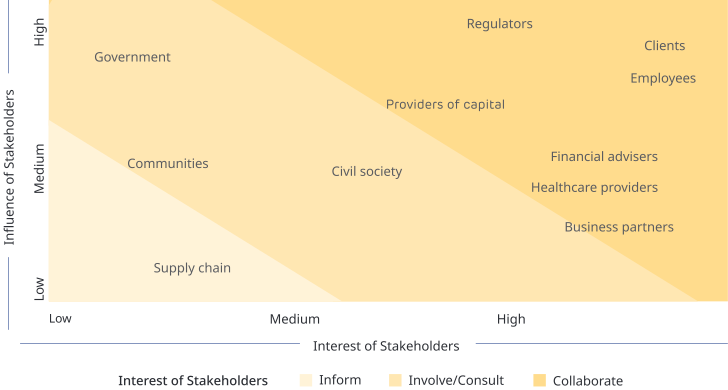
Analyse and prioritise stakeholders based on the level of responsibility, impact dependence and influence on our business and vice-versa.
Engage and collaborate with the stakeholders through a robust engagement plan based on the nature, concerns and aspirations of the stakeholder group to build constructive relationships that promote sustainable growth and mutually beneficial outcomes.

They provide strategic guidance to the Company. They also oversee the Company’s performance and risk management.
Update senior management on the overall performance of the organisation on financial and non-financial parameters.
instances of breach in code, non-ethical practices or non-compliance with regulatory requirements
fines due to regulatory non-compliance


They provide financial capital to achieve long-term business growth and stability
Market capitalisation
Return on Equity*

They execute operations and strategies. An engaged and productive workforce reinforces business competitiveness and market leadership.
Total employee benefits

They support the continuity of business activities
increase in average wages
lost time injury frequency rate


They are a critical part of the value chain. Strong relations secure availability at competitive prices and seamless operations.
Procurement from local suppliers


They are essential for revenue generation and business sustainability. Customer-centricity strengthens relations and contributes to long-term success.
Average PPA tariff (net)
Average merchant/short-term tariff (net)


They provide a social licence to operate. Prioritising inclusive growth fosters mutually beneficial relations.
Direct and indirect beneficiaries


They frame policies and regulations. Meaningful partnerships support a beneficial regulatory regime for industry growth.
Tax contribution to the national exchequer

They play a crucial role in presenting a unified perspective to the government on policy advocacy.


They facilitate timely and transparent communication with stakeholders, building trust and reliability
Media coverage (including Print and Online)


They facilitate access to the latest research, advanced technologies and innovative solutions.



