×

Risk and opportunities
A proactive approachto risk and growth

In today’s ever-evolving business environment, the challenges we face are as dynamic as the opportunities we can seize.
Recognising this duality, we have crafted a comprehensive Risk Management policy and built a resilient Enterprise Risk Management (ERM) framework. These enable us to proactively identify, evaluate, and mitigate potential risks that could hinder our strategic goals or impact our journey of creating lasting value.
Our approach is structured, focussed, and committed to safeguarding our business’s growth and resilience.

Risk Governance Framework

Our governance framework ensures clear accountability for our risk management strategy through a balanced bottom-up and top-down approach, overseen by the Board and the statutory Risk Management Committee (RMC).

Chaired by an Independent Director, the RMC supervises the risk framework, reviewing policies, practices, and procedures. The Chief Risk Officer (CRO), along with Risk Coordinators and Risk Owners, strengthens the process.

The RMC addresses critical concerns through regular discussions and evaluations, holding at least one meeting annually or more as needed. Key outcomes and recommendations are presented to the Board and documented in stock exchange reports, ensuring transparency and accountability.

Board of Directors

They set the tone at the top, promoting a culture of transparency and effective risk management. They periodically review the risk management framework and address key threats to ensure the Company remains resilient and prepared.


Risk Management Committee (RMC)

The Committee monitors internal and external environments to assess the Company’s risk exposure, provides guidance through risk evaluation and management procedures, oversees the implementation of the Risk Management Plan, and reviews controls and systems to recommend improvements.


Chief Risk Officer

The officer acts as the custodian of the risk management process, ensuring its effective execution across all business functions. They oversee coordination between the RMC and business units to drive efficient risk management practices.
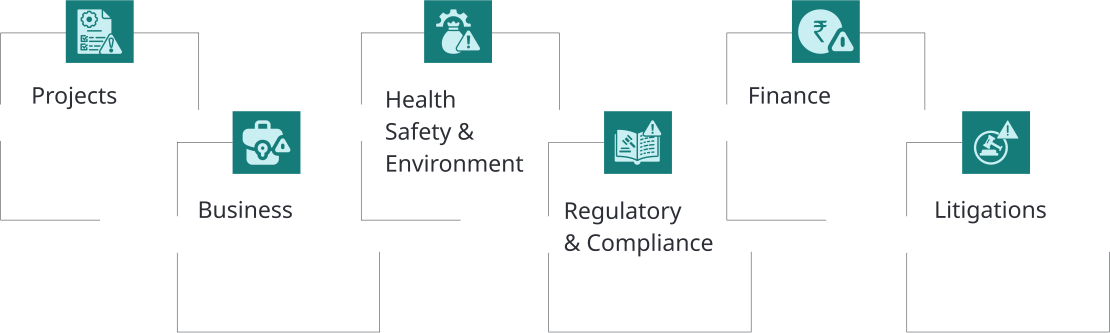
Risk Categorisation

Risk coordinators and owners

They are trained individuals responsible for identifying and understanding risks within their areas, communicating them to the CRO, and implementing mitigation measures in line with the risk management framework.

ERM Framework and Risk Management Process

Our Enterprise Risk Management (ERM) framework follows a structured approach to identifying, assessing, monitoring, and mitigating risks, ensuring a proactive and systematic risk management process.
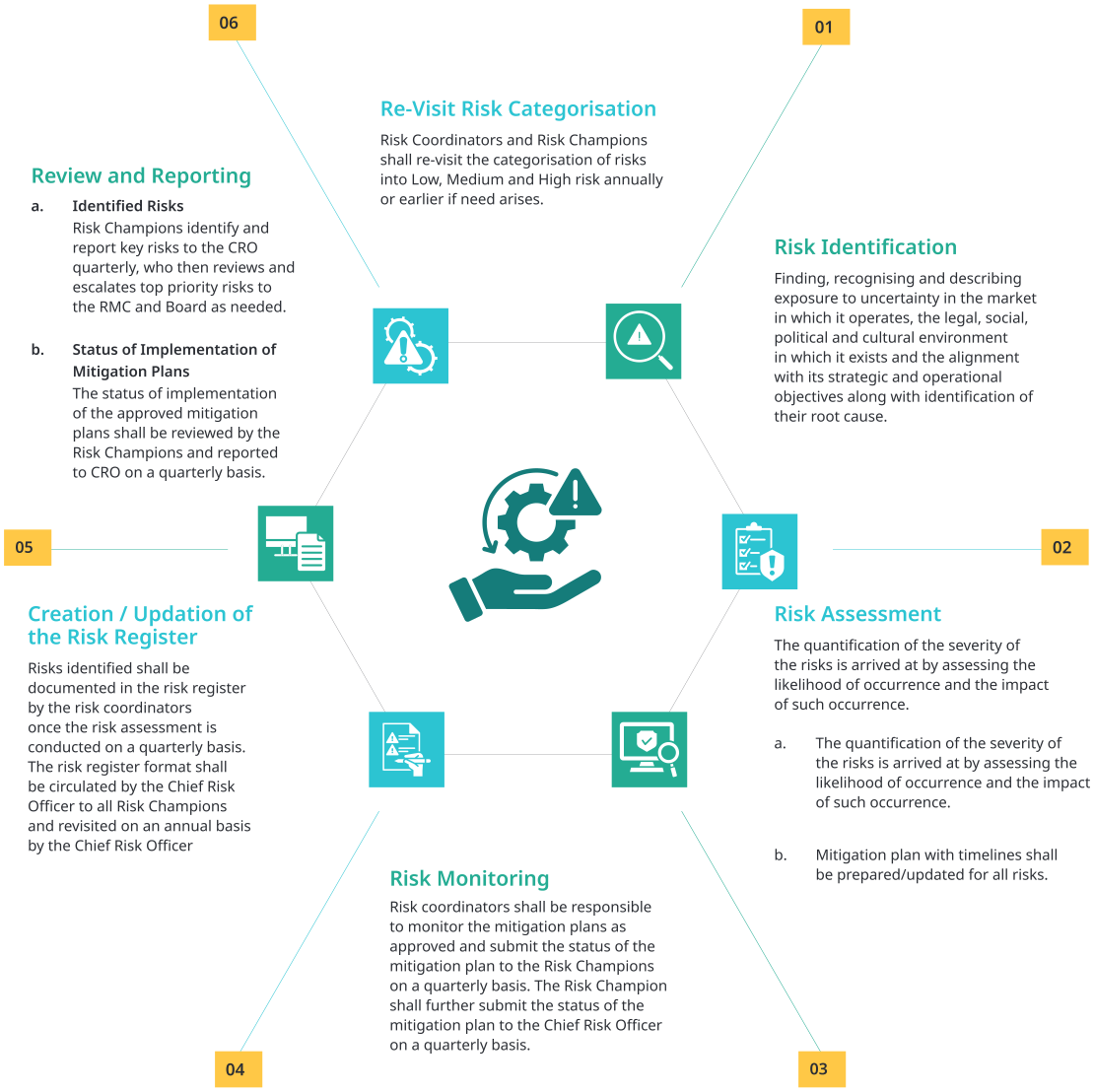
Risk Management Process

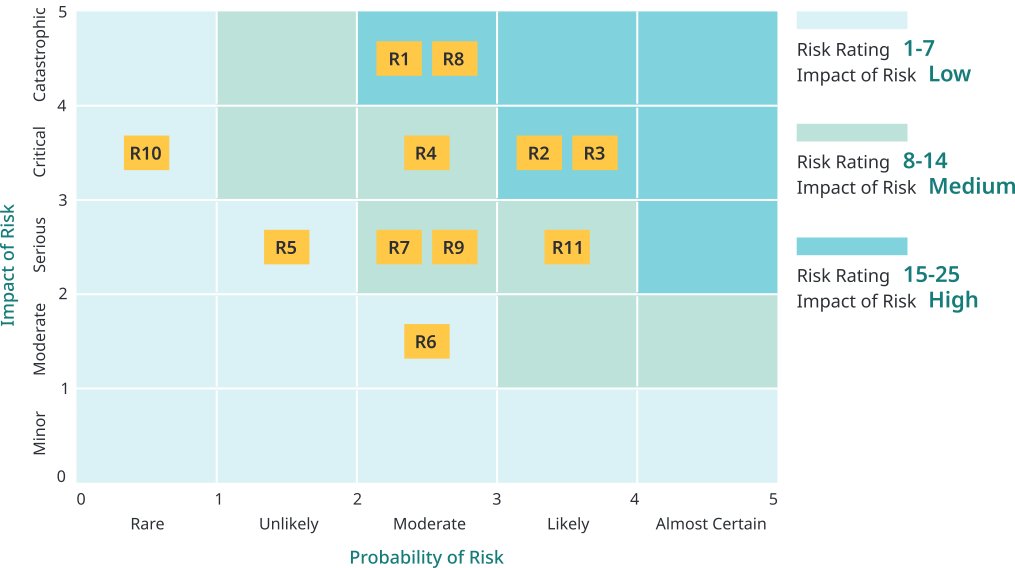
Risk Heat Map

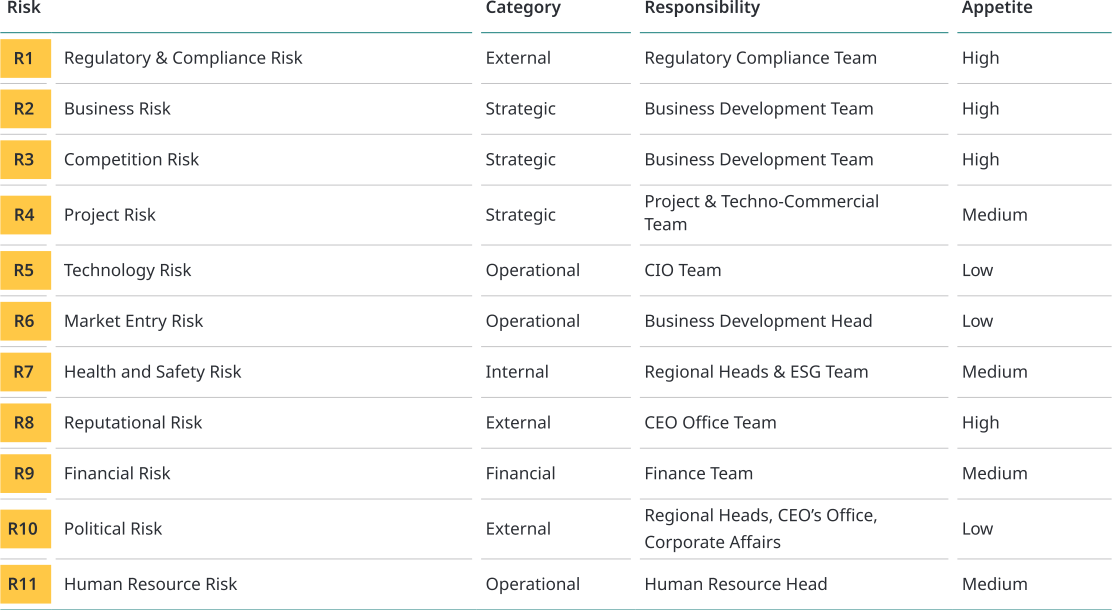
Our Top Risks Broadly Covers

Key Risks and Mitigating Actions

Capitals

Financial Capital

Manufactured Capital

Intellectual Capital

Human Capital

Social and Relationship Capital

Natural Capital

Material Topics
M1

E&S Impact of Products and Services

M2

Climate Change, Adaptation and Mitigation

M3

Land Use and Biodiversity

M4

Energy Management

M5

Waste & Recycling

M6

Water Use

M7

Carbon Emission

M8

Pollution

M9

Energy Security and Accessibility

M10

Community Relations

M11

Human Capital Management

M12

Occupational Health and Safety

M13

Data Privacy and Security

M14

Human Rights

M15

Product Quality & Safety

M16

Innovation, Patents, and Technology Transfer

M17

Corporate Governance

M18

Risk and Crisis Management

M19

Customer Satisfaction

M20

Sustainable Sourcing

M21

Sustainable Supply Chain

M22

Grievance Redressal Mechanisms

Strategies
S1

Infrastructure Development

S2

Gas Sourcing and Volume Enhancement

S3

Cost Leadership through Digital First Approach

S4

Responsible Corporate Citizenship

S5

Preparing for Low Carbon Future

R1

Regulatory and Compliance Risk

Capitals at Risk

Strategy at Risk

S1 S4

Material Topics

M17 M18

Risk Description

  • Risk of non-compliance with statutory regulations due to the absence of a robust compliance framework for monitoring and tracking regulatory requirements
  • Risk of significant or sudden change in regulation or key policy, with adverse impact on CGD exclusivity, gas allocation, taxation, etc.

Impact on Value

The CGD business operates under the regulatory oversight of PNGRB and MoPNG, requiring adherence to evolving regulations from time to time. Changes in these regulations and market conditions can significantly impact the Company’s operations.

Also, being a listed entity, it is required to comply with SEBI’s Listing Obligations and Disclosure Requirements. Non-compliance with this will lead to a penalty.

Mitigating Measures

  • Maintain an updated Key Advocacy Charter
  • Engage in advocacy efforts independently or through industry/sectoral associations
  • Continuous monitoring of regulatory and policy changes, including draft proposals and news updates
  • Participates in open house discussions with authorities
  • Constant review of business strategy keeping up with possible regulatory and policy changes in the future

Secretarial team have a compliance framework to monitor and track various regulations, using Legatrix Software to monitor compliance.

R2

Business Risk

Capitals at Risk

Strategy at Risk

S3 S2 S3 S5

Material Topics

M1 M11 M12 M13 M15
M17 M18 M20 M21

Risk Description

  • Risk of revenue loss due to significant fluctuations in gas prices, impacting profitability
  • Risk of reduced domestic gas allocation for CNG and Domestic PNG, leading to increased procurement costs and potential margin pressures
  • High reliance on OMC/Dealer networks may result in demands for higher margins, affecting cost efficiency
  • Risk of losing market share due to the expiration of marketing or infrastructure exclusivity, increasing competition in the sector

Impact on Value

Our natural gas supply for CNG and domestic sectors is sourced partly from GAIL, based on prevailing domestic gas allocation and pricing guidelines of MoPNG, the balance requirement is sourced from the market. Gas for Commercial and Industrial segments is also sourced from the open market. Any increase in natural gas prices, reduction in domestic allocation, or inability to source gas may negatively affect our business, operations, and cash flows.

Mitigating Measures

Gas Sourcing and Price Management
  • A dedicated 24x7 gas sourcing team ensures continuous availability and efficient management of gas requirements
  • The team regularly updates the gas sourcing strategy based on market conditions
  • Short- to medium-term sourcing plans are developed to mitigate price volatility risks
  • Active advocacy efforts are undertaken to address price and volume risks arising from policy changes
Diversification of CNG Station Formats:
  • Strategic Focus on developing a balance Mix of Channel/Business Partner Network cutting across various categories
Customer Engagement and Market Adaptation:
  • ATGL maintains direct engagement with industrial customers to understand their needs and ensure timely supply
Regulatory Monitoring and Compliance:
  • The open access regime, under which the CGD networks would be declared as common carrier/ contract carrier, is yet to be implemented in the country
  • Remaining proactive in tracking regulatory changes and adapting business strategies accordingly
R3

Competition Risk from Alternative Fuels

Capitals at Risk

Strategy at Risk

S1 S2 S3 S5

Material Topics

M7 M9 M15 M16 M19

Risk Description

  • Loss of revenue due to significant fall in prices of alternate fuels vis-à-vis gas prices
  • Risk that Company loses existing and future market share due to alternative solutions such as electric vehicles, LNG etc.

Impact on Value

Loss of volume and customer base, resulting in reduction of revenue and profitability.

Mitigating Measures

  • Gas price risks are mitigated through a price cap mechanism, aligned with the government’s vision for a gas-based economy
  • Engaged with OEMs and retrofitment agencies to offer innovative customer solutions
  • Expanded our product portfolio by entering into EV, Biogas and LNG segment, turning adoption risks into long-term opportunities
R4

Project Risk

Capitals at risk

Strategy at Risk

S1 S2 S3 S5

Material topics

M11 M12 M14 M18 M21

Risk Description

  • Stoppage of gas supply at CGS due to supply issues from gas suppliers or the main line connecting the CGS
  • Pipeline failure/damage due to corrosion leading to gas loss/fire/fatalities
  • Permissions, approvals from local as well as central authorities
  • Delayed conversion of large industrial and commercial customers leading to loss of revenue and customer dissatisfaction
  • Demand supply gap resulting in non-availability of key equipment for procurement to meet business demands resulting in possible business disruptions

Impact on value

Disruptions to our network infrastructure for sourcing and supplying natural gas could negatively impact our business, reputation, operations, and cash flow. Delays in commissioning new filling stations due to regulatory approvals or other factors could also affect our prospects and financial outcomes.

Mitigating measures

  • Our gas transmission pipeline and upstream operations have ensured continuous supply for decades
  • In case of disruptions, alternative methods, such as cascade movement, are available, especially for the CNG segment
  • We follow industry best practices in engineering, design, and process management
  • Our O&M and emergency response teams are trained to handle disruptions promptly, 24x7
  • Robust systems are in place to manage asset integrity, with regular training for effective monitoring and mitigation
  • Employed best project management practices and collaborated with authorities to minimise delays
R5

Technology Risk

Capitals at risk

Strategy at Risk

S1 S3 S5

Material Topics

M13 M16

Risk Description

  • Loss of data and business disruptions due to IT/OT systems failing or intrusions/virus attack/ransomware

Impact on Value

Mechanical faults, natural disasters, and fires can disrupt operations and cause revenue loss, while data loss can hinder efficiency. Cyberattacks like viruses and ransomware can lead to financial losses and reputational damage.

Mitigating Measures

  • Business continuity and Disaster Recovery (DR): SAP, our core business application, runs on Google Cloud Platform (GCP) with a dedicated Disaster Recovery (DR) setup to ensure uninterrupted operations
  • Data backup and protection: Non-SAP applications are backed up using Commvault/GCP, ensuring data integrity and recovery capability
  • Cybersecurity and network security: Our IT network is secured and encrypted, supported by Antivirus (AV), Endpoint Detection & Response (EDR), and multiple security tools to safeguard data and prevent cyber threats
R6

Market Entry Risk

Capitals at Risk

Strategy at Risk

S1 S2 S3

Material Topics

M1 M2 M4 M7
M9 M16 M19

Risk Description

  • Inability to penetrate into newer geographical areas to create natural gas ecosystem

Impact on Value

Our growth prospects may be negatively impacted if our strategy to enter new market fails. This approach requires significant skills, resources, and time, and failure to execute it effectively could adversely affect our business, operations, and financial health.

Mitigating Measures

  • Developed and implemented dynamic strategies for entering new markets and ventures
  • Skilled resources are acquired or developed to drive new initiatives effectively
  • In emerging sectors like CBG, we actively engage with policymakers to shape supportive frameworks
  • Actively engaged with our consumers to provide 24x7 service which ensures consumer delight to all consumers
  • Launched various awareness initiatives, marketing schemes and social media posts in its areas of operation to ensure a continuous connect with its existing and potential customers
R7

Health and Safety Risk

Capitals at Risk

Strategy at Risk

S1 S4

Material Topics

M11 M12 M18

Risk Description

  • Human loss, fire, property damage
  • Cascade operations, transportation risks
  • Third-party damage to natural gas infrastructure

Impact on Value

Operating with natural gas, a highly combustible fuel, presents risks such as gas leaks, fires, or explosions if procedures are not followed. Such incidents could damage materials, cause injuries, and harm our brand image and public perception, in addition to financial losses.

Mitigating Measures

  • Our CGD network and system fully comply with T4S regulations set by the PNGRB
  • All networks adhere to PNGRB's Emergency Response and Disaster Management Plan
  • Operational safety, process safety, and asset integrity are embedded in all our procedures and design
  • Prioritised safety through regular training and refresher courses for employees and contractor staff to ensure safe operations at all times
R8

Reputational Risk

Capitals at Risk

Strategy at Risk

S1 S2 S4

Material Topics

M10 M14 M17 M18
M19

Risk Description

  • The potential loss of the organisation’s credibility and trustworthiness due to negative public perception or adverse events
  • Inadequate background checks may lead to increase in crime/irregularity by contractor staff

Impact on Value

The Company’s reputation, shaped by internal and external stakeholders' perceptions, is critical to its long-term sustainability and growth. Reputation risks, if not managed well, can negatively affect brand value, stakeholder trust, financial performance, and talent acquisition. They can also increase the likelihood of regulatory non-compliance, leading to legal consequences and penalties.

Mitigating Measures

  • We have established a Board-level Reputation Risk Committee (RRC), comprising 50% Independent Directors, to proactively manage reputation risks
  • The RRC oversees the Risk Management Framework and assesses the Company’s reputation risk appetite in a global business context
  • The RRC recommends best practices and measures to mitigate reputation risks effectively
  • Deployment of security team and cameras
R9

Financial Risk

Capitals at Risk

Strategy at Risk

S1 S2 S3 S5

Material Topics

M11 M15 M17 M18

Risk Description

  • Decline in credit quality and liquidity position
  • Inability to raise finance for project
  • Weak internal financial controls
  • Unsecured sales to customers leading to risk of bad debts

Impact on Value

Impact on Credit quality, cost of borrowing, delay in implementation of projects.

Impact on operations, financial losses, misstatement of accounting records.

Mitigating Measures

  • We employ financial prudence in investment decision-making, ensuring debt covenants are comfortably within the threshold to maintain our credit strength
  • We have our capital management plan in place, meeting both short-term and long-term financial need ensuring sufficient liquidity to achieve financial stability and support growth
  • Strong internal financial control mechanism ensures accuracy and completeness of the accounting records that give a true and fair view
  • We ensure timely payments by sending automated payment reminders, such as emails, SMS, or WhatsApp messages for payment of outstanding amount. and identify, address and monitor overdue payments through receivable ageing reports
R10

Policy Stability Risk

Capitals at Risk

Strategy at Risk

S1 S2

Material Topics

M1 M4 M7
M9 M15 M16

Risk Description

The risk of policy revisions, regulatory changes, or withdrawal of existing approvals due to shifts in the policy landscape. Such changes could impact operational stability and long-term business strategies.

Impact on Value

Policy uncertainties can reduce the attractiveness and growth prospects of the sector, potentially causing delays or disruptions in project execution. Additionally, it may also lead to increased operational challenges, affecting overall business stability.

Mitigating Measures

  • Engage with regulatory bodies and policy makers to propose reforms through industry associations
  • ATGL diversifies its gas sourcing and builts portfolio across multiple suppliers, linkages and tenure to reduce the impact of change in domestic gas allocation policy
R11

Human Resource Risk

Capitals at Risk

Strategy at Risk

S1 S2 S3 S5

Material topics

M11 M12 M14 M22

Risk Description

  • High attrition rates or the departure of key personnel due to market competition, job dissatisfaction, or other factors
  • Impact on operational efficiency, leading to workflow disruptions
  • Hindrances while achieving business objectives

Impact on Value

The loss of key talent can lead to disruptions in business operations, increased recruitment and training costs, and a decline in productivity and employee morale, ultimately affecting long-term growth and stability.

Mitigating Measures

We, at ATGL, have an internal mechanism to monitor and track the attrition. We have MIS as well as HR binder through which we monitor. We also interact with such employees and try to understand their actual reason for leaving and try to pursue for retaining them.

Managing Climate Risks and Opportunities

We recognise the potential impact of climate risks – both physical and transitional – on our operations and business value. To enhance resilience, we have fortified our pipeline network, implemented a robust Emergency Response Management System, and continuously monitor climate risks.