




We continuously monitor and evaluate our environmental footprint and implement innovative solutions to establish sustainable and low-carbon operations.
Our environmental management systems are accredited to ISO 14001:2015 standards and we set annual goals and objectives aimed at mitigating climate change and protecting invaluable ecosystems.
Key Linkages
SDGs
Material Topics
Capitals

Associated Risks
Strategic Priorities
Focus Areas and Key Highlights
Climate Change and Decarbonisation – Energy and Emissions
943.16 kW
Installed in-house solar energy capacity
7,200 km
LDAR survey & Lock Pressure Test (LPT)
Water Stewardship
35,303 KL
Units water savings due to water conservation initiatives i.e Rainwater Harvesting
Waste Management
05
Single-Use-Plastic (SUP) free sites
Environmental Management System
In the Oil & Gas Sector, we are a pioneer in having an Environmental Management System (EMS) which addresses each of the regulatory requirements in a systematic and cost-effective manner. It also helps us address non-regulated issues, such as energy conservation, promote stronger operational control, Monitoring mechanism and employee stewardship. Our EMS extends beyond mere legal compliance and help reduce the risk of non-compliance and improve health and safety practices for employees and the public.
Our Climate Change Policy, Quality, Health, Safety & Environment (QHSE) Policy, and other environmental policies guide our efforts to ensure compliance with environmental laws and regulations. We provide trainings across the organisation on various ESG issues to drive synergies towards enhancing our environmental performance and ESG goals.
The Board-level Corporate Responsibility Committee (CRC) comprising 100% Independent Directors oversee the implementation of ESG policies, goals and strategies across the Company’s operations. CRC communicates and provides assurance to the Board regarding the ESG issues and progress. At the management level, the CEO and the CSO are responsible to provide oversight to the day-to-day implementation of the ESG policies and initiatives and provide quarterly updates to the Board.
In FY 2024-25, there were zero instances of environmental non-compliance, including the fines/penalties.


Our Integrated Management Systems in Ahmedabad, Faridabad, Vadodara and Khurja GAs are certified for ISO 9001:2015, 14001:2015, and ISO 45001:2018. We aim to extend these certifications to all our GAs by 2027.
Commitment Towards Climate Action
Climate Risk Assessment
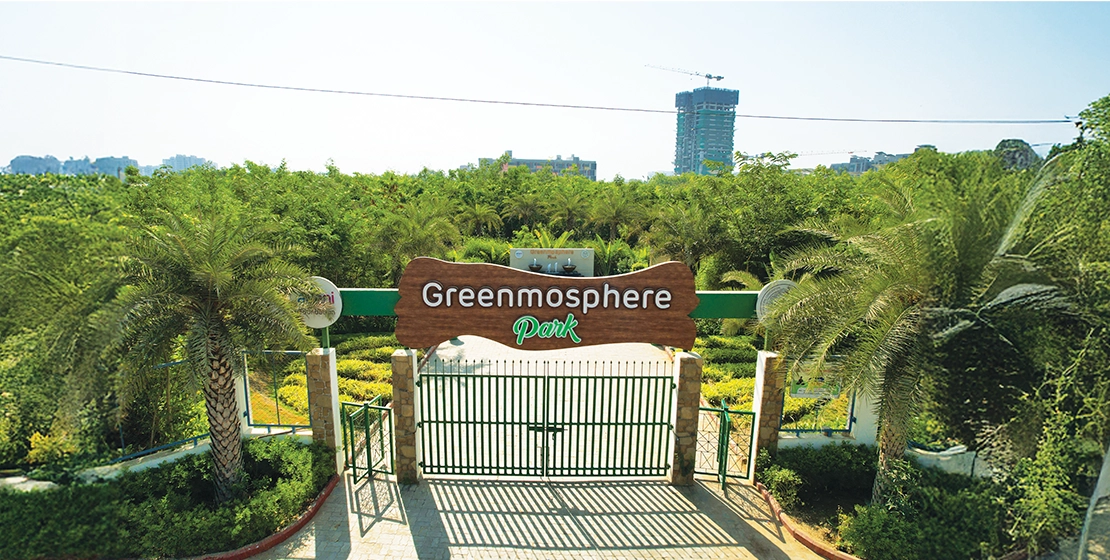
Greenmosphere Oxygen Park, Gota, Ahmedabad
We have conducted a comprehensive climate risk assessment in FY 2024-25 covering 04 sites. The assessment helped us understand the vulnerabilities of our assets and operations due to climate change over the short, medium and long term. The assessment was carried in alignment IFRS S2 Climate-related disclosure issued by the International Sustainability Standard Board (ISSB). The Board-level Corporate Responsible Committee (CRC) and Risk Management Committee (RMC) ensure the alignment with global best practices and regulatory frameworks. The climate-related risk management is integrated into our Enterprise Risk Management (ERM) framework. It is carried out in the supervision of the Chief Sustainability Officer, who in turn, provides the inputs to the Risk Management Committee of the Board. The Chief Risk Officer is responsible for managing and addressing the identified risks.
Our total annual financial impact and cost of response to risk/opportunity for physical risks by temperature variation (Chronic category) is estimated to be in the range of ₹ 0.974 crore to ₹ 1.177 crore and ₹ 0.541 crore respectively.
Our total annual financial impact and cost of response to risk/ opportunity for transitional risk by policy and legal risk is estimated to be in the range of ₹ 1.85 crore to ₹ 5.56 crore and ₹ 14.5 to ₹ 43.7 crore respectively.
The cost of capitalising the climate-related opportunities for ability to diversify the business activities (CBG) & Energy Sources is to be estimated at ₹526.98 crore & ₹7.58 crore respectively.
Accelerating Decarbonisation Pathways Towards Net Zero
While India aspires to become a USD 30 trillion economy by 2050, a recent report* published by the Reserve Bank of India (RBI) starkly warns that climate change could slash nearly 10% off the country's GDP by then if global emission trends remain unchanged. ATGL is committed to establishing a comprehensive decarbonisation strategy to minimise its carbon footprint and contribute positively towards energy security, and economic growth, while prioritising the environment.
*https://rbi.org.in/Scripts/PublicationsView.aspx?id=21769
The Indian Scenario
India's rapid economic growth and its dependency on fossil fuels for development have resulted in it becoming the world's third-largest emitter of greenhouse gases. This is despite its per capita emissions being lower than those of developed nations.
In response to India's growing gas and energy demand, our business sector is pivotal in promoting sustainable practices. By investing in renewable energy sources and adopting energy-efficient technologies, we aim to reduce greenhouse gas emissions and energy intensity. Our strategic initiatives align with India's commitment to achieving Net Zero by 2070, ensuring a steady transition to cleaner energy. Through continuous monitoring and setting annual environmental performance targets, we are dedicated to driving accountability and impact, ultimately fostering a sustainable future while meeting the nation’s energy needs.
India’s Climate Change Commitments
As part of its Nationally Determined Contribution (NDC) under the Paris Agreement, India has set a target of becoming Net Zero by 2070. Additionally, India intends to achieve 500 GW of non-fossil energy capacity, and source 50% of its energy requirements from renewable energy by 2030. It also aims to reduce the emission intensity of its economy by 45% and create an additional carbon sink of 2.5 - 3.0 billion tonnes of CO2 equivalent through additional forest and tree cover.
Presently in India, the share of natural gas in energy basket is 6.7% and the Government has set a target to raise the share of natural gas in energy mix to 15% in 2030. Furthermore, India is developing a domestic carbon market to encourage industries to adopt low-carbon technologies and trade carbon credits, fostering emission reductions across key sectors.
Strategic Approach to Decarbonisation
ATGL’s decarbonisation approach closely aligns with India's commitment to achieving Net Zero by 2070. Our decarbonisation and Net Zero targets are designed to contribute to India’s Nationally Determined Contribution (NDC) targets and the Conference of Parties (COP) agreements, in sync with the ESG goals laid down by our promoter partners – Adani Group and TotalEnergies. We establish annual environmental performance targets and measure our progress through continuous monitoring and engage with the leadership team to drive accountability and impact. We are focussing on reducing our energy intensity and Greenhouse Gas emissions by implementing energy-efficient technologies and renewable energy sources.
Pathway to Attain Operational Net Zero by 2045
(For Scope 1 and 2 only)
In our ambitious quest to combat climate change and achieve Net Zero Emissions for Scope 1 and Scope 2 emissions by 2045, we are focussing on reducing our energy intensity and emission intensity.
Our pathway to operational Net Zero involves a strategic approach to reducing our operational footprint. This includes adopting decarbonisation levers such as installation of rooftop solar systems at CNG/CGS stations, sourcing green electricity via open access and deploying energy-efficient technologies, Improving energy efficiency, advancing our E-mobility and Compressed Biogas (CBG) businesses, we aim to offer sustainable mobility solutions and low-carbon energy alternatives to broader communities.
We are steadfast in our journey towards sustainability, utilising innovative technologies and strategic planning to diminish our environmental impact. Through these concerted efforts, we are not only moving closer to our Net Zero objectives but also championing a greener and more sustainable future for all.
Net Zero Targets
Aiming to achieve Net Zero Emissions by 2045 (For Scope 1 and 2 only)
Intermediary Targets
Achieve 30% reduction in emission intensity by 2030(Only for Scope 1 & 2 emission)
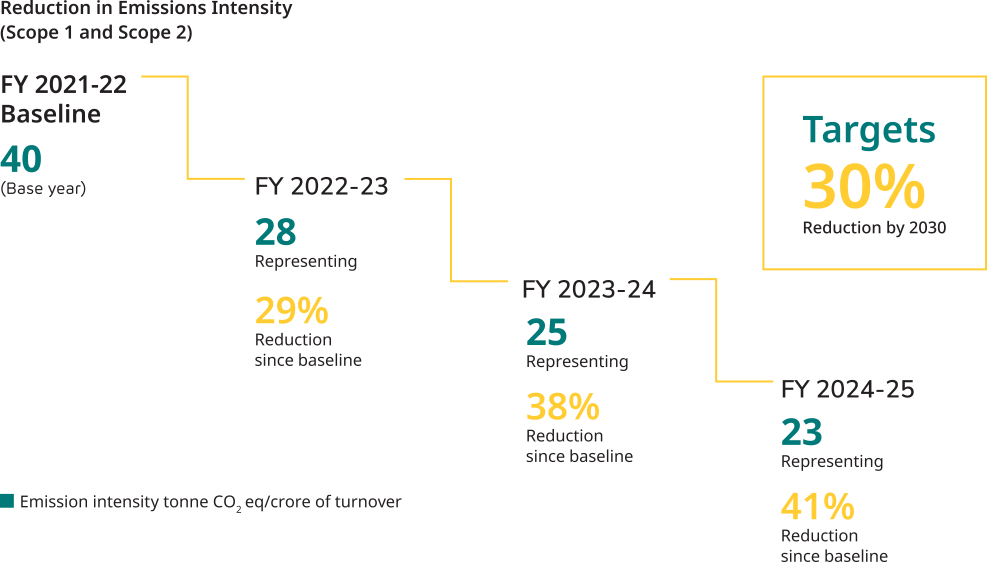
Strategically Reducing Our Operational Footprint

Low-Carbon Businesses Opportunities
Our E-Mobility and Compressed Biogas (CBG) businesses are enabling us to offer sustainable mobility and low-carbon energy solutions to the broader communities.
We are well on the path of diversification by installing 02 CBG plants with a Total 13 Tonne capacity and 546 EV charging stations.

Methane Leak Detection and Repair (LDAR)
Our Leak Detection and Repair (LDAR) programme helps us address any methane leaks into the environment and reduce our Scope 1 emissions.
In FY 2024-25, Methane Leak Detection Survey has been conducted for 7,200 kms of gas grid.
- Decarbonisation Levers
- Current Progress in Road to Net Zero

Adoption of Renewable Energy and Energy Efficiency
We are installing captive solar plants under our Solarisation initiative, to integrate renewable energy into our operational framework.
Rooftop solar panel are installed across 54 sites, including Company Owned Dealer Operated (CODO) and Dealer Owned Dealer Operated (DODO) CNG stations, City Gate stations and offices. We are generating 0.94 MW of solar power through these panels versus the target of 1.5 MW.

Decarbonisation of Fleet
To cut logistics-related emissions, we have transitioned all owned and contracted transport from HSD to CNG.
We averted 922 tCO2e emissions due to 100% decarbonised fleet operations in FY 2024-25.

Investment in Low-carbon Technology – CCUS
Blending hydrogen with natural gas offers low emission solutions for the energy sector. We also plan to consider Carbon Capture, Usage and Storage (CCUS) technologies in the coming years, based on its effectiveness and nation’s readiness.
We have implemented a pilot scale project in Ahmedabad GA, by blending of 2% of Hydrogen gas mixture in our PNG distribution network.

Carbon Sinks and Offsets
We undertake mass plantation to create natural carbon sinks and enhance carbon sequestration. We may also consider purchasing credible carbon and green credits to compensate for greenhouse gas emissions and invest in community-based carbon offset projects.
2.7 lakh+ trees planted under the Adani Group's Pledge for planting 100 million trees by 2030.

Carbon Pricing
The SATAT (Sustainable Alternative Towards Affordable Transportation) scheme, launched by the Government of India in October 2018, aims to promote the production and usage of Compressed Biogas (CBG) as a green, renewable fuel for the transportation sector.
Additionally, there is a growing possibility that the CBG blending mandate could evolve to incorporate formal carbon pricing mechanisms, such as Carbon Credit Trading Schemes (CCTS) or Emissions Trading Systems (ETS).
To assess the attributing costs and financial consequences related to the emission of CO2 per tonne or its equivalent greenhouse gases, we have established an Internal Carbon Pricing (ICP) at ~USD 21-25 using Shadow Pricing Mechanism, contingent upon the level of intensity and emissions.

Climate Risk Assessment and Transparent Disclosures
We consider climate risks into our business decisions and strategies to create a future-ready climate resilient business.
We have digitalised our greenhouse gas inventory process and set clear emission reduction goals and strategies. Our GHG emissions are measured and reported transparently using GHG protocol data and other international standards.
We conducted climate risk assessment in FY 2024-25 covering ATGL operations to ascertain the vulnerabilities against the climate-related threats.
- Decarbonisation Levers
- Current Progress in Road to Net Zero
Performance-linked Climate Incentives
We have linked climate and sustainability performance metrics to the incentives of leadership team and employees, to align with ATGL’s ESG ratings, commitments and climate transition plan.
The incentives for the Executive Board are crucial in driving the Company’s environmental commitments and climate transition plan. The incentives ensure that Board member provide strategic oversight and align our efforts with the Company’s climate-change initiatives. This alignment guarantees that our leadership is focussed on achieving specific environmental targets.
The Nomination and Remuneration Committee's recommends remuneration framework, including the incentives. The incentives of CEO, CSO, CFO and CRO and sustainability managers are tied to the achievement of sustainability targets, improvement in ESG ratings, and compliance with environmental regulations and standards. Some of these KPIs are reduction in GHG emission & emission intensity, installation of solar panels, achieving Zero Waste to Landfill certification for four sites, mass (tree) plantation, decarbonisation of fleets etc.
‘Maaadhyam’, an Adani Group online reward scheme, enables employees to share impactful ideas with the Chairman and win incentives ranging from ₹ 5,000 to ₹ 50,000 for successful implementation.


