



We continuously monitor and evaluate our environmental footprint and implement innovative solutions to establish sustainable and low-carbon operations.
Water Management
Approach
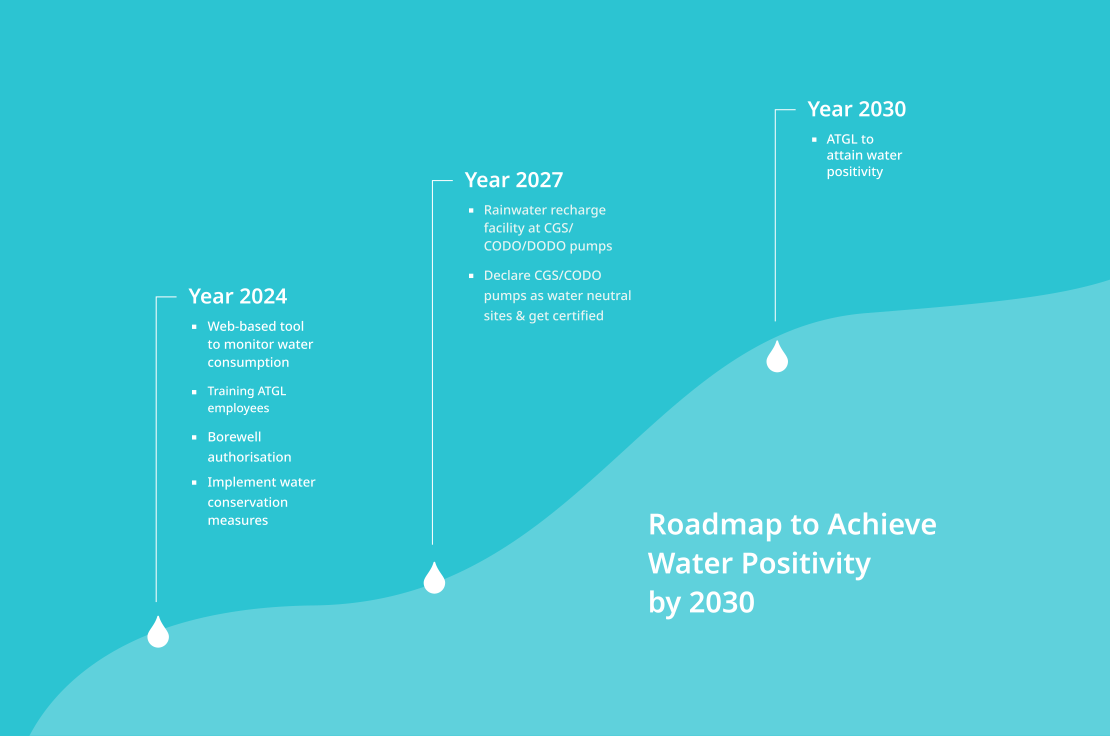
We consider water as a shared resource and its management is a part of long-term sustainability strategy. Our Board-approved Water Stewardship policy focusses on effective water management practices, driving compliance with applicable laws and regulations. Through comprehensive discussions, our management has established the aspirational goal of achieving water positivity by 2030. Our primary water consumption is designated for domestic usage at our facilities and not used in any process operations. Therefore, there is no discharge of industry effluent. Since, we operate in a service-oriented industry, water consumption does not directly affect the procurement of goods, services or the overall value chain. Some of our sites have borewells to access groundwater resources, while certain sites use third-party water tankers to replenish their overhead tanks. We use fresh water solely for domestic purposes and all wastewater generated in the form of sewage is directed to the municipal sewer line.

We are committed to achieving water positivity by 2030
Improving Water Use Efficiency
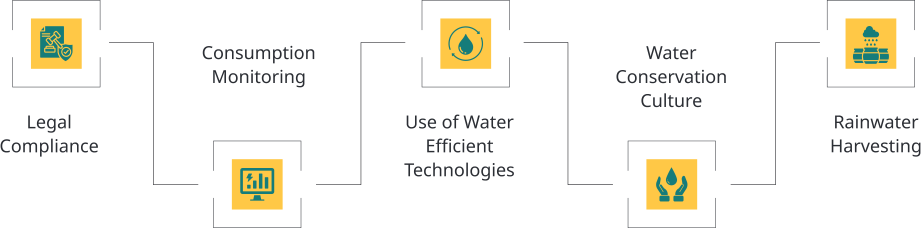
Water meters installed at all sites to monitor water consumption, prevent leaks and wastages for enhancement of accuracy & transparency
Regular water audits are conducted at sites with support of third-party to identify improvement opportunities in FY 2024-25
Environmental Impact Assessments (EIA) are conducted for all Geographical Areas (GAs) with emphasis on water, and outcomes are considered to enhance our business operations
Water conservation measures are taken across sites, including rainwater harvesting to improve water use efficiency
Rainwater Harvesting
We actively promote rainwater harvesting to mitigate our reliance on conventional water sources and enhance groundwater recharge.
To date, we have successfully installed rainwater harvesting structures at CGS and CNG station sites. Furthermore, we are steadfast in our commitment to mandatorily incorporate rainwater harvesting infrastructure in all new upcoming stations. Our goal is to achieve water neutrality certification for CODO stations, ensuring sustainable water management practices across our operations.
This initiative is particularly crucial in the context of climate change and increasing droughts, as it helps to secure water resources and maintain groundwater levels.
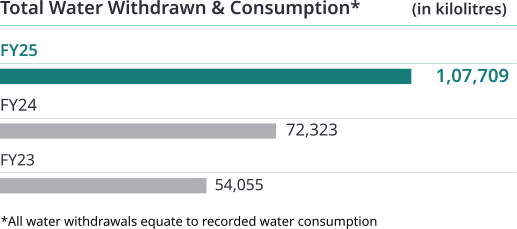
- Recorded water consumption refers to the water meter-based value and in some cases it is based on average footfall of visitors and employees where water meter is not available
- Third-party water refers to water provided by municipal water suppliers through tankers
- Out of the total water withdrawal above, the freshwater water withdrawal (≤1,000mg/L Total Dissolved Solids) in FY 2024-25 is: 107709
- Out of the total water withdrawal above, the other water (>1,000 mg/L Total Dissolved Solids) in FY 2024-25 is: Zero


