×

Stakeholder engagement
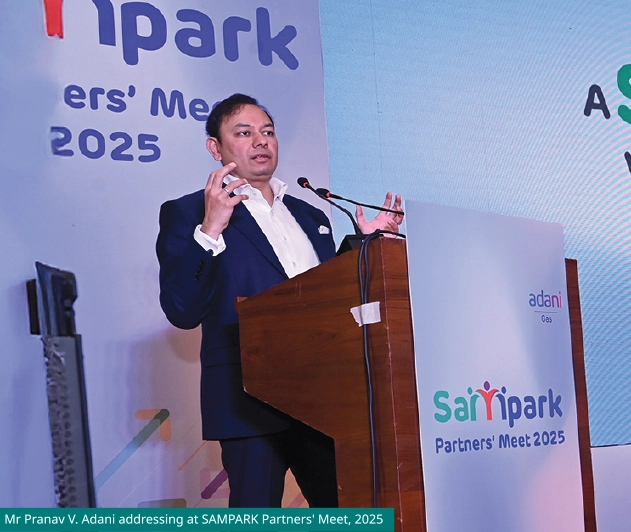

Creating long-term value for our stakeholders

At ATGL, we value the perspectives of our stakeholders and strive to understand their needs to build trust and seamless collaboration.

Through open and genuine engagement, guided by our Stakeholder Engagement Policy and overseen by the Board-level Stakeholders Relationship Committee, we work towards shared goals, gaining their trust, ensuring sustainable growth with improving credibility and meaningful impact across all operations.

Oversight from Stakeholder Relationship Committee

Chaired byIndependent Director

3 Members

100% IndependentDirectors

Our Approach to Identifying Material Stakeholders

StakeholderIdentification

Identification of individual or entity with the potential to impact or be impacted by ATGL’s business activities directly or indirectly

What We Do
  • Compilation of an initial list of interested parties
  • Assessment of historical interactions and relationships
  • Holding requisite discussions as and when needed

StakeholderPrioritisation

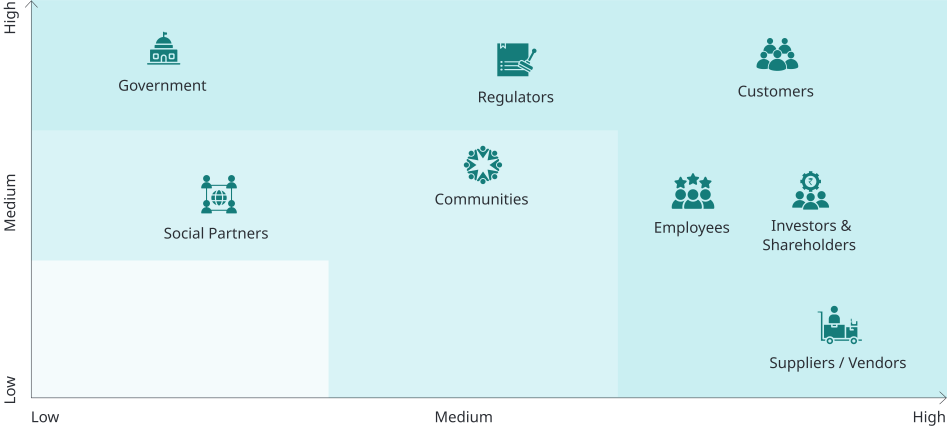
Stakeholder profiling is done based on their common attributes, level of influence and impact, as well as their interest and engagement with ATGL

Our Categorisation

High Priority Stakeholders: High influence & high interest/ engagement

Key Players: High influence but low interest/engagement

Keep Informed: Low influence but high interest/engagement

Monitor: Low influence and low interest/engagement

Engagement

Efficiency of the engagement process is measured using a combination of qualitative, quantitative and outcome- based performance indicators
Quantitative Indicators
  • Number of engagements
  • Stakeholder participation rate
  • Response rate
  • Number of grievances or complaints
Quantitative Indicators
  • Stakeholder satisfaction
  • Quality of relationship
  • Alignment with stakeholder expectations
  • Level of knowledge-sharing
Outcome-Based Indicators
  • Positive community impact
  • Innovation and collaboration
  • Enhanced reputation
  • Contribution to sustainability goals

Stakeholder Importance

Addressing Stakeholders’ Needs and Expectations

We are strengthening our stakeholder engagement by mapping capitals and material topics, highlighting their interconnections across our engagement strategies. The below legend system ensures a clear alignment between stakeholder priorities, material issues, and value creation across multiple capitals.

Capitals

Financial capital

Intellectual Capital

Social and Relationship Capital

Manufactured Capital

Human Capital

Natural Capital

Material Topics
M1

E&S Impact of Products and Services

M2

Climate Change, Adaptation and Mitigation

M3

Land Use and Biodiversity

M4

Energy Management

M5

Waste & Recycling

M6

Water Use

M7

Carbon Emission

M8

Pollution

M9

Energy Security and Accessibility

M10

Community Relations

M11

Human Capital Management

M12

Occupational Health and Safety

M13

Data Privacy and Security

M14

Human Rights

M15

Product Quality & Safety

M16

Innovation, Patents, and Technology Transfer

M17

Corporate Governance

M18

Risk and Crisis Management

M19

Customer Satisfaction

M20

Sustainable Sourcing

M21

Sustainable Supply Chain

M22

Grievance Redressal Mechanisms

Customers
Stakeholder Importance
  • Drives revenue growth which enhances financial stability and ensures sustainability, generating business opportunities
  • Their feedback and experience guide service development, enhancing satisfaction and spark positive word-of-mouth, attract new customers, and drive organic growth

Their Needs and Expectations
Service Quality
  • Uninterrupted gas supply
  • Billing clarifications
  • Delay in connections
  • Emergency services
Infrastructure
  • Pipeline network availability
  • Digital adaptability
  • Safety and pipeline integrity
Legal
  • Regulatory compliance
  • Clearances and permissions
Methods of Engagement and Frequency
  • My AdaniGas Mobile app
  • Emails and online surveys
  • Online grievance mechanism
  • Reports & brochures
  • Feedback mechanism
  • Customer meets
  • Website
  • Customer delight centres & customer call centre
  • Customer satisfaction survey by third-party
  • Promotional and digital campaign
  • Social Media platforms
Engagement Frequency

On quarterly, annual and need basis

How We Create or Preserve Value

  • Expanded Customer Touchpoints:
  • Established multiple customer service centres, including doorstep customer centres, to enhance accessibility and convenience

  • Self-help Kiosks:
  • Deployed self-service kiosks at strategic locations for faster issue resolution and seamless customer assistance

  • Interactive Voice Response System (IVRS):
  • Pioneered India’s first cloud-based, SAP-integrated IVRS in the CGD sector, offering multi-language automated assistance. The upgraded IVRS 2.0 enhances emergency response, resolving 55% of cases without human intervention. Additionally, from August 9, 2024, ATEL’s 24x7 contact centre now supports EV charging customers

  • Targeted Campaigns and Collaborations:
  • Launched various outreach campaigns and strategic partnerships to increase customer engagement and generate new leads


Related Material Topics
M8 M9 M13 M15 M19 M22
Capitals Impacted
Investors & Shareholders
Stakeholder Importance

Provide diverse insights on strategy and performance while playing a vital role in our growth and expansion plans.


Their Needs and Expectations
Financial Growth
  • Profitability
  • Dividend
  • Share Price Appreciation
Business Growth and Expansion Strategy
  • Business sustainability
  • Risks related to business & sustainability ethics
  • Board oversight
Environmental Social & Governance (ESG) Practices
Methods of Engagement and Frequency
  • Stakeholders Relationship Committee to address grievances of investors and shareholders
  • Annual General Meeting
  • Reports and website
  • Investors meet through conferences and non-deal roadshows
  • One-to-one interactions
  • Emails
  • Quarterly results
  • Media releases
  • Online grievance mechanism
Engagement Frequency

Quarterly, as and when required

How We Create or Preserve Value

Create value through growth in business and profitability

5,398 crore

Revenue from Operations

1,167 crore

EBITDA

648 crore

PAT

16.03%

ROCE

27.5 crore

Dividend outflow

AA

Credit rating by ICRA


Related Material Topics
M1 M2 M7 M15 M16 M17 M18
Capitals Impacted
Employees
Stakeholder Importance
  • To maintain a competitive edge and attract the right talent
  • Motivated and engaged employees to drive sustained growth
  • Key in executing projects and operating business

Their Needs and Expectations
Benefits
  • Policies and compensation
  • Facilities
Human Rights
  • Working hours
  • Healthy and safe working environment
  • Diversity and inclusion
Career Growth
  • Training & development
  • Job rotation
Financial Growth
  • Performance managementcycle and promotions
Methods of Engagement and Frequency
  • Online surveys
  • Events – rewards/recognition
  • Employee get-together – offsite engagements
  • Employee workshops
  • Magazines
  • Internal e-mails
  • Online grievance mechanism
  • One-to-one interactions
  • Townhall meetings
  • Website & internal portals
Engagement Frequency

Regularly

How We Create or Preserve Value
  • Robust HR policies
  • Effective and transparent communication
  • Learning and development activities
  • Timebound effective redressal through grievance mechanism

51,738 Hours

Invested in employee/ workers' training and development

ZERO

Fatalities

100%

Of career development review of eligible employees


Related Material Topics
M11 M12 M13 M14 M22
Capitals Impacted
Communities
Stakeholder Importance

Engaging with communities is essential for building trust, earning their confidence, and fostering long-term support. It also enables us to better understand their needs and concerns, allowing us to contribute meaningfully to social upliftment and inclusive growth.


Their Needs and Expectations
Economic Growth
  • CSR investment
Social
  • Driving local development
  • Livelihoods
  • Access to resources
  • Environment conservation
  • Use of resources
  • Employment (direct and indirect)
  • Improving healthcare and education facilitates
Methods of Engagement and Frequency
  • Focus group discussions
  • One-to-one interactions
  • Media and website
  • Online grievance mechanism
Engagement Frequency

Continual (weekly, monthly, quarterly and annually)

How We Create or Preserve Value
  • Build social infrastructure such as schools, colleges, medical facilities
  • CSR initiatives for building sustainable communities such as Varanasi Bio Project
  • Developing an ecosystem to create sustainable livelihoods

₹15.50 crore

Total CSR spend

1,42,964

Direct and indirect beneficiaries


Related Material Topics
M1 M2 M3 M5 M6 M7 M8 M10 M20 M21
Capitals Impacted
Suppliers/Vendors
Stakeholder Importance
  • Essential for seamless business operations
  • Help maintain a competitive edge through quality, technology, timely delivery and pricing

Their Needs and Expectations
Service
  • Contract management andpayment terms
  • Permissions and site availability
Capability Development
  • Training
  • ESG requirement
Human Rights
  • Amenities provision
  • Safe working conditions
  • Working hours
  • Wages
Methods of Engagement and Frequency
  • Emails
  • Vendor meet
  • Online grievance mechanism
  • Site visits
  • One-to-one interactions
  • Reports and website
  • Townhall meetings
  • Training workshops
Engagement Frequency

Operationally on a regular basis, including quarterly and annually

How We Create or Preserve Value
  • 100% value chain partners assessed on health and safety practices third-party assessment
  • Well defined and robust supplier code of conduct and onboarding process
  • Data collection on sustainability performance
  • Conduct training & workshops for suppliers/vendors workshops
  • Rewarding vendor’s safety behaviour through Samarthan Green Cap Programme
  • Provide timebound redressal through a grievance mechanism

100%

Procurement from local suppliers


Related Material Topics
M12 M14 M15 M20 M21
Capitals Impacted
Government, Regulators and Social Partners
Stakeholder Importance

Engagement with government and regulatory authorities helps shape policies and regulations, ensuring a conducive business environment.


Their Needs and Expectations
Service Quality
  • Ontime payment of taxesand partnership
Legal
  • Licence/Authorisation
  • Adherence to compliance and governance
Methods of Engagement and Frequency
  • Participation in local events
  • Reports and website
  • One-to-one interactions
  • Events
  • Emails & letters
Engagement Frequency

Regularly

How We Create or Preserve Value
  • Deployment of robust management systems towards identification of needs, plan and execution
  • Continual monitoring of compliance
  • Transparent and timely communication
  • Provide periodic disclosures & reports, as per regulatory & statutory requirements, in public domain
  • Partnering with industry associations like Natural Gas Society, CII, ASSOCHAM, Associated of CGDEntities (ACE) for holistic progress

₹1,286 crore

Total tax contribution to the exchequer


Related Material Topics
M1 M2 M3 M5 M7 M8 M9 M15 M17 M19
Capitals Impacted