Social – Occupational Health and Safety
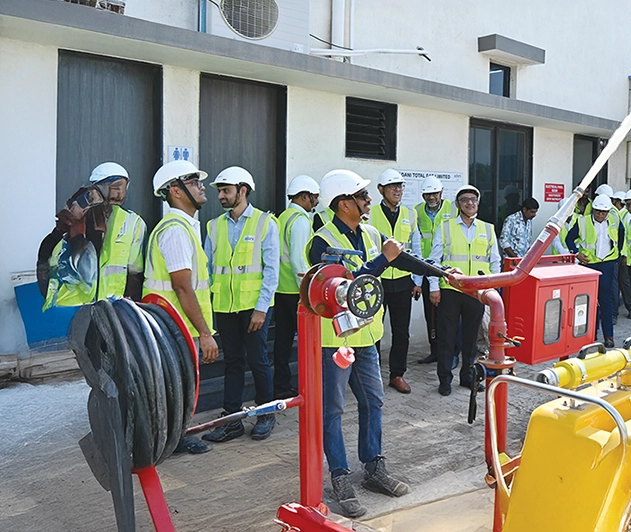
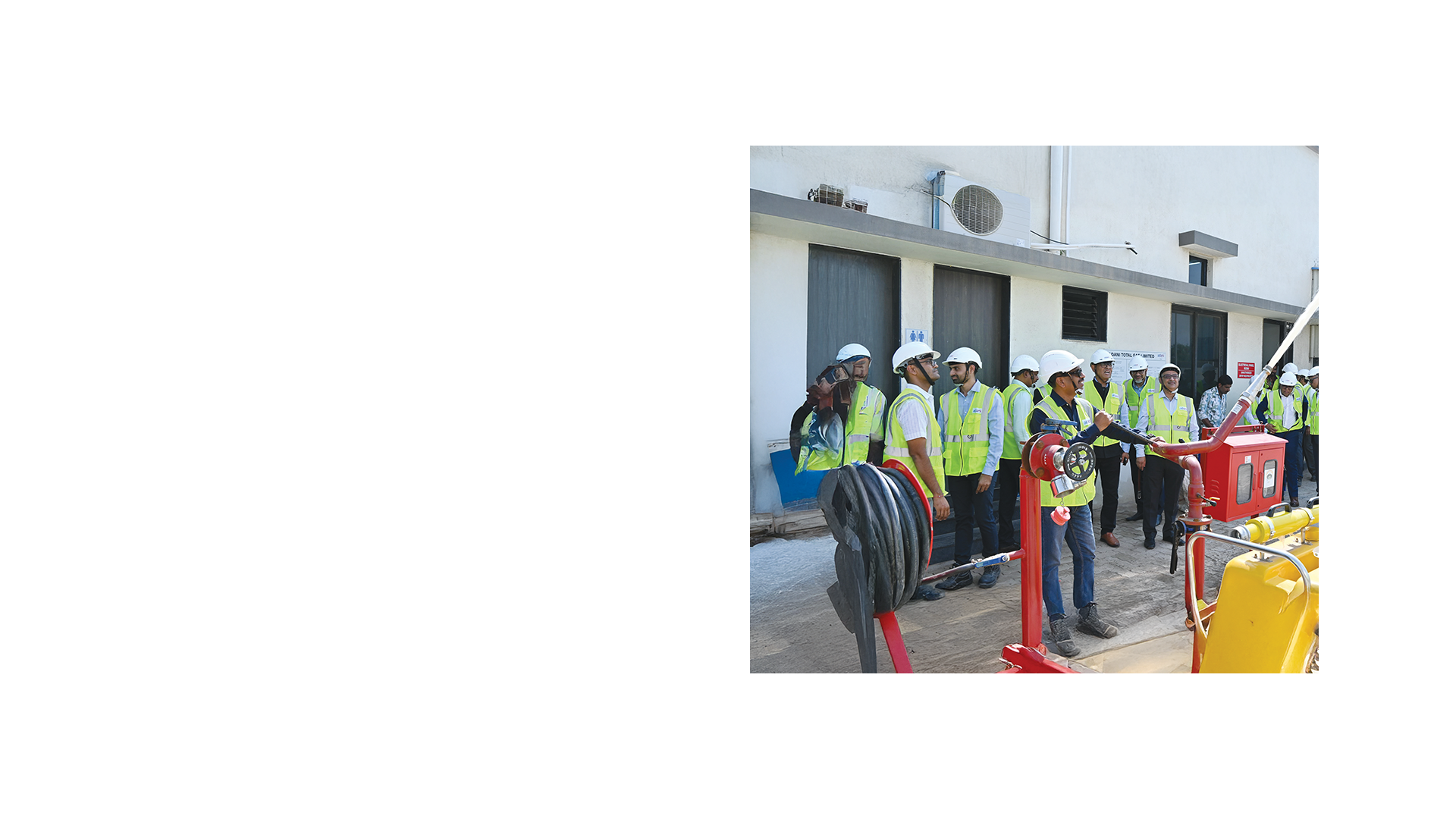


We have established comprehensive Quality, Health, Safety & Environment (QHSE) policy and management systems, 100% employees and contractors at ATGL. The policy has been approved by our CEO and integrates QHSE in all aspects of our business operations and ensure compliance with applicable legislation & other requirements. The policy also promotes consultation & participation from workers & worker representative in decision-making, whenever required. Our integrated management system (IMS) are certified with ISO 9001:2015 (Quality Management System), ISO 14001:2015 (Environmental Management System) and ISO 45001:2018 (Occupational Health and Safety Management system). We also have been certified by Petroleum and Explosives Safety Organisation (“PESO”) & Petroleum & Natural Gas Regulatory Board (PNGRB) for all our assets.
Regular HSE audits and assurance are conducted both internally and with third-party support, assessing compliance with PNGRB Regulations, workplace safety standards, asset integrity & contractor safety.
We regularly train our employees and contractors on critical HSE procedures to nurture safety behaviour, driving our commitment towards a Zero Harm workplace.
We have adopted a framework aligned with globally recognised high level Safety Intervention and Risk Assessment programmes:
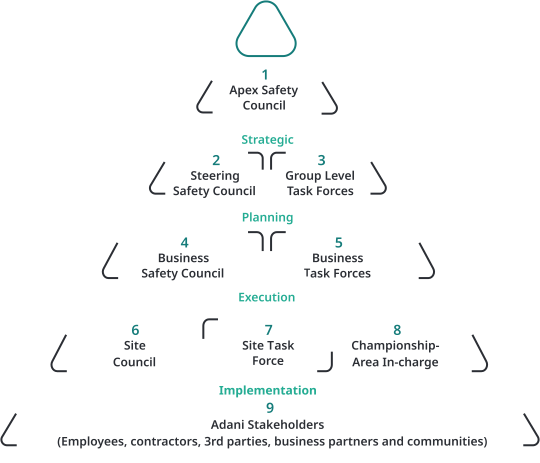
Our multi-tier HSE governance model adopts a top-down approach, with the Board and the Board-led Corporate Responsibility Committee (CRC) providing strategic guidance and oversight to the implementation of HSE policies and Management System.
Business Safety Committees and five taskforces operate under the Board’s and CRC’s supervision, driving execution and compliance. These committees and taskforces, guided by dedicated HSE charters and KPIs, conduct bi-monthly reviews of the safety management system to ensure continuous improvement. The clearly defined roles and responsibilities ensure accountability at each level.
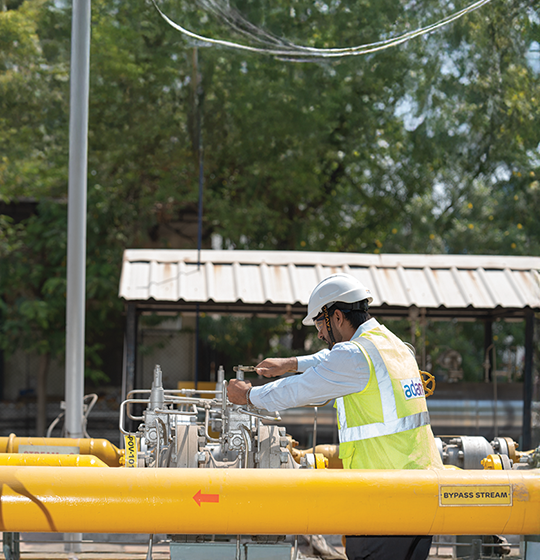
We have adopted a framework aligned with globally recognised high level Safety Intervention and Risk Assessment programmes:
A systematic and structured technique to identify potential hazards and operability issues in processes, focussing on deviations from design intentions and their possible consequences. A multidisciplinary team reviews process diagrams to ensure safety and efficiency.
Assessment of potential safety risks and vulnerabilities could affect system or operation, and identification of weaknesses that could be exploited or lead to failures. This process enables implementing proactive measures to mitigate risks and enhances overall safety.
On-site evaluations are conducted to identify and assess potential risks and hazards in the workplace, ensuring compliance with safety regulations and standards for the tasks performed by our Business Partners. These audits involve comprehensive inspections and reviews of safety practices, equipment, and procedures.
A methodical approach using numerical data and statistical techniques to evaluate the likelihood and impact of hazardous events, providing a quantitative insight for decision-making regarding risk management and mitigation strategies.
A comprehensive safety review is conducted before the commencement of new or modified facilities to ensure all safety systems are in place and operational. This review verifies that equipment, procedures, and personnel are prepared to operate safely.
ATGL has established a structured training and competency development plan for employees and business partners based on training needs identification (TNI). The Company organised mandatory trainings on safety induction, STOC (Safety, Technical & Operational Competency) and defensive driving for employees and business partners. Additionally, risk-based & TNI-based programmes are organised for different skill groups.
We follow a well-structured incident reporting and investigation mechanism to maintain a strong safety culture. All incidents are duly investigated to understand the root causes. Appropriate mitigation plans are developed and implemented as per the hierarchy of controls. We believe in extracting valuable insights from all incidents and sharing the learnings with our employees to prevent any future occurrences. We have deployed a system of Critical Vulnerable Factors (CVF) through which corrective actions arising out of any incidents is deployed horizontally across all locations.

Code of conduct for incident reporting

Benchmark Digital (Safex) - based incident reporting and investigation system

Benchmark Digital (Safex) - based action tracking system

Sharing learning from incidents through audio/ video platform
We have established a comprehensive safety programme for supply chain that involves a stringent evaluation process from pre-qualification to post-contract assessment and recognition of the partners who uphold high safety standards.
The Samarthan 4.0 is our flagship initiative designed to promote, recognise, and reward safety practices within the supply chain. This collaborative and participative approach aims to build a safer and more resilient supply chain ecosystem. The programme evaluates and enhances our business partners' practices across various health and safety attributes, fostering a 'Zero Harm' culture throughout the value chain.
ATGL’s state-of-the-art centralised Logistic Control Centre (L.C.C) is designed to efficiently track and monitor the Company’s transport fleet, ensuring strict compliance with both company regulations and traffic laws. By employing real-time interjection and vehicle monitoring, the L.C.C ensures that all vehicles adhere to the permissible speed limit of 60 km/hr, guaranteeing safe and timely arrivals at their designated destinations.
ATGL has defined procedures for safety and technical competency training to ensure workforce competence and evaluate the effectiveness of the implemented actions. Each Process Owner and Management/HR Function determine the required competencies for site personnel, including workers performing work under its control, whose tasks affect or can affect the QHSE performance, regulatory compliance and effectiveness of the QHSE management system. The GA Head ensures that all site personnel, including workers, are competent in carrying out the tasks safely and identifying hazards through appropriate education, training, or experience on critical HSE procedures. The HSE department imparts Safety and Environment-related training to all employees and contractors employees.
ATGL engages personnel through induction, internal and external trainings, meetings and communication about organisation’s vision and mission. ATGL supports personnel by understanding their needs and expectations in maintaining the effectiveness of the QHSE management system.
Samarthan 4.0 purple cap programme for contractors
Road safety week campaigns
PNGRB internal audits across various GAs
Self-assessment for contract workers using safety assessment checklist
Felt leadership from leaders by engaging site team through ‘Suraksha Samwaad’ – safety interaction process
Various digital initiatives were taken during the year to enhance safety behaviour, such as SSY mobile application, PTW mobile application and DMS for hazardous goods vehicles.
Developed to encourage more boots on ground and monitor employees site visits for enhancing HSE practices.
Designed to monitor compliance with permit-to- work procedures and enhance focus on high-risk jobs.
AI-based Video Cameras are installed in our cascade vehicles carrying hazardous gas to improve driver behaviour towards safety.
ATGL leverages Occupation Health Services offered by the Group’s Occupation Health department, including medical consultation, health tips and periodic wellness programmes for the employees.
Call Before u Dig (CBuD) helpline urging people to call us before initiating excavation activity, to prevent any fire, gas leaks and damages to the underground utilities.
Indradhanush Programme launched in May 2023, evaluates GA-wide asset performance using industry KPIs and formulating improvement plans based on asset health.
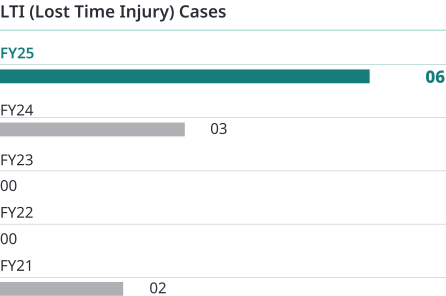
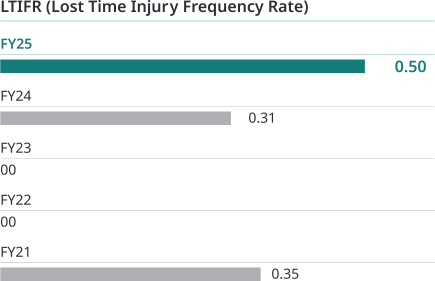
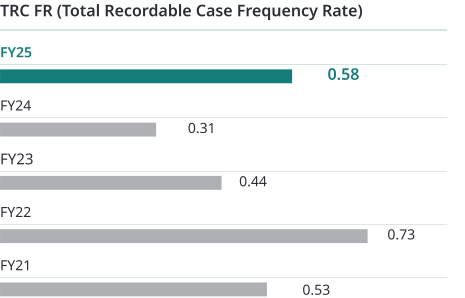
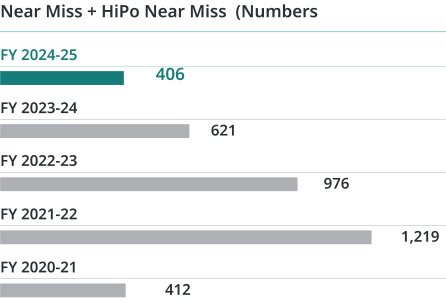
Notes:
The data is inclusive of employees, workers and contract workforce.
LTIFR calculation: (Total LTI*1,000,000)/Total Manhours at ATGL
TRC FR calculation: (Total Recordable cases*1,000,000)/Total Manhours at ATGL
There were no work-related ill health hazards that occurred on the ATGL sites during FY
2024-25