CSR Outcome Assessment
An independent assessment study was conducted, engaging beneficiaries and stakeholders, to assess the overall impact of the CSR projects on them. The study documented their feedback and insights and identified gaps. The evaluation framework comprised five key principles – relevance, effectiveness, efficiency, impact, and sustainability. Furthermore, a mixed methods research design was adopted for the data collection and integrating quantitative surveys and qualitative methodologies.
The assessment revealed that the projects have significantly uplifted a large stratum of the population by addressing their challenges and empowering them attain an improved quality of life for themselves, in alignment with Sustainable Development Goals.
| Objective | Benefits | Impact | SDGs Impacted |
|---|---|---|---|
| Healthcare Initiatives | |||
| To improve access to quality and affordable healthcare services at grassroots level |
Initiatives such as Mobile Medical Vans, distribution of medical aid and assistive devices, soundproof speech therapy rooms, and ambulance services have enabled access to quality medical care, linkages with government hospitals and awareness on health issues at reduced healthcare expenses for marginalised communities:
|
|

|
| Water Conservation Activities (Rejuvenating existing dams, pond deepening and creation of check dams) | |||
| To improve depletion of groundwater and frequent drought situations |
Evident increase in the water availability and quality, leading to:
|
|

|
| Objective | Benefits | Impact | SDGs Impacted | |
|---|---|---|---|---|
| Women Livelihood Activities | ||||
| To bring women in the workforce and enable them to earn additional income | Skill training and support provided to community women by APL/AF in setting up a cottage enterprise for production of lac bangle, Agarbatti, mushroom farming and, vegetable/fruit vending and SHG canteen have generated positive economic and social impact on them |
|

|
|
| Education | ||||
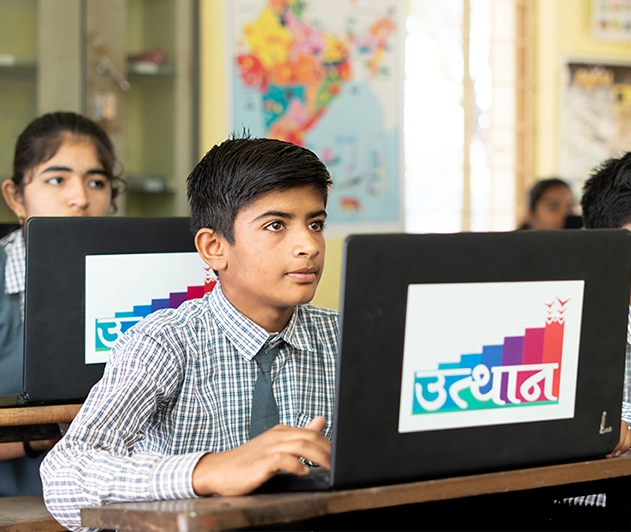
| To improve the standard of schools including quality of education and the required infrastructure | The Aamchi Shala Adarsh Shala (ASAS) initiative catalysed substantial improvement in schools’ infrastructure and education quality, effectively addressing deficiencies in government schools, prior to the intervention. |
|

|
|
| Objective | Benefits | Impact | SDGs Impacted |
|---|---|---|---|
| Biogas | |||
| To improve the rural women’s health through clean source of energy for household cooking, concurrently contributing to environmental conservation and aligning with Hon’ble PM’s vision carbon net zero and the promotion of organic farming. | All women reported improvement in their health due to clean cooking process, free from smell, smoke and eye discomfort. |
|

|
| Livestock Development | |||
| To provide entire ecosystem for dairy development to supplement farmers’ income through livestock rearing | The initiative has directly empowered households through increased milk production, sales and livestock ownership (no. of cattle), thereby generating enhanced household income. |
|
|
CASE STUDY
Revati Patle Transforms Dairy Dreams into Village Pride
Revati Harishankar Patle, age 39 belongs to Chikkali village of Tiroda block. Her husband works at the Adani Power Plant, and she has two school-going kids. Previously she was a housewife and the family used to run on the limited earnings of her husband. When Adani Foundation came to their village, she started working as a Sangini for the SUPOSHAN programme for AF and also as the secretary of Tiroda Pragatisheel Mahila Producer Company Limited (TPMPCL). When the plan to setup a bulk milk cooler in Chikkali village was finalised, members from MAVIM and AF held a meeting at the village to inform everyone and also mentioned that this will be run only by women.
Revati Ji mentioned that there were lots of speculations and opinions regarding women handling the dairy business and villagers were not at all confident with this idea. Revati Ji took up the challenge when she approached to run the cooling centre in Chikkali by AF. She was given proper training related to milk collection, running the bulk cooler and also keeping a check of the quality of milk received. She mentioned that they started with a daily collection of 60 litres milk per day in 2020 and now they have gone up to a daily collection of almost 1,500L/day
Her monthly family income has increased from ₹10,000-12,000/month month to almost ₹25,000 per month since the inception of the dairy. Being in charge of the bulk milk cooler, she has broken the local myth that women won’t be able to run the dairy business. She proudly mentioned that customer count has risen to 230 from the initial number of 20 customers. She is very happy that she is well respected across the society and also mentioned that the District Magistrate has visited her centre and praised her for running the centre so efficiently.
CASE STUDY
Where Change Began with a Classroom
Devendra Ramteke lives in Chikkali village of Tiroda block and is an Adani Power employee. He is 41 years old and has a family of five members. He mentioned that the school in Chikkali previously lacked proper infrastructure, there were no proper toilets, and the quality of education was also not that great. The environment was not attractive at all, and it was difficult to send children to school. Lots of children from his village were shifting to private schools and he was planning to do the same for his daughter.
Adani Foundation started improving school infrastructure way back in 2012-13. Their primary focus was to enhance the primary education quality, make the school environment-friendly and attractive for children, maintain cleanliness and hygiene, build proper washroom units and handwash stations. Through this they wanted to bring back students to government schools.
Devendra Ji came to know about this from his daughter and also fellow villagers. He then visited the school one day to see that it has transformed a lot, there was a print rich environment, new chairs and desks for students, new library etc. The Amchi Shala Adarsh Shala Programme was introduced by AF to enhance quality of education in schools. It created a sense of competition amongst schools in the district and this came about as a highly effective positive change.
Her daughter was also enjoying going to school. He slowly that his daughter's performance was becoming better, her confidence level was increasing and also, she was getting better in English and General Knowledge. Seeing these changes, Devendra Ji himself started motivating other parents to bring back their children to the government school. The community also acknowledged these changes and supported the school with funds and also manpower, panchayat and they also actively participated in the school’s development.
He proudly mentioned that her daughter had gone for an exposure visit to Mumbai and have also participated in many district level dance competitions. Her daughter also receives benefits from various government schemes.
CASE STUDY
MHCU: Bringing Healthcare to Gaitara
Mrs Rameshwari, a 60-year-old woman from Gaitara village, earns her living by working on farms and lives with her husband and son, who run a small provision store in the village. In the past, she endured arduous and time-consuming travel to distant Government hospitals for healthcare. The advent of Mobile Health Care Unit (MHCU) in her village, significantly improved her access to healthcare. She and her husband are regular beneficiaries of MHCU’s competent medical services and medicines, saving at least ₹500/- per treatment, had she sought it elsewhere. Additionally, regular health check-ups and eye camps from MHCU further reduce her medical and travel expenses and preventing wage loss.
CASE STUDY
Ashish’s Bountiful Harvest Through Pond Deepening
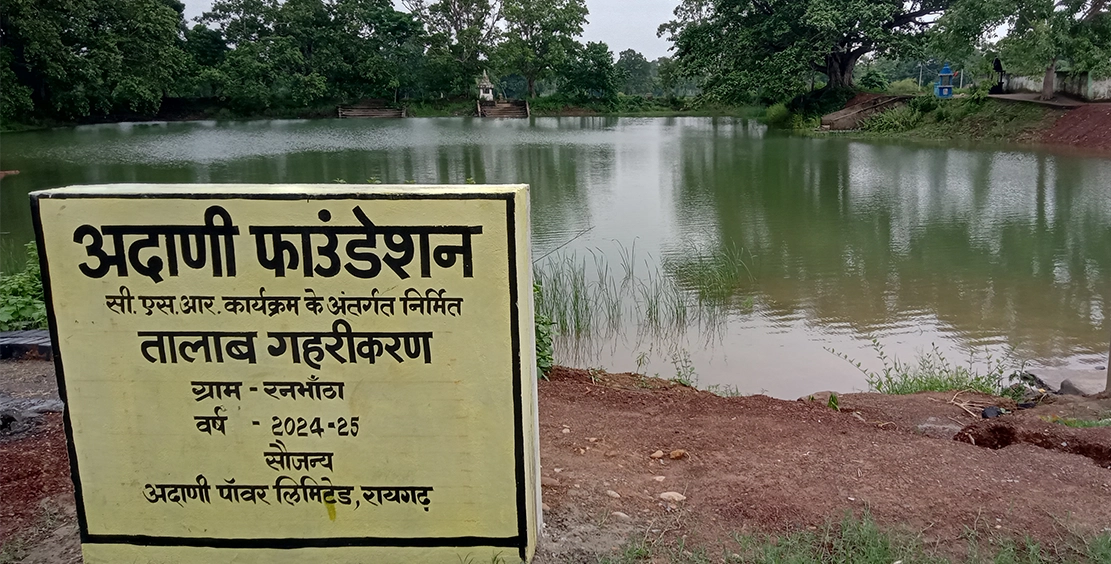
Ashish, a 33-year-old farmer, residing in Bunga village with his family of 12 people, depended on borewell and water tanks to fulfil drinking and household needs. For irrigation, they were solely reliant on rainwater and a nearby 125 acre pond that was also shared by over 20 other farmers in the vicinity. With CSR intervention from Adani Power Limited, a substantial part of the pond was deepened significantly amplifying its water storage capacity. Consequently, Ashish’s agricultural yield boosted by additional 5 quintals in the last fiscal year, generating ~ ₹15,000.