Double materiality
Our materiality approach evaluates both the impact of our operations on the economy, environment, and society, and the financial implications of ESG issues on our business performance. By integrating these perspectives, we ensure that our strategies are robust and aligned with long-term value creation. This balanced approach allows us to navigate the complexities of the modern business environment while staying true to our commitment to sustainability
Our double materiality assessment, aligned with the Corporate Sustainability Reporting Directive (CSRD) guidelines, enables us to identify and address both risks and opportunities effectively. We also incorporate insights from the Global Reporting Initiative (GRI), the Sustainability Accounting Standards Board (SASB), and the Integrated Reporting < IR> Framework, ensuring comprehensive coverage of both general and sector-specific standards.

The impact of the external environment on our ability to generate value over the short, medium, or long term

The impact of our activities on people, the environment and the economy in the short, medium, or long term
Our materiality assessment is aimed at identifying the most critical ESG issues that influence our business operations and our capacity to generate long-term value. Each material issue is intricately tied to a business case, underscoring its direct financial implications on our operational costs and revenue streams. We have crafted tailored mitigation and adaptation strategies to effectively address these material issues through targeted initiatives, products, and services. By clearly articulating these strategies, we ensure alignment with our overarching goal of achieving sustainable success.
We place significant emphasis on evaluating and quantifying the impact of our operations on external stakeholders. Utilising quantitative metrics linked to the identified material issues, we determine the environmental and social impacts of our business activities in areas such as air and water quality, community wellbeing, and local economic development. These evaluations guide our strategic decision-making by enabling us to prioritise the most relevant issues affecting our stakeholders.
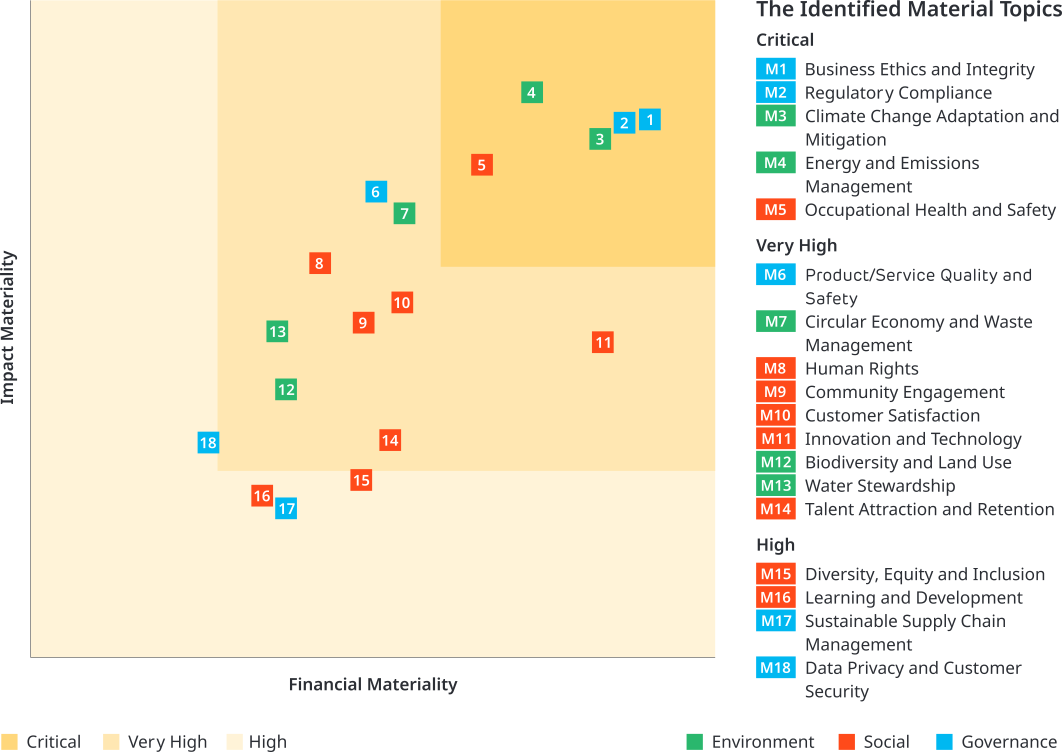
After identification of the key issues, the topics encompassing both financial and impact materiality are finalised through a structured consultation process involving both internal and external stakeholders. The resultant materiality matrix incorporates both inside-out and outside-in impacts in alignment with the principles of double materiality.
We update our materiality assessment once every two years and communicate any significant changes in our business nature or material topics to relevant external stakeholders.
During FY 2024-25, we updated our materiality assessment based on the principle of double materiality facilitated by an independent third-party agency. This year, the materiality assessment process also included three new businesses which have recently become operational – Wind Turbine manufacturing, Copper Smelting and Digital Labs. The outcomes of the double materiality assessment are reviewed and approved by our Senior Management, and any identified risks and opportunities are seamlessly integrated into our enterprise risk management framework.
We began by mapping the value chain to gain a comprehensive understanding of the business models, products and services, including the geographical scope and resource dependencies. This process was essential for identifying key stakeholders, and developing an engagement plan to involve them in the assessment process.

The various material topics were identified based on sector-specific ESG disclosures and rating frameworks as well as industry best practices. The topics were also benchmarked against those prioritised by leading national and international peers, underscoring our role in leading India's sustainability efforts.
A comprehensive business and stakeholder analysis plan was developed by engaging relevant stakeholders and identifying key impacts, risks and opportunities (IROs).
The materiality issues were evaluated by defining criteria and thresholds, evaluating IROs, and engaging with stakeholders. The focus was on prioritising key impacts, risks and opportunities to direct our strategic efforts towards the priority issues.
The material topics and IROs were prioritised using established thresholds and developing a materiality matrix. Stakeholders were engaged to validate and refine the material topics, leading to a double materiality matrix that comprehensively addresses both financial and sustainability impacts.
 Financial capital
 Manufactured capital
 Intellectual capital
 Human capital
 Social & Relationship capital
 Natural capital
 Shareholders and investors
 Customers
 Employees
 Suppliers
 Community
 Regulatory authority
S1 Strong Incubation Approach
S2 Strengthening Construction Excellence
S3 Investing in Operational Excellence
S4Reinforcing Risk Management Framework
S5 Maximising Synergies Across Businesses
S6 Enhancing Stakeholder Value
The findings of our materiality exercise have been classified into critical, very high and high, based on their external impact and their effect on the businesses’ ability to generate value in the short, medium, and long term. The key material issues influencing enterprise value creation, based on their significance impact, include:
As India aims to achieve Net Zero by 2070, environmental regulations are expected to become more stringent and compliance is essential for business continuity. Energy is also a significant portion of a company’s operational cost. In this backdrop, adoption of energy-efficient technologies can optimise resource use and lead to substantial savings. Additionally, improved energy efficiency and a reduced emission footprint can potentially improve external stakeholder sentiments. Exploring opportunities in the clean technologies sector may also help establish new business models.
Risk



Key elements of our strategy to reduce our emission footprint include:
 For more details, Click here
| Target | Progress |
|---|---|
| 30% Reduction in energy consumption intensity by FY 2029-30* | Achieved 47% reduction in energy intensity in FY 2024-25* |
| 45% Reduction in emission intensity by FY 2029-30* | Achieved 65% reduction in emission intensity in FY 2024-25* |
| 50% share of renewable energy in total energy mix by FY 2029-30* | Achieved 24% share of renewable energy in total electricity mix in FY 2024-25* |
*The targets and the progress achieved are against the baseline year FY 2021-22 intensity on a revenue basis (in ₹)
Prioritising the health, safety and well-being of employees is crucial for an organisation. Neglecting these aspects can lead to reduced productivity due to lost man-hours, which can negatively affect business operations, customer satisfaction, and profitability. Additionally, it may result in legal issues and harm the company's reputation.
Risk


For more details, Click here
| Target | Progress |
|---|---|
| Annual Safety assessment of 100% of plants and offices by FY 2024-25 | 100% of plants and offices assessed on Occupational Health & Safety parameters in FY 2024-25 |
| 100% of employees trained on Health and Safety parameters | 46% of employees trained on Health and Safety parameters in FY 2024-25 |
Effective governance and risk management practices constitute the cornerstone of our organisational resilience. It helps safeguard our businesses against financial setbacks, regulatory non-compliance, and reputational harm, instilling confidence among stakeholders. This strategically positions us to capitalise on opportunities while navigating challenges. It helps in promoting transparency, accountability, and ethical decision-making.
Risk


We are committed to promoting effective governance and risk management throughout the company. Key elements include:
For more details, Click here
| Target | Progress |
|---|---|
| Independent assessment of the effectiveness of corporate governance policies by FY 2025-26 | Independent assessment of the effectiveness of corporate governance policies is planned for FY 2025-26 |
| Independent 3rd party review of related party transactions | Independent 3rd party review of related party transactions is under implementation phase |
A strong emphasis on human rights in business is essential for long-term success, aligning with ethical standards and offering strategic benefits. Dedication to human rights boosts a company's reputation, reduces legal and financial risks, attracts top talent, and promotes a diverse and innovative work environment. Fair labour practices enhance operational efficiency and supply chain resilience, while compliance with international human rights standards opens access to global markets. Companies that demonstrate corporate citizenship and positive societal impact build goodwill, engage stakeholders, and attract socially responsible investments, positioning themselves for sustained success in a globally conscious and interconnected business landscape.
Risk


Our commitment to human rights is all-encompassing and extends across the entire company, beyond individual departments or business units. A strong policy framework guides us in integrating human rights considerations into every aspect of our operations. From procurement and recruitment to employee training and regular assessments, we are dedicated to fostering an ethical business environment that upholds and promotes human rights at every level:
For more details, Click here
| Target | Progress |
|---|---|
| Human Rights assessment of 100% of plants and offices in FY 2024-25 | 100% of plants and offices assessed on Human Rights parameters in FY 2024-25 |
| 100% of employees trained on Human Rights parameters | 64% of employees trained on Human Rights parameters in FY 2024-25 |
Operations

Society


Our core belief in 'Growth with Goodness' highlights our dedication to supporting, enhancing, and nurturing the communities we serve. By aligning our community development efforts with the UN Sustainable Development Goals (SDGs), particularly SDGs 1, 2, 3, 4, 5, 6, 7, 8, 9, 11, 13, 14, and 15, we aim to tackle pressing global challenges while ensuring equal access to opportunities and an improved quality of life for all individuals. As a responsible organisation, we continuously engage with, and assist our community stakeholders, including communities, elected leaders, experts, and community representatives. We actively pursue various community development initiatives through the Adani Foundation.
Our CSR initiatives are designed to generate long-term social outcomes. Our education programmes support students from marginalised communities, many of whom are first-generation learners. The role of educational institutions in students' academic achievement, social and emotional health, family participation, and community engagement is undeniable. AEL-supported initiatives create a positive and supportive ecosystem, where teachers, parents and other stakeholders actively contribute to social value for these families. Similarly, our initiatives in sports, health and livelihood aim to improve the lifestyles and well-being of the target communities, while also building social capital that contributes to the broader goal of nation-building.
For more details, Click here
Social Return on Investment (SROI) study of CSR activities in 14 villages surrounding Surguja in Chhattisgarh, has been conducted by an independent agency.
Operations
Environment


Biodiversity ensures ecosystem stability, supports food security, and holds significant economic value. It regulates climate, offers cultural and aesthetic benefits, and provides essential ecological services like water purification and soil fertility. Preserving biodiversity is vital for these benefits and the overall health of the ecosystem. Additionally, extensive plantations can sequester large amounts of carbon, acting as carbon sinks and helping to mitigate climate change.
We are dedicated to restoring forest ecosystems, promoting biodiversity, and enhancing carbon sequestration. AEL has established dedicated teams and partnerships with environmental organisations to ensure the success of this initiative. These teams work closely with the local communities, involving them in the process and creating employment opportunities. The benefits of planting trees extend beyond carbon capture; trees play a crucial role in maintaining ecological balance, preventing soil erosion, and supporting wildlife habitats. Additionally, they contribute to cleaner air by acting as natural filters, absorbing pollutants, and releasing oxygen.
For more details, Click here
Over 2.5 lakh tCO2e sequestered till FY 2024-25