




As a responsible corporate citizen, AEL is steadfastly dedicated to crafting a comprehensive and forward-looking decarbonisation strategy that not only reduces our carbon footprint but also drives broader economic, and social impacts for the nation.
The Indian Scenario
The rapid growth of Indian economy and heavy reliance on fossil fuels to drive the country’s economic growth and modernisation, has made it the third largest emitter of greenhouse gases in the world, despite having lower per capita emissions than the developed countries. With 50 million citizens getting electricity connections each year over the past decade, the conundrum for India is to meet its growing energy and materials demand sustainably.
India’s Climate Change Commitments
As part of its Nationally Determined Contribution (NDC) under the Paris Agreement, India has set a target of becoming net zero by 2070. Additionally, India intends to achieve 500 GW of non-fossil energy capacity, and source 50% of its energy requirements from renewable energy by 2030. It also aims to reduce the emission intensity of its economy by 45% and create an additional carbon sink of 2.5 - 3.0 billion tonnes of CO2e through additional forest and tree cover.
To accelerate its transition to clean energy, India has also launched the National Green Hydrogen Mission, which aims to position the country as a global hub for green hydrogen production, targeting 5 million metric tonnes (MMT) of annual production by 2030. Furthermore, India is developing a domestic carbon market to encourage industries to adopt low-carbon technologies and trade carbon credits, fostering emission reductions across key sectors.
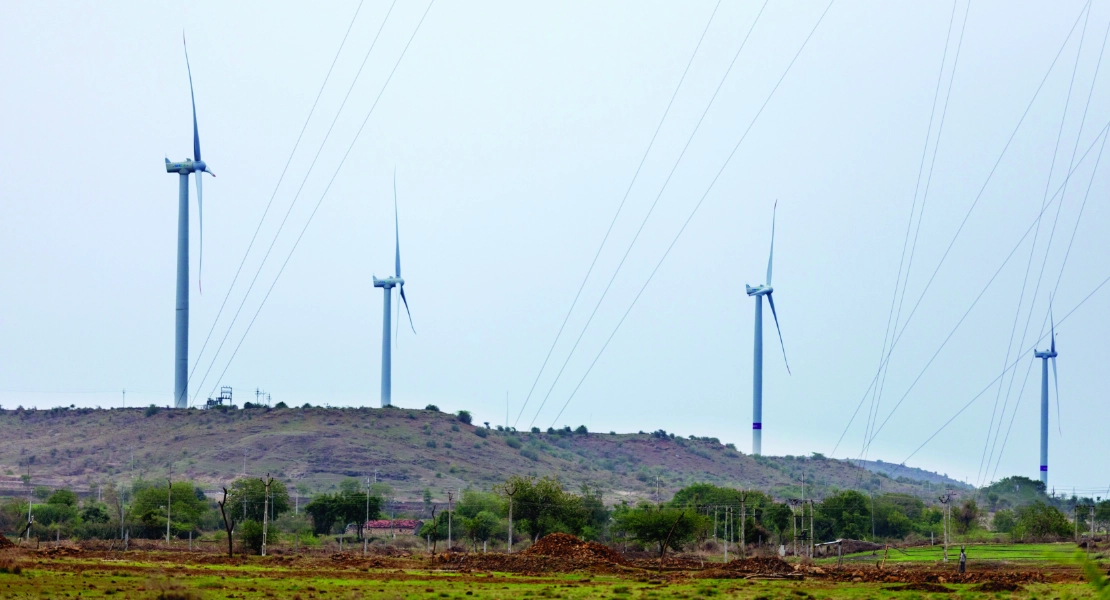
Our Strategic Approach to Decarbonisation
AEL's path to Net Zero, is closely aligned with India's goal of achieving Net Zero emissions by 2070, reflecting the nation's global commitment under the Paris Agreement to limit global warming to well below 2°C, with efforts towards a 1.5°C target. Our business-specific decarbonisation pathways are derived from the Science Based Targets initiative's (SBTi) Net Zero sector pathways factoring in the IPCC scenarios. Additionally, we ensure that our climate change-related disclosures adhere to recommendations of the IFRS S2/TCFD framework.
Our comprehensive decarbonisation strategy, aligned to science-based targets and guided by our Climate Change Policy, balances short to medium-term goals with long-term objectives and outlines actionable steps to significantly reduce carbon emissions and advance decarbonisation across our entire operations.
Net Zero Targets
While AEL is broadly aligned with India’s Net Zero Target year of 2070 and plans to reduce its emission intensity by 45% till 20303, the respective businesses within AEL have their own decarbonisation strategies and Net Zero targets, in alignment with their respective industry best practices and sectoral decarbonisation pathways.
- Airports business - Adani Airports Holdings Limited (AAHL) – committed to achieving Net Zero operational emissions by 2029
- Data Center business - AdaniConneX – aims to become operational Net Zero by 2030
- Green Hydrogen ecosystem - Adani New Industries Limited (ANIL) – Aiming for Net Zero by 2050 (As a signatory to World Economic Forum’s ‘Transitioning Industrial Clusters’ initiative)
3Reduction in emission intensity in terms of revenue, against a baseline of FY 2021-22.
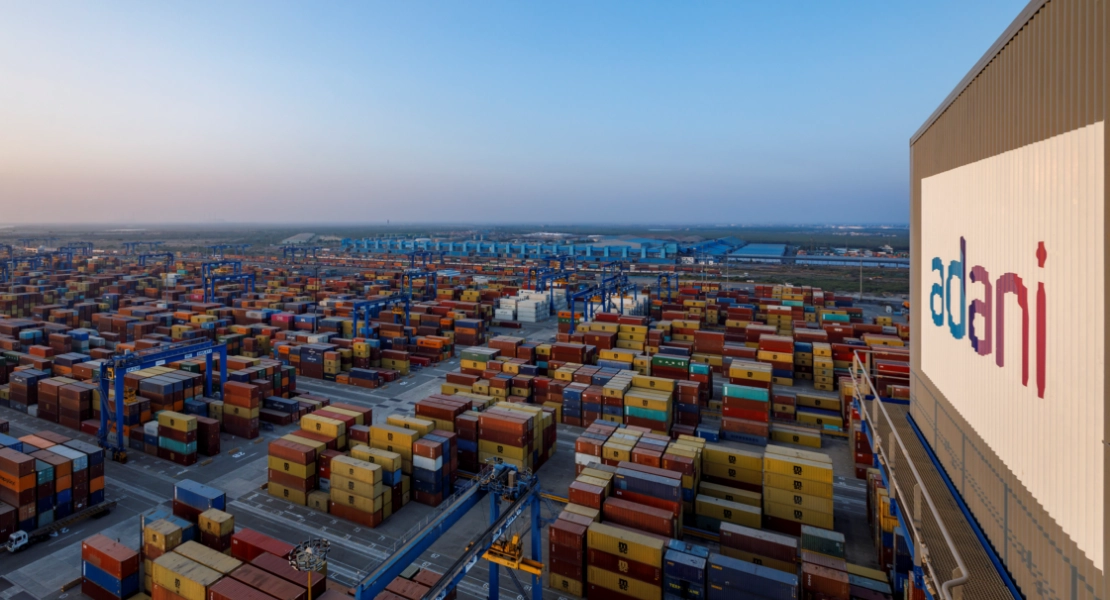
Mundra GH2 Cluster Becomes a Member of WEF’s ‘Transitioning Industrial Clusters’ Initiative
Our engagement with global platforms is crucial for expediting our decarbonisation agenda. We explore memberships and associations with credible national and global ESG and climate-related platforms and carry out policy advocacy on related topics such as innovative decarbonisation technologies, renewable energy and green hydrogen.
In September of 2024, Adani New Industries Limited (ANIL), subsidiary of Adani Enterprises Limited, along with 2 other companies of the Adani Portfolio – Adani Ports and Special Economic Zone Ltd (APSEZ) and Ambuja Cements Ltd – joined the World Economic Forum’s ‘Transitioning Industrial Clusters’ initiative, forming the Adani Mundra Cluster thereby committing to reach operational Net Zero emissions by 2050.
This initiative brings together public and private sector stakeholders from industrial clusters to reduce their CO2e emissions while driving economic growth and creating jobs. By aligning regulatory and financial components, including securing funding and gaining policy support, the initiative enables industrial clusters to implement effective and sustainable strategies.
Through collaboration with key stakeholders and implementation of innovative solutions, we strive to position the Adani Mundra Cluster as a driver of environmental, economic, and social progress. ANIL will leverage this platform, striving to become one of the world’s largest integrated green hydrogen hubs and a key contributor to India’s Green Hydrogen ambitions.
Reducing Our Operational Footprint
We are undertaking multiple initiatives across our businesses to reduce our operational GHG emission footprint, with a major focus on electrification, improvement of operational efficiency and increased uptake of renewable energy. For hard-to-abate sectors, we are exploring innovative decarbonisation solutions such as the use of green hydrogen and its derivatives.
Renewable Energy Transition
We are committed to electrifying our operations and mobility wherever feasible and transitioning to renewable energy sources for meeting our electricity requirements. For business cases, where electrification or transition to renewable energy is not possible, we will switch to low-to-zero-carbon fuels including green hydrogen and its derivatives.
AEL aims to increase the share of renewable energy in its electricity mix to 50% by 2030 - against 24% in the reporting year. The constituent businesses under AEL have also taken their own targets around procurement of renewable energy –
- By FY 2025-26, the Airports business is committed to sourcing 100% renewable energy for its operations and aims to transition 100% of the airport-owned vehicles to EVs. In FY 2024-25, it has procured 53% renewable energy and 96% of the vehicles have already been converted to EVs
- Our Data Center business targets to power its data centers with 100% renewable energy by 2030. In FY 2024-25, it has met 57% of its electricity requirements from renewable sources
- Our Mining Services business has committed to instal a captive solar power plant of 9 MW capacity at the Parsa East Kente Basan (PEKB) mine in Chhattisgarh
- Our Roads and Water business has procured 10% electricity from renewable sources in FY 2024-25
Operational Efficiency and Circular Economy
Our commitment to the circular economy principles is centred around optimising energy usage, minimising waste, maximising resource efficiency, and promoting the recycling and reuse of materials. We also acknowledge the dual benefits of energy efficiency as a key driver for operational cost savings and a crucial pathway to decarbonisation.
By prioritising innovation and adopting energy-efficient technologies and processes, AEL aims to achieve a 30% reduction in energy consumption intensity by 2030. Majority of the businesses under AEL have also taken their own targets around procurement of renewable energy –
- Our mining services business aims to achieve a 15% reduction in energy intensity by FY 2027-28
- Our solar module manufacturing business has undertaken a 5% energy optimisation plan under ISO 50001, considering per MW of module production. In FY 2024-25, it has achieved a y-o-y energy intensity reduction of 19% per MW of module produced
Investments in Innovative Decarbonisation Technologies
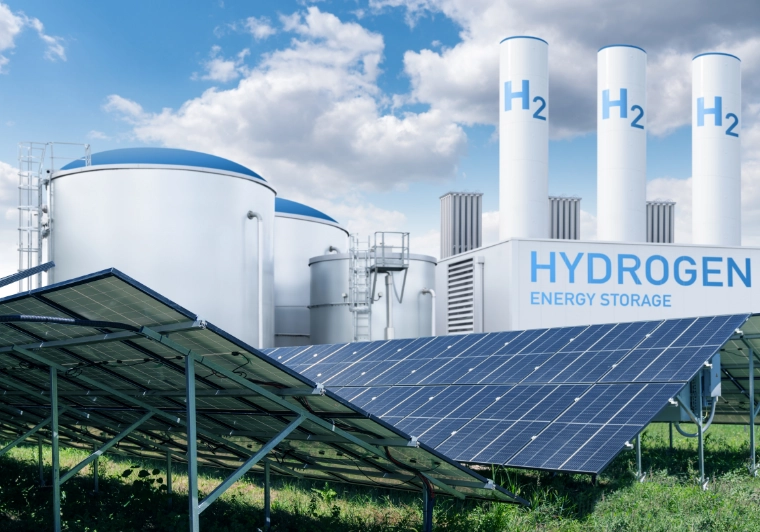
Green hydrogen (GH2 ) and its derivatives possess the transformative potential to replace fossil fuels, thereby significantly reducing or even eliminating greenhouse gas (GHG) emissions from hard-to-abate industrial sectors. As global economies intensify efforts to meet climate targets and curb GHG emissions, green hydrogen is poised to become a cornerstone of a sustainable energy future, driving the transition towards a cleaner and greener planet.
Cognisant of this potential of green hydrogen and its derivatives in the decarbonisation, we are developing a cutting-edge, cost-competitive and integrated green hydrogen ecosystem, comprising:
- 10 GW of fully integrated solar PV module manufacturing ecosystem
- 5 GW wind turbine manufacturing capacity
- 5 GW electrolyser manufacturing capacity
- Comprehensive in-house EPC capabilities
- Production facilities to support up to 1 MMTPA (million metric tonnes per annum) of green hydrogen production by 2030. These would include its derivatives including green ammonia and others

Harnessing the Decarbonisation Potential of Green Hydrogen
We are exploring innovative pilot projects focussed on decarbonising our operations, by the utilisation of green hydrogen and its derivatives.
We have successfully launched a pilot project to utilise hydrogen fuel cell electric trucks (FCET) for mining logistics and transportation. This initiative, in collaboration with Ashok Leyland and Ballard Power, features a 40-tonne hydrogen-powered mining truck equipped with three hydrogen tanks, offering an impressive range of 200 km. The truck utilises Ballard’s advanced 120 kW PEM fuel cell technology.
This initiative will help us curb the GHG emissions from heavy transportation in our mining operations.
Going Beyond Our Operations
Engaging with Our Value Chain Partners
We are actively mapping our entire value chain to identify emission hotspots and key partners for collaboration in reducing their GHG emissions. Recognising the market's preference for low-emission products, we plan to incentivise upstream suppliers with a price premium and offer discounts to downstream partners to encourage their emission reduction efforts.
Additionally, we are identifying critical suppliers of goods and services who are significantly exposed to climate-related physical and transition risks and evaluating the impact of these risks on our operations. We also engage in capacity building with key supply chain partners to help them manage climate-related risks and achieve emission reductions.

For more details, Click here
We have also invested into nature-based solutions aiming to enhance carbon sequestration through afforestation and reforestation projects and mitigate the impact of climate change impacts. AEL is committed to planting over 15 million trees, as a part of the Adani portfolio’s broader aim to grow 100 million trees by 2030.
Internal Carbon Pricing
AEL has introduced an Internal Carbon Pricing (ICP) mechanism to enhance sustainability and drive climate action. This initiative helps navigate regulations, influence strategy and financial planning, and promote energy efficiency. By setting climate-related policies and targets, AEL uses ICP to establish an emission reduction budget and integrate climate considerations into decision-making.
ICP also drives low-carbon investments and evaluates the economic implications of carbon emissions. AEL aligns its pricing strategy with scientific guidance, emissions trading schemes, international standards, and voluntary carbon offset credits. The framework considers carbon taxes and potential border adjustments, ensuring a comprehensive approach to carbon management. Through ICP, AEL aims to reduce carbon emissions, improve environmental performance, and support long-term sustainability goals.
| GHG Emissions | Type of ICP | Coverage | Price (₹/tCO2e) | Price Setting Approach |
|---|---|---|---|---|
| Scope 1+2 | Shadow Pricing | Organisation-wide | 917 | External approach and internal consultation |
Note: AEL has established an internal carbon pricing range of approximately 9 to 13 USD per tonne of CO2e, with an average price of approximately 11 USD per tonne ofCO2e.


