Responsible supply chain


Directly procured from MSMEs/small producers
of significant suppliers in Tier-1 assessed on human rights parameters
of total procurement sourced from within the State
of total procurement spend on significant suppliers
Material Topics
SDGs Aligned
Risks
Capitals Impacted

We have developed an agile, resilient, and sustainable supply chain that aligns with Environmental, Social, and Governance (ESG) principles. A key aspect of our supply chain management strategy is embedding ESG considerations into every part of our operations, promoting transparency and ethical practices throughout the supply chain.
Using platforms like the ARIBA portal, we evaluate suppliers based on ESG criteria and other relevant parameters during the onboarding process. After the initial ARIBA screening, suppliers undergo additional evaluations upon onboarding, where ESG indicators are also incorporated into purchase order terms.
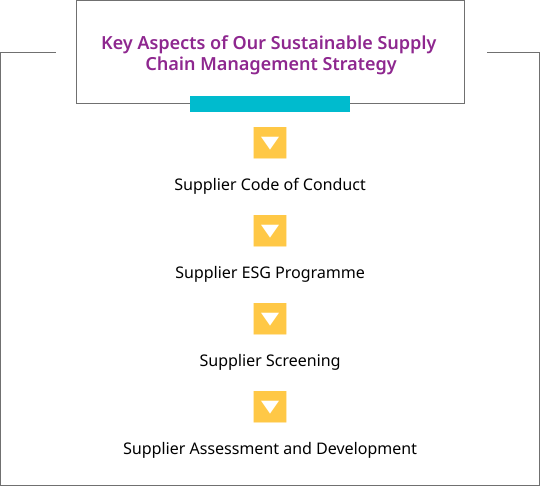
We have a well defined Supplier Code of Conduct (SCoC) in alignment with recognised Global and National standards and regulations including the United Nations Global Compact (UNGC) principles and core conventions of the International Labour Organisation (ILO), as well as sector best practices. The Supplier Code of Conduct is approved by the Board-level ESG Committee (Corporate Responsibility Committee – CRC) and is updated periodically.
The Supplier Code of Conduct covers multiple aspects across E, S and G including the following:


We have a comprehensive and a robust Supplier ESG Programme to embed sustainability and ESG into our sourcing practices and supply chain operations, to recognise and assess potential ESG risks, and consequently, plan remedial measures to ensure sustainability performance along the supply chain.
All our suppliers are strictly required to adhere to the Supplier Code of Conduct and purchasing practices towards suppliers are continuously reviewed to ensure alignment and to avoid potential conflicts. We provide training to relevant internal stakeholders on their roles in the Supplier ESG Programme as part of the comprehensive mandatory e-learning module on ESG.
The Board-level ESG Committee - Corporate Responsibility Committee (CRC) comprising 100% independent directors has an oversight of the Supplier ESG programme
Techno-commercial teams at each business level is responsible for procurement, contracts, and vendor management, in alignment with Group’s Sustainable Supply Chain philosophy, Supplier Code of Conduct, and directions from AEL’s Board of Directors and Senior Management
Our supplier risk management involves a comprehensive screening process based on environmental, social and governance parameters to assess any negative impacts and their business relevance. Our supplier screening methodology considers various risks, including country-specific, sector-specific, and commodity-specific risks.
Customised risk management plans are created to address supplier-specific risks identified during screening, outlining actionable steps and controls for risk mitigation and remediation. Through continuous engagement, monitoring, capacity building, and self-assessments of our supply chain partners, we aim to build a resilient and responsible supply chain aligned with our company-level sustainability goals
We have identified our significant suppliers in alignment with the SEBI’s BRSR value chain disclosure guidelines – considering supply chain partners individually comprising 2% or more and cumulatively not surpassing 75% of our total purchase value.
| Supplier Screening KPIs | FY 2024-25 |
|---|---|
| Total number of Tier-1 suppliers | 6,326 |
| Total number of significant suppliers in Tier-1 | 07 |
| % of total spend on significant suppliers in Tier-1 | 21 |
| Total number of significant suppliers in non-Tier-1 | 00 |
| Total number of significant suppliers (Tier-1 and non-Tier-1) | 07 |
Post the supplier screening and assessment, we share the ESG improvement areas with the suppliers and actively engage with them to enhance their performance through awareness sessions and induction programmes on safety, sustainability, human rights, and industrial relations. Additionally, regardless of the assessment outcomes, we always encourage suppliers to develop improvement plans and optimise potential performance.
Work closely and maintain open communication with suppliers. Review supplier practices to ensure alignment with the SCoC and avoid any potential conflict with its requirements
Provide resources and training on the company’s supplier ESG programme. Conduct capacity building to enhance supplier awareness on best practices based on ESG benchmarks against peers
Conduct desk-assessments of suppliers to assess their performance on ESG parameters and identify any actual or potential gaps and negative impacts
Provide remote support to suppliers on implementation of corrective/improvement actions against any identified gap or negative impact and develop in-depth technical support programmes to improve supplier ESG performance