Occupational health and safety
Material Topics
Risks
Strategic Pillars
Capitals Impacted

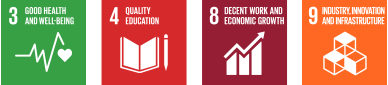
SDGs Aligned
Units and offices assessed for health andsafety in alignment with ISO 45001
for the workforce
fatalities for employees
We are committed to achieving Zero Harm to our employees, contractors, and communities, by maintaining highest OH&S standards and safeguarding our workforce and assets. Our Occupational Health and Safety Policy, reinforces our conviction to foster a ‘culture of care’, aligned with the Adani Portfolio of Companies’ ‘Growth with Goodness’ philosophy.
Blueprint for Excellence: Focussing on continuous improvement to meet the evolving challenges of our industry.
Advocacy for Deployment: Focussing on execution of OH&S blueprint through every facet of our operations for tangible outcomes at workspace.
Pursuit of Resilience: Embedding OH&S principles into organisational DNA, fortifying our commitment to excellence.
of AEL’s business sites have achieved certification under ISO 45001 (OHSMS)
of AEL’s business sites have internally been assessed through Adani Safety Management System
Our robust OH&S Management System leverages governance forums, digital platforms, and technological advancements, yielding positive trends in our OH&S indicators. All our employees and workers are covered under our OH&S Management system. At Adani, our Safety Management System (SMS) serves as a comprehensive Group-level safety framework, seamlessly integrating all Occupational Health & Safety (OH&S) management components across all aspects of our business operations. This integration enables us to manage our environmental impacts and minimise occupational health and safety risks, helping us achieve our OH&S objectives and transcend beyond mere compliance.
We regularly evaluate our progress in reducing occupational health & safety risks against established targets through internal inspections and independent external verification using ISO 45001 standards.
The Adani Safety Management System (SMS) fosters proactive and sustainable business practices, ensuring compliance with both internal and external requirements, while driving continuous improvement.

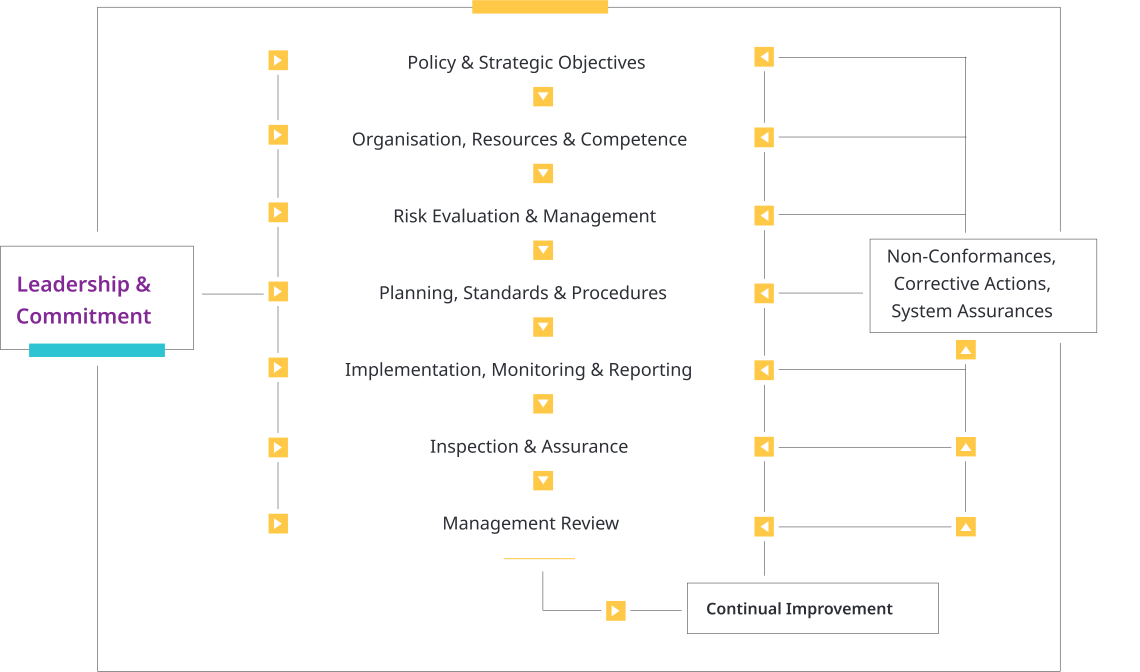
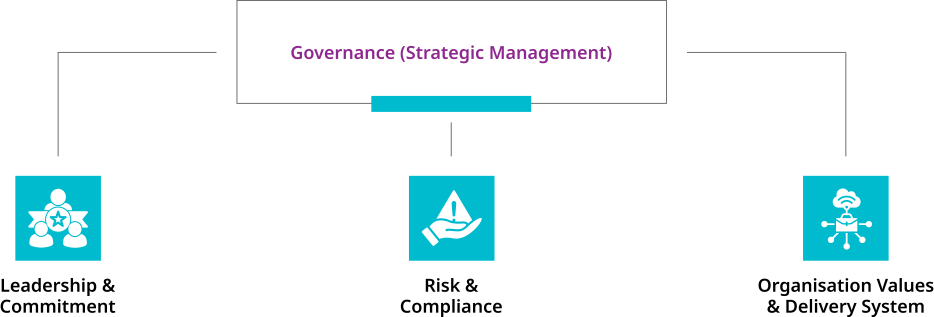
Our safety governance model focusses on four key areas: transformational leadership, addressing adaptive challenges, engaging and enrolling communities, and fostering new practices through synergy. With a strategic top-down approach and bottom-up approach for safety management, we have institutionalised robust safety governance across business segments, with clear accountability and well-defined responsibilities.
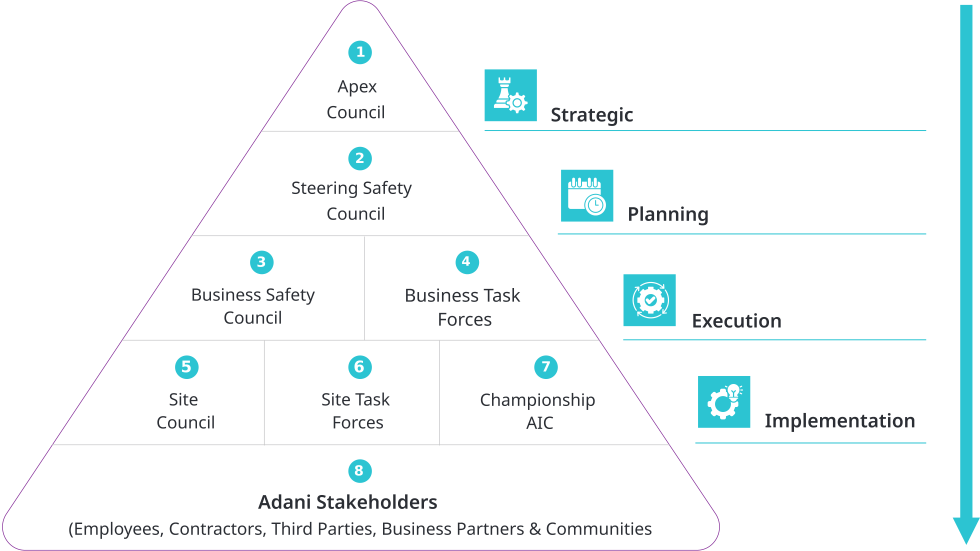

Apex Safety Council
Steering Safety Council
Business Safety Council and Task Forces
Site Safety Council
Adani Stakeholders

Appellate body comprising Senior Leadership Team, Promoters, Service Head Safety, Group Head Safety
Service Head Safety, Group Head Safety, Business Safety Heads and Key Business Leaders
BU Head, Business Safety Head, Operations Head and Line Function Leaders
Site Head, Site Safety Head and Line Function Area in Charge
Employees, Contractors, Third-Parties, Business Partners and Communities

Oversees group-wide overall Safety Management System, at pan-India level
Develops group-level safety strategy
Plan and oversee the implementation of safety standards requirement across the business
Executes and reviews site-specific safety protocols
Responsible for site-level implementation of safety standards
We have adopted Contractor Safety Management System to integrate OHS criteria into all contractual agreements. Contractors are required to adhere to our safety standards to ensure overall project safety. Our Saksham Programme (Contractor Incubation programme) enhances safety awareness and skills in the last-mile contractors to execute the tasks safely. Additionally, we also practice ‘Design for Safety’ approach for procurement, integrating safety considerations into design and sourcing stages for early mitigation of potential hazards and safer operations through equipment reliability.
We have established comprehensive processes for worker participation and consultation in the development, implementation, and evaluation of its Occupational Health and Safety (OH&S) management system.
Taskforces: Our safety committees and safety governance taskforces at various levels within the organisation, such as Site level, BU level and Group level, include representatives from different departments and worker groups, seeking their inputs and active participation in safety-related decisions.
Training and Capability Building: We foster health and safety communication with employees and workers through comprehensive training and awareness programmes, ensuring they are well informed on safety policies, procedures, and actively engaged in safety initiatives to uphold a safe work environment.
Risk Management: We involve employees and workers in hazard identification, risk analysis, mitigation planning, as well as joint hazard reviews, as part of Area Implementation Committee (AIC)/ Zone. Their firsthand experience and insights are invaluable in devising effective risk management plans.
Survey and Feedback Mechanism: We implement workforce safety surveys and feedback mechanisms to gather insights on safety practices, expectations and identify areas for improvement, ensuring continuous enhancement of the OH&S management system.
Safety Interaction (SI)
Vulnerability Safety Risks
Site Risk Field Audits (SRFA)
Process Hazard Analysis (PHA)
Hazard Spotting
The organisation has implemented a holistic hazard identification and risk assessment process to comprehensively evaluate all business processes and activities, ensuring potential risks are identified, analysed, and mitigated across the organisation. The uniqueness of the approach lies in the fact it goes beyond individual departments or isolated processes, integrating risk management into the overall business strategy.
We follow a structured risk management framework to systematically identify, assess and mitigate risks, in a responsible and effective manner.
TREAT (Lower Risk)

TOLERATE (Manage Risk)
TRANSFER (Share Risk)
TERMINATE (Remove Risk)
The outcome of Responsible Risk Assessment contributes to building a more resilient and responsive risk management system by considering the interconnectedness of various functions and activities. Through incorporation of risk control measures with emphasis on high order controls and proactive strategies, organisation efficiently mitigates risks, protects its workforce and ensures safety across all operational levels.
To enhance effectiveness of our safety risk assessment process, we prioritise workforce training and capability building, engaging personnel at all hierarchies – senior management, line managers, and frontline workers. The organisation also conducts formal competency checks for personnel involved in designing and implementing safety measures.
AEL's hazard management process is designed to systematically identify, document, analyse, and respond to hazards and risks promptly, with an overarching objective to enhance safety and prevent recurrence of similar incidents. Our hazard and risk reporting system leverages digitalisation, providing user-friendly reporting formats (both physical and online) and emphasising the significance of reporting throughout the organisation.
Adani Portfolio of Companies' Occupational Health & Safety Policy and Life Saving Safety Rules (LSSR) establishes clear ground rules to prevent injuries during its operations and high-risk activities. All employees are authorised to intervene or stop work without the fear of adverse consequences, if they perceive any safety concerns related to their activities. They are encouraged to promptly report any unsafe conditions or situations to their supervisors or through the online reporting platform - Safex, enabling swift actions for hazard mitigation.
Anonymous Reporting - The QR code-based reporting system allows workers to report hazards anonymously, protecting their identity and reducing the risk of reprisals.
Reporting Culture - The organisation fosters a supportive environment where safety concerns are encouraged and valued. This culture of openness ensures that workers feel safe and supported when reporting hazards.
Management Commitment - The leadership is committed to maintaining a safe and transparent workplace. They actively promote the importance of hazard reporting and ensure that all employees understand their rights and the protections in place.

In FY 2024-25, the organisation deployed a comprehensive safety management system to enhance safety capabilities across all levels – senior management, line managers, and last-mile workmen. The initiative aims to strengthen deployment of safety policies and procedures, including the Adani Life Saving Safety Rules, while fostering the capabilities, awareness and accountability among employees and contractors through targeted training programmes.
“AWAKENING” programme has been developed and implemented by the Group Safety team to empower top and mid management level executives, with aim to:
of employees trained on Health and Safety measures in FY 2024-25
Saksham – Contractor Workmen Safety Incubation Programme
Aligning the contract workmen trade skills with group safety performance standards is crucial for safe execution of our projects. Our leadership conceptualised a process of “Contractor Incubation Series” comprising on-ground interventions for different hierarchies in the contracting domain. As part I of this series, ‘Saksham’ has been designed to create “Experienced based Learnings” for contractor workmen.
‘Saksham’ engages workmen through 3D animated module delivered in a classroom mode by qualified trainers at sites/facilities/offices. The programme has been deployed as a mandatory module, integrated with the existing site-specific contractor safety induction module to synchronise Group imperatives with BU-specific risks and vulnerabilities. The onsite OH&S team and training coordinators maintain training records and feedback forms, which is evaluated by the business units to enhance programme effectiveness.
All contractors and workmen undergo mandatory induction before entering our sites and initiating the work. Any non-compliance leading to disciplinary action as per Adani Consequence Management Policy.
coverage
total training manhours
We have implemented a detailed Emergency Preparedness & Response Plan (EP&RP) covering all operational and office premises. This plan establishes structured procedures and protocols to effectively manage emergencies, prioritising the safety of our personnel, assets, and the environment. It undergoes regular reviews and updates to support a prompt and organised emergency reaction. The plan includes essential elements, such as introductions, definitions, organisational information, layouts, goals, procedural specifics, and mitigation strategies. The EP&RP strengthens our readiness and employee safety, ensuring compliance with regulatory standards.

CASE STUDY
Organisation is digitalising and automating core Occupational Health & Safety processes into an enterprise-level platform to improve system effectiveness, accessibility, and predictive risk mitigation capabilities at our worksites.
Envisioned as the "Single Source of Truth" for safety performance and governance effectiveness, this digital platform delivers:

CASE STUDY
The Adani Portfolio of Companies Safety organised a Safety Technology Exposition in FY 2024-25 with the core objective to enhance operational excellence and fortify integrity or its systems and processes. Recognising the transformative potential of integrated technological and digital solutions, the exposition was curated under the theme "Transforming Safety for Tomorrow”.
The exposition convened leading technological and digital solutions providers to showcase the innovative safety solutions, such as Honeywell Automation, Arrestor Solution, ABB India, Draeger Safety, Hilti India, Schneider Electric, Siemens Limited, Engg Online, Innvendt Technologies, Raychem RPG, CHRP India
Capability building safety learning packages based on advanced technologies
CASE STUDY
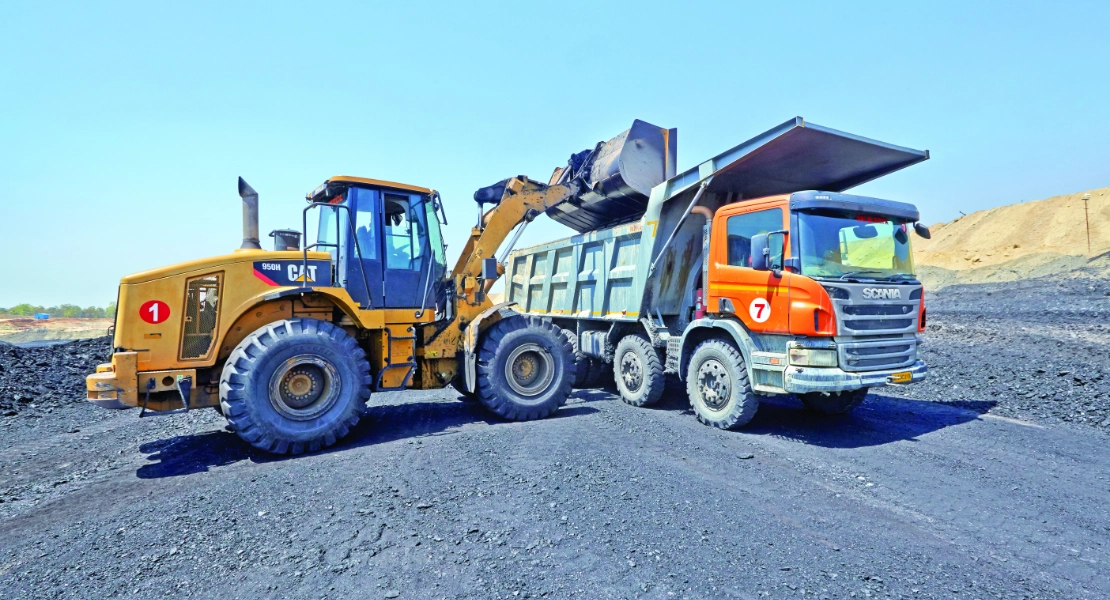
The Talabira opencast coal mine has implemented a sophisticated Fleet Management System (FMS) to boost its production efficiency through the real-time data.