




Energy management
At AEL, we prioritise energy management as a central aspect of our operations, guided by our Energy Management Policy. Recognising its dual benefits in progressing decarbonisation and driving cost-effectiveness, we focus on increasing energy savings by optimising energy consumption and enhancing efficiency across our businesses. We are committed to exploring and adopting innovative and resilient alternatives to traditional energy sources, demonstrating our dedication to be sectoral leaders in sustainable energy management practices. We also provide energy efficiency training to our employees to raise awareness about energy consumption reduction.
Striving to Enhance Energy Efficiency
Our company conducts rigorous energy audits in compliance with ISO 50001 standards, helping us enhance our operational efficiency, drive down costs, and minimise environmental impacts through efficient energy management. These audits form the baseline for establishing, implementing, maintaining, and improving our energy management system. It also helps us update our policy commitments towards efficient energy use, set targets and objectives, and use data to make informed decisions about energy consumption. Regular audits ensure accurate measurement of consumption trends, review the effectiveness of energy-saving initiatives, and continually improve our practices.
In our pursuit of innovation, we also have adopted state-of-the-art technologies and automation systems across our operations. These advanced systems enable real-time energy consumption monitoring, crucial for identifying usage patterns and addressing energy wastage promptly. Implementing these smart technologies optimises our energy use, enhances operational efficiency, and significantly contributes to our sustainability goals.
Transitioning to Renewable Energy
Over the next decade, most of our businesses are committed to sourcing a significant portion of their energy needs from renewable sources. Our efforts include installing captive renewable energy generation facilities, wherever feasible and, partnering with renewable energy producers, and purchasing Renewable Energy Certificates (RECs) from credible and verified providers where direct sourcing of renewable energy is not possible. In FY 2024-25, AEL has procured 24% of its electricity requirements from renewable sources.
Sourcing Renewable Energy from the World’s Largest Hybrid RE Park at Khavda
The Adani portfolio is developing a 30 GW renewable energy project at Khavda, Kutch, Gujarat, spanning 538 km²—five times the size of Paris and nearly as large as Mumbai. AEL businesses will source renewable energy from this facility through a group open access arrangement, investing equity to set up the infrastructure and consuming a portion of the generated green electricity.
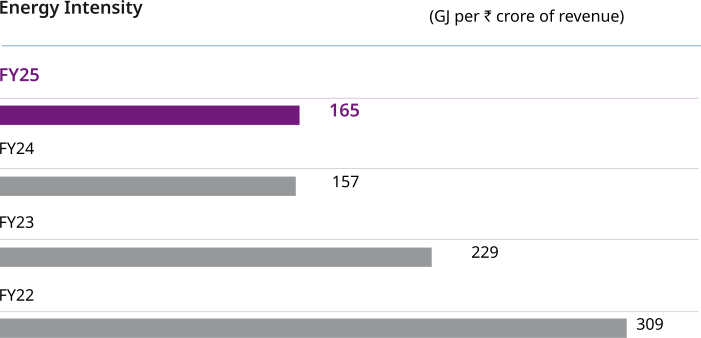
AEL's energy consumption intensity has increased marginally in the reporting year in comparison to the previous year, owing to the addition of 3 new businesses - Copper Smelting, Wind turbine manufacturing and Digital Labs to the reporting boundary.

CASE STUDY
Improvement in Power Usage Effectiveness at Chennai Data Center
Power Usage Effectiveness (PUE) is a critical metric used to determine the energy efficiency of a data center. PUE quantifies how efficiently a data center uses its energy, comparing the total energy consumption of the facility (including IT equipment, cooling, lighting, etc.) to the energy used solely by the IT equipment (servers, storage, networking, etc.). A lower PUE indicates a more efficient data center that is consuming less energy to operate the same capacity of IT equipment, leading to lower operational costs, reduced GHG emissions and a cleaner environmental footprint.

Objective
Our data center business, AdaniConneX, has undertaken substantial initiatives to reduce the Power Usage Effectiveness (PUE) of its Chennai Data Center from 1.60 to 1.57. This year-on-year improvement in PUE has the potential to decrease our energy consumption by nearly 25% over the next few years. This initiative will serve as a crucial decarbonisation lever, aiding us in achieving operational Net Zero emissions by 2030.
Initiatives
Several impactful initiatives have been undertaken to improve the energy efficiency of the Chennai Data Center.
- Air Leak Fixes: Identified and fixed air leaks in the cooling systems and air-cooled chillers to prevent leakage of cooled air.
- Occupancy Sensor-Embedded Lighting: Installed sensor-enabled lighting systems in common passages and office areas that only operate when required, significantly reducing electricity consumption.
- Shutdown of idle equipment: Unused electrical equipment such as UPS units are periodically shut down to prevent energy wastage from idle electrical equipment.
- Optimised De-humidifier Usage: Reduced the usage of de-humidifiers and optimised their operation to maintain acceptable humidity levels without consuming excess energy.
- Chiller Operation Fine-Tuning: Fine-tuned the operation of air-cooled chillers to ensure they run according to design parameters, thereby matching cooling output to the actual demand.
Outcome
Through targeted efficiency measures and interventions, we have substantially reduced the PUE of our Chennai Data Center from 1.609 to 1.59 and we aim to further reduce it to 1.57 by FY 2025-26, resulting in a substantial decrease in our auxiliary energy consumption.
The initiatives undertaken at the Chennai Data Center have demonstrated a clear path towards improved energy efficiency and reduced GHG emissions. By continuing to focus on optimising our operations and implementing innovative solutions, we are on track to meet our long-term sustainability goals and contribute to a greener future.
Adani Natural Resources is Undertaking Efforts Towards Sustainable Mining by Powering its Operations Using Renewable Energy
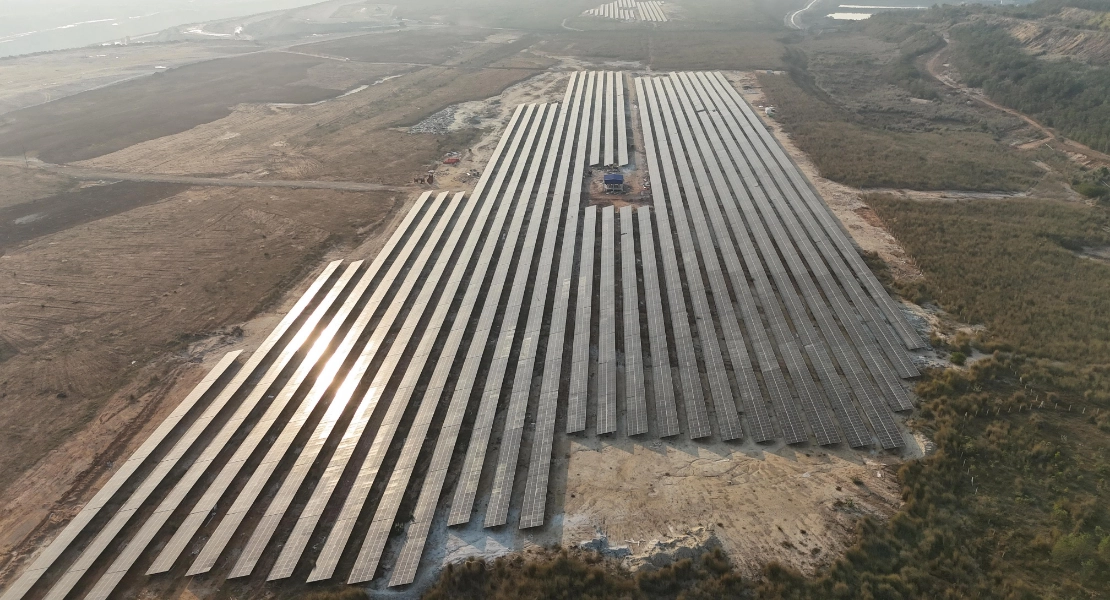
At the PEKB mine of Adani Natural Resources, we are undertaking a significant project to build a 9 MW captive solar power plant to source renewable energy for our mining operations, thereby making a positive impact on the environment and nearby communities.
Beyond its ecological impact, the renewable energy substitution represents a harmonious blend of technological innovation and environmental stewardship. By investing in renewable energy, the PEKB mine is not only reducing its GHG emission footprint but is also positioning itself as a benchmark in sustainable mining operations. This project demonstrates that economic growth and environmental preservation can go hand-in-hand, fostering a culture of sustainability within the community.
The 9 MW Solar Project at PEKB is currently in the commissioning stage and is poised to make a significant environmental impact. This effort is expected to significantly reduce greenhouse gas emissions, avoiding approximately 4 lakh tonnes of CO2 equivalent over the next two and a half decades. Such a reduction is akin to planting 2.4 million trees or removing hundreds of cars from the road each year, highlighting the project's substantial environmental benefits. This substantial reduction in greenhouse gas emissions highlights the project's dedication to sustainability and its crucial role in combating climate change.


