




Advancing water stewardship
Our Water Stewardship Policy is responsible for guiding our commitment to sustainable water management practices, ensuring the effective utilisation and conservation of this crucial resource. Recognising the need to conserve water as a vital resource for generations to come, we leverage advanced technologies and initiatives derived from sector best practices, striving to achieve a water positive status across our operations.
Our Approach to Water Stewardship
Water recycling is a fundamental part of our approach, allowing us to minimise freshwater usage by reusing treated water, wherever possible. Most of our operational sites are certified for Zero Liquid Discharge (ZLD), ensuring recycling and reuse of treated wastewater within the plant premises. By implementing Sewage Treatment Plants (STP) at most of our operational sites, we effectively treat wastewater ensuring that the quality of water discharge is in compliance with applicable laws and regulations.
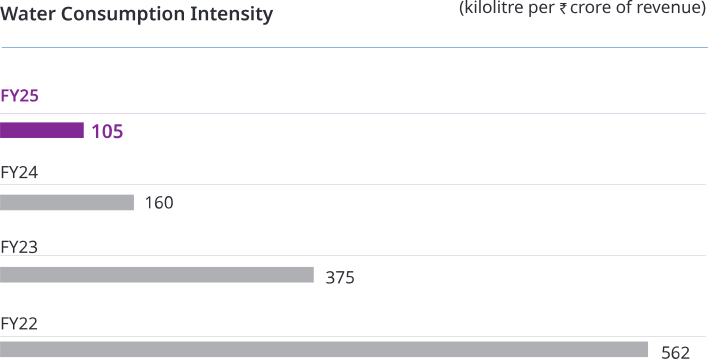
AEL's water consumption intensity and absolute water consumption have decreased in comparison to previous year owing to our extensive efforts towards water recycling and optimisation of water consumption in our operations and water use assessments carried out by the respective businesses.

CASE STUDY
Leading Wastewater Treatment efforts via the PWPL STP project
Water Conservation through Pollution Prevention
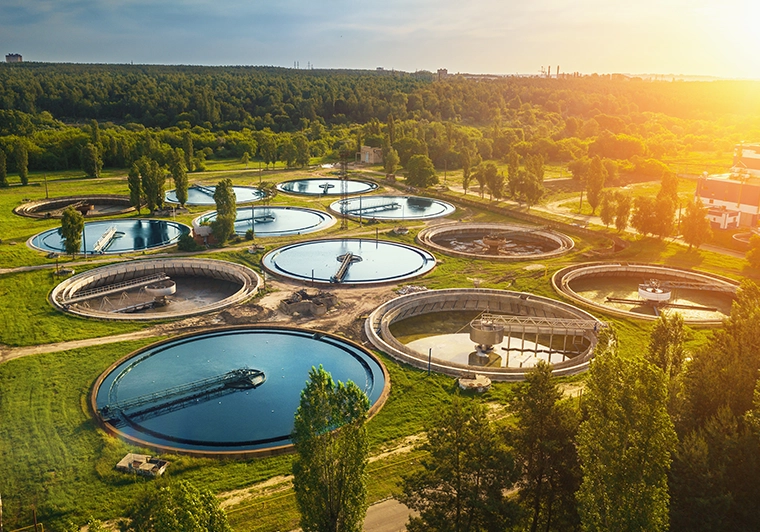
The Prayagraj Sewage Treatment Plant (STP) project is a critical initiative aimed at treating wastewater from open drains before it is discharged into the Ganga River. This project plays a vital role in preventing pollution and safeguarding the river, which is essential for millions of people.
The Ganga River faces significant threats from untreated sewage and industrial waste. The Prayagraj STPs use advanced treatment processes to remove contaminants such as suspended solids, organic matter, and pathogens. These facilities treat over 130 million kilolitres of water annually, ensuring that the discharged water meets quality standards. This effort supports downstream freshwater availability and contributes to tourism, agriculture, and cultural heritage preservation.
Impact of the project
By treating wastewater before it reaches the Ganga River, the project prevents pollutants and contaminants from entering the river, preserving its ecological integrity. In the previous year, the STPs prevented around 2.7 lakh metric tonnes of pollutants from entering the Ganga, improving water quality and supporting aquatic life. This initiative helps maintain the biodiversity of the Ganga basin and supports the diverse flora and fauna that depend on it. The project also focusses on restoring wetlands, creating buffer zones, and promoting vegetation to reduce nutrient runoff and sedimentation. This supports the growth of aquatic plants like water hyacinths, Vallisneria, and Ceratophyllum, improving water health. The establishment of STPs brings several societal benefits, including economic value creation and employment generation.
Aiding in Ecosystem Restoration
By intercepting and treating raw sewage before it reaches the Ganga, the project aids in ecosystem restoration. The cleaner effluent supports aquatic species such as fish, amphibians, and invertebrates, while promoting healthier riparian zones that provide essential breeding grounds and habitats. The project also enhances conditions for endangered species, including the Ganges River dolphin, which is starting to reappear in its riverine habitat. By improving water quality, the initiative creates a safer environment for these species, highlighting a broader commitment to biodiversity conservation and preserving aquatic ecosystems.
The Prayagraj STP project is a transformative initiative that not only addresses wastewater treatment but also contributes significantly to environmental preservation, societal benefits, and ecosystem restoration. By setting a precedent for sustainable development, this project demonstrates how technological advancements can harmonise with ecological preservation, ensuring a healthier future for the Ganga River and its surrounding communities.
Additionally, we actively implement rainwater harvesting systems to reduce reliance on traditional water sources. Our commitment to wastewater treatment and recycling ensures minimal water wastage and protects natural bodies. We engage with local communities through educational initiatives and awareness campaigns to foster a collective responsibility for water conservation.
We provide awareness training to employees, promoting active participation in water efficiency management programmes and reinforcing our commitment to sustainable water practices.
Improving Water-Use Efficiency
- Advanced monitoring systems are installed to track water usage, quality, and discharge across sites, providing crucial insights to enhance our water use practices and efficiency
- Periodic water-use assessments, both internal and with the aid of a third-party, are conducted in alignment with global and national frameworks to identify inefficiencies and implement targeted conservation measures
- Clear targets are undertaken with focussed action plans to reduce water consumption and enhance wastewater quality through advanced recycling and treatment processes
- Water conservation measures are implemented across operations to reduce water wastage and improve water use efficiency. These include the installation of water-efficient fixtures, conducting leak detection tests, and enhancing our water recycling systems
Commitment to Rainwater Harvesting
Rainwater harvesting is a cornerstone of our water management strategy, reducing reliance on conventional water sources and supporting local ecosystems by replenishing groundwater. We proactively utilise stored rainwater for non-potable uses in our mine operations.
Our Airports business has carried out detailed water assessments with the aid of a third-party at all seven airports. Embracing these measures, we strive to be leaders in water stewardship, ensuring sustainable utilisation for the benefit of our organisation, communities, and the environment.
Fostering Community Wellbeing
We strive for water positivity in our businesses, while also prioritising water sufficiency for the nearby communities. We raise community awareness and inspire action through educational initiatives, awareness campaigns, and collaborative projects, leveraging social media, local media, and community events to disseminate key messages. We partner with local governments, NGOs, and community groups on projects such as rainwater harvesting system installations and the restoration of local water bodies. We also encourage employee volunteerism and provide resources and technical support for community-led projects. By fostering collaboration and ensuring collective responsibility, we aim to create a culture of water conservation that benefits both our organisation and the broader communities.
Through our CSR initiatives, we support projects that focus on water availability, sanitation improvements, and hygiene education, addressing the urgent needs of communities affected by water scarcity.
We also strive to source our water requirements from non-competing sources wherever possible, to support the wellbeing of the communities that we operate in.
In FY 2024-25, AEL sourced 26% of its water requirements from non-competing sources.


