



Rooted in our corporate governance tenets – Courage, Trust and Commitment, we ensure transparency and integrity towards our stakeholders.
At Adani Energy Solutions, our governance framework is designed to uphold the highest standards of corporate responsibility and operational excellence. Rooted in our corporate governance tenets – Courage, Trust and Commitment, we ensure transparency and integrity towards our stakeholders. Adani Energy Solutions’ governance practices transcends mere compliance, fostering a culture of continuous improvement and innovation. By integrating sustainability priorities into our business strategies, we contribute meaningfully to the broader societal and environmental goals.
Key Linkages
SDGs

Associated Risks

Material Topics
Capitals Impacted

Strategic Priorities

Key Highlights
100%
Directors, senior management, employees, and business partners are trained on Code of Business Ethics and Conduct
100%
Compliance achieved on applicable corporate governance and environmental regulations
Zero
Penalties/fines paid, or non-monetary sanctions faced due to statutory non-compliance
50%
Board Independence
Key Focus Areas


Business Ethics and Transparency

Digitisation, Data Privacy & Information Security

Supply Chain Management

Public Policy & Advocacy

Economic Performance
Corporate Governance Structure
Adani Energy Solutions has a robust corporate governance structure headed by the Board, fostering transparency and open communication. We follow a one-tier Board which ensures effective implementation of business strategies, driving holistic growth and development, thereby making us stronger than ever. With 50% independence, our Board of Directors brings a balanced and objective perspective, crucial for informed decision-making and solid governance.
The Company has established strong internal controls and audit mechanisms to monitor compliance and address any issues promptly. Our dedication to regulatory adherence and sustainable practices is reflected in 100% compliance with all applicable environmental and statutory requirements.
Corporate Governance Structure
Board Snapshot
50%
Independent Directorson the Board
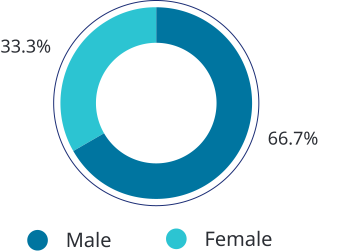
33.3%
Women Directors
8.17 years
Average tenure of Boardof Directors
64 years
Average age of theBoard of Directors
83.3%
of Board members are Indian and
5
Board meetings held duringthe year with
16.7%
are Australian
100%
Average attendance(minimum requirement: 33%)
64%
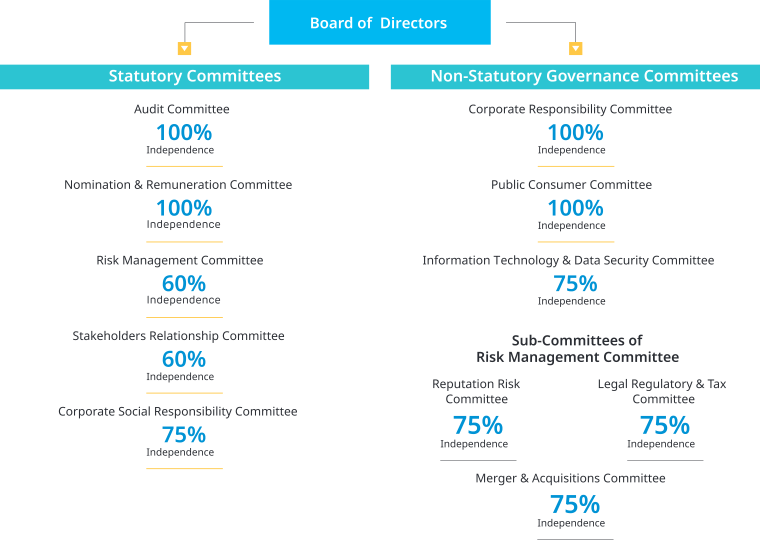
Statutory and Non-Statutory Committees chaired by Independent Directors
Board Size and Composition
The Board composition complies with the applicable provisions of Companies Act, 2013 (“Act”), SEBI Listing Regulations, as amended from time to time and other applicable statutory provisions. The composition is in alignment with Regulation 17 of the Listing Regulations and Section 149 (4) of the Act. Further, as per SEBI Listing Regulation, the Board of Directors of the top 1,000 listed companies, effective April 01, 2020, shall have at least one independent woman Director.
The Company has a well-balanced Board with an optimal mix of Executive and Non-Executive Directors possessing diverse skills, knowledge and experience. As of March 31, 2025, there are total six Directors on the Board including independent woman Directors.

| Directors | Male | Female | Total Members |
|---|---|---|---|
| Executive Directors | 01 | 0 | 01 |
| Independent Directors | 01 | 02 | 03 |
| Other Non-Executive (Promoter) Directors | 02 | 0 | 02 |
| Total Board size | 04 | 02 | 06 |
Note
- All the 04 male Directors are Indian, while out of 02 women Directors, 01 is Indian and the other director is Australian
- There are no under-represented social groups in the governance body.
The Board and Its Committees
Board’s Role
The Board sets the strategic direction for the Company, upholding high standards of business ethics, transparency, and accountability, while safeguarding the interests of shareholders and other stakeholders. It oversees and aligns the management's execution of the Company's business plan with the long-term goals.
The Board also leads digitisation initiatives, data privacy, and information security for the Company to maintain competitiveness in the evolving business landscape. It ensures active supply chain management, public policy and advocacy, and monitors economic performance to drive Company's growth and sustainability. With clearly defined roles and responsibilities, regular meetings, and dedicated committees for diverse functions including audit, risk management, and corporate social responsibility, the Board ensures effective governance. The Board members are appointed considering shareholder votes, and their operational competency.
Chair of the Highest Governance Body
The Chair of the highest governance body holds a crucial role in overseeing the effective functioning and management of the organisation. Their responsibilities include:
- Leads Board meetings and sets the agenda for productive discussions and decision-making in the best interest of the Company and its stakeholders
- Liaise between the Board and senior management, for clear communication and alignment on strategic objectives
- Strengthens leadership structure, providing stability and continuity in the Company's governance
- Promotes accountability and transparency, along with the Board, to maintain investor confidence and regulatory compliance

Separate Posts for Chairperson, MD, and CEO
At Adani Energy Solutions, the role of Chairperson, MD and CEO are held by different personnel. Mr Gautam Adani is the Non-Executive Chairman, Mr Anil Sardana, is the Managing Director and Mr Kandarp Patel is the CEO, of the Company. All these positions have distinct and well-articulated roles and responsibilities and are not related to each other.
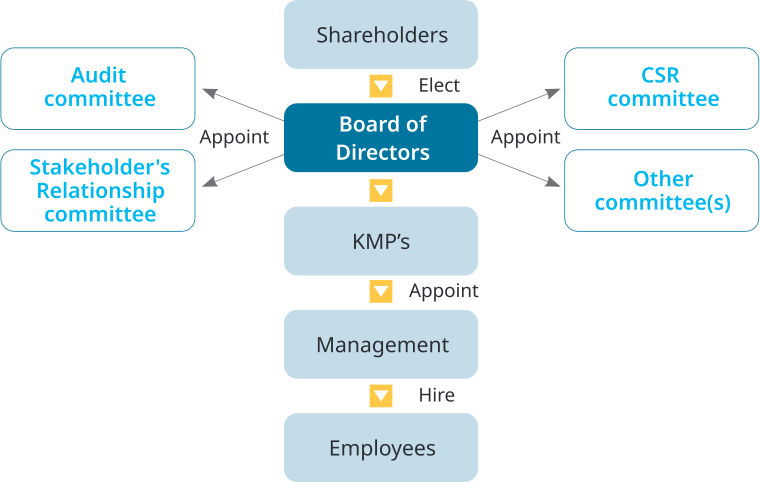
Board Committees
Adani Energy Solutions' Board has formally established statutory and non-statutory committees for effective oversight of corporate governance and business operations. These committees support the Board in overseeing various diverse organisational functions to ensure streamlined operations. The Board supervises the execution of the responsibilities by the committees. Minutes of meeting and updates for all Committees are placed before the Board for review. Critical concerns, if any, are communicated to the Board for their review each quarter. During the reporting year, there were no critical concerns raised to the Board. The Board Committees ensure prompt and effective resolution on all corporate governance matters.

Board’s Oversight on Sustainability and ESG Impacts
The Board oversees sustainability reporting ensuring the disclosures are accurate, comprehensive, and aligned with organisation's commitment to sustainable development.
Adani Energy Solutions’ ESG governance is led by the Corporate Responsibility Committee (CRC) of the Board. In managing ESG impacts, the Board and the CRC actively engage with stakeholders to understand and integrate their concerns and expectations into the Company's strategic planning and operations. The Board plays a crucial role in developing, approving, and updating the organisation's purpose, value or mission statements.
They are instrumental in shaping the strategies, policies, and goals, embedding ESG considerations into the core business decisions planning to meet regulatory requirements and drive positive broader societal and environmental impact.
Board Meetings
The Board convenes as and when required, with one minimum meeting held every quarter. These meetings are conducted to hold discussions and reviews on corporate or future action plans, strategy, financial performance, budgets and matters related to sustainability action plans.
Board Diversity Policy
Our Board Diversity Policy emphasises on fostering diversity and inclusion within our governance body. We acknowledge that the diverse Board enhances decision-making by bringing a range of perspectives and experiences. This diversity is crucial for effective management across areas such as power sector, strategy, financial, counterparty, negotiations, risk, public policy, legal environment, and social issues.
While no Board members are from the underrepresented social groups, stakeholder representation is achieved through Independent Directors. Our Independent Directors have confirmed their compliance with the criteria of “Independence”, adhering to the regulatory requirements of SEBI Listing Regulations and the Act.
Board Mandates
In compliance with the requirements of the Companies Act, 2013 and Listing Obligation, we mandate that no Director can hold directorship (including any alternate directorship) in more than 20 companies, with a maximum of 10 public companies. Furthermore, out of these 10 public companies, a Director may hold directorships in no more than seven listed companies. In adherence with this mandate, no Director in our organisation serves on the Boards of more than 10 public companies or more than seven listed companies.
Management Ownership
Our Company does not enforce specific stock ownership requirements for the CEO or other executive committee members. As part of management ownership, neither the CEO nor other executive officers hold company shares. Additionally, there is no government ownership in our Company, nor do we have any golden shares designated for governmental institutions.
Nomination and Selection
The Nomination and Remuneration Committee (NRC) identifies, evaluates and recommends candidates for the highest governance bodies i.e., the Board, its committees and key managerial roles. The NRC includes all Independent Directors in the nomination and selection process to ensure fairness, impartiality and objectivity.
The NRC defines selection criteria based on strategic objectives, long-term goals and regulations, focussing on desired experience and competencies, such as:


Professional qualifications and experience

Industry knowledge

Leadership skills

Integrity and ethics standards

Diversity considerations
Selection Process
Identification of potential candidates through internal talent pools, external search firms, industry networks, and professional associations, ensuring diversity and inclusivity.

Stringent evaluation and shortlisting of the candidates on defined criteria through careful review of resumes, interviews, and track record assessments.
Recommendations to the Board of Directors by NRC for final selection approval, considering NRC’s recommendations and additional insights.

Formal appointment of the approved candidates to the governance bodies and key managerial positions.

Thorough due diligence prior to the final selection to verify candidates' backgrounds, qualifications, and references, ensuring compliance with regulatory and ethical standards.
Board’s Performance Evaluation
The NRC has established formal structured performance evaluation criteria, enabling the Board to evaluate its performance, along with that of its committees and individual Directors, including the Chairman of the Board.
The evaluations are conducted independently and anonymously of each Board member by other Board members, to seek an unbiased perspective on the Board's effectiveness with objectivity and impartiality.
These annual evaluations followed by timely feedback drive continuous improvement, aligning the governance with Company's strategic goals, while strengthening Board’s effectiveness, risk management, strategic planning and stakeholder value.
In the current year, the Board evaluations provided insights into our Board dynamics, individual contributions from each Director, and areas for improvement in governance practices to enhance resilience. In FY 2024-25, the outcome of the Board’s evaluation exercise led to the changes in the composition of the highest governance body to infuse new perspectives and expertise. Additionally, organisational policies and practices were revised to strengthen decision-making processes, accountability and transparency. Training programmes were also intensified to address identified skill gaps and enhance leadership effectiveness.
Board’s Remuneration
The remuneration of the Board and senior management is governed by our Nomination and Remuneration Policy, compliant with the SEBI Listing Regulations. The NRC oversees the Board appointments and compensations, without involving any external remuneration consultants in this process. Stakeholder opinions are integrated through voting, with outcomes disclosed in our Integrated Annual Report for transparency. A Clawback Policy, applicable to our CEO and senior executives, have been implemented to safeguard the interest of the Company and its stakeholders against any financial misconduct.
Remuneration Details in FY 2024-25
₹22,38,207
Median remuneration for all employees excluding CEO
₹18.9 crore
Remuneration drawn by KMPs
₹14 Crore
Salary drawn by the CEO – Adani Energy Solutions (including variable compensation)
62.55:1
CEO to employee pay ratio (based on consolidated remuneration drawn)
Components of CEO’s Compensation
35%
KPIs linked to the delivery of the approved budget
20%
KPI’s linked to achievement of targeted EBITDA (consolidated), ROCE, and free cash flow from operations
25%
KPIs linked to ESG (De-Carbonisation & Corporate Sustainability Assessment score) and successful execution of total CAPEX and installation of smart meters
Additional KPIs include ensuring commissioning of new projects to meet Company's annual target Internal Rate of Return and CoD of projects as per the targets
Familiarisation and Capacity Building
We conduct induction programme to familiarise the new Board members and key management personnel with the Company's operations, governance framework, and strategic objectives through:

We also organise training programmes, workshops, and seminars to facilitate continuous improvement and upskilling on key governance areas and other evolving business landscape.
Doing Business with Ethics and Integrity
Policy Commitments
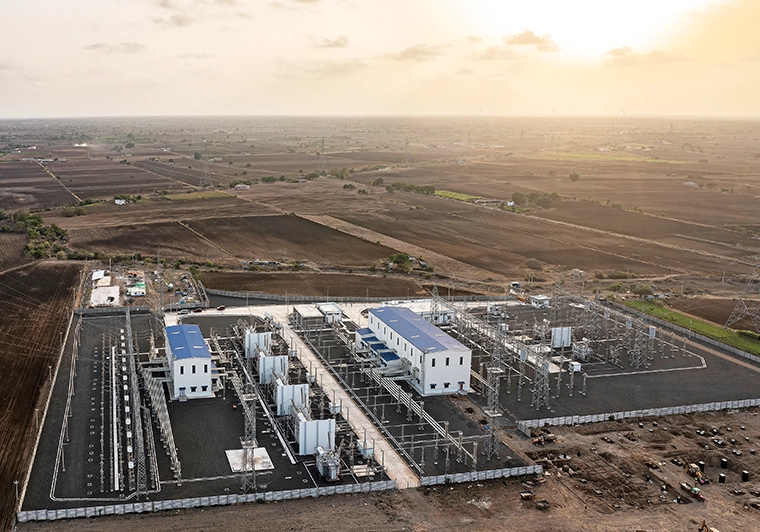
Adani Energy Solutions has established comprehensive policy frameworks that integrate responsible business conduct into its business strategies and operations, aligned with its core values and strategic objectives. These commitments reflect in our operational policies which guide our day-to-day activities and decision-making. Further, we have designed our operational procedures to implement these policies effectively, through regular reviews and updates to maintain their relevance and effectiveness.
Embedding Policy Commitments
Our Corporate and ESG governance framework are designed to embed our policy commitments across our business operations, with leadership, senior management, employees and business partners as custodians of implementation.

Policy Integration Across Organisational Levels
- The Board oversees the overall adherence and effectiveness through regular reviews
- The CEO and the senior leadership provide resources and strategic direction for organisation-wide implementation
- Middle management operationalises and translates commitments into actionable strategies
- Employees at all levels are encouraged to uphold these commitments, with clear guidelines and managerial support

Policy Integration Across Organisational Levels
- Responsible business conduct and human rights policies extend to our business relationships, including our partners, suppliers and other stakeholders
- Adani Energy Solutions screens new vendors on human rights and ESG parameters and selects partners aligned with its values and ethical standards
- Policy commitments, including human rights are enforced through contractual agreements and Supplier Code of Conduct
- Due diligence of suppliers and partners, regular audits and assessment ensure compliance
- Any non-compliance with the required standards is promptly addressed to maintain integrity of the business relationships

Communication and Awareness
- Policies and procedures are communicated to all employees and business partners through regular training programmes, workshops, seminars and e-learning modules, tailored to different roles for relevance and practical applicability
- Business partners are provided with resources on ethical conduct, human rights and ESG in terms of training, policies, procedures and clarifications

Integration into Strategies and Operations
- Operational policies are regularly reviewed and updated, with the Board approving the revisions/amendments to maintain alignment with evolving regulations and commitments
- Strategic planning sessions focus on strengthening policy implementation
Code of Conduct
Adani Energy Solutions has adopted a formal Code of Conduct (CoC) for its Board and senior management and Employee Code of Conduct to ensure compliance with required standards of business conduct, organisation’s core values and regulatory requirements. The Company Secretary oversees its effectiveness and compliance. The supply chain sustainability is ensured through the Supplier Code of Conduct.
In FY 2024-25, all Board members and senior management personnel have affirmed their compliance with the Code of Conduct and a declaration to this effect signed by the Managing Director of the Company is included on page 360 of this report.
Managing Conflict of Interest
The Code of Conduct for Directors and senior management lists the guidelines to prevent conflicts of interest and requires them to avoid any activities or relationships that could lead to conflict with the Company’s interest. Directors and senior management are strictly required to promptly disclose any actual or potential conflict of interest to the Company Secretary.

Regular case studies and scenario-based training sessions keep the members updated on latest regulations, company policies, best practices and effective conflict management.

An independent committee or external auditor is appointed to oversee the conflict-of interest management process, review disclosures, monitor compliance, and investigate any potential conflicts.

Recusal protocols ensure that the members disclosing a conflict, abstain from participating in related discussions or votes to maintain the integrity and impartiality of the decisions.

Anonymous Whistleblower reporting mechanism and Claw back policy act as secure channels to report any violations.

CoC, Claw back policy and procedures are regularly reviewed and updated to align with the regulatory environment, organisational structure, and industry standards, with clear consequences for violations, including disciplinary actions, removal from the governance body, legal and or other appropriate measures.

All disclosures, conflict management actions, and decisions are documented and recorded for accessibility during review and audits by the oversight committee and external auditors.
The Board members submit annual disclosure statements detailing their financial interests, directorships, employment positions, and any other affiliations that could potentially influence their decisions, including the immediate updates for any new potential conflicts.
There have been ZERO cases of conflicts of interests in FY 2024-25 including cross-board membership, cross-shareholding with suppliers and other stakeholders, existence of controlling shareholders and related parties, their relationships, transactions, and outstanding balances.
Anti-Bribery and Anti- Corruption
RRecognising the significant reputational, financial and legal risks associated with corruption or bribery, we reinforce our commitment through our Anti-Bribery and Anti-Corruption Policy. The policy upholds a zero tolerance approach towards all forms of bribery and corruption, further driven through our Code of Conduct (CoC) for employees, Directors, and Senior Management, as well our Supplier Code of Conduct. In FY 2024-25, our internal team conducted corruption and bribery risk assessment covering 100% of our operations and there were no significant risks found.
Training and Compliance
All our Directors, senior management personnel, employees, workers, suppliers, contractors and business partners receive training and periodic refresher courses on Adani Energy Solutions’ Code of Conduct, including human rights, environmental sustainability, anti-corruption & bribery, conflicts of interests, and compliance with regulatory requirements. New hires receive mandatory training on Code of Conduct as part of the induction programme.
To verify and enhance compliance, we conduct regular audits for all our stakeholders covering every aspect of the Code. We also get our compliance management system independently audited and verified by third-party as part of the statutory audit. There were ZERO instances of breach of Code reported during FY 2024-25.
Training on Anti-Corruption and Anti-Bribery
| Stakeholders Trained | Percentage |
|---|---|
| Board and Senior Management | 100% |
| Employees and Workers | 100% |
| Incidents Reported for Violation of Code | Number of Incidents in FY 2024-25 |
|---|---|
| Money Laundering or Insider Trading | Nil |
| Corruption & Bribery | |
| Conflicts of Interests involving Directors and Senior Management Personnel | |
| Anti-Competitive Practices, Anti-Trust and Monopoly | |
| Employee Misconduct | |
| Workplace Harassment and Discrimination | |
| Health, Safety and Environment | |
| Others |
Access to Remedy
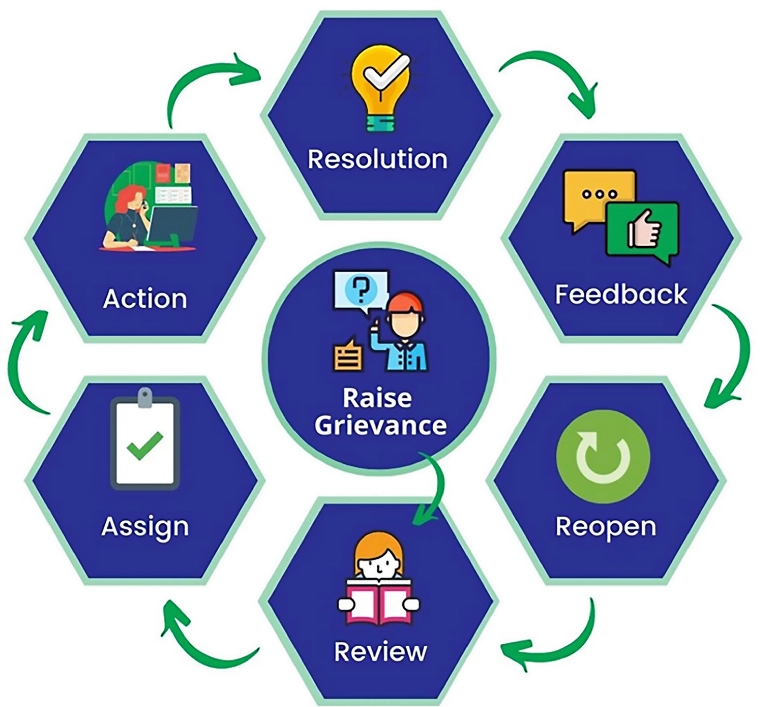
Stakeholder Grievance Mechanism
At Adani Energy Solutions, we have established formal grievance mechanisms for all our key stakeholders to raise their concerns to us and seek prompt and effective resolution within stipulated timelines.
Read more about our grievance redressal:
Whistleblower Mechanism
Adani Energy Solutions’ Whistle Blower Policy has been established in accordance with the provisions of the Act, and SEBI Listing Regulations. The policy encourages employees and Directors to enhance compliance by raising concerns about organisation’s business conduct including human rights violation, financial irregularities, misconduct, or wrongdoings. The policy allows the employees to make protective disclosures to report the violations without the fear of reprisal, maintaining anonymity and confidentiality of the complainant.
The Vigilance and Ethics Officer and/or Chairman of the Audit Committee are responsible for monitoring the effectiveness of the Whistleblower policy & vigil mechanism. They handle all the reported concerns and maintain the records of the complaints, under the purview of Chairman of the Board or the Chairman of the Audit Committee.
Policy Advocacy
We adopt a systematic approach towards policy advocacy. Our policy advocacy and lobbying efforts are overseen by Adani Energy Solutions' Board-led Stakeholder Engagement Committee and Corporate Responsibility Committee.
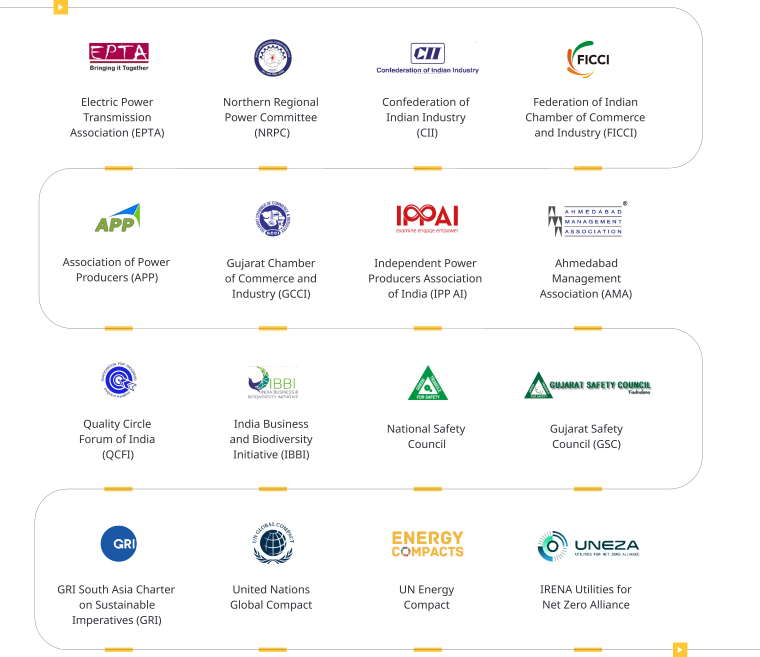
We actively engage with various trade and industry chambers at both national and global levels, ensuring our memberships and relationships don't conflict with our climate strategies.
Our lobbying activities and trade affiliations for climate action align with the Paris Agreement. We also promote sustainable development across value chain by encouraging our partners, including suppliers and vendors, to adopt best practices.

Commitment to IBBI 2.0
We reaffirmed our commitment to Biodiversity by endorsing India Business & Biodiversity Initiative (IBBI) 2.0 declaration, hosted by the Confederation of Indian Industry (CII). This initiative integrates biodiversity into business operations and decision-making, aligning with the Kunming-Montreal Global Biodiversity Framework.
Commitment to Utilities for Net Zero Alliance (UNEZA)
To advance our commitment to addressing Climate Change, Adani Energy Solutions became India’s First Electric Utility to join the Utilities for Net Zero Alliance (UNEZA) under the coordination of the International Renewable Energy Agency. This community of global utilities companies responds to the need for an immediate acceleration in the energy transition in line with the aforementioned 2030 and Net Zero 2050 goals.
As a member of UNEZA, Adani Energy Solutions is dedicated to advance its six key commitments between now, 2030 and 2050:
Buildout of clean power and decarbonisation of thermal power generation

Build up reliable, resilient and flexible grid infrastructure
Drive widespread adoption of electrification in end use sectors
Improve energy efficiency
Promote technological innovation
Sustainable and equitable execution to conduct environmentally responsible and socially inclusive manner
Trade and Industry Associations
We contributed ₹14.7 lakhs in FY 2024-25 as annual subscription fees towards our affiliated trade associations at national and state level.
Political Contribution in FY 2024-25
In FY 2024-25, there were ZERO political contributions or spending directed towards political campaigns, political organisations, lobbyists or lobbying organisations, trade associations and other tax-exempt groups.


