




We strive to ensure that the far-reaching impacts of our business operations are positive and beneficial to all stakeholders involved. Rigorous supplier selection, collaboration and continuous monitoring are key pillars to drive supply chain sustainability.
Adani Energy Solutions sources 98% of its materials locally, partnering with local suppliers located near our operational and project sites. This approach contributes to regional development, reduces environmental impact, and promotes sustainable practices in India’s power transmission, distribution, and smart metering sectors.
Key Linkages
SDGs
Key Associated Risks

Material Topics

Capitals

Strategic Priorities

Key Highlights
713
Total suppliers in FY 2024-25 ( 16% from
previous year)
16% from
previous year)
16%
New suppliers added, out of which 32.7% were identified as significant Tier 1 suppliers
100%
Suppliers assessed using environmental and social criteria, including 100% critical suppliers
~68%
Suppliers participated in supply chain engagement platform
Local Sourcing
In the specific context of Adani Energy Solutions' operations in India, the term ‘local’ in local suppliers is defined using a multifaceted approach i.e. suppliers located within the same and or neighbouring states as the Adani Energy Solutions operational and or project sites to drive economic impact, and sustainability, as per GRI standards. Since Adani Energy Solutions operates in 16 states of India, so for all practical purposes, suppliers located in India are considered local.
‘Significant locations of operations’ are key regions where Adani Energy Solutions has substantial business activities. These are the areas where Adani Energy Solutions' services and products are most impactful, influencing both local economies and the overall performance of the Company. These locations are identified based on the volume of business conducted, strategic importance, and the potential for future growth and development.
98% Of total procurement budget spent on local suppliers (for significant locations of operations)
 Read more under
BRSR-Principle 8
Read more under
BRSR-Principle 8 Approach to Sustainable Procurement
Our Procurement Policy emphasises supply chain sustainability, efficiency, and innovation, by integrating ESG principles, safety culture, and optimal capital allocation. We ensure uninterrupted supply of critical procurement packages through strategic vendor partnerships and risk mitigation strategies. We maintain pre-bid engagements with supply chain partners to secure capacity in advance and integrate business associates for a greener supply chain by FY 2024-25. Additionally, we leverage AI and machine learning to optimise procurement processes for faster turnaround. We have introduced Productivity-Linked Performance-Based Contracts (PLPBCs). Furthermore, our 10% variable pay linked to achieving ESG goals promotes sustainable sourcing and responsible supply chain management, aligning with our broader environmental and social objectives.
Our supply chain management process, from supplier onboarding to capacity building, has been independently assured by TUV. We actively encourage our suppliers to adopt globally recognised ESG standards and disclosures such as ISO 14001, ISO 45001, ISO 50001, SA 8000, GRI etc.
Continuing in FY 2024-25, we have implemented independent assurance mechanisms involving third-party audits and verifications of our supply chain practices, ensuring compliance with our procurement policy and Supplier Code of Conduct. This independent oversight reinforces accountability and continuous enhancement of our supply chain management processes.
 Supplier Code of Conduct Policy
Supplier Code of Conduct
The Supplier Code of Conduct outlines the ethical and responsible practices our suppliers are expected to follow, to ensure integrity, transparency, and accountability in all business dealings. It encompasses various aspects such as labour rights, environmental stewardship, and anti-corruption measures, thereby fostering a collaborative and principled supply chain network.
Productivity-Linked Performance and Incentivisation
Our Productivity-Linked Performance-Based Contracts (PLPBCs) are designed to motivate suppliers by linking their compensation to specific performance indicators related to safety and ESG criteria. This incentivisation framework not only drives excellence in supplier performance but also ensures alignment with our sustainability goals. By rewarding suppliers for their contributions towards our environmental and social targets, we promote a culture of continuous improvement and responsible procurement practices.
Supplier ESG Programme
Our supplier ESG programme focusses on adopting a collaborative approach with suppliers, to improve supply chain. Our Chief Sustainability Officer (CSO) is responsible for overseeing the implementation of the programme in alignment with Adani Energy Solutions' sustainability goals and commitments. The programme aims to integrate ESG principles into our sourcing practices right from the pre-vendor qualification stage to the contract execution and closure stage.
Supply Chain Due Diligence Framework
We have implemented a robust supply chain due diligence framework to align with ethical sourcing and responsible procurement. This framework is designed to identify, assess, and mitigate potential risks within our supply chain, ensuring that all suppliers adhere to our stringent standards of conduct.
Key Components of our Due Diligence Framework
New Supplier Screening/Onboarding and Supplier Assessment
We prefer suppliers with superior ESG performance, promoting continuous improvement and higher standards across our supply chain. Our dedicated in-house team conducts comprehensive evaluation of potential suppliers, assessing their capabilities and regulatory compliance in line with our Supplier Code of Conduct. The potential supply chain partners are assessed using pre-determined criteria, through desk assessments and documentary evidence, provided on the ARIBA portal.
New Vendor Screening Criteria
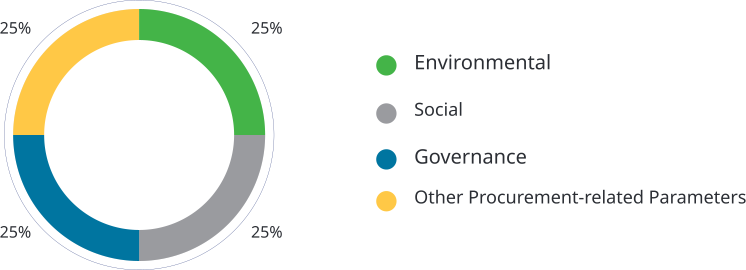
ESG Criteria
- Environment, including GHG, water, waste, packaging
- Social, including human rights, safety compliance
- Country-specific, sector-specific and commodity-specific risks, depending on material sourcing
- Statutory, regulatory and legal compliance
- ISO standards, SA 8000, Zero Waste to Landfill (ZWL) Certifications
Non-ESG (Techno-Commercial) Criteria
- Quality
- Financial stability
- Manufacturing and testing facilities
- Expenditure on commodities
Weightage of ESG and Procurement Parameters in Supplier Screening
Post Assessment and Quality Assurance
Supply chain partners scoring below 60% in the ESG criteria are not considered for further evaluation. However, they receive guidance on improvement areas and their performance is re-assessed after six months. For the suppliers selected post preliminary evaluations, factory assessments are carried out to review their social and safety standards.
Third-Party Evaluation of Significant Suppliers
In case of a significant supplier signing a contract, a third-party valuation of financial strength is conducted to ensure material supply continuity in any adverse/unseen events. Vendor is onboarded on satisfactorily clearing the assessment and the scorecard is shared for feedback. Suppliers needing compliance guidance are offered constructive feedback and supported on implementation of corrective action plans.
In FY 2024-25, suppliers with~68%by spends value, were assessed on ESG aspects.
Supplier Screening and Assessment on Environmental and Social Parameters
| Supplier Assessment Indicators | FY 2024-25 | Targets |
|---|---|---|
| Total number of suppliers assessed via desk assessments/on-site assessments | Desk assessments – 100% On-site assessments – 100% |
Desk assessments – 100% On-site assessments – 100% of eligible suppliers [for those who qualify the desk assessments] |
| % of significant suppliers assessed | 100% | 100% |
| Number of suppliers assessed with substantial actual/potential negative impacts | 02 | - |
| % of suppliers with substantial actual/potential negative impacts with agreed corrective action/improvement plan | 100% | 100% with no deviation permitted |
| Number of suppliers with substantial actual/potential negative impacts that were terminated | ZERO | No orders to be placed until the suppliers comply with minimum threshold requirements |
| Total number of suppliers supported in corrective action plan implementation | 02 | 100% for suppliers asking for support |
| % of suppliers assessed with substantial actual/potential negative impacts supported in corrective action plan implementation | 100% | – |
| New suppliers onboarded | 98 | – |
| Number of new suppliers assessed (on whom PO/SO is raised) | 98 | – |
| New suppliers who were assessed on environmental and social criteria through Contract Safety Management (CSM) | 100% | – |

Supplier Categorisation
Our Supplier Categories
Material suppliers for projects, O&M and smart metering
Contractor for civil construction works
Service contractors for projects, O&M and smart metering
EPC contractors for transmission & distribution lines and substations
Significant Suppliers
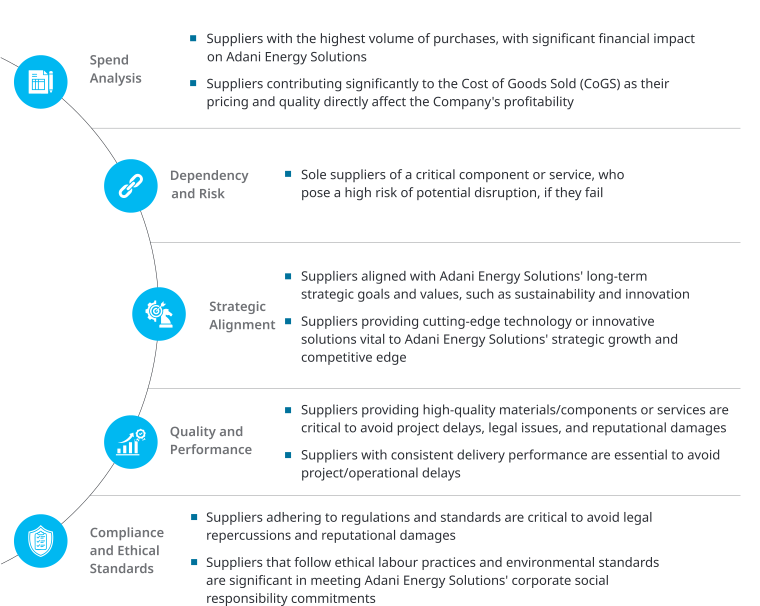
For Adani Energy Solutions, significant suppliers are those whose products or services have a substantial impact on its performance, reputation, strategic goals and or directly affect a company's ability to meet its business objectives. These suppliers are integral to the supply chain, often representing a substantial portion of the procurement budget, and are typically involved in the delivery of projects and or services.
Significant Supplier Identification Criteria
| Particulars | FY 2024-25 |
|---|---|
| Total number of Tier-1 suppliers | 713 |
| Total number of significant suppliers in Tier-1 | 32 |
| % of total spend on significant suppliers in Tier-1 | 22.3% |
| Total number of significant suppliers in non-Tier-1 | 09 |
| Total number of significant suppliers (Tier-1 and non-Tier-1) | 41 |
Supply Chain ESG Maturity Model
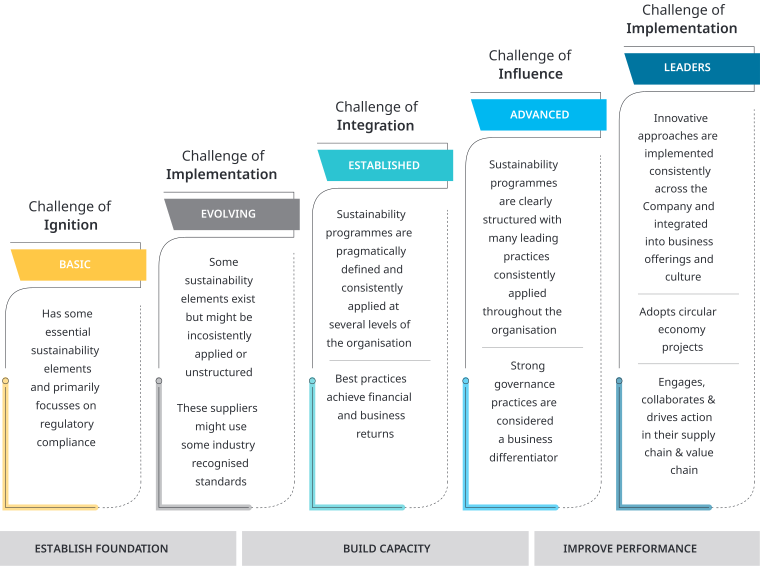
The Supply Chain Environmental, Social, and Governance (ESG) Maturity Model is a framework designed to help Adani Energy Solutions assess and enhance its supply chain's sustainability and ethical practices. The framework marks our commitment to transparent supply chain practices and responsibility towards stakeholders for maintaining our market position and reputation.
The ESG Maturity Model typically comprises several stages, each representing a level of sophistication and effectiveness in implementing ESG principles within the supply chain.
Supplier Engagement and Development
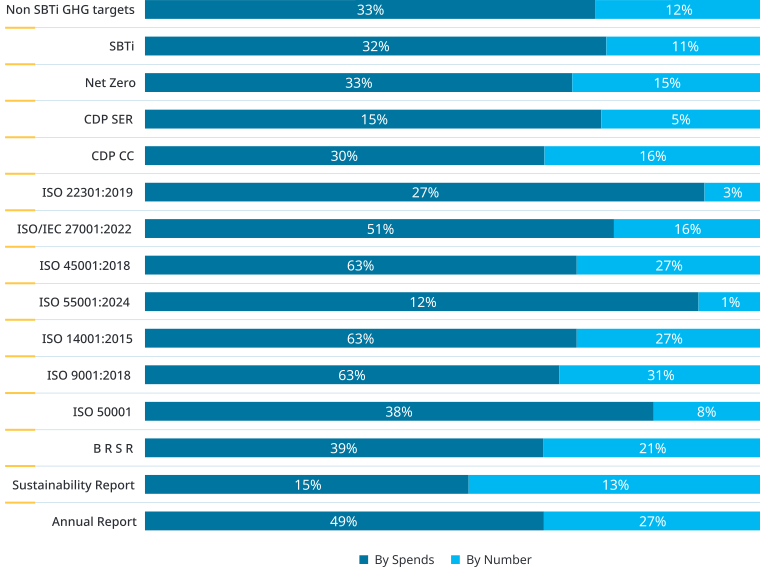
In FY 2024-25, we supported some of our suppliers in disclosing their ESG performance. We engaged with suppliers with ~68% by spend value, of which, 30% by spends value disclosed energy and emission reductions, while 15% are further engaging with their supply chains. Additionally, suppliers have established and disclosed SBTi targets. We empowered 22 suppliers (comprising 64% of our supplier expenditure) through capacity building programmes.
Supplychain Engagement Profile
Strategic Engagements with Supply Chain Partners
Competitive Landscape
The rapidly evolving power Transmission and Distribution (T&D) sector in India is marked by intense competition and stringent regulatory standards. With the entry of major developers and contractors into the market, the need for robust strategies such as competitive bidding, supply-demand gaps, and project timelines, has been heightened. In the smart metering segment, the growing demand for Advanced Metering Infrastructure (AMI) and related technologies calls for robust partnerships with technology providers and manufacturers, achieving operational excellence and maintaining competitive advantage.
Capability Building and Support to Type-B EPC contractors
- Providing technical training and skill development programmes for capability expansion
- Offering financial support to execute project smoothly and mitigate cash flow risks
- Facilitating access to advanced tools and technologies for improved efficiency
Securing Supply Chain Integrity
- Long-term agreements with reliable supply chain partners for uninterrupted supply of critical equipment
- Rigorous quality control measures to uphold high standards for all procured components
- Regular audits and assessments to ensure vendor’s compliance with contractual obligations
Ongoing Supply Chain Engagement
- Open communication with supply chain partners for prompt resolution of issues or concerns
- Regular performance reviews and feedback sessions for continuous improvement
- Driving innovation through collaborative projects and initiatives with strategic supply chain partners
Social Responsibility
- Ensuring supply chain partners’ compliance with just working conditions & fair labour practices and human rights standards
- Encouraging community initiatives for the well-being of workforce and local communities
- Supporting diversity and inclusion efforts within the vendor workforce
Strategic Partnerships with Type-B EPC Contractors
The non-participation of major Type-A Engineering, Procurement, and Construction (EPC) contractors in competitive bidding made project execution challenging. To bridge the gap, we took a strategic approach to empower the Type-B EPC contractors with manpower and financial support, strengthening their capabilities on large-scale project execution. This reinforced our position as a leading developer in India's T&D sector, while boosting the market presence and capabilities of Type-B EPC supply chain partners.
Pre-Bid Tie-Ups for Critical Equipment
- Established strategic pre bid tie-ups with supply chain partners to procure critical equipment such as transformers, reactors, substation equipment, and conductors
- These agreements cushion our projects from potential supply chain disruptions and ensure timely access to essential components
Supply Chain Partner Onboarding and Management
- Expanded approved supply chain partners list through digitalised and streamlined vendor onboarding processes, ensuring transparency and efficiency
- Setting clear criteria and standards in our vendor selection and management practices, aligning them with our corporate values and sustainability goals
- Comprehensive orientation and training programmes to familiarise new supply chain partners with our operational requirements and expectations
Environmental Impact
- Require supply chain partners to disclose their carbon footprint reduction, waste management, and resource conservation
- Encourage adoption of eco-friendly technologies and practices
- Monitor and report emissions, energy consumption, and waste management practices
Governance
- Require supply chain partners to outline their corporate governance structures, including policies and measures on ethics and anti-corruption
- Ensure transparency and accountability through regular audits and assessments
- Promote stakeholder engagement and collaboration on governance-related issues
Road Ahead
Third-Party Assessments for Critical Tier-1 Suppliers
In the upcoming year, we plan to accelerate third-party on-site assessments for our critical Tier-1 suppliers to ensure they meet our ESG expectations and align with our sustainability goals.
Supplier On-Site Assessment Parameters
01
Level of Risk
Assess suppliers with high risk such as those providing critical components or operating in regions with regulatory challenges.
02
Past Performance
Suppliers with inconsistent performance in key areas such as timely delivery, quality of goods, compliance with contract etc., will be assessed first.
03
Capability and Capacity
Assess the ability of the supplier to meet current and future demands through the lens of production capacity, technological capabilities, and skilled workforce.
04
Compliance
Suppliers who do not possess necessary certifications in alignment with industry standards will be scrutinised.
05
Sustainable Practices
Implementation of ESG practices to be assessed.
06
Financial Stability
To ensure financial stability for undisrupted supply chain activities.
07
Geographical Location
Frequent assessments of suppliers located in regions prone to political instability, natural disasters, or logistical challenges.
BRSR Compliance for Supply Chain Transparency
In the upcoming years, we plan to transition to Business Responsibility and Sustainability Reporting (BRSR) for our supply chain partners, aligning with SEBI's updated BRSR requirements for value chain-related sustainability disclosures. These requirements mandate our suppliers to disclose the below:

Environmental Performance
Reporting on carbon footprint reduction, waste management, and resource conservation

Social Responsibility
Reporting on labour practices, human rights, and community engagement to demonstrate how they contribute to the social well-being of their workforce and the communities they operate in

Governance Practices
Detailing corporate governance structures, policies & procedures on ethics, anti-corruption, and stakeholder engagement
Adherence to these requirements will enhance suppliers' sustainability credentials and contribute to Adani Energy Solutions' ESG goals, driving greater transparency, accountability, and performance improvements across the supply chain.
This alignment ensures that we collectively build a more sustainable and responsible business ecosystem.


