
Adhering to ISO 31000 and COSO frameworks, we proactively identify and address significant risks, strengthening our ability to navigate uncertainties. This structured approach enhances operational stability, safeguards stakeholder interests, and supports sustainable long-term growth in an evolving business environment.

At Adani Energy Solutions, we prioritise integrated risk management to ensure robust and reliable service for our customers. By proactively identifying and mitigating risks, we uphold our commitment to safety, sustainability, and operational excellence. Together, we navigate the future with resilience and confidence”.
Shashank Sharma Chief Risk Officer
Risk Governance
We manage risks through a collaborative approach involving Board-level committees, departments, and professionals. The Board oversees risk management, supported by the Statutory Audit Committee and Risk Management Committee (RMC), which engage with the Management Risk Committee (MRC). The Chief Risk Officer (CRO), who reports directly to the CEO, is the custodian of the Risk Identification and Management process, with dedicated responsibilities at the operational level. The engagement from the Chief Risk Officer, Management Risk Committee (MRC), Business Risk Team (BRT) and Function Risk Committees (FRCs) at department level strengthen our Risk Management process.
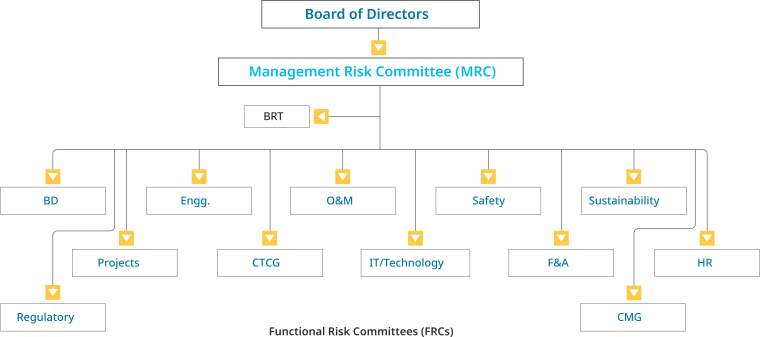
Roles and Responsibilities
Board
- Sets the tone for a transparent risk management culture
- Reviews risk appetite and provides strategic direction
Risk Management Committee (RMC)(Quarterly Review)
- Assists the Board in managing significant risks
- Evaluates and monitors risk management procedures and controls
- Guides MRC in reviewing internal business functions
Management Risk Committee (MRC) (Quarterly Review)
- Ensures the efficacy of risk management procedures and controls
- Assesses top risks through regular business function reviews
- Guides BRT and FRC in mitigating prioritised risks
- Communicates key risk implications to RMC
Business Risk Team (BRT) (Quarterly Review)
- Leads risk management across business units
- Coordinates with FRCs for risk identification and management
- Conducts peer-risk benchmarking and maps risk interactions
- Reports significant risks to MRC
Functional Risk Committee (FRC) (Quarterly Review)
- Oversees risk management at the department level
- Ranks risks based on severity and secures Function Head approval
- Updates the Risk Register & Risk Plan
- Presents function-level risk reports to MRC
Integrated Risk Management Framework
Our Risk Management framework ensures end-to-end risk oversight, addressing internal and external risks with structured mitigation controls. Led by the Chief Risk Officer, it empowers employees and associates to escalate risks. Built on strong organisational principles, it supports strategic and operational objectives through an effective review mechanism.
IRM Framework Components
- Risk identification: Utilises tools like risk registers, SWOT analysis, and scenario planning
- Risk assessment: Evaluates risk likelihood and impact using qualitative and quantitative methods
- Risk mitigation: Implements strategies such as avoidance, reduction, transfer, and acceptance
- Monitoring & reporting: Tracks residual risk value & indicators and ensure transparency through periodic reporting
- Risk Culture: We foster a risk-aware culture within the organisation by promoting risk management education, training, and communication.
IRM Significance
- Comprehensive risk view: Identifies interdependencies between risk factors and their impact on business objectives
- Proactive identification: Embeds risk management into operations to detect and address risks early
- Informed decision-making: Provides clarity on risk exposure, enabling balanced strategic choices
- Operational efficiency: Streamlines processes, reduces redundancies, and optimises resource use
- Compliance & governance: Ensures regulatory adherence with clear policies, procedures, and accountability
Approach to Risk Management
Our framework ensures early risk identification and mitigation through a hierarchy of controls.
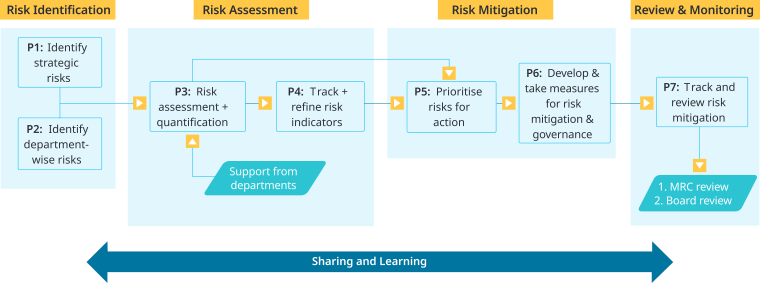
- Strategic & departmental risk identification: Led by function heads, senior leaders, and employees through a bottom-up (FRC) approach, with inputs from the strategy team
- Risk assessment: Evaluates risks based on impact severity and occurrence probability
- Risk mitigation: Prioritises risks (strategic, tactical, functional) and applies treatment strategies – Accept, Treat, Transfer, or Terminate – using cost-benefit analysis
- Risk monitoring & review: Tracks risk trends quarterly, ensures mitigation effectiveness, drives continuous improvement, and incorporates Board and MRC oversight with an outside-in approach

Prioritising Sustainability
We annually review risk exposure to identify shifts and emerging risks. Sustainability metrics are integrated into executive compensation, with 15% of KRA evaluation linked to ESG performance and risks
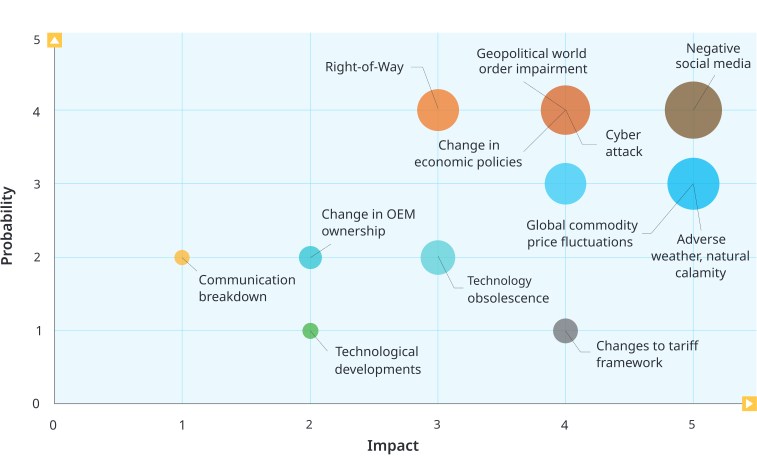
Risk Heat Map
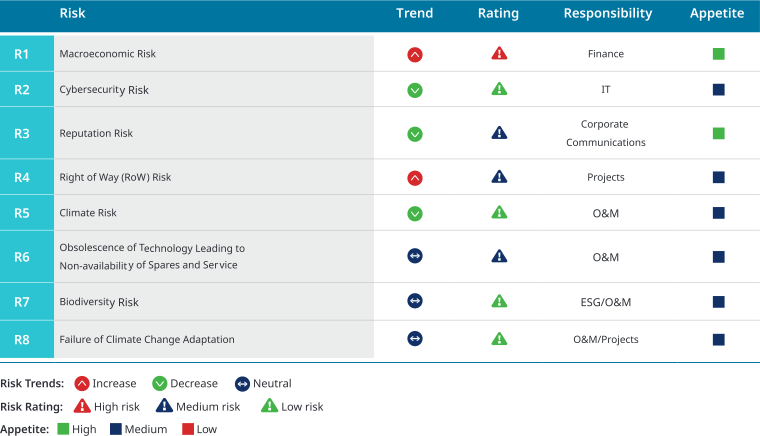
Our Top Risk