


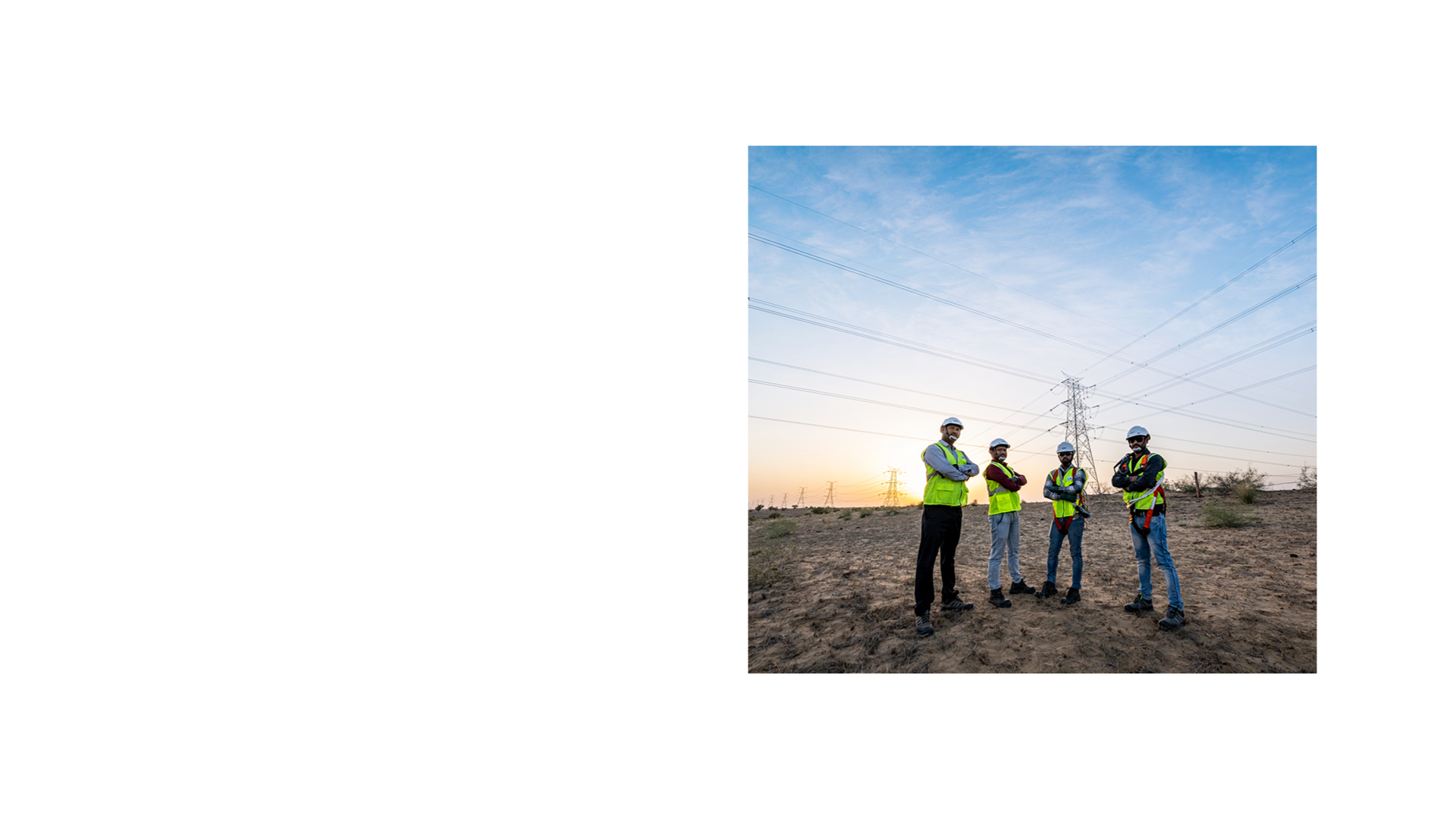
Climate-related Risks and Opportunities
We have identified climate-related risks and opportunities and integrated into our Enterprise Risk Management System (COSO) and HSE Management System. We use the TCFD framework to assess risks and capture opportunities.
Scenario Analysis and Stress Testing
Conducted long-term (2020–2039) assessments to evaluate climate risks and operational impact. Identified IPCC RCP/ SSP and IEA scenarios to shape our climate strategy and business outlook.
| Climate-related Scenario | Temperature Alignment | Adaptation Strategy |
|---|---|---|
| RCP 4.5 / SSP 2‑4.5 (Medium Emission) |
Intermediate emissions scenario with global mean temperature expected to rise by 1.1-2.6°C |
|
| RCP 6.0 (High Emission) |
High emissions scenario with global mean temperature expected to rise by 3-4°C |
|
| IEA 2DS / SSP 1-2.6 | The 2DS is consistent with a 50% probability of limiting the expected global average temperature increase to 2°C by 2100 |
|
| IEA B2DS | Global mean temperature expected to rise beyond 2°C Scenario (B2DS) |
|
| IEA NZE 2050 / SSP 1-1.9 | The IEA Net Zero Emissions by 2050 (NZE) |
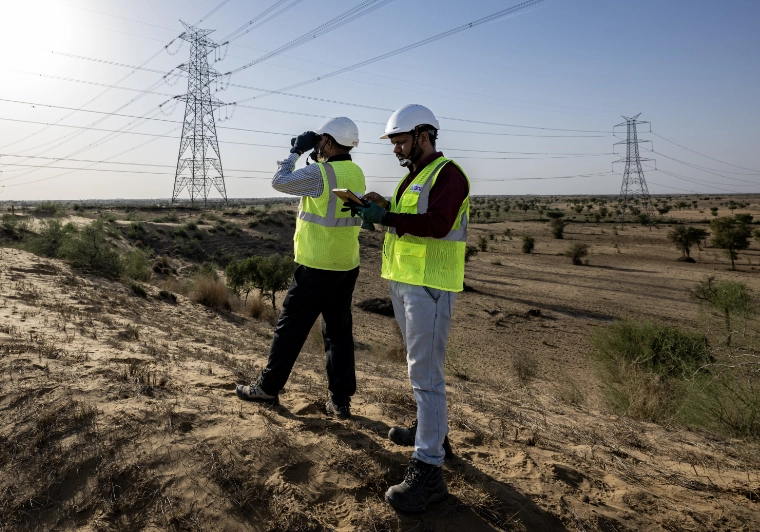
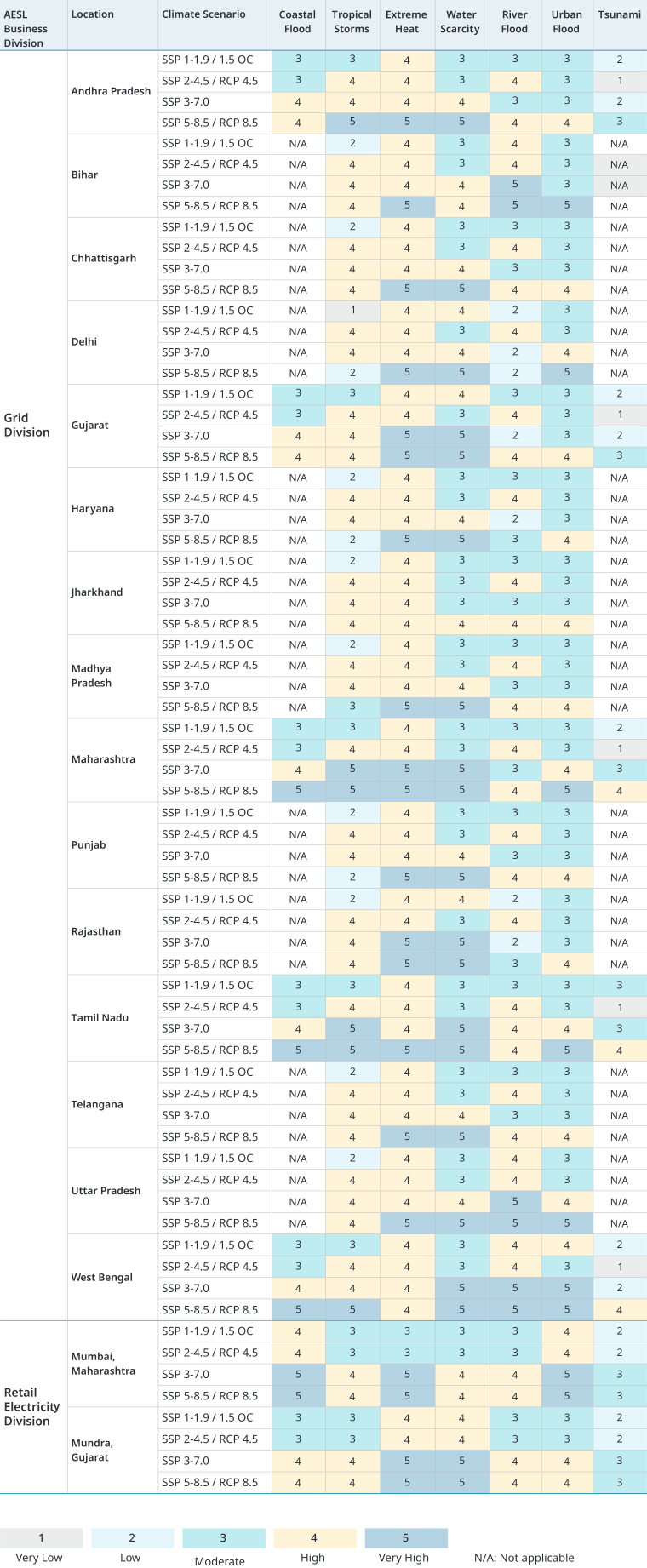
Business Division and Location-wise Climate Risks
Climate Change-related Risks
Physical

Acute
Capitals Impacted

Description
- Acute physical risks from extreme weather events (cyclones, hurricanes, heatwaves, earthquakes) threaten operations
- Assets in climate-prone zones (Rajasthan, Gujarat, Maharashtra, Bihar, Madhya Pradesh, Haryana, Uttar Pradesh, Chhattisgarh, Jharkhand) face heightened risk
Impact on Value
- Cyclones, hurricanes, heatwaves, and earthquakes can damage infrastructure, disrupt operations, and increase costs
- Supply chain disruptions may cause delayed material deliveries, impact restoration, productivity, and expenses
- High repair costs, downtime, revenue loss, legal risks, and investor confidence decline affecting the business
Mitigating Measure
- Identify vulnerable assets using historical data, climate models, and geography
- Design for extreme weather, integrate redundancies, and deploy Emergency Restoration System (ERS)
- Implement site-level emergency response plans
- Build trust with customers, investors, regulators, and communities on climate risk initiatives
Physical

Chronic
Capitals Impacted

Description
Long-term climate disruptions affect asset performance. Rising temperatures impact transmission and distribution efficiency, causing energy losses.
Impact on Value
- Increased maintenance and operational costs
- Capital required to upgrade or replace inefficient assets
- Revenue loss due to unscheduled downtimes
- Market perception of climate risk management affects stock performance
- Stringent compliance requirements may demand additional financial resources
Mitigating Measure
- Increase renewable energy generation
- Develop High Voltage DC transmission lines and adopt low-carbon technologies
- Integrate climate resilience in asset design
- Use monopoles, insulated cross arms, and high-grade concrete for durability
- Design infrastructure to withstand adverse conditions
- Deploy two Emergency Restoration Systems (ERS) for rapid recovery
- Embed climate resilience in policies, planning, and workforce training
Transition
Policy and Legal
Capitals Impacted

Description
Carbon tax, stringent reporting, and renewable energy mandates may impact access to key capital markets.
Impact on Value
- Trade regimes and tariff caps could strain finances, requiring higher environmental and legal provisions
Mitigating Measure
- Ensure strict compliance with evolving regulations and carbon emission standards
- Enhance energy efficiency to lower emissions and operational costs
- Reduce GHG intensity, maximise renewable integration, and improve grid resilience
- Foster transparent stakeholder communication for sustainability support
- Engage in policy advocacy for favourable trade and tariff structures
- Invest in low-carbon technologies and carbon offset programmes
- Explore carbon capture and storage to mitigate tax impacts
Transition
Market
Capitals Impacted
Description
Investor and financial institution preference for low-carbon assets may limit access to capital for Adani Energy Solutions and partners
Impact on Value
- Rising demand for RE-based transmission and low-carbon tech may disrupt fossil-based services
- Market shifts could challenge Adani Energy Solutions transition strategy
- Financial implications include increased capital costs, reduced funding access, lower investor confidence, disrupted partnerships, and higher compliance costs
Mitigating Measure
- Expand renewable integration in distribution and enter emerging markets
- RE solutions for commercial and industrial use
- Commission EV charging stations
- Set carbon reduction targets, invest in RE, and integrate sustainability into core strategy
- Explore green bonds, impact investing, and public-private partnerships for financing
- Maintain transparent investor communication to retain confidence and attract long-term capital
- Invest in R&D for sustainable innovations and business models
- Engage stakeholders to share resources, knowledge, and best practices
Transition

Technology
Capitals Impacted

Description
Inability to adopt emerging technologies may increase costs, reduce competitiveness, and risk obsolescence
Impact on Value
- Higher costs, inefficiencies, and reduced competitiveness
- Loss of customers, revenue, and investor confidence
- Increased risk of obsolescence, affecting long-term sustainability
Significance
- Technology helps monitor climate-related impacts across geographic sites, enabling swift action to mitigation actions
- Renewable energy depends on newer technologies to efficiently integrate electricity supply in the grid
Mitigating Measure
- Upgrade networks with advanced tech like HTLS conductors
- Integrate resilient technology from design to commissioning
- Foster innovation through training and strategic partnerships
- Align tech initiatives with customer needs for market relevance
Climate Change-related Opportunities
Opportunity Type and Description
Policy and Legal
Opportunity Driver
Policy
Likelihood of Occurrence
More likely than not
Time span
Medium-term
Realisation Strategy (Sustainability)
- Adani Energy Solutions has joined IRENA’s Utilities for Net Zero Alliance to develop renewable-ready grids, promote clean energy, and advance electrification
- Strengthens Adani Energy Solutions sustainability leadership, enhancing credibility and investor appeal
- Enables cost savings through renewable energy integration and opens new revenue streams
- Increases access to government incentives, grants, and green financing
- Enhances brand reputation, attracting ESG-focussed investors
- Participation in the Perform, Achieve and Trade (PAT) scheme at Dahanu plant generates Energy Certificates (E-Certs), providing additional income and reinforcing Adani Energy Solutions sustainability credentials
Opportunity Type and Description
Market
Opportunity Driver
Access to new markets
Likelihood of Occurrence
More likely than not
Time span
Short-term
Realisation Strategy (Sustainability)
- Expanding into low-carbon markets, including Renewable Energy and EV mobility
- Leveraging the global decarbonisation push to increase renewables in the energy mix
- Capitalising on India's growing EV market by commissioning EV charging stations
- Forming strategic partnerships with technology providers, startups, and research institutions for innovation and efficiency
- Exploring joint ventures to strengthen market position and attract investors
Opportunity Type and Description
Resource efficiency
Opportunity Driver
Focussed optimisation & efficiency measures
Likelihood of Occurrence
More likely than not
Time span
Medium-term
Realisation Strategy (Sustainability)
- Optimising resource consumption through adopting energy efficiency measures
- Reduce emission intensity, waste, and water usage to enhance sustainability
- Invest in R&D for design-driven efficiency improvements
- Improve operational efficiency, leading to direct cost savings in the medium to long term
Opportunity Type and Description
Market
Opportunity Driver
Green tariffs
Likelihood of Occurrence
More likely than not
Time span
Short-term
Realisation Strategy (Sustainability)
- Tapping into the global shift towards low-carbon energy by offering greener solutions to customers
- Developing green tariff products to strengthen market presence and meet consumer demand
- Engaging with regulatory bodies for approvals, compliance, and supportive policies
- Forming strategic partnerships with renewable energy generators for joint ventures
- Enhancing investor and customer appeal through a strong commitment to environmental responsibility, positively influencing financial performance and market perception


