




Corporate Governance Structure
The Company follows a one-tier Board system, with the Board of Directors at the helm of the corporate governance. The Board is committed to conducting Company’s business operations based on the tenets of courage, trust and commitment, upholding the highest standards of ethics and integrity.
Board’s Snapshot and Composition
Board’s Snapshot
50%
Independent Directors on the Board
12.5%
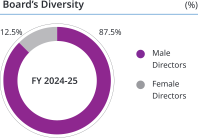
Women Directors on the Board
13.91 years
Board’s average tenure of Board of Directors
8
Board meetings held during the year with
63.13 years
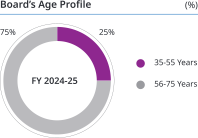
average age of Board of Directors
98.4%
average attendance (minimum requirement: 16.67 %)
100%
Directors with > 20 years of experience
100%
Statutory and Non-Statutory Committees chaired by Independent Directors
Board’s Size and Composition
The Board's composition complies with the guidelines outlines in the Companies Act, 2013, the SEBI Listing Regulations, and other applicable statutory requirements.
The Company has a well-balanced Board comprising an optimal mix of Executive and Non-Executive Directors with diverse skills, knowledge and experience. As of March 31, 2025, there are total 8 directors on the Board including 1 Independent Woman Director.
| Particulars | Number of Members |
|---|---|
| Executive Directors | 4 |
| Independent Directors | 4 |
| Other Non-Executive Directors | 0 |
| Total Board size | 8 |
Board and Its Committees
Board’s Role
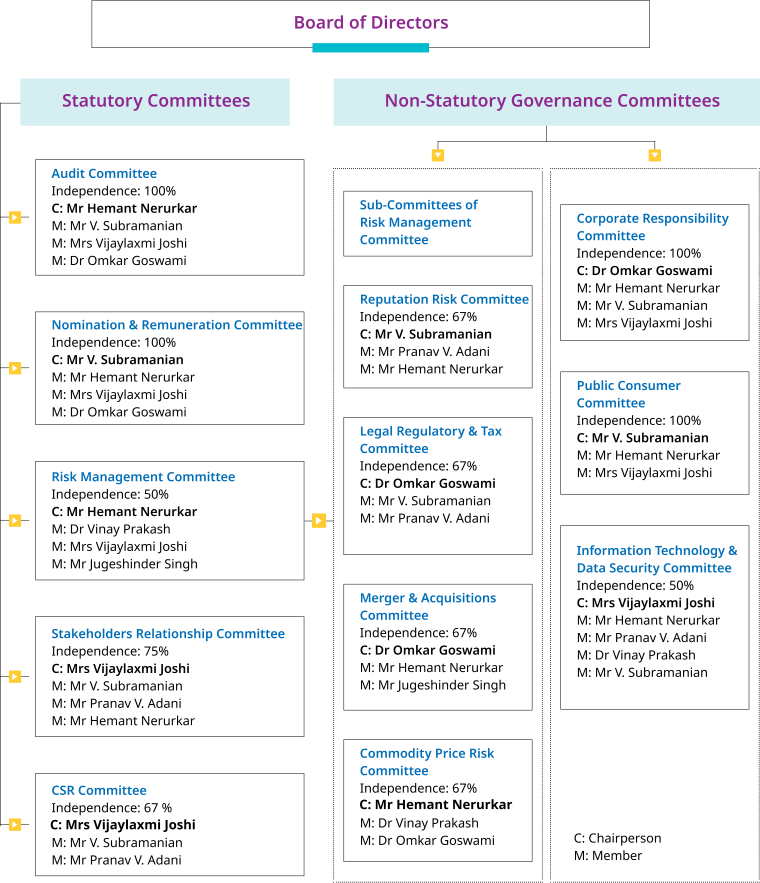
The Board serves as the highest corporate governance authority, overseeing Company’s governance practices through specialised sub-committees. The Board actively monitors company’s business strategy, significant developments, and key activities, ensuring that AEL conducts its business operations with integrity and transparency in line with its corporate values, fulfilling compliance obligations. The Board is also responsible for operating in a manner that fulfils stakeholders’ aspirations and societal expectations. The Board’s Corporate Responsibility Committee (CRC) is responsible for reviewing AEL’s Annual Integrated Report and sustainability-related publications, providing assurance to the Board on the ESG aspects. Please refer to the CRC’s Charter for more details.

Board Committees
Board has formally approved to establish 12 dedicated statutory and non-statutory (governance) committees, each with clearly defined roles in managing diverse corporate governance-related matters across Company’s operations. These specialised committees support the Board in supervising the Company’s operations, facilitating effective integration of corporate governance and sustainability policies into business practices and ensuring compliance with laws and regulations.
Key Governance Committees
Roles and Responsibilities
Risk Management Committee (RMC)
- Oversees Company’s risk governance, assessment (including ESG risks), and implementation of risk policies, practices, and plans
- Assesses climate-related regulatory and policy risks to proactively manage emerging risks
- Reports to, and assures the Board on findings and recommendations for effective risk management
Corporate Responsibility Committee (CRC)
- Directs integration of ESG agenda into Company’s operations and assures the Board on progress towards ESG goals
- Oversees formulation and implementation of ESG and climate change-related policies
- Oversees management of ESG and climate issues in line with UNSDGs, national and international ESG reporting and rating standards and industry best practices.
- Reviews company’s stakeholder communication, including sustainability, ESG & Climate reports, ESG disclosures, ratings, scores and improvement plans
- Receives quarterly updates from the Corporate Sustainability Team on individual business-specific ESG progress
Stakeholders’ Relationship Committee (SRC)
- Board-led committee to oversee and enhance stakeholder engagement, including shareholders, debenture holders, other security holders, and entities like rating agencies and regulators
- Safeguards stakeholders' interests and strengthens trust and transparency through effective communication, and addressing their concerns
Corporate Social Responsibility Committee (CSRC)
- Guides Company’s efforts towards community engagement and community’s welfare and development programmes
- Identifying CSR initiatives, recommends the budget allocations, and oversees effective implementation of CSR programmes in line with the CSR policy
- Reports to the Board and ensures compliance with legal requirements
Board’s Oversight on Economic and ESG Impacts
The Board, along with its committees including Corporate Responsibility Committee (CRC), carry out the task of supervising the management of Company’s environmental, social and economic performance. We have established a robust climate and ESG governance structure, with dedicated responsibilities handled by the governance committees, as delegated by the Board.

Board Diversity Policy
Our Board Diversity Policy focusses on aligning the nomination and selection process with our commitment to have a diverse Board.
Aspects of Our Board Diversity

We actively support Gender Diversity acknowledging unique perspectives Women Directors bring to our decision-making processes
Diversity in nationality, cultures and ethnicity enriches our strategic discussions and decision-making
Our Board reflects diversity in skills and expertise across domains such as finance, operations, risk management, sustainability, ESG & technology
Board Meetings and Reporting
The Board calendar for the financial year 2025-26 is given under Corporate Governance Report.
Board Evaluation and Effectiveness
Board and its committees, individual Directors and the Chairman, undergo a structured evaluation mechanism that assesses various aspects of Board’s functionality. The performance evaluation results, and actionable insights are discussed with Independent Directors and the Board and appropriate actions are taken promptly.
We enhance Board’s effectiveness to align with long-term objectives and stakeholders' interests, with a focus on Strategic Direction, Risk Management, Financial Performance, Shareholder Engagement, Sustainability, Transparency, Shareholder Communication, Ethical Business Practices and Responsible Management of ESG Impacts.
Board and CEO’s Compensation
The optimum remuneration to the Board is ensured through the Remuneration Policy, in adherence with applicable laws. CEO’s compensation comprises fixed and variable components, structured around the following key components:
- Success Metrics for Variable Pay
- Long-term performance incentives
- Sustainability-linked incentives
- Clawback and Malus Policy
Knowledge and Development of the Governance Bodies
In FY 2024-25, 4 educational and engagement sessions were conducted covering the following key topics, to enhance the Board’s skills and knowledge on emerging trends and best governance practices:
and Internal Controls
trends
Intelligence
Centricity
People Potential


