




Responsible Resource Management
Key Highlights in FY 2024-25
>99%
Waste generated was diverted from landfill through reuse and recycling
100%
Single-Use-Plastic Free certified operational sites
100%
Zero Waste to Landfill Certified Operational sites
100%
Responsible waste disposal ensuring legal and regulatory compliance
Approach
The management of waste has become a pressing concern for the industries worldwide, including the electric utility sector. In India, as the demand for electricity surges, utilities are prioritising innovative waste reduction and utilisation initiatives to drive sustainable operations.
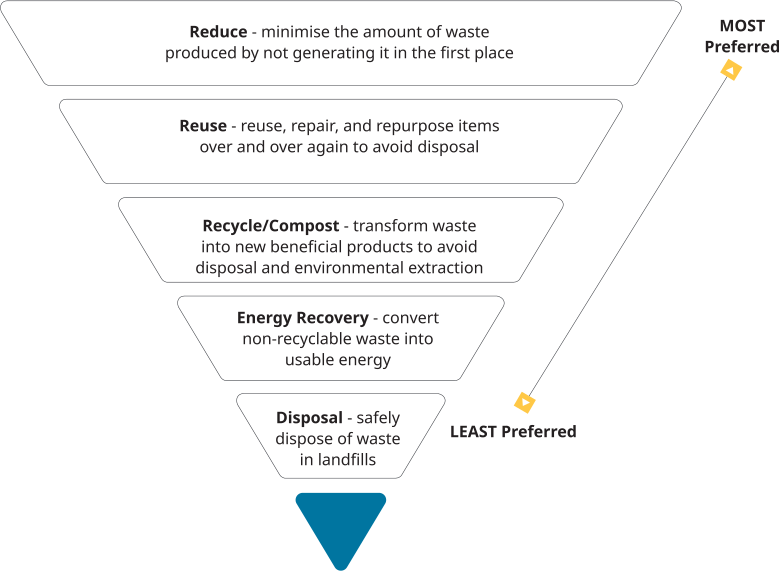
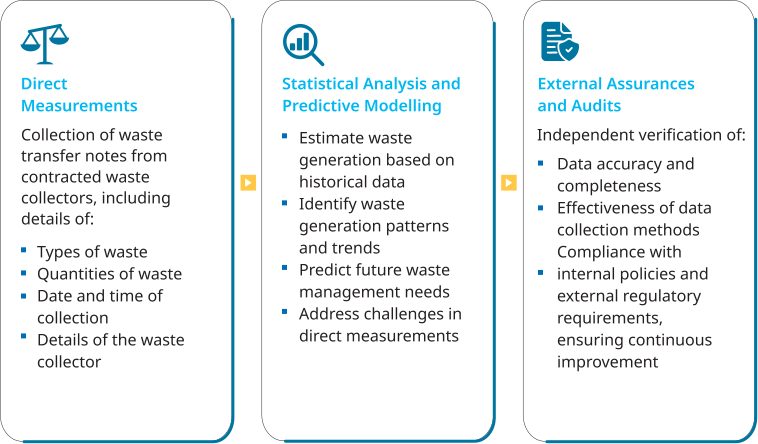
Adani Energy Solutions deploys 5R principles of Reduce, Reuse, Recycle, Repurpose and Recover to enhance resource efficiency and promote circular economy. The waste data is compiled using direct measurements and advanced data modelling, seeking external validation through assurance and audits to ensure transparency and accountability. We provide trainings to the concerned team members to ensure consistency and accuracy of the process. We also educate employees on responsible waste management practices to foster their participation.
A dedicated compliance team at Adani Energy Solutions monitors regulatory changes and ensures compliance with the latest waste management standards. Through innovative initiatives, strategic partnerships, and employee engagement, the company has effectively minimised its environmental impact, contributing to a cleaner, more sustainable future.
Waste Data Management Approach
Waste Types, Impact and its Management
| Source | Waste Generated | Waste Category | Waste Management Process |
|---|---|---|---|
| Upstream | |||
| Packaging materials of new AIS/GIS equipment |
|
Non-Hazardous and Plastic Waste |
|
| Raw material for switchgear/Tower structure |
|
E-Waste, Hazardous Waste and Non-Hazardous Waste | |
| Own Operations | |||
| Material required for the design of new substations |
Construction and Demolition Waste during the Upgrades:
Packaging Waste:
Hazardous Waste:
Electronic Waste Resulting from Upgrades:
|
E-Waste, Hazardous waste and Non-Hazardous waste |
|
| Downstream | |||
| Electricity use | Switchgear and other equipment such as fans, refrigerators, motors etc. used by the end customer | E-Waste |
|
| Smart Meter Use | Packaging waste and faulty meters (if any) | Non-Hazardous & E-Waste |
|
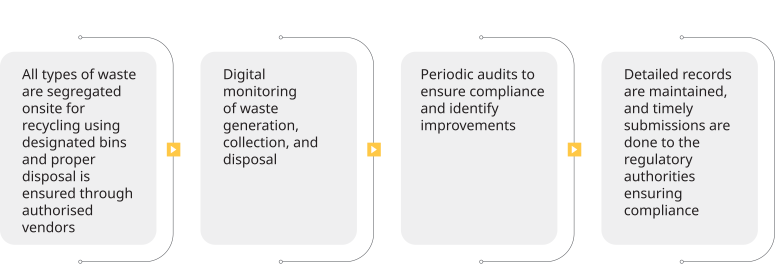
Waste Collection and Monitoring Process
Waste Management and Reduction Programmes
E-Waste Management
- Implemented an asset management programme to track electronic devices lifecycles, ensuring proper disposal and recycling
- Partnered with certified e-waste recyclers for material recovery and environmental protection from toxic substances
- 366.23 MT of e-waste has been diverted from landfills using comprehensive management approach
Packaging Waste Reduction
- Implemented effective recycling programmes for packaging waste
- Introduced reusable packaging solutions for transporting and storing components, reducing single-use materials
- Partnered with local recycling companies for recycling cardboard, plastic, and foam
Industrial Sewage Treatment
- Invested in advanced sewage treatment technologies for efficient reuse of wastewater for horticulture requirements at ADTPS, Dahanu
- Repurposed treated sludge for agricultural use, promoting circular economy and reducing landfill waste
Circularity of Organic Waste
- Implemented vermicomposting to recycle organic waste, such as food and horticulture waste, into nutrient-rich compost
- Used this compost as a fertiliser to grow vegetables and fruits onsite, providing nutritious food to employees at ADTPS, Dahanu
Smart Metering and Sustainability
- Launched an extensive smart metering programme, replacing traditional meters with digital ones
- Smart meters provide consumers with real-time energy usage data, enabling them to optimise their energy consumption
- Longer lifespan of digital meters reduce waste over time
- Automated meter readings eliminate physical visits, leading to operational efficiencies and lesser environmental impact
- Enhanced monitoring enables utilities to promptly detect and address energy thefts and system losses, improving overall efficiency
General Waste Management and Compliance
- Implemented waste segregation and recycling programmes to manage everyday waste generated by employees
- Conducted awareness campaigns and trainings to educate employees on waste segregation at source, for proper disposal and recycling
- Introduced recycling programmes to reward employee’s efforts in waste reduction
- Diverted 99.5% waste from landfills through this approach
Ash Management
The thermal power plant generates two types of ash:
- Dry ash constitutes 48% of the total ash generated and is sold to the cement sector through authorised vendors as cement mix / ash-based replacement products
- Wet ash constitutes 52% of the total ash generated and is sold to the local vendors for consumption in manufacturing of bricks, tiles and landfill material for development of green belts
100%
Ash utilisation from the thermal generation unit contributing to circular economy
| Particulars | FY 2020-21 | FY 2021-22 | FY 2022-23 | FY 2023-24 | FY 2024-25 |
|---|---|---|---|---|---|
| Ash Utilisation (in MT) (recycled/reused) | 4,22,833 | 6,71,098 | 6,25,334 | 8,10,862 | 5,11,497 |
Notes: 1,000 kilograms used as the measure for a metric tonne.
Performance in FY 2024-25
Key Material Consumption
| Particulars | Unit | FY 2020-21 | FY 2021-22 | FY 2022-23 | FY 2023-24 | FY 2024-25 |
|---|---|---|---|---|---|---|
| Coal | MT | 17,85,029 | 19,88,929 | 22,22,916 | 21,54,502 | 12,23,840* |
| Concrete (M20) and reinforced cement concrete (RCC) | Cum | 1,31,593 | 1,34,853 | 70,612 | 1,38,637 | 1,37,725 |
| Steel (tower part) | MT | 1,04,503 | 29,303 | 29,266 | 1,01,523 | 73,202 |
| Aluminium alloy (conductor) | MT | 33,994 | 18,616 | 52,395 | 37,032 | 30,640 |
| Steel wires (conductor and earth wire) | MT | 3,728 | 2,559 | 2,072 | 646 | 647 |
| Diesel consumption | KL | 2,043 | 556.86 | 35,682 | 1,447 | 1,317 |
Notes: *Significant reduction is primarily due to Adani Energy Solutions divestment of its sole 500 MW Adani Dahanu Thermal Power Station effective September 26, 2024
The data reported in the table above includes only non-renewable materials. 39% of total steel input is recycled/reused steel for FY 2023-24 as per CEEW report, October 2023. CRISIL research report 2022 reports India’s steel average scrap content at 37%
Waste Diverted from Disposal (in Metric Tonnes)
0.05%
Total hazardous waste diverted from disposal (onsite)
99.15%
Total hazardous waste diverted from disposal (offsite)
0.25%
Total non-hazardous waste diverted from disposal (onsite)
99.30%
Total non-hazardous waste diverted from disposal (offsite)
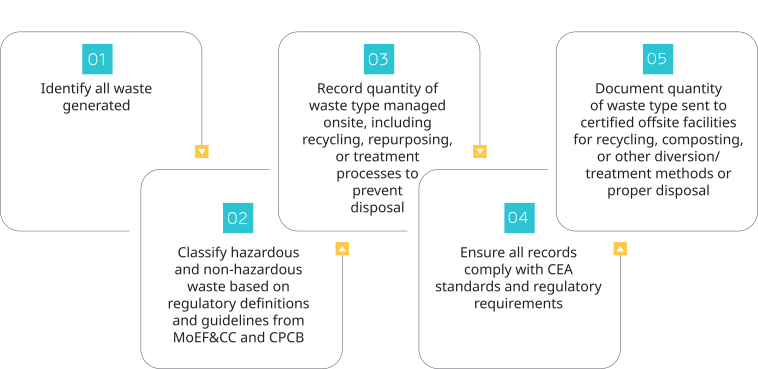
Steps involved in Compilation of Data for Hazardous and Non-hazardous Waste Diverted from Disposal:
| Type of Waste | End-of-Life Method | FY 2020-21 | FY 2021-22 | FY 2022-23 | FY 2023-24 | FY 2024-25 |
|---|---|---|---|---|---|---|
| Hazardous | Recycled | 186.9 | 319.8 | 171.6 | 81.7 | 181.79 |
| Reused | 0 | 0 | 0 | 0 | 0.49 | |
| Other Recovery Options | 0 | 0 | 0 | 0 | 0 | |
| Non-Hazardous | Recycled | 2,566 | 3,295 | 2,645 | 3,118.6 | 3,578.85 |
| Reused | 0.3 | 0.3 | 18.8 | 0 | 6.8 | |
| Other Recovery Options | 0 | 0 | 11.9 | 0 | 2.89 |
Notes:
We use 1,000 kilograms as the measure for a metric tonne.
‘Onsite’ means within the physical boundary or where Adani Energy Solutions has administrative control, and
Other and unknown Disposal Option includes - Non Hazardous - Food waste & garden waste composted.
Waste Directed to Disposal (In Metric Tonnes)
Various external regulations, including those from the Ministry of Environment, Forest and Climate Change (MoEF&CC) and the Central Pollution Control Board (CPCB), mandate specific disposal operations. For example, the hazardous and other Wastes (Management and Transboundary Movement) Rules, 2016, stipulate the proper disposal of hazardous wastes, often requiring offsite disposal to meet regulatory compliance. Adani Energy Solutions prefer offsite disposal for most of the hazardous and Non-hazardous wastes as they could pose significant environmental risks if disposed of onsite. Having specialised offsite facilities ensures that these wastes are managed in a manner that minimises environmental impacts. Adani Energy Solutions follows Industry & Regulatory best practices, that hazardous waste be directed to certified offsite facilities to ensure proper handling and mitigation of environmental risks. With our consistent efforts in reduction of waste generation, all our Grid division operations including the head office in Ahmedabad have been certified as Zero Waste to Landfill sites by M/s. Intertek India Pvt. Ltd. & M/s. Bureau Veritas India has certified our Retail division operations in Mumbai & Dahanu since 2022. Furthermore, the company was also a certified Single Use Plastic (SUP) free company by M/s. Confederation of Indian Industries [CII].
0%
Total hazardous waste directed to disposal (onsite)
0.80%
Total hazardous waste directed to disposal (offsite)
0%
Total non-hazardous waste directed to disposal (onsite)
0.45%
Total non-hazardous waste directed to disposal (offsite)
| Type of Waste | End-of-Life Method | FY 2020-21 | FY 2021-22 | FY 2022-23 | FY 2023-24 | FY 2024-25 |
|---|---|---|---|---|---|---|
| Hazardous [MT] | Landfilling | 0 | 0 | 0 | 14.925 | 5.35 |
| Incineration (with energy recovery) | 7.6 | 7.0 | 20.0 | 4.148 | 2.96 | |
| Incineration (without energy recovery) | 0 | 0 | 0 | 0 | 0 | |
| Other and unknown Disposal Options | 0 | 0 | 0 | 0 | 0 | |
| Non-Hazardous [MT] | Landfilling | 16.2 | 23.3 | 22.0 | 6.617 | 7.35 |
| Incineration (with energy recovery) | 0 | 0 | 0 | 0 | 5.32 | |
| Incineration (without energy recovery) | 0 | 0 | 0 | 0 | 0 | |
| Other and unknown Disposal Options | 0 | 0 | 11.9 | 0 | 0 |
Notes:
We use 1,000 kilograms as the measure for a metric tonne
‘Onsite’ means within the physical boundary or where Adani Energy Solutions has administrative control, and
‘Offsite’ means outside the physical boundary or administrative control of Adani Energy Solutions.


