


Environment
Climate Change
Alignment with GRI Standards and associated KPIs
- GRI 2-24
- GRI 3-3
- GRI 201-2
- GRI 302
- GRI 305
KPIs:
- GHG emissions intensity
- Share of RE in total electricity
- Share of fossil fuel in total energy
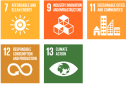
SDG Linkages
Capitals Impacted

Financial Impact

Risk or Opportunity and Rationale
Risk: The increased frequency and severity of disasters attributable to climate change present risks of infrastructure damage and operational disruptions leading to escalated maintenance costs, increased operational expenses, and revenue-related vulnerabilities for our business. The evolving regulatory environment further amplifies the risk of regulatory scrutiny, necessitating actions to address the impacts of climate change.
Mitigation measures
- Established a roadmap to achieve Carbon Neutrality by the year 2025 and net-zero emissions by the year 2040
- Carried out a comprehensive Climate Change Vulnerability Assessment for our port business infrastructure and developed a thorough climate-related mitigation and adaptation plan
- Implemented energy efficiency measures, like the mechanisation of bulk cargo handling and installation of LED lights
- Increased the share of renewable electricity (RE) usage by building captive solar and wind power plants
- Inducted electric internal transfer vehicles (ITVs) for cargo handling
Biodiversity and Land Use
Alignment with GRI Standards and associated KPIs
- GRI 3-3
- GRI 304
KPIs:
- Total area of mangrove afforestation
- Total area of terrestrial plantation
- Improvement in native species diversity and abundance
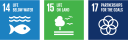
SDG Linkages
Capitals Impacted

Financial Impact

Risk or Opportunity and Rationale
Risk: Our business activities can cause habitat fragmentation, deforestation and coastal erosion, which can lead to wildlife habitat loss, degradation of the marine ecosystem and a decline in the diversity and abundance of species. Port activities like ship movement and dredging can harm marine ecosystem, attracting fines from the regulators.
Opportunity: Biodiversity stabilises ecosystems and climate, supports food security, and offers essential services like water purification and soil fertility maintenance. It holds economic, cultural, and aesthetic value, and preserving it boosts our reputation.
Mitigation measures
- Adopted the goal of achieving a Net Positive Impact (NPI) on biodiversity by 2050 and have implemented Environment and Social Management Plans (ESMPs) to support the CII’s India Business and Biodiversity Initiative (IBBI). For example, in Dhamra, the plans adhere to the IUCN protocol for lighting and dredging, aimed at safeguarding endangered species like Ridley turtles and dolphins
- Ports comply with the Oil Spill Action Plan as dictated by the National Oil Spill Disaster Contingency Plan (NOS-DCP) and the International Petroleum Industry Environmental Conservation Association
- Have established location-specific Biodiversity Management Plans for all operational ports and ESMPs for Mundra, Dhamra, Hazira, and Vizhinjam, in accordance with IFC Performance Standards and the Equator Principles
- Have taken measures to increase green cover and protect natural habitat with mangrove afforestation and conservation, terrestrial plantation, grassland protection, threat monitoring of endangered species, and assessment of biodiversity richness
- Have taken measures to ensure all developments are strictly carried out outside of eco-sensitive areas
Water and Wastewater Management
Alignment with GRI Standards and associated KPIs
- GRI 3-3
- GRI 303
KPIs:
- Specific water consumption
- Share of wastewater recycled
- Water intensity
SDG Linkages
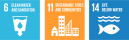
Capitals Impacted

Financial Impact
Risk or Opportunity and Rationale
Risk: Ineffective water resource management, including improper treatment of wastewater and excessive consumption of freshwater contribute to water scarcity, ecosystem degradation and conflicts over access, thereby posing risks to human health, agriculture, and the overall well-being of ecosystem.
Mitigation measures
- Water stewardship with consistent monitoring and measurement
- Implementation of efficient water and effluent management practices and localised water strategies
- Initiatives like Zero Liquid Discharge to enhance efficiency of effluent treatment plant
- Commitment to CEO Water Mandate
- Established targets to reduce water consumption intensity, water withdrawal, WASH assessment and entering partnerships for water stewardship certification
Waste Management
Alignment with GRI Standards and associated KPIs
- GRI 3-3
- GRI 306
KPIs:
- Number of sites certified with Zero Waste to landfill
- Quantity of waste generated
- Share of waste recycled, reused, reprocessed and recovered
SDG Linkages
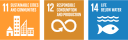
Capitals Impacted

Financial Impact
Risk or Opportunity and Rationale
Risk: Inadequate waste management practices present substantial environmental and safety hazards, jeopardising our reputation and exposing us to regulatory violations. Such lapses can result in operational disruptions, potentially impacting the financial well-being and brand equity of the organisation.
Mitigation measures
- Adhering to the principles of sustainable consumption and production
- Operating in compliance with applicable rules and regulation for management of waste including State Pollution Control Board requirements, E-Waste Management Rules of 2016 and the Batteries Waste Management Rules of 2016
- Implemented the 5Rs (reduce, reuse, recycle, recover and reprocess) approach with stewardship efforts on waste recycling
- Focussed on recycling and reuse of wastewater, zero waste to landfill and conversion of waste to fuel
- Emphasised addressing marine pollution
- All our operational ports are free from single-use plastic
Air Quality Management
Alignment with GRI Standards and associated KPIs
- GRI 305-7
KPIs:
- Air Quality Index (AQI)
- Number of locations where tarpaulin cover protection is provided to bulk cargo
SDG Linkages
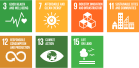
Capitals Impacted

Financial Impact
Risk or Opportunity and Rationale
Risk: The emissions of nitrogen oxides (NOx), sulfur oxides (SOx), and particulate matter (PM) from diesel-powered equipment, docked ships, and cargo transport vehicles can lead to regulatory scrutiny and potential fines or restrictions on operations if the emission levels cross permissible limits. Moreover, dust from cargo handling and storage operations pose additional air quality concerns. This may also create a significant risk for social licenses to operate.
Mitigation measures
- Adhered to relevant legal requirements for air emissions and implementing comprehensive air quality management strategies
- Followed stringent emission guidelines set by the State Pollution Control Boards (SPCB) for stack monitoring
- Compliance with the National Ambient Air Quality Standards (NAAQS) for monitoring and reducing non-GHG emissions effectively
- Implemented innovative dust control measures: dry fog systems, water sprinklers, and enclosed cargo handling mechanisms. Installed dust suppression systems at conveyor lines and transfer points
- Invested in greenbelt development to serve as a natural buffer, mitigating the effects of air emissions and noise pollution on adjacent communities
- Retrofitted all diesel generator (DG) sets at Ennore and Kattupali ports to reduce emissions


