


Robust biodiversity risk assessment
As part of our sustainability thrust, we take care to address risks related to biodiversity and ecosystems, alongside critical areas such as climate change, waste, water, and community relations. We have put in place a comprehensive risk management strategy that encompasses the unique challenges presented by coastal and marine ecosystems. We have adopted a structured and meticulous approach for mitigating various nature-related risks.
Frameworks & Standards Guiding Our Biodiversity Risk Assessment
By complying stringently with various risk related frameworks and best practices, and integrating them into our multi-disciplinary company-wide risk management processes, we ensure effective risk assessment at APSEZ. The key frameworks and standards include:
- Local and National Regulations: Cover all relevant environmental and social laws, regulations, policies and guidelines, at national, state and local levels
- International Best Practices and Guidelines: Include globally recognised standards, including the IFC Performance Standards on Environmental & Social Sustainability (2012) and the World Bank Group Environmental, Health, and Safety (EHS) Guidelines
- Sector-Specific Guidelines: Encompass General EHS Guidelines (2007), along with sector-specific guidance for Ports, Harbours, and Terminals (2017), and Shipping (2007)
Biodiversity Risk Assessment Scope
In identifying the scope of our biodiversity risk assessment, we follow a comprehensive approach, covering the potential impacts of our operations on biodiversity within the immediate vicinity of our ports and those influenced by our upstream and downstream activities, and at our direct operation sites. This enables us to identify and address risks triggered by activities like infrastructure construction, dredging, shipping activities, and land use changes.
Risk Identified: Based on our broad perspective and strategy, we have identified the following risks:
- Upstream Operations - habitat disturbance, introduction of invasive species
- Direct Operations - pollution risks from oil spills and chemical discharges, alterations to natural water flow
- Downstream Operations - noise and vibrations that impact marine life due to movement of vessels
Stage 1Preliminary Biodiversity Risk Screening
- Meticulous screening process at the start of project to identify potential impacts on biodiversity, particularly in areas of ecological sensitivity
- Leveraging of Integrated Biodiversity Assessment
Tool (IBAT) for business
- Referencing of wide array of databases, including the ENVIS Centre on Wildlife and Protected Areas, the IUCN Red List of Threatened Species, Birdlife Data Zone, ebird.org, and databases from Conservation International and the Critical Ecosystem Partnership Fund, among others
- Identifying location-specific key species and biodiversity-rich areas that could be impacted by our projects
- Assessment of the ecosystem services within and around the project area, such as erosion control and pollution mitigation, to fully understand the environmental dynamics at play. This is done through the Ecosystem Service Matrix (ESM) analysis
Stage 2Detailed Biodiversity Impact Assessment
- Comprehensive assessment of
potential biodiversity impacts.
- Details provided in our Environmental Impact Statement (EIS) or Environmental Impact Assessment (EIA) reports, which conform to a suite of legislative requirements and international guidelines and include contributions from experts and the public
- Assessment leverages the Ecosystem Service Matrix (ESM) to identify dependency-related biodiversity risks to ecosystems, within and adjacent to project sites
- This process helps us acquire an in-depth understanding of the direct effects of our operations on biodiversity and the surrounding ecosystem
Identified Impact-Related Biodiversity Risks
During Construction of Terminals
- Increased sediment load and potential changes in water quality resulting from suspended solids, altered dissolved oxygen levels, and biochemical oxygen demand
- Conceivable effects of the mix of hydrocarbons and chemicals on water bodies, impacting aquatic ecology
- Impact on aquatic fauna as a result of underwater noise increase risk
- Potential disruptions to benthic habitats and marine life on account of bioaccumulation of toxic materials
During Port Operations
- Impact on water bodies from increased organic load, potentially affecting water quality and aquatic life
- Risks to marine ecology as a result of untreated wastewater discharge, runoff, and vessel movement
Stage 3 Formulation of Biodiversity Management Plans
- Formulation of location-specific Biodiversity
Management Plans for Mundra, Dhamra, Hazira and Vizhinjam,
as part of our Environmental and Social Management System (ESMS) reports,
based on screening and risk
assessment. These reports align with IFC Performance Standards and the
Equator Principles
- Plans integrated into our framework for Land & Biodiversity Management at every site, with the aim to enhance the biodiversity quotient and mitigating risks
- Natural Capital Action Plan (NCAP) report also prepared for Mundra and Dahej Ports
| Number of Sites | Area (Hectares) | |
|---|---|---|
| Total no. of sites | 15* | 13,484.6 |
| Assessment | 15 | 13,484.6 |
| Exposure | 2 | 2,293.5 |
| Management Plan# | 2 | 2,293.5 |
* Includes 14 Ports and 1 Logistics sites
# Numbers indicate management plans of those sites that have a significant
biodiversity impact. Additionally, each location
has a Biodiversity Management Plan as an integral part of its Environmental
Management Plan.
Stage 4 Ongoing Monitoring of Value Chains and Stewardship
- Regular monitoring and mitigation of indirect impacts in our upstream activities
- Includes evaluation of marine biodiversity, hydrodynamic changes, shoreline erosion study, and water quality
- Proactive diligent monitoring and integrated biodiversity management plans in place to ensure sustainability of our operations and protection of marine ecosystems
Risk Mitigation Hierarchy
A risk mitigation hierarchy is followed for all new projects, with focus on avoiding, reducing, regenerating, restoring and transforming negative impacts through various strategic initiatives.
Avoid at Source
Refers to planning and designing of all new port projects in ways that avoid negative impacts on biodiversity. Process includes selection of locations that are not critical habitats for endangered species, and scheduling of construction activities to avoid sensitive periods like breeding seasons.
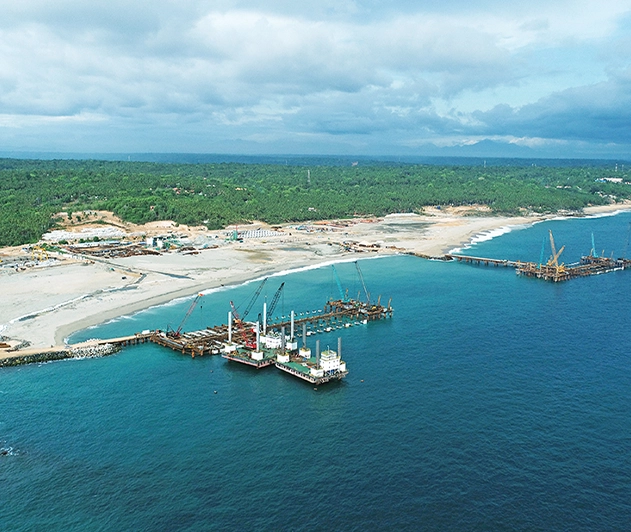
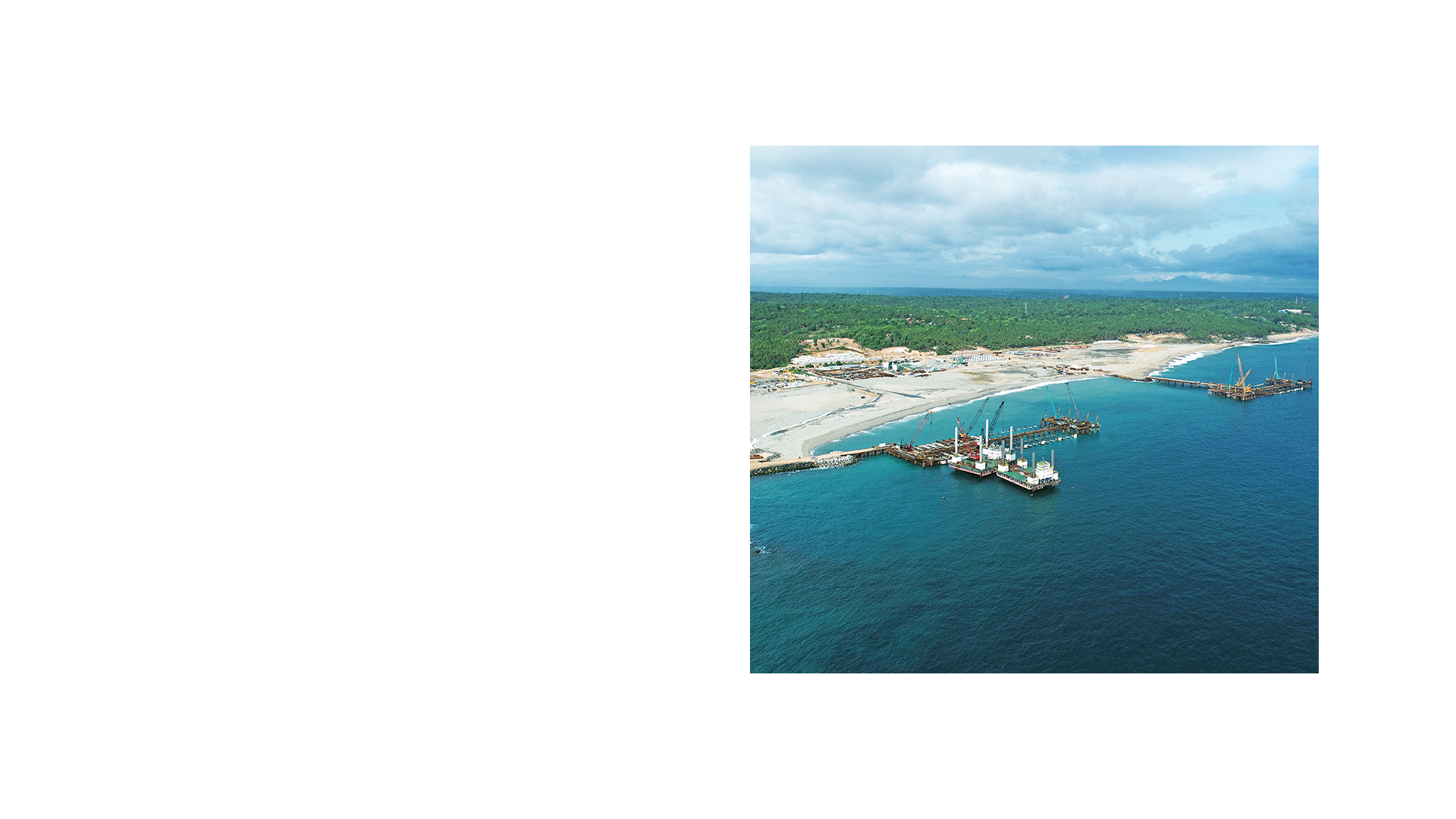
Example: The outcome of biodiversity risk screening is considered when deciding on the location and design of ports, related infrastructure, and operations. The recently operational Vizhinjam International Seaport Limited (VISL) Port does not impact mangroves or sensitive marine ecosystems due to its carefully chosen strategic location and design.
Reduce at Source
Refers to measures taken to minimise negative impacts where they cannot be completely avoided. This includes implementing technologies to reduce pollution, and creating buffer zones to protect nearby ecosystems. Care is also taken to implement design improvements and measures such as pollution control and sea traffic management to minimise adverse impacts.
Example: A ship tranquillity study assesses the harbour’s calmness and stability to ensure safe and efficient port operations and take control measures, if required. This has been done for all the operational ports of APSEZ.
Reserve Areas to Restore & Regenerate
Refers to allocation of specific areas at all operational sites for indigenous vegetation, in line with our committment to the restoration and regeneration of biodiversity.
Example: We have collaborated with the Gujarat Ecology Society (GES) for the restoration of natural grassland habitats (Ecological Restoration) along the Guneri village, covering 40 Ha. of grassland in Gauchar land.
Transform/Offset
Refers to ensuring adequate compensation for any residual impacts by creating or enhancing biodiversity elsewhere. We strive to achieve no net loss of biodiversity and adopt compensatory measures for unavoidable impacts.
Example: Replacement of biodiversity loss/damage at one location is undertaken at another location.


