



Improving access to health and nutrition
India faces a growing burden of non-communicable diseases like diabetes, heart disease, and cancer, while rural areas continue to struggle with high maternal and child mortality rates. In response, the Adani Foundation is committed to fostering an equitable society where people of all ages can lead healthy, productive lives.
Our approach integrates preventive and curative healthcare solutions, prioritizing vulnerable populations through key initiatives. These include Mobile Healthcare Units (MHCUs) for primary care, rural clinics and hospitals for secondary and tertiary care, and Project SuPoshan, which tackles malnutrition and anaemia by empowering village-level volunteers, known as SuPoshan Sanginis, to drive change at the grassroots level.
Mobile Health Care Units (MHCUs)
The Mobile Health Care Units (MHCUs), operated by the Adani Foundation, play a key role in delivering healthcare to remote areas with limited access to medical facilities. These units are fully equipped with medical professionals, diagnostic tools, and essential medicine supplies, bringing healthcare directly to the community’s doorsteps.
In addition to MHCUs, the Foundation organizes general and specialized health camps to provide comprehensive services such as health checkups, screenings, vaccinations, referral to higher facilities and health awareness campaigns.
Rural Clinics
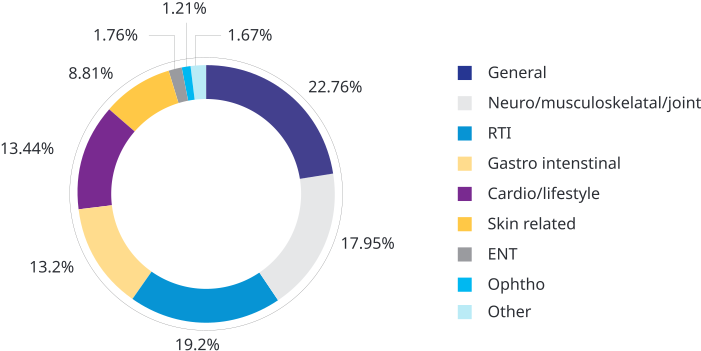
In FY 2024-25, the Adani Foundation operated 7 rural clinics and 1 wellness centre across various port locations, providing essential healthcare services to remote communities. These clinics, along with 7 Mobile Health Care Units (MHCUs), delivered much-needed medical care, reducing travel time and expenses, particularly for women, elderly, and children.
40,325
patients’ visit rural clinics and wellness center
1,10,670
treatments provided through Mobile Health Care Units (female)
MHCUs significantly reduced travel time, hardships, and expenses.
Locations served: Mundra, Dhamra, Dighi, Kattupalli, Gangavaram
General
330
patients
Multi-specialty
27,114
patients
Gujarat Adani Institute of Medical Sciences (GAIMS), Bhuj
GAIMS is a pioneering public-private partnership between the Government of Gujarat and Adani Education & Research Foundation. It is the only Medical College and Multi-Specialty Teaching District Hospital (G.K. General Hospital) in Kutch district. During the COVID-19 pandemic, G.K. General Hospital became a designated treatment center, providing essential medical equipment like ICUs, ventilators, and extra beds.
In FY 2024-25, GAIMS registered
3.95+
lakhs OPD footfalls
43,643
IPD admissions
Burn Care Center at GKGH: 24×7 Emergency Services with 26 General Beds + 4 ICU Beds. Major & Minor OT (Operation Theatres). Dressing Room for burn wound management.
Adani Vision Care Program
Screened around beneficiaries
1,16,867
(Total across all locations)
Provided eyeglasses to
36,319
individuals with vision needs
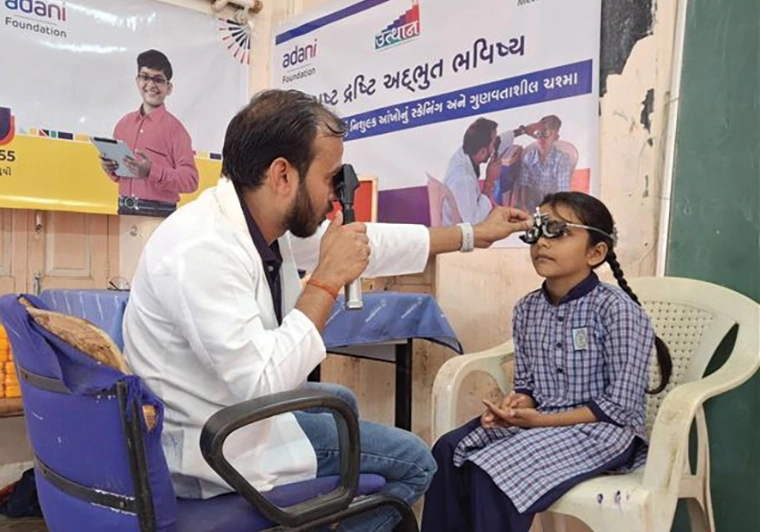
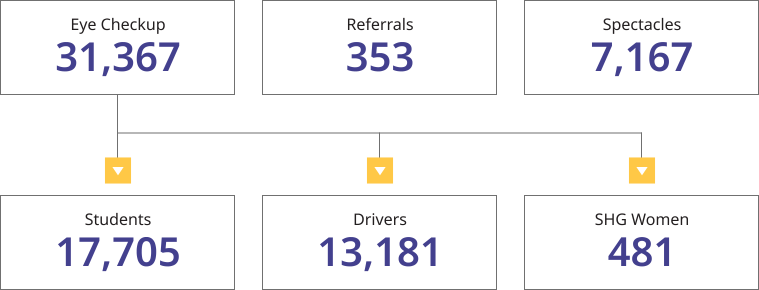
Launched in August 2024, the Vision Care Program aims to improve visual health among various demographics, including school-going children, women, elderly individuals, and truck drivers. This initiative provides eye screenings, primary eye-care services, vision health advice and free spectacles at the community level.
Adani Hospital, Mundra (Gujarat)
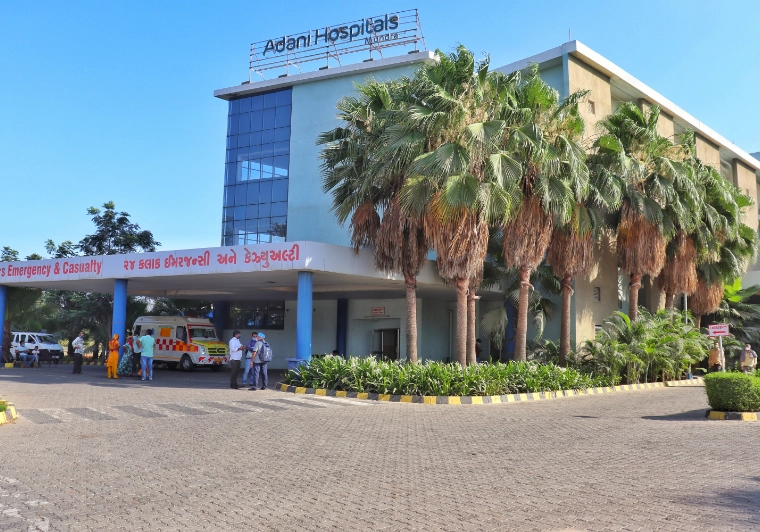
The Adani Hospital in Mundra is a 100-bed secondary care hospital serving the local population and nearby communities with affordable healthcare services. It focusses on delivering affordable healthcare and clinical training for medical professionals.
In FY 2024-25, the hospital provided
47,376
OPD services
2,616
IPD services
Village Sanitation Programme
The Village Sanitation Programme in Krishnapatnam focusses on addressing the lack of proper solid waste management and poor sanitary conditions, which often lead to significant health issues in rural areas.
- Beneficiaries: 18,000 families across 8 villages
- Community Workers: 136 workers engaged in sanitation efforts


