



Students
288 (intervention),
92
(non-intervention)
Transformation through education
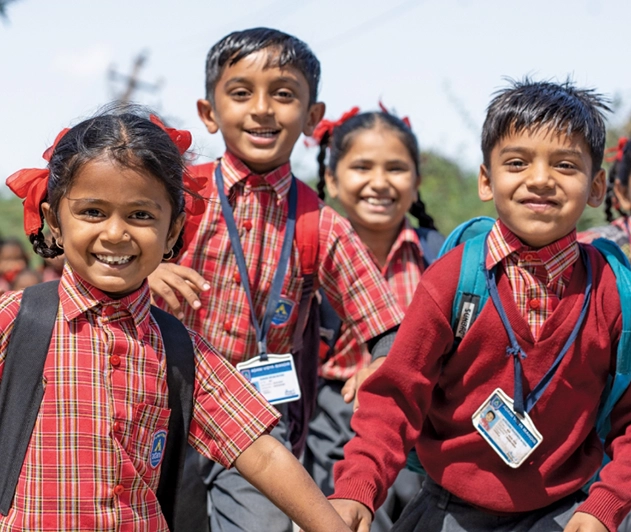
Access to quality education is a fundamental right, not a privilege. APSEZ through the Adani Foundation is committed to making education inclusive, accessible, and impactful. Through 41 schools, Project Utthan (improving learning outcomes in government schools), and Udaan (empowering young minds), the Foundation is shaping the future of thousands of children across India. Several cost-free Adani Vidya Mandir schools and subsidised institutions ensure quality education reaches the most underserved communities.
Adani Vidya Mandir, Bhadreshwar (AVMB)
- 100% pass rate in the Class 10 Gujarat State Board examinations
- 16 graduates (11 boys & 5 girls) secured employment in Adani Group Companies
Established in June 2012, AVMB is the second of four free schools operated by the Adani Foundation, catering to children from socio-economically disadvantaged backgrounds, particularly the fisherfolk community. Many students are first-generation learners.
Affiliated with the Gujarat State Education Board (GSEB), AVMB achieved a significant milestone in 2022 by becoming the first Gujarati-medium GSEB school to receive accreditation from the National Accreditation Board for Education and Training (NABET). In the 2024-25 academic year, the school enrolled 642 students, with 30% from fishing and Maldhari (cattle-rearing) communities across eight surrounding villages.
| No. of students | Single Mothers | No. of Teachers | ||||||
|---|---|---|---|---|---|---|---|---|
| Total | Boys | Girls | SC | ST | OBC | General | ||
| 642 | 433 | 209 | 65 | 0 | 413 | 164 | 15 | 27 |
A key highlight of the past year was the 12th Annual Day Celebration, dedicated to the United Nations’ Sustainable Development Goals (SDGs). As part of this initiative, over 600 students pledged to plant 25,000+ saplings over three years, including mangroves along the coast.
Special Recognitions and Awards
Best Day-Boarding School Award (NSA 2024) recognized AVMB’s commitment to quality education. The Education Excellence Award (February 11) reinforced AVMB’s role in empowering underprivileged students.
Adani Vidya Mandir, Bhadreshwar (AVMB)
- 100% board exam results
- 13 Gold, 6 Silver, and 4 Bronze medals won at the state level in various sports
- Alumilliona Vinitha secured admission to Vishwa Bharati Medical College
- Class VIII student Rithima won Gold in the State-Level Shooting Ball Event and was selected for the National Team representing Andhra Pradesh
AVMK is an English-medium school offering education from playschool to Class 10, affiliated with the State Government curriculum. Located in Muthukur Village, it provides free value-based education, books, uniforms, and midday meals. Currently, 928 students from fisherfolk families are enrolled.
The Class 10 board results for 2024 were particularly commendable with:
- 21% of students scored above 90%
- 27% scored between 80-90%
- 16 students scored 95+ in Mathematics
In the 2024-25 academic year, 1,011 students (including 876 from ST, SC, and OBC backgrounds) received free quality education, midday meals, uniforms, and stationery.
| No. of Students | Single Mothers | No. of Teachers | ||||||
|---|---|---|---|---|---|---|---|---|
| Total | Boys | Girls | SC | ST | OBC | General | ||
| 1,011 | 519 | 492 | 102 | 18 | 756 | 135 | 80 | 43 |
Adani DAV Public School, Odisha
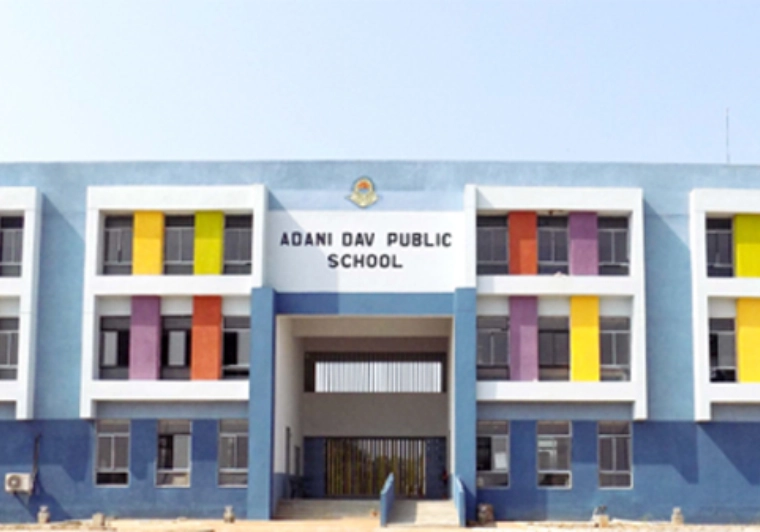
Established in April 2012 in Kuamara, Bhadrak, Odisha, this CBSE-affiliated school is a joint initiative of the DAV Managing Committee and Dhamra Port Company Limited. Initially offering secondary education, it has expanded to Senior Secondary level, serving children from fisherfolk and farming communities.
In the 2024-25 academic year, the school enrolled 594 students (43% girls), supported by 26 teachers and 7 staff members. It recorded an outstanding performance in Class 10 CBSE board exams, achieving a Quality Performance Index (QPI) of 77.55.
| No. of Students | Single Mothers | No. of Teachers | ||||||
|---|---|---|---|---|---|---|---|---|
| Total | Boys | Girls | SC | ST | OBC | General | ||
| 594 | 339 | 255 | 42 | 0 | 93 | 459 | 3 | 30 |
Navchetan Vidyalaya Primary Wing (NVPW), Hazira, Surat
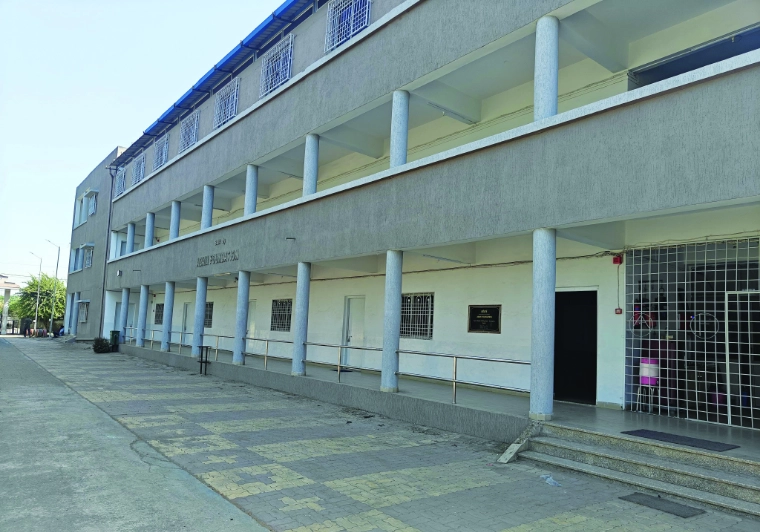
Located in Junagam, Hazira, Surat, NVPW is a Gujarati-medium primary school affiliated with the Gujarat State Education Board (GSEB). Established in 2003 by Navchetan Vikas Mandal, the school is managed by the Adani Foundation, overseeing both academics and administration.
Since its inception, student enrollment has grown from 193 to 422, with 53% being girls. The school prioritizes activity-based learning methodologies, ensuring enhanced student engagement and academic success.
| No. of Students | Single Mothers | No. of Teachers | ||||||
|---|---|---|---|---|---|---|---|---|
| Total | Boys | Girls | SC | ST | OBC | General | ||
| 422 | 197 | 225 | 5 | 29 | 385 | 3 | 9 | 15 |
Adani Evening Education Centre (AEEC)
Launched as a pilot project in December 2021, AEEC operates in and around five port locations of APSEZ. Each centre has a dedicated tutor and subject matter expert for every five students, focussing on Mathematics, English, and Science.
The programme aims to reduce school dropout rates and build self-confidence among students from underprivileged fishing and farming communities. Recognising its impact, the Adani Foundation expanded AEEC to 69 centres in FY 2024-25, benefiting 3,173 students.
Adani Competitive Coaching Centre
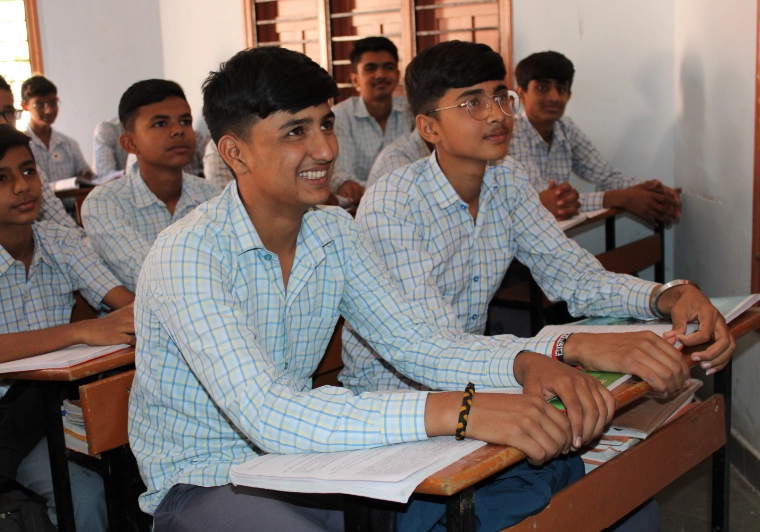
Operating across three locations, the Adani Competitive Coaching Centre enrolled 2,444 (NMMS, JNV, CET, Gyan Sadhna) selection, 1,165 (420 CET, 401 Gyan Sadhna, 344 NMMS) students in the 2024-25 academic year. The centre focusses on preparing students for competitive exams, providing quality coaching and guidance to help them excel.
Results for FY 2024-25
420
selections CET
Utthan
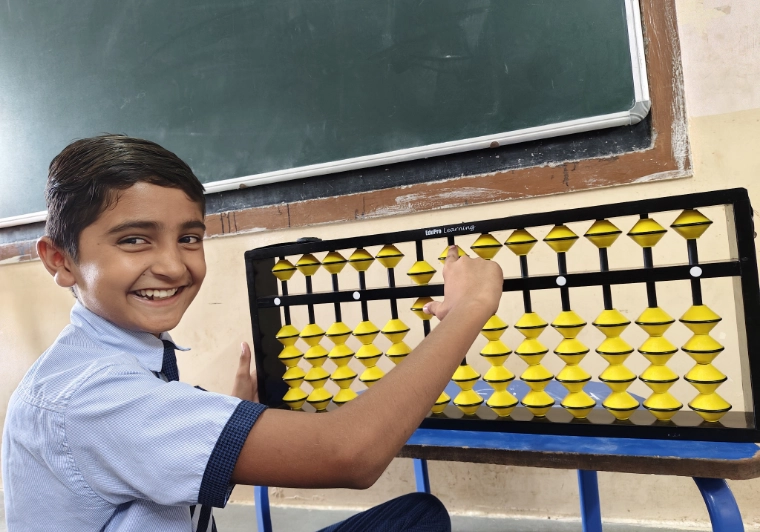
Launched in 2018-19 under the Adani Foundation’s education vertical, the Utthan programme enhances learning capabilities in government schools by improving infrastructure, integrating digital tools, and providing coaching and evening classes.
Implemented at the grassroots level, the programme is driven by Utthan Sahayaks (community volunteers) who identify Priya Vidyarthis (progressive learners) and cater to their unique learning needs. It introduces English as a third language, alongside academic and extracurricular activities aimed at reducing dropout rates. Additionally, it focusses on capacity building for teachers and volunteers, while actively engaging parents, especially mothers, in their children's education.
- 21,962 students across 166 schools in Gujarat (Kutch, Bharuch, Surat) & Odisha (Bhadrak)
- Enhances learning environments through BaLA paintings and digital tools
Utthan Outcome Assessment
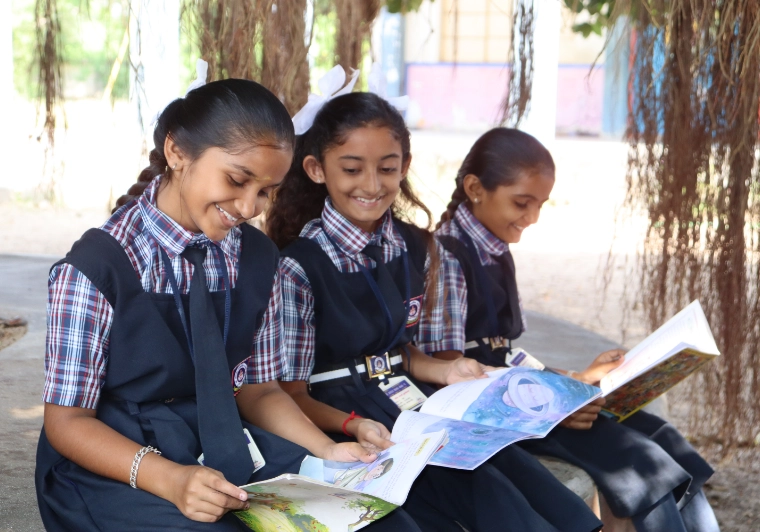
Objectives: Evaluate Project Utthan's impact on literacy, numeracy, practices of teacher assistants, community engagement, infrastructure, school transformation, and identify strengths, weaknesses, and recommendations for sustainability and further improvement
- Aligned with National Education Policy (NEP) 2020, emphasising foundational literacy, numeracy, and community engagement
Sample Size
Hazira
4 FGDs Sahayaks
14 SSI and 2 FGDs
14 SSI and 2 FGDs
Head Teacher
13 KII’s
13 KII’s
SMC Members
13 KII’s
13 KII’s
Parents
13 KII’s Community
13 KII’s Community
Members
2 FGDs
2 FGDs
Mundra
Students
288 (intervention),
96 (non-intervention)
288 (intervention),
96 (non-intervention)
2 FGDs Sahayaks
53 SSI and 2 FGDs
53 SSI and 2 FGDs
Head Teacher
30 KII’s
30 KII’s
SMC Members
30 KII’s
30 KII’s
Parents
30 KII’s
30 KII’s
Community Members
2 FGDs
2 FGDs
Dahej
Students
307 (intervention),
127 (non-intervention)
307 (intervention),
127 (non-intervention)
2 FGDs Sahayaks
9 SSI and 2 FGDs
9 SSI and 2 FGDs
Head Teacher
12 KII’s
12 KII’s
SMC Members
12 KII’s
12 KII’s
Parents
12 KII’s
12 KII’s
Community Members
2 FGDs
2 FGDs
Findings
A. Students
| Hazira | Mundra | Dahej | |
|---|---|---|---|
| Reading Proficiency | The Utthan Group demonstrated high reading proficiency, with 90.3% of students achieving proficiency compared to 58.7% in the Non-Utthan Group, where 31.6% were at beginner or intermediate levels. | The Utthan Group demonstrated high reading proficiency, with 95.7% of students achieving proficiency compared to 40.4% in the Non-Utthan Group, where 31.1% were at beginner or intermediate levels. | The Utthan programme significantly improved student proficiency, with Utthan schools outperforming Non-Utthan schools. Proficiency rose from 28.9% at baseline to 77.2% in outcomes. |
| Writing Proficiency | 89.6% of Utthan students were proficient in writing, with minimal representation at lower levels, versus only 52.17% in the Non-Utthan Group was at proficient stage, where 47.83% were at beginner, intermediary and non-beginner stages. | 93.7% of Utthan students were proficient in writing, with minimal representation at lower levels, versus only 45.21% in the Non-Utthan Group was at proficient stage, where 47.1% were at beginner, intermediary and non-beginner stages. | Writing proficiency increased from 11.9% during Baseline to 81.9%, with Utthan Group achieving 88% proficiency. Non-Utthan Group showed similar proficiency but had larger disparity of students in beginner/non-beginner stages. |
| Numeracy Proficiency | In the Utthan Group, 83% of participants achieved proficiency, whereas in the non-Utthan Group, only 28.85% reached this level, with a significant portion remaining at beginner, non-beginner, or progressive stages. | The Utthan Group excelled in numeracy, with 94.73% proficiency, while only 29.14% of non-Utthan students achieved this level, with significant representation in beginner (36.75%), nonbeginner (20.75%), and progressive (7.54%) stages. | Numeracy proficiency improved from 29.7% during the baseline to 82% during the impact assessment. Non-Utthan Group showed 75% proficiency, highlighting the need for focussed numeracy interventions to address lower performance levels. |
| Engagement and Confidence | 93% of students in the Utthan Group expressed interest in attending school, indicating a very high level of engagement. In contrast, only 82.6% of students in the non-Utthan. 63.9% of students in Utthan schools expressed confidence in their leadership and communication skills, whereas only 19.6% of students in nonUtthan schools reported similar levels of confidence. | 97.3% of students in the Utthan Group expressed interest in attending school, indicating a very high level of engagement. In contrast, only 88.7% of students in the non-Utthan, 96.8% of students in Utthan schools expressed confidence in their leadership and communication skills, whereas only 69.7% of students in non-Utthan schools reported similar levels of confidence. | 98.4% of students in the Utthan Group expressed interest in attending school, indicating a very high level of engagement. In contrast, only 92% of students in the non-Utthan, 95% of students in Utthan schools expressed confidence in their leadership and communication skills, whereas only 91% of students in non-Utthan schools reported similar levels of confidence. |
| Classroom Participation and Skill Development | 94.8% of students reported improved classroom participation, and 76.9% credited sahayaks with enhancing skills like communication, leadership, computer literacy, and academics. | 95% of students reported improved classroom participation, and 89.1% credited sahayaks with enhancing skills like communication, leadership, computer literacy, and academics. | 85% of students credited sahayaks with enhancing skills like communication, leadership, computer literacy, and academics. With more than 80% of students stating they have received adequate support in FLN skills and 65% among Numeracy. |
B. Sahayaks
Effective Teaching Methods
The training equipped sahayaks with valuable techniques, and educational tools to make learning more engaging. Storytelling, a skill emphasised during training, is actively used in classrooms to captivate students’ attention and enhance their learning experience.
Increased Confidence in Using Technology
Sahayaks have embraced technology in teaching, gaining proficiency with digital tools such as smart TVs and laptops.
Development of Empathy and Emotional Intelligence
Sahayaks have adopted a more student-centred approach, fostered deeper connections and effectively addressing students’ emotional and psychological needs.
Personal and Professional Growth
Sahayaks reported significant growth in leadership, communication, and time management skills due to the training sessions.
C. Parents, SMC Members and Head Teacher
Collaborative Efforts
Teacher training and parent-teacher meetings enhanced communication and child support.
Community Involvement
Active parent participation fostered a supportive learning environment.
Sustainable Impact
Stronger school-community relationships drove lasting improvements in education.
Conclusion
The Utthan Project, has significantly enhanced foundational literacy and numeracy (FLN) outcomes. These gains are further reinforced by advancements in life skills, increased classroom participation, and a stronger interest in continuing education.
Abacus & Vedic Math (Utthan Initiative)
As part of the Utthan initiative, Abacus and Vedic Mathematics have been introduced in 54 primary and 8 high schools, helping students develop strong numerical skills.
1,607
students trained in Abacus
1,302
students trained in Vedic Math
Udaan: Inspiring the Youth
Inspired by Mr Gautam Adani’s journey from visiting Kandla Port as a child to building his own ports, Project Udaan aims to expose students to real-world business operations through learning-based exposure tours. Students visit Adani Port, Adani Power, and Adani Wilmar facilities to gain insights into large-scale industries.
680
institutes participated.
39,201 students
(including 14,774 female students) benefited.
Participants from schools, colleges, and other institutes gained practical knowledge about port, power, and edible oil refinery operations.


