


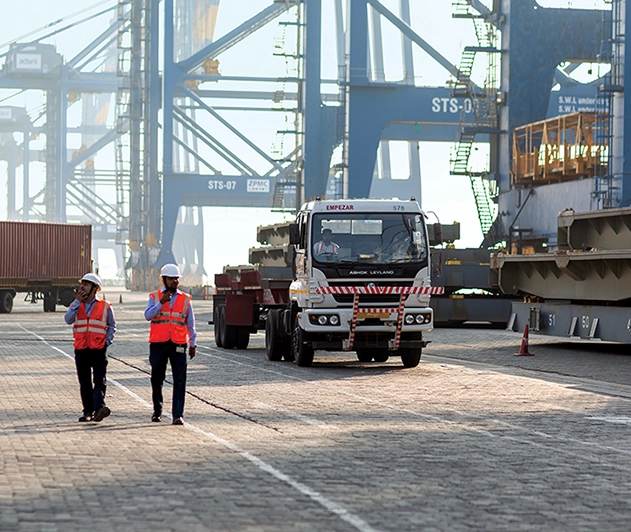
Emergency preparedness and response
With a sharp focus on preventive and prompt responsive safety measures, we have put in place an elaborate Emergency Preparedness & Response Plan (EP&RP).
Encompasses all phases and areas of port site operations
Lists out response processes, escalation hierarchies and control measures for extreme disaster scenarios
Includes regular simulation exercises with stakeholders to ensure emergency-readiness
Covers strong fire safety measures, including firefighting equipment, early detection sensors, and regular audits, complemented by training programmes and hazard awareness initiatives
Uncompromising Focus on Security
Our robust, well-defined security framework is central to our safety proposition. It is crafted to the mitigation of all types of potential risks, and considers geopolitical risk assessments to protect the workforce and operations.
- The multi-layered framework includes deployment of drone technology and routine patrolling for the protection of the facility
- Maritime security is ensured through collaborations with the Indian Coast Guard
- Periodic exercises, such as Sagar Kawach, are conducted with the Indian Navy, Coast Guard and Marine Police, to evaluate the response capabilities and ensure effective crisis coordination
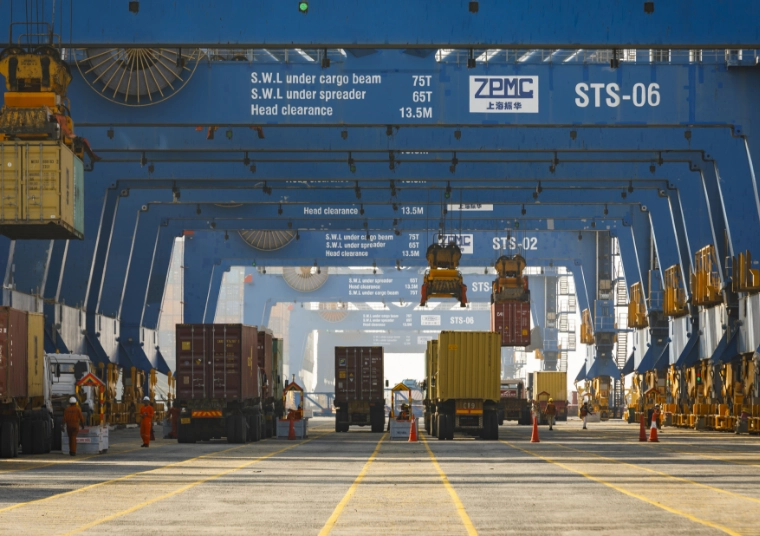
Our OHS Performance in FY 2024-25
- Data-Driven Safety Insights: Reinforcing the role of data analysis in safety enhancement, the Adani GENSUITE platform played a crucial role in facilitating the reporting and analysis of 1,23,164 safety concerns in FY 2024-25. This highlighted the importance of a proactive approach to health and safety management.
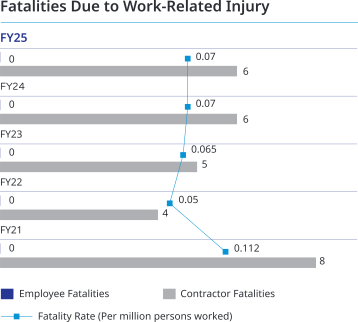
- Learning from Incidents: Our rigorous safety measures notwithstanding, we lost 6 contractors during the fiscal year. We undertook detailed investigations to identify the root causes behind the incidents, and to develop strategies to prevent recurrence. We also shared the lessons learned with our workforce, emphasising the importance of strict adherence with the safety protocols.
| Safety incident description | Actions taken to strengthen safety |
|---|---|
| 1.At the Liquid Terminal location, a tragic incident occurred involving a tanker driver. After positioning the tanker for loading Carbon Black Feed Stock (CBFS), the driver climbed on top of the tanker to fix the loading hose. While attempting to straighten the bent end of the tanker's ladder using a tommy bar, he lost his balance and fell. The fall resulted in a severe head injury. He was immediately rushed to the Adani Hospital for treatment, but was declared dead upon arrival. |
|
| 2.At Terminal 03 (Berth No. 11), an incident occurred during pipe loading. A workman working under Aditya Marine Pvt Ltd was unhooking pipes. After unhooking pipes in tier six, the workman moved to a safe location near the port after the hold corner. Unfortunately, he slipped from the stacks of OD pipes and fell inside the hold. The workman was rescued by other team workers and supervisors on duty. He was promptly taken to Adani Hospital but later succumbed to his injuries. |
|
| 3.RTG 506 was used for import delivery operations for an external trailer. The operator picked up a container and moved towards the vehicle lane to place it. While reversing the trolley, the container hit a nearby stacked empty container, causing it to topple over and fall onto another truck driver's cabin. The trapped driver was rescued and sent for treatment but succumbed to injuries on the way to the hospital. |
|
| 4.A workman was unloading aggregate material from an open-body truck. During the process, the truck came in contact with an overhead electric line. The workman received an electric shock upon touching the side door and was immediately taken to the nearest hospital. Despite efforts, he succumbed to his injuries. The driver experienced a mild shock but escaped unhurt. |
|
| 5.Workmen were shifting a piling tripod after completing stone column activities. The tripod collapsed due to muddy ground. While escaping, one workman was struck by a leg of the metal structure, sustaining neck and facial injuries. He was taken to the nearest hospital for treatment but succumbed to his injuries. |
|
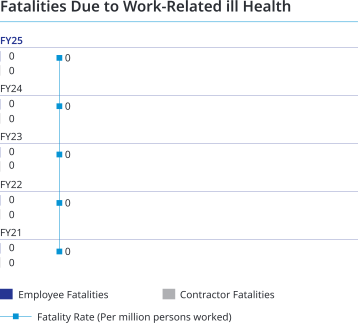
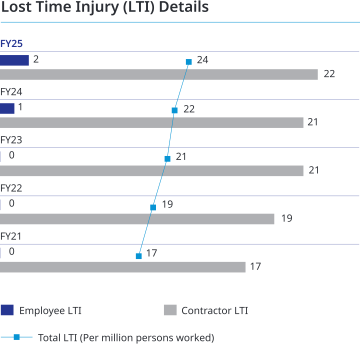
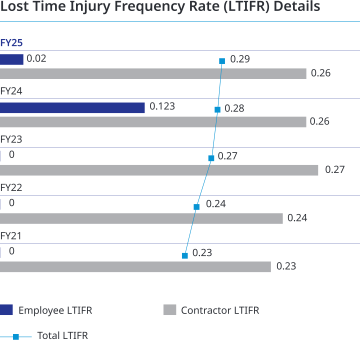
Fatalities by Year
Total Person-Hours Worked in FY 2024-25
68,74,982 hours
Employees
7,67,02,107 hours
Contractors


