
Investing in People Training & Development
To ensure that workforce lead industry advancements and leadership excellence, we make significant investments in the training and development of our people through a continuous learning process. We follow a well-defined talent development approach, crafted to avoid obsolescence and equip our employees for future challenges and opportunities.
Promoting a Learning Culture
The employee development strategy at APSEZ is centred around a robust Capability Building and Leadership Development framework. This is supported by the Adani Behavioural Competency Framework, thus ensuring completely compatibility between the talent development initiatives and the organisation’s growth charter.
As part of this dual framework, we encourage knowledge sharing and mentorship in the organisation, facilitating senior professionals to share their learnings and experiences with the next generation of leaders. Besides promoting cross-functional knowledge sharing, this helps in building a leadership pipeline equipped to effectively negotiate the challenges and complexities of the evolving global business landscape. The e-Vidyalaya-Percipio platform at APSEZ helps in training executives in the areas of risk management, soft skills and compliance.
Key Talent Development Initiatives
To ensure our team remains relevant and valuable in today's dynamic business landscape, APSEZ implements a range of impactful talent development initiatives, such as:
- Capability building and leadership development framework, focussed on challenging assignments and talent development opportunities, to enable employee empowerment
- Adani Behavioural Competency Framework, ensuring competence-based progression opportunities for employees by synergising talent development with growth
- Knowledge sharing and mentoring programmes, enriching cross-functional expertise and nurturing empowered business leaders through knowledge and wisdom transfer
A range of programmes and practices, encompassing Talent Management, Learning & Development, Performance Management, Job Rotations, Leadership Development etc., are in place at APSEZ to promote talent and equip our people to meet the transforming business needs.
1
Adani Accelerated Leadership Programme (AALP)
Our flagship leadership development initiative, AALP, aims to develop our future leadership pipeline through a well-structured process. The programme provides participants selected from prestigious institutions with early career challenges and opportunities, paving the way for a fulfilling career within the company. The programme provides participants exposure to all facets of the business through job rotation.
A total of 12 AALPs from reputed institutions, such as IIT, IIM and MDI are currently participating in the programme for FY 2024-25.
2
Knowledge Sharing & Mentoring Programme
We have established a Knowledge Sharing & Mentoring Programme to enhance knowledge transfer and expand our employees' business and functional understanding.
- The programme follows the 70:20:10 model of learning, and is focussed on shaping & developing first-time managers and functional managers into well-rounded business leaders
- It is spread over a duration of 18-24 months
- Each mentee is carefully matched with a senior mentor, fostering a leadership pipeline aligned with our organisational goals
- High performing employees mentored through this programme are placed at various enhanced roles with greater responsibilities as per the business needs
13
Employees successfully completed the programme in FY 2024-25
3
Human Potential Programme
The Human Potential Programme is a strategic initiative aimed at enhancing our people’s potential and empowering them to become their best version. It enables the employees to deliver their best work in alignment with purpose and core values, thus steering the company’s growth at scale.
Training is provided by esteemed faculty from reputed institutes like IIT and IIM, ensuring high-quality learning experiences. Additionally, participants are given exposure to other industries through industrial excursions, allowing them to gain valuable insights and broaden their perspectives. This combination of expert training and real-world exposure equips employees with the skills and knowledge needed to excel in their roles.
Training for Non-Managers
We ensure that all employees, regardless of their roles, have access to learning opportunities that support their personal and professional growth. Our e-learning platform, eVidyalaya – Percipio, enables seamless, anytime, anywhere learning, fostering a swift and convenient learning experience.
4
Skill Development Centre
Recently, we have launched Adani Krishnapatnam Skill Development Centre (ASDC) which is a prominent facility dedicated to enhancing skills, particularly in port operations. Located in Krishnapatnam, this Centre spans over 20 acres and offers 21 simulation-based programs. ASDC conducted its first port training with international participants, showcasing its commitment to global standards in skill development. The centre is equipped with advanced simulators for cargo handling, including wagon loaders, mobile cranes, and earth-moving equipment, ensuring operators are well-prepared for real-world challenges.
100%
of employees received trainings in FY 2024-25
The Key Programs Designed to Address Critical Needs in the Maritime Sector Include
RTG Crane Operator Training for Indian Students
Empowering India’s next generation with cutting-edge operational expertise.
RTG Crane Operator Training for Tanzanian Students
Strengthening global ties through knowledge transfer and skill enhancement.
Heavy Motor Vehicle (HMV) Driving Training
Preparing skilled drivers for a safer and more efficient transportation industry.
Marine Engine and Mechanical Systems Training (Dredging)
Developing technical expertise for marine and dredging operations.

We are continually investing in the growth and development of our people through comprehensive programmes and initiatives, underlining our commitment to nurturing a workforce that excels in their current roles and is empowered to tackle the leadership challenges of the future.
The young men and women who train here will become the backbone of not only our operations but the industry at large. Whether it’s learning to operate cutting-edge RTG cranes or mastering the mechanics of marine engines, these skills will enable them to be pioneers in their fields.
Training: Age Group
(Man-Hours)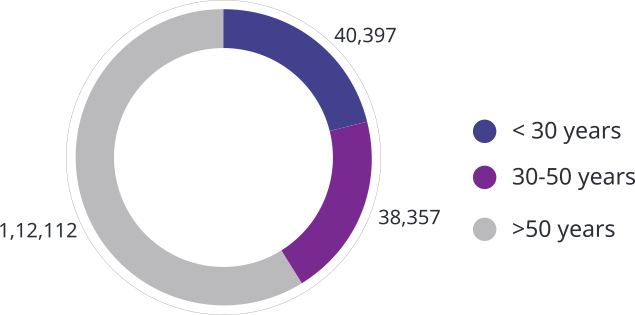
Training: Management Level
(Man-Hours)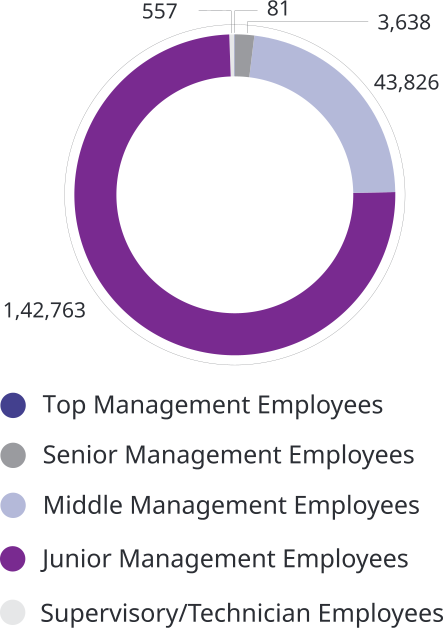
Training: Gender
(Man-Hours)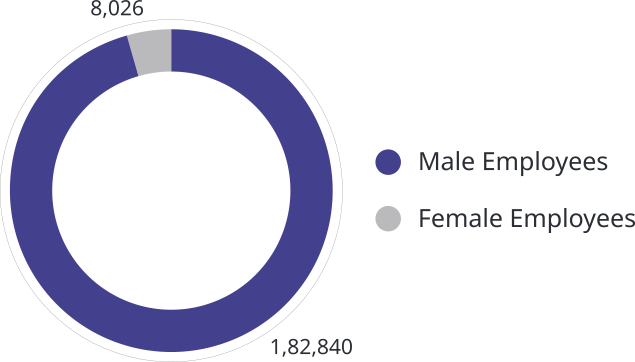
Training: Type of Training of all Workforce
(Man-Hours)
1,59,289
Behaviour Training
27,44,654
Safety Training
6,10,140
Technical Training
7
mandays training of FTE
10
mandays training of total workforce (including contractors)
Key Employee Development Programmes
1
North Star
The North Star programme at APSEZ is a unique initiative to develop the internal High Potential Talent and prepare the managers for their next role. Spread over 10 months, the programme runs in partnership with EMERITUS Institute of Management, Singapore, which is a consortium of three internationally reputed business schools: Columbia Business School, TUCK School of Business and MIT Sloan. The programme, designed to ensure proper engagement and learning of working professionals, covers permanent employees. 11 employees from APSEZ have graduated through this platform during this year’s North Star program.
Type of Programme
Leadership development programme
Learning Methods
Classes, complemented by industry visits, project-related tasks, and Coaching and mentoring
Quantitative Business Impact
Participants in the program can lead to a 10% increase in team productivity, enhancing overall project completion rates and efficiency.
0.37%
of FTEs participating in the programme
2
Iceberg
Iceberg connotes exploration, discovery and nurturance of the inherent capabilities of the target employees, enabling their development into capable leaders. The programme is focussed on meeting the organisation’s talent requirements on a continuing basis. This high-intensity intervention programme works on three tiers, deploying a systematic, structured, consistent and futuristic approach. Active participation and ownership of the executives responsible for steering the programme ensures positive results. The beneficiaries include permanent employees
Type of Programme
Leadership development programme
Learning Methods
Team collaboration and networking, on-the-job training, and specialised leadership development programmes by Korn Ferry.
Quantitative Business Impact
These leaders can take up progressively higher roles, contributing to organisational growth and resilience. By engaging with this talent pool and expanding their capabilities, the organisation benefits from enhanced skills, improved performance, and higher engagement levels.
0.22%
of FTEs participating in the programme
3
Young Leadership Programme
The Young Leaders Programme (YLP) at APSEZ is crafted to provide young employees the opportunity to get more comprehensive and foundational holistic exposure in certain vital areas. This includes financial acumen, operational excellence, understanding of operating in regulated businesses, along with ability of self-leadership and being a people manager. The programme, designed for permanent employees, has been launched on a pilot basis at four IIMs, namely IIM Nagpur, IIM Sambalpur, IIM Raipur and IIM Udaipur.
Type of Programme
Leadership development programme
Learning Methods
Classes, complemented by industry visits, project-related tasks, and Coaching and mentoring
Quantitative Business Impact
As part of the Action Learning Project, participants are expected to pick a problem statement, which is under their zone of influence and linked with their current job roles. The participants are provided the opportunity to apply the learnings from the 4 modules of YLP in their job roles.
0.62%
of FTEs participating in the programme
4
FULCRUM
FULCRUM is a 9-10-month-long intervention, designed to be rigorous and experiential. A programme for permanent employees, it requires a commitment of 50–60 man-days of effort. Selected candidates are exposed to best-in-class management practices through immersive learning, access to global institutions and top-notch faculty, with support of individual coaches. The classroom sessions are conducted in Ahmedabad (Gujarat), while the candidates are required to travel to their respective locations for immersive business sessions and site visits.
Type of Programme
Leadership development programme
Learning Methods
Coaching & mentoring
Quantitative Business Impact
Immersive learning and exposure to global institutions foster innovation and efficiency. Employees bring new ideas and practices to their roles, potentially leading to cost savings and revenue growth.
0.31%
of FTEs participating in the programme
5
Digital Proficiency Programme
The initiative, covering permanent employees is aimed at equipping our workforce with the digital skills necessary for today's tech-driven business environment. It is driven by the understanding that the first step toward embracing digital transformation requires adopting a mindset oriented towards its benefits. This entails understanding the role of digitised workflows, software and technology in optimising efficiency, and yielding positive outcomes for our employees and diverse business operations.
Type of Programme
Digital transition programme
Coaching & mentoring
Coaching & mentoring
Quantitative Business Impact
Equipping our workforce with digital skills, to boost productivity by 20% and reduce operational costs
75%
of FTEs participating in the programme
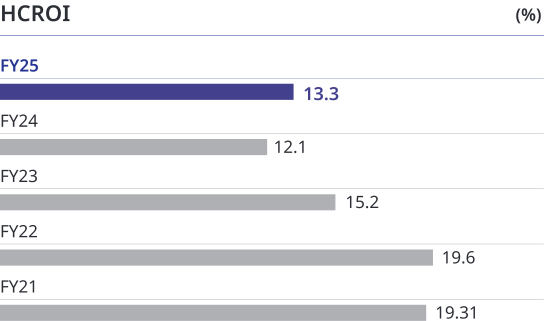
Return on Talent Investment
We continually track the Human Capital Return on Investment (HCROI) with the objective of measuring the effectiveness of its human capital development initiatives relative to overall HR-related investments. In assessing the HCROI, all company expenses (excluding employee-related costs and benefits) are deducted from the revenue generated by the company, followed by division of the outcome by the sum of employee-related expenses and welfare expenditures.
Strategic Framework to Attract & Retain Talent
Given the criticality of effective talent management to meet the demands of the competitive business environment of today, APSEZ has prioritised efforts to attract and retain a proficient and diverse workforce. We believe this is essential to steer business growth and innovation, and have established a robust strategic framework to ensure talent recruitment and retention. The strategy blends internal advancement opportunities with external recruitment, particularly for management and leadership positions, with focus on building a dynamic and capable team.
Talent Council & its Role
The Talent Council at APSEZ is a cross-functional team that drives our talent management strategy.
Key Features
- Committed to continued refinement of the APSEZ talent acquisition and development strategy
- Pivotal to identifying, nurturing and advancing high-potential employees within the organisation
- Conducts detailed talent assessments to identify individuals with exceptional skills and the potential for growth and leadership

Hiring at APSEZ
Our hiring and talent management approach is designed to meet the evolving needs of our dynamic business. We recruit diverse talent equipped to address the challenges triggered by technological advancements and transforming customer demands. Our organisation implements streamlined management practices alongside a bottom-up approach to foster the development of domain experts. Our business leaders are entrusted with the responsibility of nurturing talent in their respective areas. In adherence to government guidelines, 90% of the workforce at APSEZ is drawn from the local community
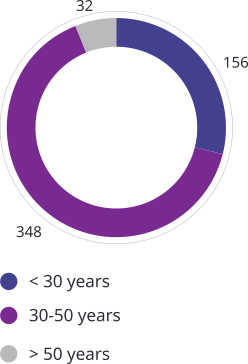
New Hires: Age Group
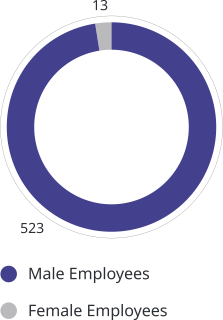
New Hires: Gender
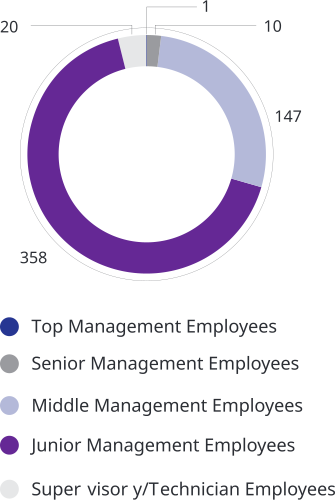
New Hires: Management Level
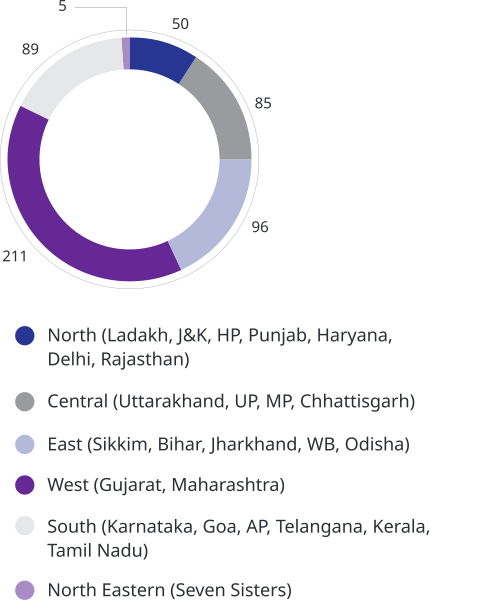
New Hires: Region-Wise
Domicile Hires
166
Number of domicile hires
31%
of domicile hiring
Position Filled with Internal Candidates
405
Open positions filled by internal candidates
43%
of open positions filled by internal candidates
₹82,142
Average hiring cost per FTE
Talent Planning & Analytics
People analytics has greatly improved APSEZ's capacity to identify, attract, develop, and retain talent. By fostering a culture that promotes data-driven decision-making, we have successfully met business demands and growth strategies within our diverse workforce. Our analytics approach encompasses:
Measurement of Employee Performance
We have in place internal BI dashboards equipped with state-of-the-art analytical tools to enable live interactive HR KPI monitoring. With these dashboards and tools, we effectively monitor and measure the key HR KPIs, including headcount, recruitment cost analysis, hire analysis, attrition, separation, demographic, and diversity analysis.
Strategic Workforce Planning
Workforce planning efforts at APSEZ are optimised across the HR function, from the stage of recruitment to talent acquisition, upskilling and talent mobility.
Identification of Current Workforce Skills Gaps
With the help of people analytics, we not only identify the organisational skill gaps but also acquire data-driven insights to fill the gaps in areas where essential employee competencies are lacking or inadequate.
Recruitment & Hiring
We leverage people analytics and data to track, manage and analyse the key metrics relating to the hiring process. These metrics include sourcing, selection and hiring procedures, along with evaluation of the overall impact of new hires on retention and turnover. We have prioritised diversity in talent to promote innovation, creativity and inclusivity at the workplace. In line with this approach, we focus on inclusive employer branding and sourcing from diverse talent pools to promote fairness and boost the business outcomes.
Identification of Flight Risks to Improve Retention
To retain talent, we evaluate the relevant data to identify employees who are at risk of leaving and, accordingly, take proactive retention measures.
Internal Job Transfers
We recognise the importance of internal job transfers as a key component of our talent management strategy. Internal job transfers offer numerous benefits, including enhanced employee engagement, retention, and career development. Our approach to internal job transfers include making Internal Job Postings (IJPs) available to all employees, ensuring transparency and equal opportunity. Interested employees can apply for these positions through our dedicated portal, making the process straightforward and accessible.
Organisational Network Analysis (ONA)
This structured approach helps us in visualising all communication, information and decision flows within the organisation. ONA enables us to comprehend employee interactions and relationships, and utilise the findings in various applications:
- Organisational design: ONA helps us position employees in a way that ensures the best impact during the restructuring process
- Cultural insights: ONA enables us to gain insights on collaboration dynamics and cultural norms
- Workforce transformation: ONA guides us in talent development and succession planning
Strategic Workforce Planning (SWP)
This involves anticipating future workforce requirements and ensuring timely availability of the right talent to realise the organisational objectives. The focus is on adoption of long-term employee strategies over short-term staffing decisions. SWP enables us to focus on:
- Pursuing a data-driven approach: With thrust on people analytics to assess workforce data, identify trends, and make informed decisions
- Synergising with long-term goals & vision: Deploying a strategic, futuristic perspective instead of the traditional workforce planning approach, ensuring the alignment of our workforce planning and strategies with the overall business goals
- Scenario planning: This equips us with the ability to explore various workforce related business scenarios (e.g., growth, downsizing, technological changes), and to plan accordingly
The need for a comprehensive HR integration plan during reorganisations, particularly those arising from acquisitions, merger, or expansions, cannot be overstated. The HR integration plan at APSEZ consists of:
- Various transition aspects, including harmonisation of employment terms, organisational structure and staffing, to align with the post-merger organisation
- Elaborate strategies for cultural integration and communication, incorporating the Adani Group processes
The plan seeks to evaluate industrial relations, boost productivity, and drive workforce optimisation for a seamless transition. Grade and compensation structures are considered, with focus on maintaining synergies between the acquiring and acquired companies, as part of the employment harmonisation process. It is ensured that the standard employment terms are communicated and accepted across the board, and compensation packages are harmonised for both payroll and non-payroll employees. Clear organisational design and staffing plans are in place for the development of the post-integration structure, and the capabilities of key executives are carefully assessed to ensure role clarity through small group interactions.
Succession Planning
APSEZ takes care to apply a well-defined succession planning process to its most strategic and critical roles. Systematic evaluation of such roles is undertaken within a well-structured framework, which applies to all employees at the O1 level and higher, including the CEO.
To ensure proper execution of the Succession Planning process:
- We have in place a well-defined accountability framework
- We have developed a robust responsibility matrix to oversee the entire process and ensure alignment with the organisation's strategic goals
The matrix helps APSEZ in ensuring consistency and transparency in the identification and development of the company’s future leaders. It specifies the roles and responsibilities of the senior management and the human resources department.
The criticality of the positions is suitably categorised after a detailed evaluation by the HR Head (Operating Unit / Corporate) & the COO / the CEO / Business Head. The categories are based on:
- a) Organisation’s ability to sustain its business operations and avoid any adverse effect it might face as a result of such vacancy
- b) Ease of availability and quality of such resource/skills in the talent market
- c) Contribution to the topline / bottom-line in terms of Gross Revenue, Net Profit and EBIDTA, in absolute relative terms
Another key factor taken into account in the process of identifying the critical positions in the company’s business strategies for next five years, with a review every two years unless there are any significant changes before that.
Succession Planning Programme
Takshashila is a structured modular programme, designed in collaboration with premier academic institutes such as the Indian School of Business along with our in-house partners. The programme seeks to sharpen the skills of employees at leadership positions (at the VP and above levels), through focussed assessments. In FY 2024-25, 8 employees were selected to upskill under the programme.