


Advocacy and Leadership at APSEZ
APSEZ plays an industry-leading role in shaping the national policy in the larger interest of the people.
This includes:
Active engagement in sector-specific public open consultations, whenever invited.
Participation in regional and national policy dialogues through trade associations and other relevant social bodies
Lobbying initiatives focussed on promoting sustainable practices, enhancing infrastructure, and fostering economic growth.
Strategic advocacy, involving collaboration with policymakers, industry associations, and relevant stakeholders to shape legislation and regulations that benefit both our business and the broader community
We are cognisant of the need to stay updated on governmental policy shifts, regulatory landscapes, and societal expectations. In pursuance of this belief, we have adopted a detailed process to identify, evaluate, and prioritise subjects that matter. This approach also takes into account various key Environmental, Social, and Governance (ESG) concerns, including securing environmental clearances, strategies for climate action, advancing port development, optimising resource use, addressing marine pollution, and safeguarding biodiversity.

The integration of advocacy and leadership in our operational ethos underlines our commitment to industry excellence and our dedication to the sustainable progress and well-being of the broader community.
Governance Framework & Management System For Policy Advocacy
Cross-FunctionalCollaboration
Input requests on policy matters are directed from diverse cross-functional teams to the ESG Head.
Policy Positioning
The ESG Head is mandated with the development and implementation of policy positions on all critical issues.
Alignment And Approval
A rigorous examination is undertaken to ensure that the policy subject aligns with APSEZ's goals before it is presented for the CEO's approval.
CEO Oversight
At the Board level, the CEO supervises the advocacy strategies and gives the final approval for policy advocacy activities.
Management-Level Planning
The ESG Head formulates strategies and action plans for policy engagements and interactions with trade associations.
Site-Level Execution
Department heads at the site level are instrumental in steering project executions and further initiatives towards net-zero emissions.
Review & Monitoring
The Corporate Responsibility Committee undertakes quarterly assessments of the policy advocacy endeavours and the various initiatives undertaken by the company. The ESH Head then identifies the discrepancies between the advocacy work of the trade associations and our commitments, and takes necessary corrective measures to fill the gap.
Framework for Addressing Misalignments

Identification
Continuously monitor trade association activities and their position on the Paris Agreement.

Analysis
Evaluate the degree of misalignment and its potential impact on APSEZ's climate commitments.

Public Statement
Clarify the company's position, and distance APSEZ from any misalignment with the Paris Agreement.

Engagement
Initiate direct dialogues with trade associations to discuss concerns and emphasise the need for alignment with our climate goals. Partners with trade associations to address any misalignments within a clear timeline. If these efforts fail, consider disassociating from the trade associations.
Policy Engagement On Climate Issues In FY 2024-25
Led by our unwavering commitment to the global climate movement, we take concerted steps to further the objectives set by the Paris Agreement. We consciously align our actions with India's national climate commitments, striving to exceed these goals well before the deadlines of the country’s Nationally Determined Contributions (NDC). In FY 2024-25, APSEZ proactively collaborated with the World Economic Forum (WEF) on the ‘Transitioning Industrial Clusters’ initiative, thereby supporting the Government of India's climate change agenda.

APSEZ's Commitment to Climate Action: Partnering with WEF for a Sustainable Future
Three Adani portfolio companies – Adani Enterprises Ltd (AEL) (through its subsidiary Adani New Industries Ltd), Adani Ports and Special Economic Zone Ltd (APSEZ), and Ambuja Cements Ltd – have joined the World Economic Forum’s ‘Transitioning Industrial Clusters’ initiative, forming the Adani Mundra Cluster. This initiative aims to enhance collaboration and align the vision of co-located companies to drive economic growth, generate employment, and advance decarbonisation by 2050.
Since its inception in 1993, the Port business at Mundra has evolved into a thriving, port-led industrial cluster. Now recognised as India’s largest port, Mundra has become a dynamic hub for companies across diverse sectors, ranging from advanced solar module and wind turbine manufacturing to the challenging-to-decarbonise business of cement manufacturing.
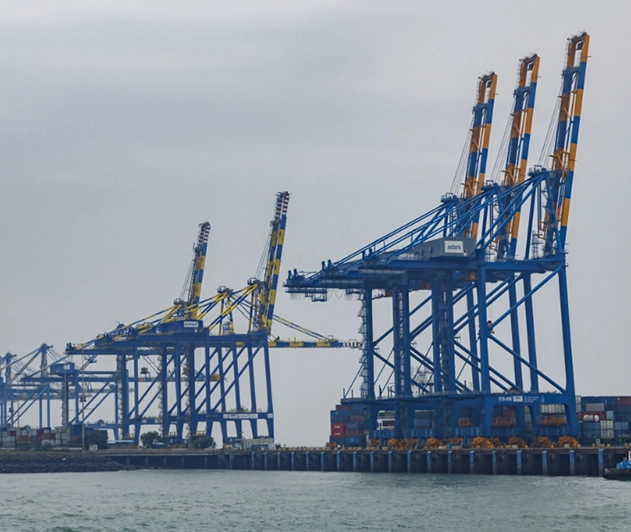
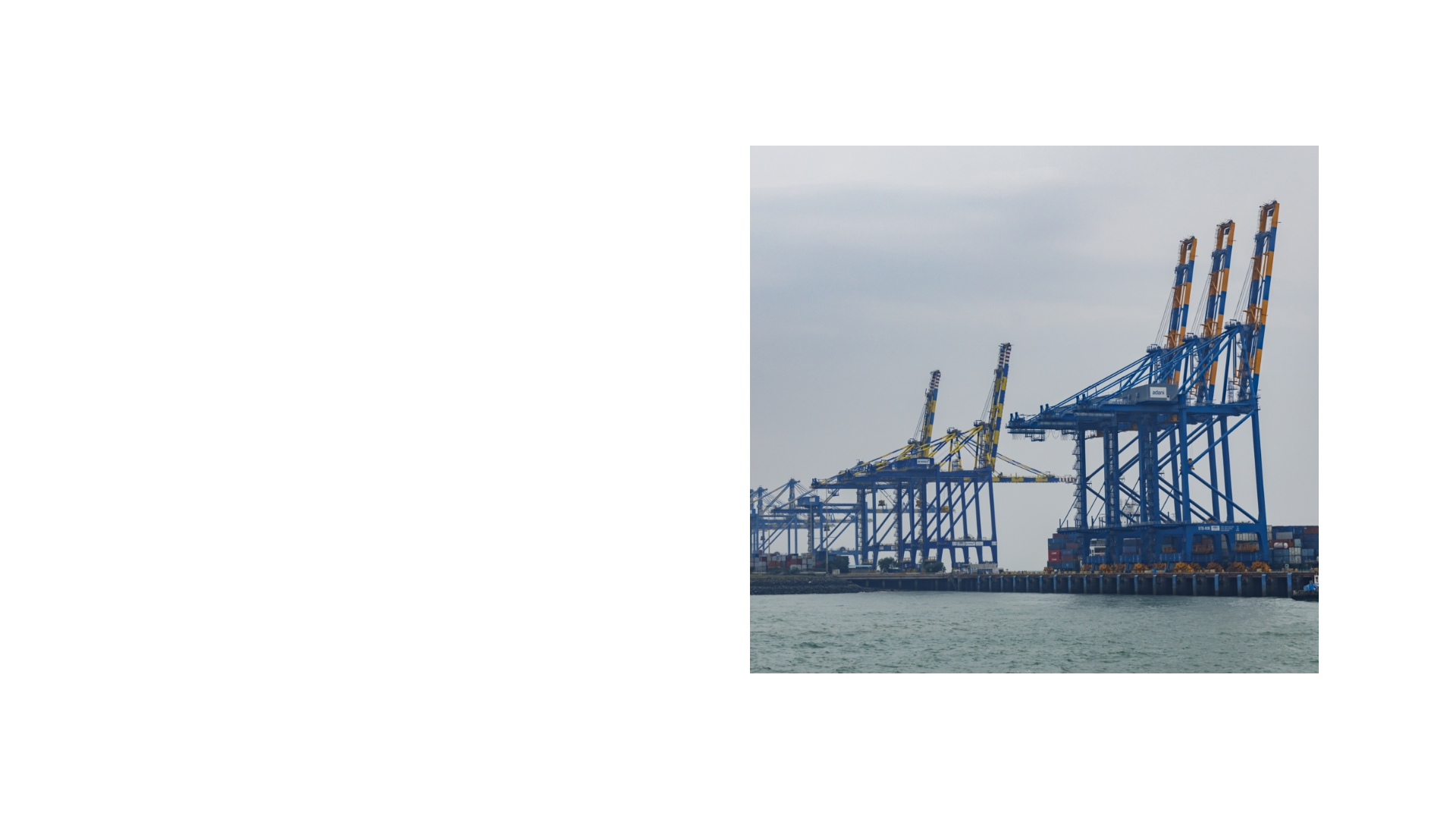
APSEZ is committed to powering all its port operations with renewable electricity by the end of 2025, aiming to achieve net-zero emissions by 2040. Mundra Port, operated by APSEZ, is one of India’s most responsible and sustainable ports, leading the way in achieving these targets. It boasts a large renewable energy capacity and adheres to best practices. The use of electrified cranes, efficient RTGs (Rubber-Tyred Gantry cranes), and e-ITVs (electric Internal Terminal Vehicles) in container terminal operations, along with extensive green zone development, further contributes to Mundra’s low carbon footprint.
The upcoming Ambuja unit in Mundra aims to be the lowest-emission-intensity cement production facility globally, aligning with the company’s goal of achieving net-zero by 2050.
Additionally, the Adani Mundra Cluster will become one of the world’s largest integrated green hydrogen hubs, with a planned capacity of 1 Million Metric Tonnes Per Annum (MMTPA) of green hydrogen production by 2030, expanding further up to 3 MMTPA by 2040. This will be supported by a fully integrated value chain, comprising 10 GW of solar modules, 5 GW of wind turbines, and 5 GW of electrolyser manufacturing capacity, alongside associated port infrastructure. The cluster will also have production facilities for green hydrogen derivatives such as ammonia, further solidifying its leadership in the green energy transition.
The World Economic Forum has played a key role in fostering collaboration among stakeholders in the cluster, enhancing its strategy to drive economic growth, employment, and decarbonisation. By joining WEF's initiative, APSEZ and its partners can collaborate with global industry peers, think-tanks, policymakers and experts to develop innovative approaches to decarbonisation.


