


Waste management
An important enabler of the company’s environmental protection efforts is its focus on effective material management and waste reduction strategies. These strategies are aimed at achieving cost savings, reduction in the environmental footprint, enhancement in productivity, and promotion of a sense of pride among the employees over their association with a responsible, future-focussed organisation.
We strive to promote effective waste management, with targeted measures to prevent and reduce the disposal of waste, across the organisation through:
- Strict adherences to principles of sustainable consumption
- Focus on reducing use of resources, minimising use of toxic materials, and limiting disposal of waste and marine pollutants throughout the life cycle

Disposal of all hazardous waste and bio-medical waste at APSEZ is done in authorised facilities in accordance with the necessary permissions obtained from the State Pollution Control Board. All e-waste and lead acid batteries waste is sent to authorised recyclers for proper handling and recycling, in compliance with the E-Waste Management Rules of 2016 and the Batteries Waste Management Rules of 2016.
We are Committed to Resource Conservation Through
Compliance with principles centred around enhanced resource utilisation and recovery via recycling and reuse.

Initiatives to tackle marine waste at various stages of a port's life cycle, including project construction and ongoing operations. Such waste includes dredged materials, ship-generated garbage and oily mixtures, cargo-related waste, besides discharges from municipal and waterfront industrial activities.

Successful implementation of waste management practices that focus on reducing the amount of waste generated and ensuring its proper disposal through authorised treatment, storage, and disposal facilities (TSDF).

Active promotion of recycling and co-processing to minimise the amount of waste sent to landfills.

Strict adherence to applicable rules and regulations for management of waste originating from ships, such as used oil and solid waste, as well as waste generated from port-related activities (including hazardous waste, lead acid batteries waste, bio-medical waste, e-waste, non-hazardous waste, and construction debris).

Compliance with principles centred around enhanced resource utilisation and recovery via recycling and reuse.

Recycling & Reuse
As part of our legal obligation to safeguard the environment, we have launched various environmental programmes and initiatives centred around waste recycling and reuse.
We prioritise recycling of waste at source to promote efficiency

We collaborate with organisations within our Special Economic Zone (SEZ) to closely monitor waste-related issues, and jointly develop solutions that reduce any adverse effects on areas beyond our immediate control.
We strive to collectively minimise the environmental impacts associated with waste management throughout our jurisdiction.
Zero Waste to Landfill
The APSEZ ‘Zero Waste to Landfill’ initiative is aimed at diverting all waste from landfills, and eliminating the need for traditional waste disposal practices. It is aimed at driving our ambitious sustainability goal. It involves environmentally sustainable waste disposal through:
- Responsible waste disposal practices for non-hazardous waste
- Implementation of 5R approach (Reduce, Reuse, Recycle, Recover, and Reprocess) at all facilities
Key Waste Management Measures in FY 2024-25
- Sustainable waste management practice by recycling bio-degradable waste and using it as manure.
- Sending non-biodegradable waste, such as paper, plastic and scraps, to recyclers.
- Diversion of non-recyclable and non-recoverable dry waste (loose refused derived fuel) to cement plants for co-processing.
- Use of STP sludge as soil conditioner/manure.
- Continuous education and training of employees on responsible waste disposal practices to promote on-ground implementation of sustainable waste management practices.
Waste Performance KPIs
The waste management KPIs tracked at APSEZ are:
- Quantity of waste generated - hazardous, non-hazardous.
- % waste processed as per the 5R principle
- Quantity of waste disposed
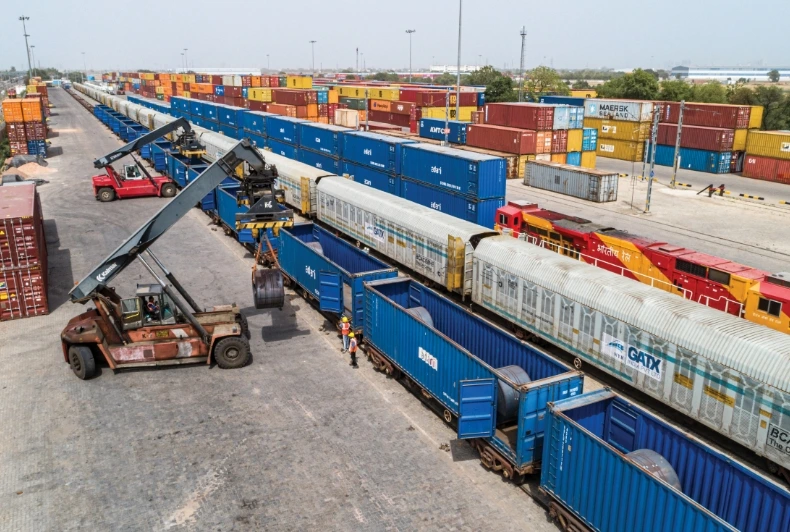
APSEZ has successfully achieved the goal of zero waste sent to landfills for 12 of its sites. This underlines our commitment to sustainable waste management practices, reduction of our environmental impact, and catalysation of economic opportunities. Going forward, we will continue to work towards achieving zero waste to landfill across all our facilities.
In FY 2024-25
During the year, in line with our focus on promoting sustainable practices and contributing to the circular economy, we sold 6,196 metric tonnes (MT) of metal scrap to facilitate its subsequent recycling. The initiative was aimed at reducing waste and minimising the environmental impact associated with traditional disposal methods. We have successfully eliminated the use of single-use plastics at all our sites, helping nurture a more environmentally friendly and sustainable environment.
| Indicator | FY 2024–25 Target | FY 2024–25 Status |
|---|---|---|
| Zero waste to landfill | 12 ports | 12 ports |
5Rs of Waste Management
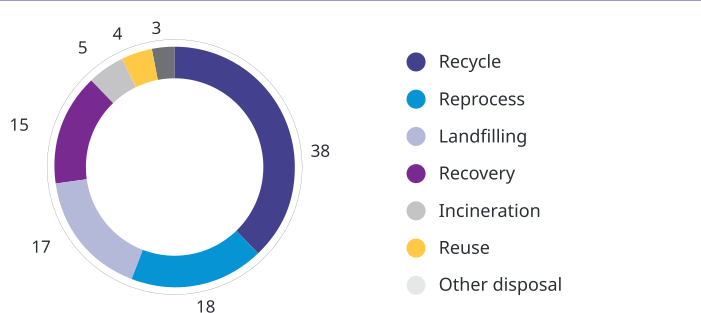
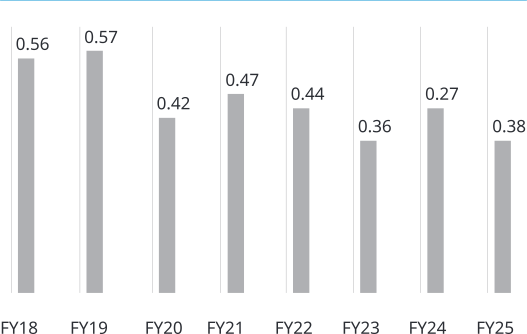
APSEZ set a target to reduce waste intensity by 30% by 2025 compared to the levels of FY 2017-18. In FY 2024-25, APSEZ successfully achieved a 32% reduction in waste intensity.
Waste Mangement Practices
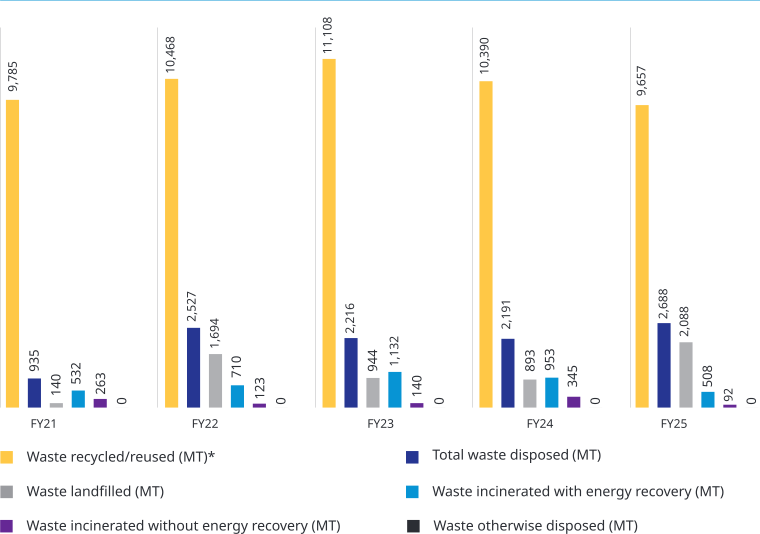
| FY21 | FY22 | FY23 | FY24 | FY25 | |
|---|---|---|---|---|---|
| Waste recycled/reused (MT)* | 9,785 | 10,468 | 11,108 | 10,390 | 9,657 |
| Total waste disposed (MT) | 935 | 2,527 | 2,216 | 2,191 | 2,688 |
| Waste landfilled (MT) | 140 | 1,694 | 944 | 893 | 2,088 |
| Waste incinerated with energy recovery (MT) | 532 | 710 | 1,132 | 953 | 508 |
| Waste incinerated without energy recovery (MT) | 263 | 123 | 140 | 345 | 92 |
| Waste otherwise disposed (MT) | 0 | 0 | 0 | 0 | 0 |
Waste by Category
| FY 2022-23 | FY 2023-24 | FY 2024-25 | |
|---|---|---|---|
| Bio-Medical Waste (MT) | 10 | 125 | 15 |
| Battery Waste (MT) | 13 | 56 | 37 |
| E-Waste (MT) | 111 | 82 | 58 |
| Hazardous Waste (MT) | 1,324 | 2,307 | 5,975 |
| Non-hazardous Waste (MT) | 13,792 | 10,073 | 5,777 |
| Construction & Demolition Waste (MT) | 0 | 0 | 165 |
| Plastic Waste (MT) | 894 | 591 | 318 |
Waste Intensity (MT/crore)
CASE STUDY
Ensuring Zero Waste to Landfill
Objective
- Identify and address the challenges and barriers associated with reducing plastic waste within mixed waste and residual waste streams, with a specific focus on stimulating the prevention and recycling of plastic waste
- Promote the recycling of plastic polymers as a viable substitute for virgin plastic, emphasising the importance of diverting plastic waste from landfills and encouraging the use of recycled materials in various industries
- Implement and advance the zero-waste approach, aiming to maximise recycling efforts, minimise waste generation, reduce overall consumption, and ensure that products are designed to be reused, repaired or recycled, either back into nature or reintroduced into the marketplace
Project Description
Our goal is to achieve a "Zero Waste Inventory" by implementing an Integrated Waste Management System that aligns with the 5Rs principle: Reduce, Reuse, Recycle, Recover, and Reprocess.
Methodology
- An assessment was conducted to identify different sources of waste and explore sustainable techniques for managing them
- The objective was to achieve milestones related to zero waste to landfill, and obtain certifications as a single-use plastic-free port
- With a comprehensive understanding of the zero waste to landfill concept, the management made a firm commitment to implementing sustainable waste management techniques
- As part of this commitment, the use of single-use plastics was completely prohibited within the port premises
Outcomes
APSEZ established an Integrated Waste Management System to effectively manage different types of waste, including dry solid waste and hazardous waste. The system encompassed the following measures:
- Collection, segregation, storage and disposal of dry solid waste and hazardous waste were implemented as part of the waste management system
- Recyclable materials, such as paper, plastic, cardboard, PET bottles and glass, were sorted and sent to authorised recyclers for proper recycling
- Wet canteen waste was directed to an in-house biogas unit. The produced biogas was utilised as a fuel source in the canteen
- ZLD has been achieved in 12 ports


