
Water stewardship
Floods, droughts and rising sea levels are no longer considered as phenomena excluded from the overall climate change issue. Water scarcity and pollution are posing serious adverse effects for ecosystems and communities worldwide. This has underscored the need for businesses and organisations to assess and effectively manage their water-related risks.
The world has already exceeded the safe limit, as per a recent study of the planetary boundary for freshwater. This means a grave risk for the balance of ecosystems, causing deforestation and soil degradation triggered by the changing moisture levels. Lack of quality water also poses serious health risks, threatening lives and causing the natural systems to further deteriorate. The risks from poor water management can range from the physical, such as droughts or floods, to reputational.
These issues have made it imperative for companies to incorporate water risk assessments into their operations and supply chains, and to follow strict mitigation and conservation strategies. This is essential for the protection of their own operations, while contributing to the preservation of the planet's vital water resources.
At APSEZ, we fully acknowledge our responsibility to water stewardship, and understand the need for responsible water management to ensure the long-term viability of our operations and the communities surrounding our operations.

Our approach to water stewardship is centred around continuous monitoring and measurement of key water-related factors, such as withdrawal, discharge, and reuse. We periodically review and revise our water management processes and systems as part of our commitment to transparent water governance
Led by our commitment to responsible water management in our operations, we have initiated several key measures for mitigating any adverse impacts of our business on local and regional water resources.
Adoption of sustainable water management practices
Investments in water-efficient technologies
Collaboration with local stakeholders to better understand and address water-related
We have set ambitious targets for reducing our water consumption. We are continuously tracking our progress on these targets, and transparently report the same to our stakeholders, with the aim of ensuring access to clean, safe, and abundant water for generations to come.
a. Water Strategy
Regular risk assessment through customised local scenario plans is the key to our water strategy. Our internal initiatives are aimed at optimising the use of water, improving efficiency, and minimising water consumption. We also pursue collaborative resource management strategies in partnership with various stakeholders, including local municipalities and communities.
Our Water Stewardship Policy
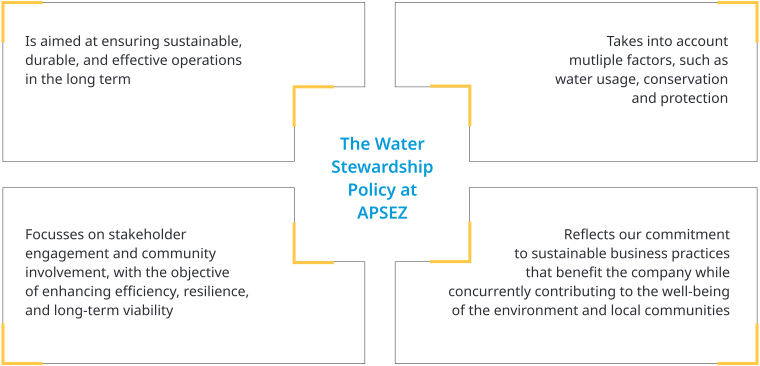
Given the unique water-related challenges faced by every locality, we work closely with local individuals and organisations to gain insights into their specific problems, and accordingly address the risks in a manner that protects and preserves valuable water resources. Our efforts are aligned to the CEO Water Mandate, a UN Global Compact initiative launched in 2007 to encourage business leaders to adopt sustainable water practices. We have endorsed the mandate, which provides a framework for companies to address water-related challenges in their operations, supply chain, and local communities. We proactively engage within our value chain to increase awareness of the challenges associated with water scarcity among employees, suppliers, and customers to enhance their understanding of the issue.
Water Targets 2025
Our water targets for 2025 reflect our leadership role in water management. The targets, keeping FY 2015-16 as the baseline, have been identified as:
- 60% water consumption intensity reduction
- 83% water withdrawal from non-competing sources
- <20% freshwater withdrawal share
The targets are aligned with the belief that adoption of responsible water management practices can drive enhanced value for our customers. It can also help reduce the challenges associated with shared resources in the local community.
Water Management Approach
With water management prioritised as a key focus area to ensure the sustainability of our operations, we have adopted a comprehensive approach, which includes:
- Ensuring access to safe drinking water and sanitation for vulnerable communities, and assist such communities in adapting to the impacts of climate change on water resources.
- Supporting and encouraging local governments, groups, and initiatives in advancing their water and sanitation agenda.
- Partnering with local stakeholders in undertaking water-resource education and awareness campaigns.
- Collaborating with public authorities and their agents to promote the development of adequate water infrastructure, including water and sanitation delivery systems.
- Incorporating a description of actions and investments related to The CEO Water Mandate in the communication on progress for the UN Global Compact; Referencing relevant performance indicators such as water indicators found in the Global Reporting Initiative (GRI) guidelines.
- Publishing and reporting on the company's water strategy, including targets, results, and areas for improvement, in relevant corporate reports; Using water indicators found in GRI guidelines.
- Enhancing transparency in dealings with governments and other public authorities on water-related issues.
b. Water Performance
To assess our business impact on water resources, we undertake regular assessment of our operational sites. The exercise also helps in identifying potential risks and opportunities.
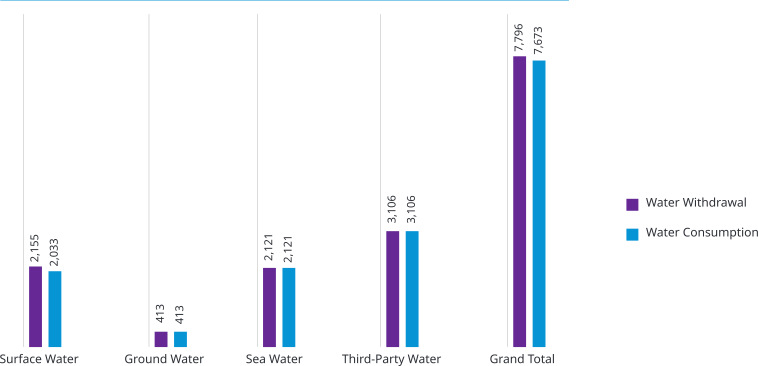
The evaluation is based on factors such as water availability, quantity, and quality, in addition to any relevant regulatory requirements. All the potable water withdrawal at APSEZ emanates from third-party water source supplied by municipalities or groundwater.
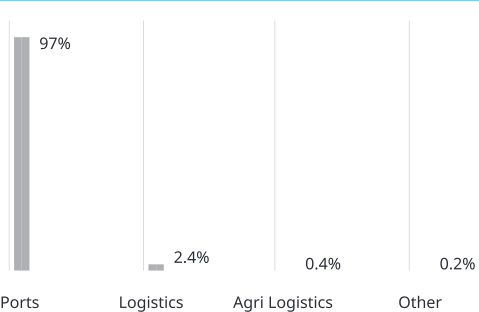
Business Unit Wise Water Consumption
Water Consumption Intensity (ML/CR)
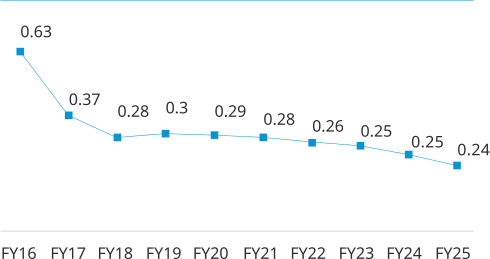
Key APSEZ Water Metrics for FY 2024-25
7%
Increase in net fresh water consumption over previous fiscal, primarily due to addition of Vizhinjam, Gopalpur and Tanzania ports
62%
Reduction in Water Intensity compared to base year
97%
Water consumption attributed to the ports
1,129 ML
Water recycled
The company’s predominant focus remains on enhancing the efficiency of freshwater usage in its operations.
| Indicator | FY 2024–25 Target | FY 2024–25 Status |
|---|---|---|
| Water consumption intensity reduction* | 60% | 62% |
*Base year FY 2015–16
Water Consumption Details
| Water Consumption | Unit | FY 2020–21 | FY 2021–22 | FY 2022–23 | FY 2023–24 | FY 2024–25 |
|---|---|---|---|---|---|---|
| A. Water withdrawal (excluding saltwater) | Million cubic metres | 1.8488 | 2.7432 | 3.6234 | 4.3011 | 4.6071 |
| B. Water discharge (excluding saltwater) | Million cubic metres | 0 | 0 | 0 | 0 | 0 |
| Total net fresh water consumption (A–B) | Million cubic metres | 1.8488 | 2.7432 | 3.6234 | 4.3011 | 4.6071 |
Water Consumption & Water Withdrawal (ML)